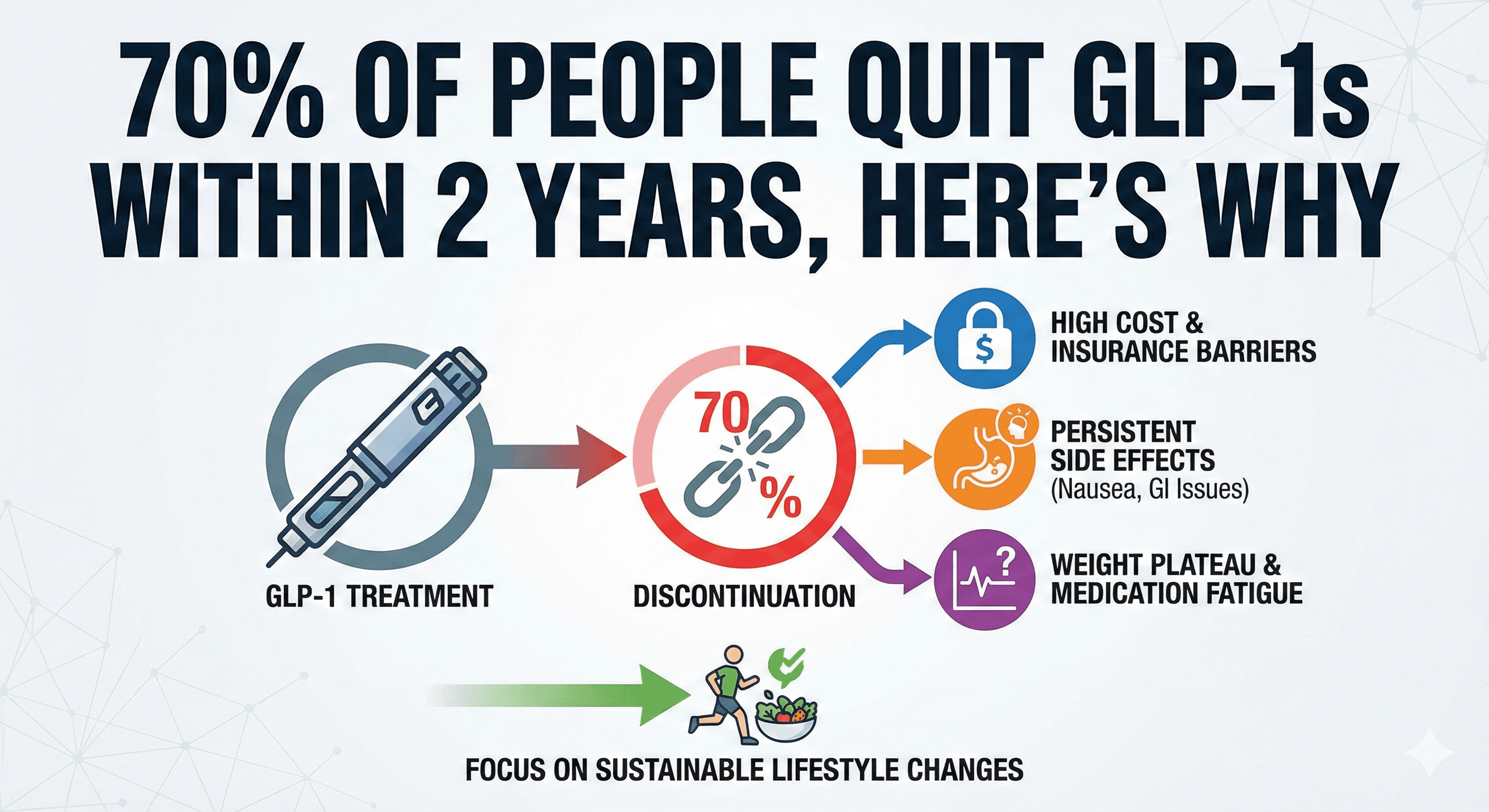
70% of People Quit GLP-1s Within 2 Years, Here's Why

70% of People Stop GLP-1s Within 2 Years: Here's Why
GLP-1 receptor agonists have completely transformed the landscape of modern weight management. With headlines constantly praising their efficacy, it can feel like everyone is taking them—and staying on them forever. But recent real-world data reveals a surprising twist: up to 70% of patients prescribed a GLP-1 medication discontinue its use within the first two years.
If these medications are so effective, why are so many people stopping?
Whether you are currently on a GLP-1, considering starting one, or thinking about tapering off, understanding the realities of long-term adherence is crucial. The decision to stop isn't usually about a lack of willpower; it’s often driven by a complex mix of biology, finances, and quality of life. Let’s break down the primary reasons behind this massive drop-off rate and what happens next.
The Top Reasons Behind GLP-1 Discontinuation
While clinical trials show incredible results, living with a medication week in and week out in the real world presents unique challenges. Here are the most common roadblocks that lead patients to stop their injections.
1. The Financial Wall and Insurance Roadblocks
For many, the decision to stop a GLP-1 is made by their wallet, not their doctor. Without insurance coverage, these medications can cost upwards of $1,000 to $1,300 per month out-of-pocket.
Even for those who initially secure coverage, the landscape is shifting. Many employers and insurance providers are rewriting their policies, citing the unsustainable cost of covering these medications long-term. Patients often face:
- Sudden loss of prior authorization: Having coverage revoked after a year because they no longer meet the "obesity" BMI requirement.
- High deductibles: Realizing the monthly copay is financially draining.
- Supply chain shortages: Being forced to skip doses for weeks at a time, eventually leading them to abandon the medication entirely out of frustration.
2. Severe or Persistent Side Effects
The appetite suppression of GLP-1s comes with a gastrointestinal cost. While mild nausea in the first few weeks is expected, a significant portion of users experience side effects that never fully resolve.
According to research published by the National Institutes of Health (NIH), gastrointestinal adverse events—including chronic nausea, vomiting, diarrhea, and severe constipation—are the leading clinical cause of GLP-1 discontinuation. For some patients, the daily reality of feeling mildly "seasick" or struggling with unpredictable digestion simply outweighs the benefits of a lower number on the scale.
Common Side Effect Breaking Points:
- Fatigue: A profound lack of energy that interferes with work or family life.
- Food Aversion: Losing the joy of eating entirely, leading to social isolation during meals or gatherings.
- Gastric issues: Persistent acid reflux or stomach paralysis (gastroparesis) concerns.
3. Hitting a Plateau and Medication Fatigue
Weight loss on a GLP-1 isn't linear. After the initial rapid drop in the first 6 to 8 months, the body naturally adapts. Weight loss slows, and eventually, it stops.
When patients hit a 6-month plateau, "medication fatigue" often sets in. The weekly injections, the side effects, and the cost start to feel burdensome when the scale is no longer moving. Additionally, some patients reach their goal weight and genuinely believe they have "fixed" their metabolism, prompting them to stop the medication under the assumption that the weight will naturally stay off.
What Happens to Your Body When You Stop?
The most critical thing to understand about GLP-1s is that they do not cure the underlying biological drivers of obesity; they manage them. When the medication leaves your system, the management stops.
The Rebound Effect When you stop a GLP-1, your appetite doesn't just return to normal—it often comes back with a vengeance. The "food noise" (intrusive thoughts about eating) that the medication silenced will turn back on, sometimes feeling louder than before.
The Body Composition Challenge If you lost a significant amount of weight, your basal metabolic rate (the calories your body burns at rest) has dropped. If you also lost muscle mass during your treatment, your metabolism is even slower. Eating the exact same way you did before you started the medication will likely result in rapid weight regain, a phenomenon often referred to as the "yo-yo" effect.
How to Protect Your Progress if You Transition Off
If you are part of the 70% who decide to stop—or are forced to stop due to cost or side effects—you need an exit strategy. Quitting cold turkey without a plan is a recipe for rebound weight gain.
Actionable Steps for a Safe Transition:
- Taper, Don't Stop Abruptly: Work with your prescribing doctor to gradually reduce your dose over several months. This allows your appetite to return slowly, giving you time to adjust your eating habits.
- Double Down on Protein: As your hunger returns, prioritize high-satiety foods. Lean proteins and fiber will help mimic the fullness you felt on the medication.
- Lift Heavy Weights: If you haven't been strength training, start now. Building muscle is the single most effective way to boost a sluggish metabolism and improve insulin sensitivity without medication.
The Centers for Disease Control and Prevention (CDC) emphasizes that comprehensive lifestyle interventions—including behavioral therapy, nutritional education, and consistent physical activity—are the foundational pillars of weight maintenance, regardless of whether pharmacotherapy is used.
Maryland Trim Clinic (MTC) in Laurel, MD
Navigating the complexities of GLP-1 medications—whether you are just starting, dealing with side effects, or trying to safely transition off—requires expert medical guidance. You shouldn't have to figure out your exit strategy or plateau on your own.
Located in Laurel, MD, the Maryland Trim Clinic provides comprehensive support that goes far beyond simply writing a prescription. If you are struggling with medication side effects or fear regaining weight after stopping your injections, their medical team can help you build a resilient, sustainable plan.
For example, to prevent rebound weight gain, their nutritional counseling and coaching can teach you how to manage your returning appetite using whole foods and smart macronutrient balancing. Furthermore, if you lost muscle mass during your time on GLP-1s, MTC’s specialized muscle building and toning therapies can help you rebuild your metabolic engine. Whether your path involves staying on medication, adjusting your dose, or transitioning off entirely, the experts at Maryland Trim Clinic are dedicated to helping you protect your progress and prioritize your long-term health.
The Future of Your Weight Loss Journey
The fact that 70% of people stop taking GLP-1s within two years isn't a sign of mass failure; it is a reality check. It highlights that while these medications are incredibly powerful tools, they are not a standalone cure.
If you choose to stop, do not view it as giving up. View it as entering a new phase of your health journey—one that requires leaning heavily into the habits, routines, and physical strength you've cultivated along the way.
Disclaimer: This article is for informational and educational purposes only and does not constitute medical advice. Results vary by individual. Always consult with a qualified healthcare professional before starting, changing, or stopping any medication or weight loss treatment plan.
Frequently Asked Questions
Q: Is it safe to stop taking GLP-1 medications cold turkey? A: While generally not physically dangerous in the way stopping certain blood pressure or psychiatric medications can be, stopping cold turkey is rarely recommended. Abruptly quitting can cause a rapid return of extreme hunger and blood sugar spikes. Always work with a healthcare provider to taper your dosage safely.
Q: Will I inevitably regain all the weight if I stop my GLP-1? A: Not necessarily all of it, but clinical studies show that most patients do regain a significant portion of the weight within a year of stopping. Preventing this requires strict adherence to dietary habits, continuous protein intake, and a rigorous exercise routine to manage the returning appetite and adapted metabolism.
Q: Can I take a break from my GLP-1 and restart it later? A: Yes, many patients cycle on and off GLP-1s due to cost, pregnancy, or surgery. However, restarting usually means you have to begin at the lowest starting dose again to mitigate gastrointestinal side effects.
Q: What is the best way to keep my metabolism high after stopping? A: The most effective method is resistance training. Building and maintaining lean muscle mass requires your body to burn more calories at rest. Combining weightlifting with a high-protein diet will give you the best defense against rebound weight gain.
Secure Your Long-Term Weight Loss Success
Are you struggling with GLP-1 side effects, worried about hitting a plateau, or looking for a safe way to transition off your medication without regaining weight? You don’t have to navigate this transition alone. Reach out to the expert team at Maryland Trim Clinic today to schedule a consultation. Let’s build a personalized, sustainable roadmap for your lasting health.