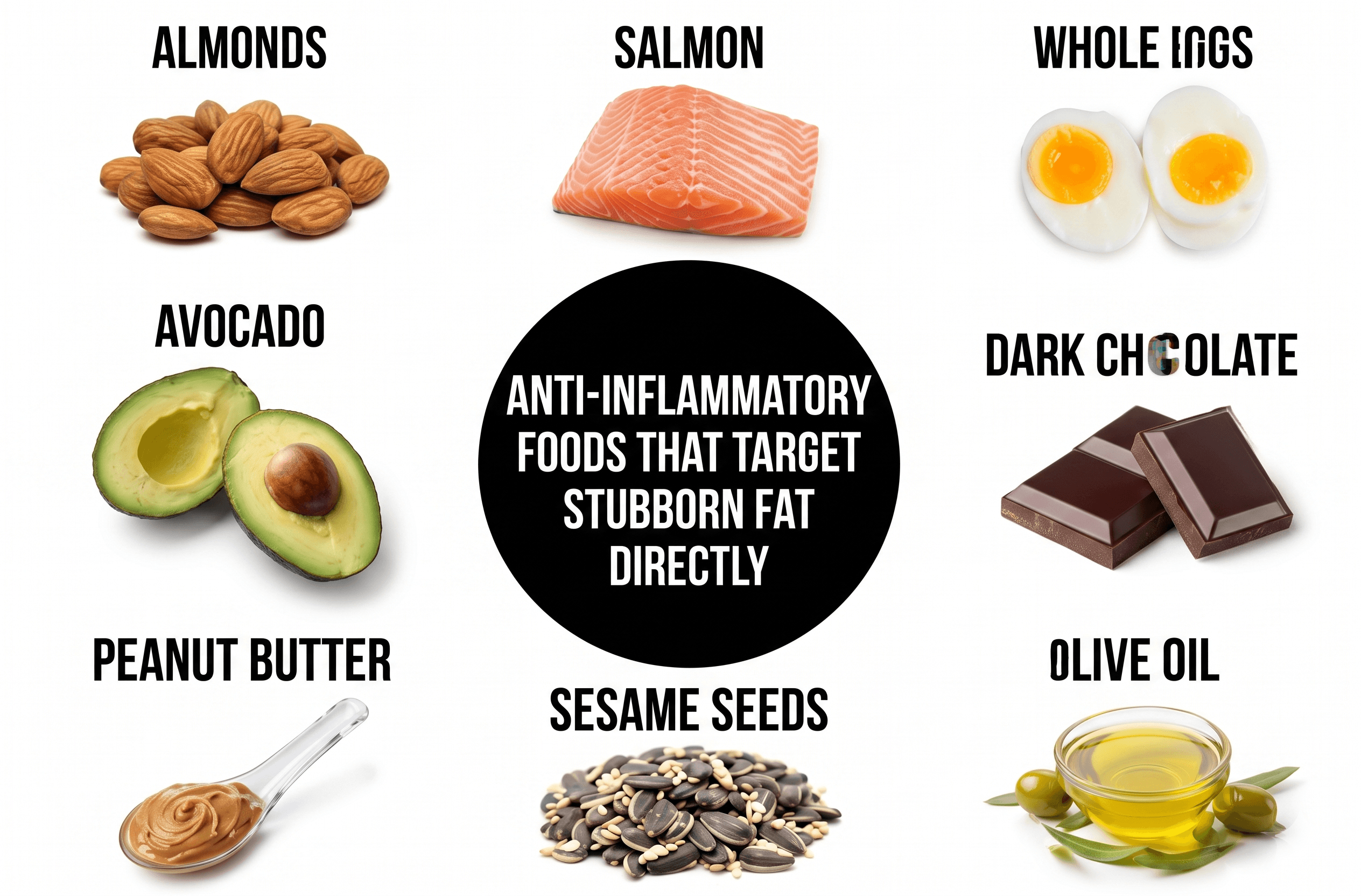
Anti-Inflammatory Foods That Target Stubborn Belly Fat

Inflammation is silently locking your fat in place, and most standard diets do nothing to stop it.
You've reduced your calories. You've cut out junk food. You've added more steps to your daily routine. And yet the belly fat remains, stubbornly indifferent to your efforts. If this sounds familiar, you are not failing your diet. Your diet is likely failing to address the real biological problem: chronic, low-grade inflammation. This smoldering process is completely ignored by most traditional fat-loss plans, yet it may be the primary reason your visceral fat refuses to move.
This is not a fringe wellness theory. It is an area of active, robust research in metabolic medicine. The clinical evidence is building in one consistent direction: you cannot reliably lose visceral fat while your inflammatory systems remain dysregulated. Understanding exactly why this happens — and what to do about it — could be the missing variable that changes your metabolic health for good.
The Hormonal Trap Inflammation Sets
To understand why inflammation drives belly fat, you first need to understand what visceral fat actually is.
Visceral Fat: The Rogue Endocrine Gland
Unlike subcutaneous fat — the soft, pinchable fat just beneath your skin — visceral fat is stored deep within the abdominal cavity, wrapping around your vital organs. It is highly metabolically active tissue. It doesn't just store energy passively; it functions almost like a rogue endocrine gland. Visceral fat actively releases its own inflammatory compounds called cytokines, most notably interleukin-6 (IL-6) and tumor necrosis factor-alpha (TNF-α).
The Cortisol Connection
Here is where the biological trap closes: these inflammatory cytokines trigger your adrenal glands to release cortisol. Commonly known as the "stress hormone," cortisol has a well-documented relationship with abdominal fat storage. Elevated cortisol signals the body to preferentially store energy as visceral fat because the abdominal region has an exceptionally high density of cortisol receptors.
In other words, the visceral fat you already carry is actively generating the hormonal signal to store more visceral fat. This is a self-reinforcing cycle, not a simple "calories in, calories out" equation.
Insulin Resistance: The Ultimate Fat-Storage Signal
Cortisol is only half the story. Chronic inflammatory signaling also heavily impairs insulin sensitivity. When your cells become resistant to insulin, the pancreas compensates by pumping out even more of it. Elevated circulating insulin — known as hyperinsulinemia — is one of the most potent fat-storage signals in human biology. It actively suppresses lipolysis (fat-burning) and accelerates fat deposition.
According to resources provided by the National Institute of Diabetes and Digestive and Kidney Diseases (NIDDK), insulin resistance and visceral fat exist in a bidirectional, mutually reinforcing relationship. Without interrupting this cycle at its inflammatory root, caloric restriction alone forces you to fight a grueling uphill biological battle.
The 'Healthy' Foods That Are Fueling the Fire
One of the most consequential problems in modern nutrition is that several widely promoted "healthy" foods are meaningfully pro-inflammatory for a significant portion of the population. Eating these foods while trying to reduce belly fat is the dietary equivalent of trying to bail out a sinking boat while leaving the leak wide open.
Refined Seed Oils
Refined vegetable and seed oils are perhaps the most underappreciated drivers of dietary inflammation. Canola oil, soybean oil, sunflower oil, and corn oil are extraordinarily high in omega-6 polyunsaturated fatty acids. When consumed in excess, these oils dramatically skew the omega-6 to omega-3 ratio in your cell membranes, creating a biochemical environment that strongly favors inflammation.
- The Red Flag: Seed oils are found in virtually every packaged health food, granola bar, and low-fat salad dressing.
- The Quick Swap: Opt for cold-pressed, extra-virgin olive oil or avocado oil instead.
Deceptive Whole Grains
While genuine dietary fiber is profoundly anti-inflammatory, many commercial whole-grain breads and cereals are deceptive. They are often made from finely milled refined flour with just a sprinkling of added bran, carrying high glycemic indices and significant added sugars.
- The Red Flag: High-glycemic "whole grain" products cause rapid blood glucose spikes that trigger inflammatory responses and massive insulin surges.
- The Quick Swap: Choose intact whole grains like quinoa, steel-cut oats, or fiber-rich legumes.
Sugary "Low-Fat" Yogurts
Low-fat, fruit-flavored yogurts are aggressively marketed as probiotic health foods. The reality is that the majority of commercial flavored yogurts contain 20 to 30 grams of added sugar per serving.
- The Red Flag: The fat removed to make these yogurts "low fat" is frequently replaced with sugar or high-fructose corn syrup, negating the probiotic benefit and delivering a massive inflammatory load.
- The Quick Swap: Choose plain, full-fat or low-fat Greek yogurt and sweeten it naturally with fresh berries.
Farmed Atlantic Salmon
Despite being lauded as a health food for its omega-3 content, farmed salmon often has a far less favorable omega-6 to omega-3 ratio than wild-caught salmon due to grain-based feeding practices.
- The Red Flag: Farmed salmon can contain three to four times more inflammatory omega-6 fats than their wild counterparts.
- The Quick Swap: Look specifically for wild-caught salmon, mackerel, or sardines.
100% Fruit Juices
Fruit juices, even those with "no added sugar," deliver concentrated fructose without the protective fiber matrix of whole fruit. Fructose is metabolized almost exclusively in the liver, and excess consumption is directly linked to hepatic fat accumulation and elevated triglycerides.
- The Red Flag: Liquid fructose triggers the production of inflammatory uric acid, a known risk factor for visceral fat deposition.
- The Quick Swap: Eat the whole fruit instead to benefit from the fiber, which slows digestion and stabilizes insulin.
The Evidence-Based Anti-Inflammatory Swaps
The clinical research on dietary inflammation and visceral fat points clearly toward actionable, specific recommendations. These are not vague wellness platitudes; they are food-level swaps with measurable outcomes in published medical trials.
1. Swap seed oils for extra-virgin olive oil (EVOO). The evidence for EVOO as an anti-inflammatory agent is among the strongest in nutritional science. Its primary bioactive compound, oleocanthal, has been shown to inhibit the exact same inflammatory enzymes (COX-1 and COX-2) as over-the-counter painkillers like ibuprofen. Use EVOO for cold applications, low-heat cooking, and as a replacement for commercial dressings.
2. Add wild-caught fatty fish three times per week. The omega-3 fatty acids EPA and DHA found in wild salmon, mackerel, sardines, and anchovies are directly converted into anti-inflammatory compounds called resolvins. According to the National Institutes of Health (NIH) Office of Dietary Supplements, Omega-3s play a critical structural role in cell membranes and actively influence cellular pathways that mediate inflammation. Higher blood EPA/DHA levels are independently associated with lower visceral fat mass.
3. Introduce turmeric with black pepper daily. Curcumin, the active polyphenol in turmeric, has been studied extensively for its ability to suppress inflammatory gene expression. However, curcumin has extremely poor bioavailability on its own. Piperine, the active compound in black pepper, increases curcumin absorption by up to 2,000%. Adding half a teaspoon of turmeric and a crack of black pepper to eggs, soups, or smoothies can meaningfully shift your inflammatory status.
4. Replace refined grain products with legumes. Lentils, chickpeas, black beans, and kidney beans offer a rare nutritional combination: high fiber, substantial resistant starch, significant plant protein, and a very low glycemic index. Resistant starch is fermented by gut bacteria into butyrate, a short-chain fatty acid that strengthens the gut barrier and blocks bacterial endotoxins from leaking into your bloodstream.
5. Eat dark berries daily. Blueberries, blackberries, and raspberries are uniquely dense in anthocyanins. Multiple trials show that daily berry consumption reduces inflammatory biomarkers, improves insulin sensitivity, and is associated with statistically significant reductions in visceral adipose tissue.
6. Prioritize magnesium-rich foods. Magnesium deficiency affects an estimated 50% of adults in developed countries and is independently associated with elevated C-reactive protein (CRP) and insulin resistance. Dark leafy greens, pumpkin seeds, dark chocolate (85%+), and avocados can help correct subclinical magnesium deficiency, lowering fasting insulin and reducing inflammatory markers.
Maryland Trim Clinic (MTC) in Laurel, MD
If chronic inflammation has locked your body into a cycle of stubborn weight retention, diet alone might not be enough to break the loop. Medical oversight can be the key to overcoming profound metabolic resistance. The Maryland Trim Clinic (MTC) located in Laurel, MD, offers medically supervised, highly personalized solutions for individuals facing these exact hormonal and inflammatory barriers.
At MTC, treating visceral fat involves a comprehensive understanding of your unique biology. Through their customized medical weight loss program, experienced providers offer advanced metabolic testing and analysis to uncover hidden inflammatory markers and identify signs of insulin resistance. To ensure your dietary habits actively fight inflammation, their clinical team provides tailored nutritional counseling and coaching. Furthermore, MTC utilizes advanced 3D body scanning to precisely measure visceral fat changes over time, giving you clear, objective data on your progress. By partnering with the experts at the Maryland Trim Clinic, you gain access to a clinical roadmap designed to safely and systematically target stubborn fat.
Putting It Together: The Anti-Inflammatory Dietary Framework
The underlying architecture of all these recommendations follows a coherent, biological logic: reduce the dietary inputs that activate inflammatory signaling pathways, and replace them with inputs that actively resolve inflammation and restore hormonal sensitivity.
This is not a traditional calorie-restricted diet. It is an inflammation-aware dietary strategy that acknowledges a biological reality: hormonal dysregulation — not merely a caloric surplus — is the mechanism most responsible for persistent visceral fat.
A 4-Week Integration Strategy:
- Week 1: Purge refined seed oils from your pantry and switch exclusively to EVOO and avocado oil.
- Week 2: Swap your standard grain-based side dishes (rice, pasta) for fiber-rich legumes.
- Week 3: Add wild-caught fatty fish to your dinners twice a week.
- Week 4: Incorporate a daily cup of dark berries and a pinch of turmeric/black pepper into your morning routine.
The changes outlined here do not require a complete dietary overhaul overnight. Each individual swap produces measurable reductions in inflammatory markers within four to eight weeks. Stack several of these changes together, and the cumulative effect on cortisol regulation, insulin sensitivity, and visceral fat mobilization becomes substantial.
Inflammation has been locking your fat in place. Now, you have the tools to change the lock.
Frequently Asked Questions
Q: What is visceral fat and why is it harder to lose than regular belly fat? A: Visceral fat is stored deep within the abdominal cavity around your internal organs, unlike subcutaneous fat which sits just under the skin. It is metabolically active and functions like a rogue gland, releasing inflammatory cytokines that elevate cortisol and impair insulin sensitivity. Both of these hormones signal the body to store more visceral fat. This self-reinforcing inflammatory cycle makes visceral fat uniquely resistant to simple caloric restriction.
Q: How long does it take for an anti-inflammatory diet to show measurable results on belly fat? A: Clinical research suggests that meaningful reductions in inflammatory markers like C-reactive protein (CRP) can occur within four to eight weeks of consistent anti-inflammatory dietary changes. Measurable reductions in visceral fat volume have been observed at the six to twelve-week mark. Results are significantly faster when multiple anti-inflammatory swaps are implemented together.
Q: Can I reduce visceral fat without exercise if I follow an anti-inflammatory diet? A: Diet-based anti-inflammatory interventions alone have produced statistically significant visceral fat reductions in controlled trials, meaning progress is possible without exercise. However, exercise — particularly resistance training — independently improves insulin sensitivity and reduces inflammation, making it a highly powerful complement to dietary changes.
Q: Is extra-virgin olive oil really better than avocado oil or coconut oil for reducing inflammation? A: Extra-virgin olive oil (EVOO) has the strongest and most extensive body of clinical evidence for anti-inflammatory effects, largely due to its oleocanthal content. Avocado oil has a similar fatty acid composition and is a reasonable alternative, especially for high-heat cooking. Coconut oil lacks the specific anti-inflammatory phytocompounds found in EVOO. For visceral fat reduction, EVOO remains the most evidence-supported choice.
Q: Why does black pepper need to be added with turmeric for it to work? A: Curcumin, the active anti-inflammatory compound in turmeric, is poorly absorbed by the body on its own. Piperine — the compound that gives black pepper its pungency — inhibits certain metabolic enzymes, preventing the premature breakdown of curcumin. Combining just a tiny amount of piperine with curcumin increases its bioavailability by approximately 2,000%.
Q: Are all whole grains inflammatory, or only certain types? A: Not all whole grains are equally problematic. The key variable is the glycemic load. Genuine, minimally processed whole grains (like intact oat groats and barley) have lower glycemic indices and higher fiber content than commercial whole-grain breads made from finely milled flour. Finely ground flour raises blood glucose almost as rapidly as white flour, triggering insulin spikes.
Q: How does gut health connect to visceral fat and inflammation? A: The gut lining acts as a barrier between your intestinal contents and your bloodstream. When this barrier is compromised (due to low fiber intake or highly processed foods), bacterial endotoxins leak into circulation. This triggers a systemic low-grade inflammatory response that impairs insulin signaling and directly promotes visceral fat deposition. Eating fiber-rich foods like legumes feeds beneficial bacteria, strengthening this barrier.
Ready to Target Visceral Fat Safely?
Stop guessing and start addressing the root cause of stubborn weight. Schedule a consultation with a certified medical provider today to create your customized, anti-inflammatory weight loss plan.