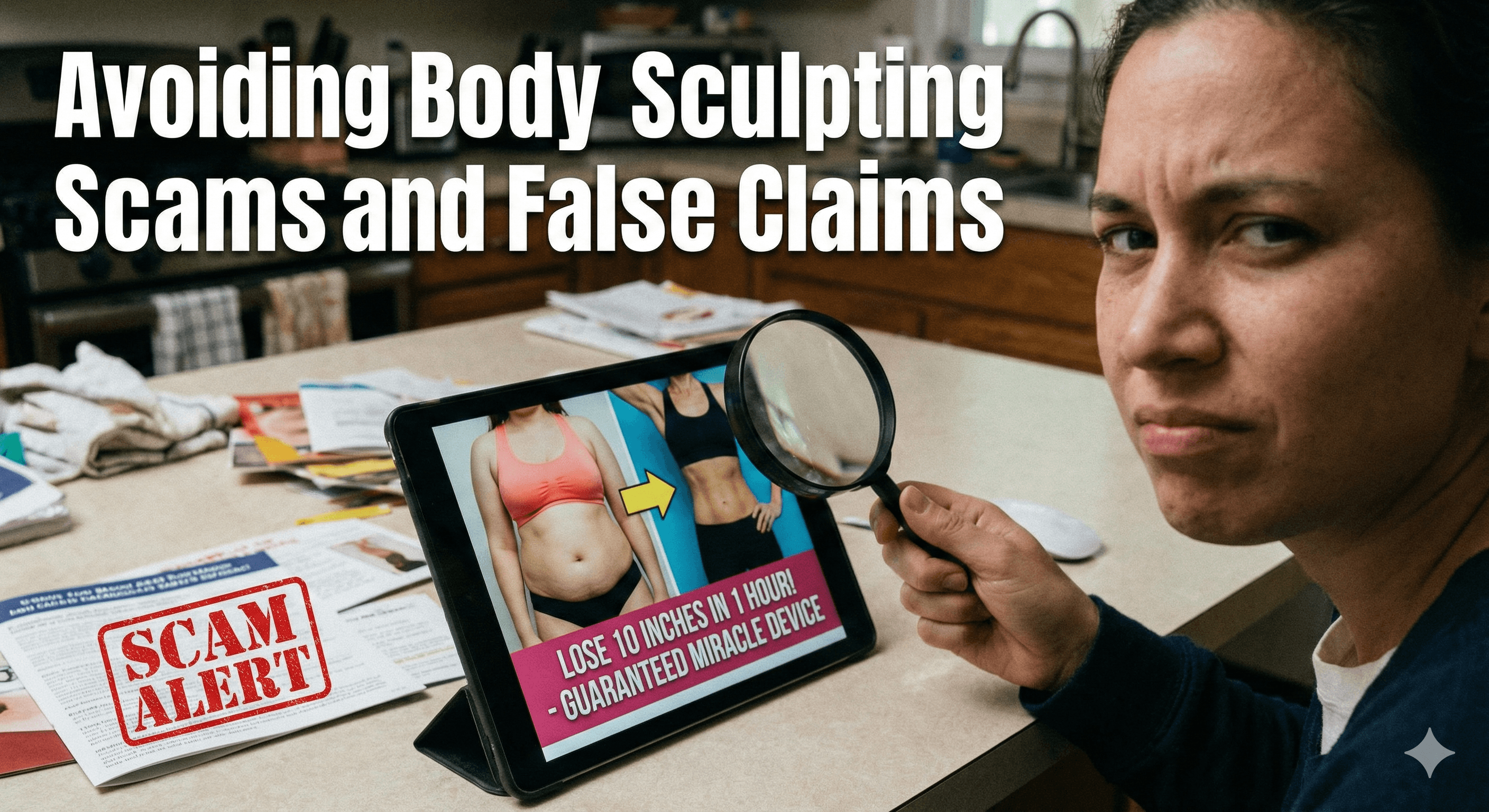
Avoiding Body Sculpting Scams and False Claims

The body contouring industry has exploded in recent years, with promises of dramatic fat loss without surgery flooding our social media feeds and late-night infomercials. It is completely natural to want to feel confident and comfortable in your own skin, and many people seek out these treatments to help them cross the finish line of their wellness goals.
While legitimate, non-invasive body sculpting technologies do exist and can deliver modest, targeted results, the market is equally saturated with scams, ineffective devices, and deceptive marketing. These bad actors prey on people's insecurities and their perfectly normal hopes for a quick fix. The result? Consumers waste thousands of dollars on treatments and products that range from minimally effective to outright fraudulent.
Understanding how to distinguish legitimate body sculpting technologies from scams isn't just about protecting your wallet—it's about protecting your health and managing your expectations realistically. This guide will equip you with the red flags to watch for, the science behind technologies that actually work, and the critical questions you need to ask before investing in any body contouring treatment or device.
Act 1: Marketing Red Flags in Body Contouring Product Claims
When navigating the aesthetic and wellness space, your first line of defense is recognizing the deceptive tactics used by less-than-reputable companies. Here is what to watch out for.
The "Too Good to Be True" Before-and-After Photos
One of the most common deceptive tactics in body sculpting marketing is manipulated or misleading before-and-after photos.
Quick Spot-Check: Signs of Manipulated Photos
- Different lighting and posing: Legitimate providers photograph clients under identical, clinical conditions. Scammers use flattering lighting, a relaxed posture, and pulled-in stomachs in "after" photos, while using harsh, overhead lighting and pushed-out bellies in the "before" shots.
- Impossibly short timeframes: Claims of losing multiple dress sizes in a matter of days or weeks through non-invasive procedures should immediately raise suspicion. Even the most effective technologies require weeks to months to show results, as the body needs time to naturally process treated fat cells.
- Stock photos or stolen images: If the image looks too perfect, it might be. Reverse image searches often reveal that promotional photos are actually stock images or stolen from legitimate medical practices. Always verify that testimonials come from real clients of that specific clinic.
- No visible treatment areas: If the photos don't clearly show the specific localized area treated, they may be showcasing overall weight loss from diet and exercise rather than the specific technology being marketed.
The FDA Confusion Game
The FDA regulates medical devices in the United States, but scammers deliberately confuse consumers about what FDA involvement actually means:
- "FDA Approved" vs. "FDA Cleared": FDA approval requires extensive clinical trials proving safety and effectiveness for specific uses, and is typically reserved for higher-risk (Class III) devices. On the other hand, FDA clearance through the 510(k) process only requires a manufacturer to demonstrate that a device is "substantially equivalent" to a device already on the market. Many body sculpting devices are merely FDA cleared for temporary results (like temporary skin tightening or temporary reduction in the appearance of cellulite), not for permanent fat reduction.
- Vague FDA claims: Catchphrases like "FDA registered facility" or "FDA compliant" are essentially meaningless marketing terms in this context. Facility registration is a basic administrative step that says absolutely nothing about whether a device actually works.
- Unapproved claims (Off-label marketing): A device may be FDA cleared for one use—like soothing muscle aches with heat—but marketed to you for another, such as melting away belly fat.
The Pressure Tactics and Financing Gimmicks
Legitimate, medically supervised practices want you to make an informed, comfortable decision. They do not need to rely on high-pressure sales tactics.
Watch out for these high-pressure behaviors:
- Manufactured urgency: "Book today or lose this price forever" is a classic manipulation tactic. Quality providers maintain consistent pricing and encourage you to take time for research.
- Aggressive financing schemes: While fair payment plans for legitimate treatments are standard, be extremely wary of providers who emphasize financing terms over the actual medical details of the treatment, or who push you to take out loans for massive package deals.
- The consultation bait-and-switch: Some facilities use "free consultations" just to get you in the door, then apply intense psychological pressure to commit immediately, sometimes making it physically awkward to leave the room until you agree.
- Package pressure: Being aggressively pushed to buy multiple treatment areas or massive upfront packages before you've even had a chance to see how your body responds to a single session is a major red flag.
Celebrity Endorsements Without Science
Celebrity and influencer endorsements flood the body contouring space, but they rarely tell the whole story.
- Undisclosed sponsorships: Many glowing "testimonials" on social media are actually paid sponsorships that are hiding the fact that they are advertisements.
- The "Halo Effect" of wealth: That fitness influencer's body is highly likely the result of professional personal trainers, private chefs, surgical procedures, and careful photo editing—not the $40 vibrating waist belt or at-home sculpting wand they are being paid to promote.
- Lack of clinical backing: If a product's marketing relies entirely on celebrity faces and lacks peer-reviewed research, it is highly suspect.
The Lack of Transparent Information
Scammers avoid specifics because clear details expose their false claims. Real providers love talking about the science.
- Pseudo-scientific jargon: Legitimate technologies explain precisely how they work (e.g., cryolipolysis freezes fat cells to a specific temperature; radiofrequency heats dermal tissue to stimulate collagen). Scam products use vague, word-salad jargon ("quantum fat-melting resonance") without explaining the actual biological mechanism.
- No published data: Real body sculpting technologies are backed by multiple peer-reviewed studies published in respected medical journals.
- Hidden credentials: You have a right to know who is treating you. You should always be able to verify that your treatments are being performed or supervised by appropriately licensed, trained medical professionals.
Act 2: Understanding the Science Behind Legitimate Technologies
While scams do proliferate, there are several evidence-based technologies that provide modest, non-surgical body contouring results. Understanding the real science helps set realistic expectations and protects you from disappointment.
Cryolipolysis (Fat Freezing)
How it works: Often recognized by brand names like CoolSculpting, this technology uses controlled cooling applicators to freeze fat cells at specific temperatures. This damages the fat cells without harming the overlying skin or surrounding tissues. Over the next 2 to 4 months, your body's lymphatic system naturally processes and eliminates these dead cells.
What the evidence shows: Clinical studies demonstrate an average of 20-25% fat reduction in the specifically treated areas. This represents a permanent reduction in the number of fat cells, but remember: the remaining fat cells in that area can still expand if you gain weight.
Realistic expectations: This is best for small, pinchable areas of stubborn fat (like a double chin or love handles). It is not a weight loss solution. Multiple treatments are usually needed. Potential side effects include temporary numbness, bruising, and in rare cases, a condition called paradoxical adipose hyperplasia (where the tissue actually enlarges).
Radiofrequency (RF) Treatments
How it works: RF devices use electromagnetic waves to safely heat the deeper layers of the skin (the dermis). This heat stimulates collagen and elastin production, which leads to skin tightening. At very high, controlled temperatures, some specific RF devices can also cause mild fat cell disruption.
What the evidence shows: The medical evidence is much stronger for RF's ability to tighten skin than it is for melting fat. Studies show mild to moderate improvements in skin laxity and overall body contour, though results are subtle and require maintenance.
Realistic expectations: RF is best suited for mild skin tightening and smoothing. You will need multiple sessions, and the results appear gradually over several months as new collagen forms.
Ultrasound-Based Technologies
How it works: High-intensity focused ultrasound (HIFU) delivers focused energy to specific depths beneath the skin, causing thermal injury to fat cells or stimulating collagen production. This is highly concentrated and very different from the gentle diagnostic ultrasound used to look at babies during pregnancy.
What the evidence shows: There is moderate clinical evidence supporting HIFU for mild fat reduction and skin tightening, with studies showing average circumference reductions of 2-4 cm over treated areas after a series of sessions.
Realistic expectations: Results take 2-3 months to fully manifest. It works best when combined with an active, healthy lifestyle and is not suitable for removing large volumes of fat.
Laser Lipolysis
How it works: Non-invasive laser lipolysis generally falls into two camps. Low-level laser therapy (LLLT) claims to create temporary pores in fat cells, allowing them to "leak" their contents. Other devices use heat from specialized lasers to permanently disrupt the structural integrity of fat cells.
What the evidence shows: The science here can be controversial. While heat-based lasers have stronger data backing their ability to destroy fat cells, LLLT has limited and often conflicting evidence. Some studies note minor circumference reductions, while others show results virtually identical to a placebo.
Realistic expectations: Approach this category with caution. While some professional-grade heat lasers work well for the right candidate, many devices marketed in this space (especially at-home laser belts) are minimally effective or entirely ineffective.
What Body Sculpting CANNOT Do
To protect yourself from false claims, you must understand the limitations of even the best technologies.
- It cannot replace systemic weight loss: These technologies reduce localized fat cells in targeted areas; they do not lower the number on the scale. If your primary goal is overall weight reduction, you would be much better served exploring a comprehensive medical weight loss program tailored to your biology.
- It cannot provide dramatic, overnight transformations: The most effective non-invasive technologies produce subtle, moderate improvements over the course of several months.
- It cannot treat obesity or replace surgery: For the removal of large volumes of fat, surgical liposuction remains the gold standard. Non-invasive sculpting is for finishing touches and refinement.
- It cannot tighten severely loose skin: While RF can improve mild laxity, significant loose skin (such as after major weight loss or pregnancy) usually requires surgical intervention to remove the excess tissue.
Act 3: Questions to Ask Before Investing in Devices or Treatments
Before you hand over your credit card for an in-office treatment or an expensive at-home gadget, use this framework to evaluate the offer. Empower yourself by asking these direct questions.
About the Technology
What is the specific mechanism of action? The provider should be able to explain precisely how the technology affects your fat or skin tissue at a cellular level, without relying on vague buzzwords.
What peer-reviewed studies support this treatment? Ask for specific citations, then verify them independently. Robust studies should be published in independent medical journals, not just hosted on the manufacturer's own website.
What is the exact FDA status? Determine whether the device is FDA cleared or approved, and ask to see exactly what specific use it is cleared for.
What are the documented success rates? Legitimate providers will give you realistic, grounded statistics (e.g., "clinical trials show an average 20% fat reduction in the treated area") rather than promising you will "drop three dress sizes."
What are the potential risks? Every single medical procedure—even non-invasive ones—carries risks. If a provider claims a treatment is "100% risk-free," they are being dishonest.
About the Provider
What are your specific credentials? Verify the licenses of the physicians, nurses, or technicians. Depending on your state, certain deep-tissue treatments legally require specific medical licenses to perform.
How much experience do you have with this exact device? The skill of the technician matters just as much as the machine. Ask how many times they have personally performed this specific treatment.
Can I speak with real patients? While HIPAA privacy laws rightfully limit what clinics can share, established practices often have a roster of former clients who have explicitly consented to speak with prospective patients about their honest experiences.
What happens if I experience an adverse effect or see zero results? Understand their clinical protocols for non-responders and their refund/retreat policies before you sign anything.
About the Investment
What is the total out-of-pocket cost? Get a complete, written quote that includes all recommended sessions required to see results, rather than just the deceptive "per-session" introductory price.
How does this compare locally? Research typical pricing for this specific technology in your city. Prices that are drastically lower than the local average often indicate outdated equipment, counterfeit machines, or dangerously inexperienced operators.
Are follow-ups included? Clarify whether your initial consultations, mandatory follow-up appointments, or future touch-up sessions will incur extra charges.
Are your financing options fair? If you choose to finance, compare the clinic's terms with independent healthcare credit options to ensure you aren't being hit with predatory interest rates.
Red Flag Questions
If your answer is "yes" to any of the following questions during a consultation, seriously reconsider moving forward:
- Does the provider pressure you to make a financial decision immediately?
- Are they unwilling or unable to provide specific, independent clinical evidence?
- Do they make absolute guarantees about specific outcomes or measurements?
- Is the technology or the clinic's medical director impossible to research online?
- Does their marketing rely entirely on influencer testimonials rather than medical science?
Maryland Trim Clinic (MTC) in Laurel, MD
Navigating the world of aesthetic and weight management treatments can feel overwhelming, which is exactly why partnering with a transparent, medically supervised practice is so vital. If you are located in the DMV area, the Maryland Trim Clinic (MTC) in Laurel, MD offers a grounded, evidence-based approach to wellness that prioritizes your safety and realistic goals.
At Maryland Trim Clinic, the focus is on personalized care rather than high-pressure sales. Their team of professionals provides honest, medically sound assessments for non-invasive body contouring to ensure you are actually a good candidate for the technology before you invest. Furthermore, because they understand that true body transformation often goes beyond superficial sculpting, they can also guide you through systemic options like GLP-1 weight loss injections if you are looking for metabolic support. You can learn more about their comprehensive, patient-first philosophy on their homepage.
The Bottom Line
Legitimate body sculpting technologies do exist and can provide beautiful, modest improvements for the right candidates. However, the industry is equally full of bad actors, ineffective products, and deceptive marketing designed to part you from your money.
Understand that even the most proven, expensive technologies provide subtle results over a period of months, not dramatic transformations in a matter of weeks. They work best as refinement tools for people who are already committed to healthy daily habits, not as magical substitutes for diet, exercise, or bariatric medicine.
Before investing your time and money, verify absolutely everything. Research the technology independently through peer-reviewed literature, confirm FDA clearance statuses, check provider credentials through your state's medical licensing boards, and trust your gut. Remember the golden rule of medical aesthetics: if something sounds too good to be true—no risks, massive transformations, overnight results—it almost certainly is. Your best protection against scams is education, patience, and a healthy dose of skepticism.
Frequently Asked Questions
What's the difference between FDA approved and FDA cleared for body sculpting devices? FDA approval requires exhaustive clinical trials proving both safety and effectiveness for a specific medical use, and is typically reserved for higher-risk medical devices. FDA clearance (via the 510(k) pathway) simply requires a manufacturer to prove their device is "substantially equivalent" to another device already legally marketed. Most non-invasive body sculpting devices are only FDA cleared for temporary aesthetic improvements—like mild skin tightening—not necessarily for permanent fat cell destruction. You should always verify exactly what claims the FDA clearance actually covers.
How much fat reduction can I realistically expect from non-surgical body sculpting? The most effective, evidence-based technologies on the market, such as professional cryolipolysis, typically reduce fat in the targeted, treated areas by an average of 20% to 25% over a period of 2 to 4 months. This translates to subtle contouring and a better fit in your clothes, not dramatic, systemic weight loss. These treatments are designed to refine stubborn pockets of fat for individuals who are already at or near their goal weight.
Are at-home body sculpting devices effective? The vast majority of at-home devices are significantly less powerful than professional, in-office medical equipment, primarily for safety reasons. Consequently, they have very limited clinical evidence supporting their effectiveness. While some may provide very mild, highly temporary results (like short-term skin tightening from heat), they generally cannot deliver the structural fat reduction of an in-office treatment. If you are considering an at-home gadget, apply the same rigorous evaluation criteria: look for independent peer-reviewed studies, verify specific FDA clearances, and keep your expectations extremely low.
How can I verify before-and-after photos are legitimate? You can use free reverse image search tools (like Google Lens) to check if the clinic's photos appear elsewhere online as stock photography or stolen content from other doctors. When looking at the photos, critically examine the lighting, the patient's posture, and the camera angle—they should be completely identical in both the "before" and "after" shots. Be highly suspicious of photos claiming dramatic, full-body transformations in incredibly short timeframes, or photos where the specific targeted treatment area isn't clearly visible.
What credentials should the person performing my body sculpting treatment have? The required credentials vary depending on your state's laws and the specific depth and power of the technology being used. Generally, these treatments should be performed by, or under the direct supervision of, licensed medical professionals such as physicians (MD/DO), nurse practitioners (NP), or physician assistants (PA). Some states do allow licensed aestheticians or certified laser technicians to operate certain low-risk devices. Always verify the individual's credentials through your state's medical or cosmetology licensing board, and ask specifically about their hands-on training hours with the exact machine they will be using on you.
Disclaimer: The information provided in this article is for educational and informational purposes only and is not intended as medical advice. Always consult with a qualified healthcare provider before beginning any new medical treatment, weight loss program, or body contouring procedure.
Your Next Step Toward Safe, Science-Backed Results
If you are tired of navigating false claims and want an honest, medically sound approach to your wellness goals, the team at Maryland Trim Clinic is here to help. Whether you are looking to refine stubborn areas with non-invasive body contouring or exploring comprehensive, systemic medical weight loss programs, your journey should always begin with a transparent, pressure-free medical consultation.