Berberine for Weight Loss: A Medical Guide & Dosing Protocol

Here's exactly how to take berberine for maximum weight loss results, safely and effectively.
If you're exploring natural alternatives to support metabolic health and fat loss, berberine has likely caught your attention. This plant-derived alkaloid has gained significant traction in functional and integrative medicine circles for its profound effects on blood sugar regulation, insulin sensitivity, and body composition. But between conflicting dosing recommendations, quality concerns, and confusion about how to properly integrate it into your health protocol, many patients end up taking berberine incorrectly, or avoiding it altogether.
The difference between seeing real metabolic changes and simply wasting your money often comes down to three critical factors: proper dosing and timing, stringent product quality, and integration with comprehensive metabolic support. Let's break down exactly how to use berberine for maximum weight loss and metabolic benefits.
Act 1: The Clinical Protocol for Berberine Dosing and Timing
Understanding Why Berberine Works for Weight Loss
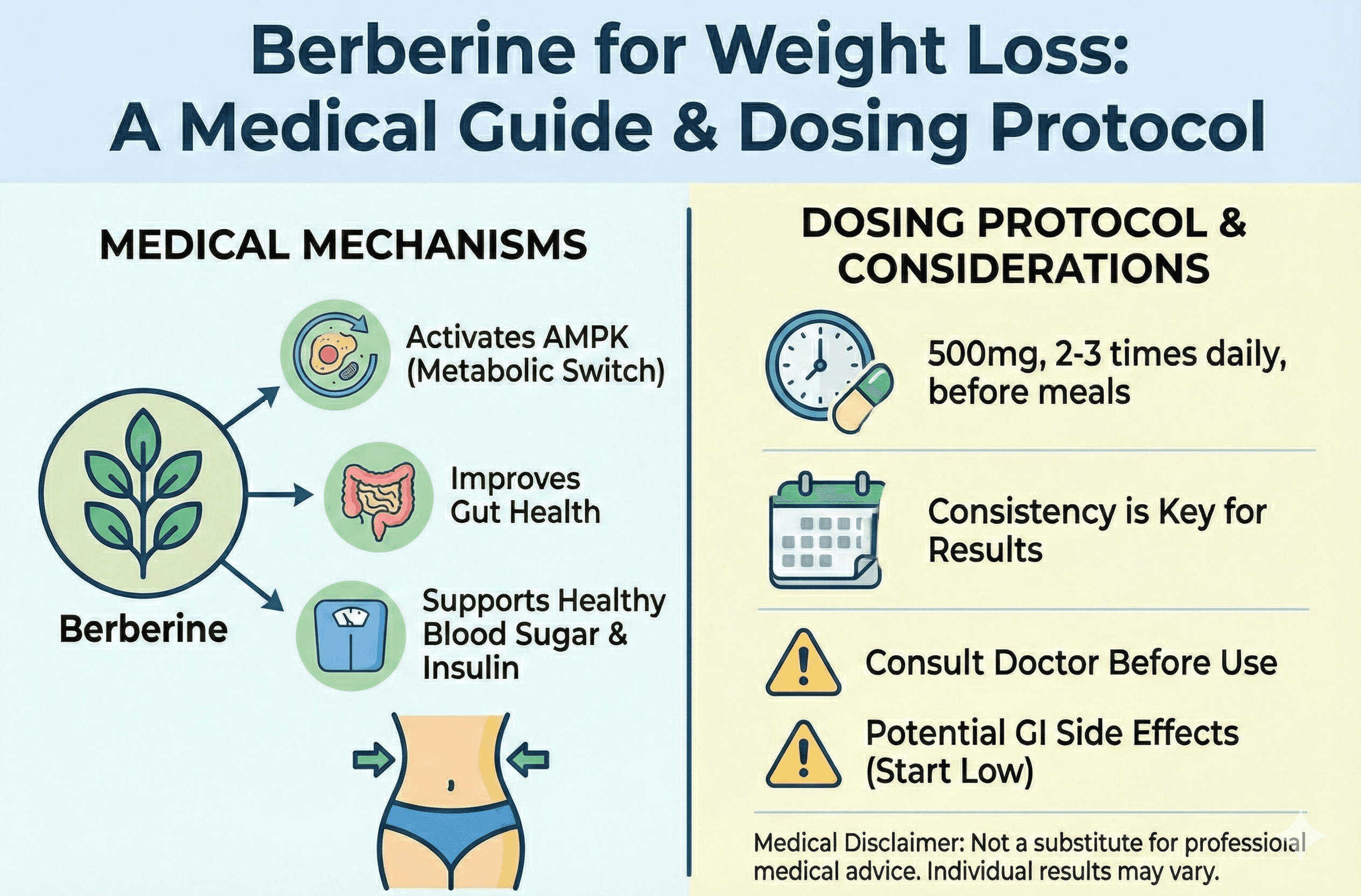
Before diving into specific protocols, it's important to understand berberine's mechanism of action. Unlike stimulant-based "fat burners" that simply spike your heart rate, berberine works at the cellular level by activating an enzyme called AMP-activated protein kinase (AMPK). This enzyme is often referred to as your body's "metabolic master switch."
When AMPK is activated, several metabolic processes shift favorably:
- Improved insulin sensitivity: Your cells become much more responsive to insulin, reducing the body's signal to store fat. You can learn more about how crucial insulin sensitivity is to overall health via the National Institute of Diabetes and Digestive and Kidney Diseases (NIDDK).
- Enhanced glucose uptake: Your muscles pull sugar from the bloodstream more efficiently to use as energy.
- Increased fat oxidation: Your body preferentially burns stored fat for fuel.
- Reduced lipogenesis: Your liver produces less new fat.
- Modulated gut microbiome: Berberine shifts bacterial populations in your digestive tract in ways that actively support metabolic health.
This multi-targeted approach explains why research shows berberine can be highly effective for blood sugar control, with the added benefit of supporting sustainable weight loss in most clinical studies.
The Standard Clinical Dosing Protocol
The evidence-based dosing protocol most widely used in functional medicine is precise. Haphazardly taking a pill whenever you remember will not yield the same results.
- The Ideal Dose: 500mg of berberine hydrochloride per serving.
- Frequency: Taken 2 to 3 times daily.
- Total Daily Intake: 1,000mg to 1,500mg.
This specific dosing range is based on the majority of clinical trials showing metabolic benefits. Going below 900mg daily often produces highly inconsistent results, while exceeding 2,000mg doesn't appear to offer any additional metabolic benefits and significantly increases the risk of digestive side effects.
Timing: The Critical Factor Most People Get Wrong
Timing is where most berberine users make their first critical mistake. Berberine should be taken 15 to 30 minutes before meals, ideally your largest meals of the day.
Here is why precise timing matters:
- Berberine's glucose-lowering effects peak when it is present in your system during active carbohydrate digestion.
- Taking it before meals positions it perfectly to blunt post-meal blood sugar spikes.
- This timing maximizes AMPK activation precisely when nutrients are entering your bloodstream.
A typical daily schedule looks like this:
Morning: 500mg at 7:00 AM (15-30 minutes before breakfast)
Midday: 500mg at 12:00 PM (15-30 minutes before lunch)
Evening: 500mg at 6:00 PM (15-30 minutes before dinner)
Quick Tip: If you are only taking it twice daily (1,000mg total), prioritize the two meals with the most carbohydrates, which is typically breakfast and dinner for most people.
Timeline: What to Expect and When
Patients always ask: "How quickly will I see results?" Berberine is not a quick fix; it is a metabolic modulator. Here is a realistic timeline of what to expect:
- Weeks 1 to 2: You may notice improved post-meal energy and reduced sugar cravings as your blood sugar begins to stabilize.
- Weeks 3 to 4: Measurable improvements in fasting glucose usually appear if you are testing your blood sugar at home.
- Weeks 6 to 8: Noticeable changes in body composition begin to emerge. Clinical studies frequently show 2 to 5 pounds of fat loss in this specific timeframe.
- Weeks 8 to 12: Full metabolic adaptation occurs. This is when your lipid panels typically show clinical improvement (e.g., lower triglycerides, better HDL/LDL ratios).
Most research protocols run for 12 to 16 weeks, and that is the absolute minimum timeline recommended before reassessing its full efficacy.
Act 2: Selecting Third-Party Tested Products for Quality Assurance
Not all berberine supplements are created equal. Because supplements are not strictly regulated in the same way prescription drugs are, independent testing has found that some products contain significantly less berberine than claimed on the label, or worse, they contain harmful contaminants.
The Third-Party Testing Gold Standard
When selecting a berberine product, always look for verification from an independent testing organization. The NIH Office of Dietary Supplements frequently emphasizes the importance of quality assurance when choosing weight management supplements. Look for these seals:
- USP Verified: Tests for exact ingredient accuracy, high purity, and proper manufacturing processes.
- NSF Certified for Sport: Particularly important if you are a competitive athlete subject to drug testing; it screens extensively for banned substances.
- ConsumerLab Approved: Provides rigorous, independent testing for both potency and heavy metal contamination.
These certifications mean a neutral, outside laboratory has verified that what is actually inside the capsule perfectly matches the label claims.
The Bioavailability Question: Standard vs. Dihydroberberine
One clinical challenge with berberine is that it has relatively poor bioavailability, meaning your body doesn't absorb it particularly well from the digestive tract. This is exactly why the effective dose is relatively high (1,000–1,500mg daily).
Some newer products contain dihydroberberine (DHB), a more bioavailable form that your gut bacteria naturally convert standard berberine into. Research suggests you may need only 100 to 200mg of DHB to equal the metabolic effects of 500mg of standard berberine.
Comparing your options:
- DHB Advantages: Requires a much lower dose, causes potentially fewer gastrointestinal side effects, and boasts better intestinal absorption.
- DHB Disadvantages: It is significantly more expensive, has less long-term safety data available, and features fewer large-scale clinical studies compared to standard berberine.
For most patients, starting with standard berberine hydrochloride is recommended because it has decades of safety data and is cost-effective. If digestive tolerance proves poor, switching to DHB is a viable backup plan.
Red Flags in Product Labels
Be a savvy consumer. Avoid berberine products that exhibit any of the following red flags:
- They combine berberine with excessive stimulants (like synephrine, high-dose caffeine, or bitter orange).
- They make outrageous, unscientific claims (e.g., "lose 30 pounds in 30 days").
- They do not explicitly specify the "berberine hydrochloride" content in exact milligrams.
- They come from manufacturers lacking standard GMP (Good Manufacturing Practice) certification.
- They are significantly cheaper than all comparable products (which almost always indicates lower quality or severe underdosing).
Storage and Stability Considerations
Berberine is relatively stable, but proper storage extends its clinical potency:
- Store the bottle in a cool, dry place away from direct sunlight.
- Keep the bottle tightly sealed, as berberine can degrade with prolonged moisture exposure.
- Always check expiration dates; potency heavily decreases after 2 to 3 years.
- Avoid storing your supplements in humid environments, such as a bathroom medicine cabinet.
Act 3: Integrating Berberine with Functional Medicine Approaches
Berberine is highly powerful, but it works best as part of a comprehensive metabolic health strategy, not in isolation.
Start with GI Assessment
Before starting berberine, it is often wise to get a baseline gut health evaluation, especially if you have:
- A history of digestive issues (IBS, chronic bloating, irregular bowel movements).
- Previous SIBO (small intestinal bacterial overgrowth) or clinical dysbiosis.
- Chronic, unexplained constipation or diarrhea.
Why does this matter? Berberine has strong antimicrobial properties and significantly alters the gut microbiome. While these changes are generally highly beneficial (such as increasing beneficial bacteria like Akkermansia muciniphila), starting berberine when you already have severe gut issues can temporarily worsen your symptoms. Functional stool testing or a SIBO breath test can identify issues that should be addressed before adding herbal antimicrobials.
Dietary Synergies: Maximizing Berberine's Effects
Berberine aggressively amplifies the results of metabolic-supportive dietary patterns:
- Low-Glycemic Eating: When you actively reduce refined carbohydrates and added sugars, berberine's glucose-stabilizing effects become vastly more pronounced.
- Intermittent Fasting: Berberine's AMPK activation perfectly complements the metabolic benefits of time-restricted eating windows.
- Mediterranean-Style Diet: The combination of berberine with healthy omega fats, high fiber, and plant polyphenols creates massive, additive anti-inflammatory effects.
In clinical practice, patients who actively combine berberine with positive dietary changes see two to three times better results than those who rely on the supplement alone.
Clinical Monitoring: Track What Matters
If you are serious about using berberine for metabolic health, baseline and follow-up testing provides invaluable feedback.
Baseline labs to request (before starting):
- Fasting glucose and HbA1c
- Comprehensive Lipid panel (total cholesterol, LDL, HDL, triglycerides)
- Liver enzymes (AST, ALT)
- Weight and detailed body composition
Follow-up labs to request (at 8 to 12 weeks):
- Repeat all of the above markers to objectively assess your progress.
This hard data helps you and your healthcare practitioner determine whether the berberine protocol is working and whether any dosage adjustments are needed.
When to Work with a Practitioner
While berberine is readily available over-the-counter, certain health situations strictly warrant professional medical guidance:
- You are currently taking prescription medications for diabetes, blood pressure, or high cholesterol.
- You have a documented history of liver disease.
- You are pregnant or breastfeeding (berberine is strictly contraindicated).
- You are taking any immunosuppressant medications.
- You experience significant, unresolving side effects.
Contraindications and Medication Interactions
Berberine is potent and can interact with several major medication classes:
- Diabetes medications: Berberine actively lowers blood sugar; combining it with metformin, sulfonylureas, or insulin may cause severe hypoglycemia. Dosage adjustments are often necessary.
- Blood pressure medications: Berberine has modest, but real, blood pressure-lowering effects that can compound with prescriptions.
- Antibiotics: Since berberine has natural antimicrobial properties, timing it alongside prescription antibiotics should be discussed with your provider.
- Medications metabolized by CYP3A4: Berberine inhibits this specific liver enzyme, which can potentially alter how your body metabolizes various other drugs.
Always inform your primary healthcare provider before adding berberine to your regimen if you are on any prescription medications.
Maryland Trim Clinic (MTC) in Laurel, MD
Navigating supplements, managing insulin resistance, and achieving sustainable weight loss can be overwhelming to tackle on your own. Having a structured, medically supervised environment ensures you are using the right protocols safely and effectively. Located in Laurel, MD, the Maryland Trim Clinic provides evidence-based care tailored to your unique biology.
Whether you need guidance integrating supplements into a broader lifestyle plan, or you are looking for a comprehensive medical weight loss program to address the root causes of weight regain, our team is equipped to support you. We utilize advanced tools like metabolic testing and analysis to clearly understand how your body processes energy, allowing us to build a precise plan just for you. We believe in moving away from generic advice and focusing instead on sustainable, personalized solutions. If you are struggling to find a holistic approach that works, visit the Maryland Trim Clinic's website to explore how our clinical expertise can support your health journey safely.
The Bottom Line: A Functional Medicine Perspective
Berberine represents one of the most well-researched natural compounds for metabolic health and weight loss. When used correctly, at proper doses, with high-quality products, and carefully integrated into a comprehensive lifestyle approach, it can be a deeply powerful tool for improving insulin sensitivity, supporting healthy body composition, and optimizing vital metabolic markers.
The absolute key is treating berberine as part of a holistic system, not as a magic bullet. When properly combined with targeted nutrition, appropriate daily exercise, stress management, and sleep optimization, berberine amplifies your results and helps address the root causes of metabolic dysfunction.
Start with the standard protocol (500mg three times daily before meals), choose a third-party tested product, monitor your progress with objective clinical markers, and always work with a knowledgeable practitioner if you have complex health conditions or take medications. This evidence-based approach gives you the highest possible chance of achieving the metabolic transformation you are seeking.
Disclaimer: The information provided in this article is for educational purposes only and is not intended as a substitute for professional medical advice, diagnosis, or treatment. Always seek the advice of your physician or other qualified health provider with any questions you may have regarding a medical condition, supplement interactions, or weight management plan.
Frequently Asked Questions
Q: How long does it take to see weight loss results with berberine? A: Most people begin noticing improved daily energy and reduced sugar cravings within the first 1 to 2 weeks as their blood sugar stabilizes. Measurable weight loss typically becomes apparent around weeks 6 to 8, with clinical studies showing 2 to 5 pounds of fat loss in this timeframe. For full, comprehensive metabolic benefits, you should plan on a 12 to 16 week trial period. Remember that berberine works best when combined with dietary improvements and is absolutely not a rapid weight loss solution.
Q: Can I take berberine with metformin? A: This combination should only be done under direct medical supervision. Berberine and metformin work through very similar physiological mechanisms (improving insulin sensitivity and glucose metabolism), so taking them together can significantly increase your risk of hypoglycemia (dangerously low blood sugar). Some practitioners do use them together strategically at heavily adjusted doses, but this requires strict clinical monitoring. Always consult your prescribing physician before combining berberine with any diabetes medications.
Q: What's the best time of day to take berberine? A: Take berberine 15 to 30 minutes before your meals. Ideally, take it before breakfast, lunch, and dinner if you are taking 1,500mg daily, or before your two largest carbohydrate-heavy meals if taking 1,000mg daily. This specific timing positions the berberine to work precisely when you are digesting food and absorbing nutrients, maximizing its glucose-lowering and AMPK-activating effects. Taking it during meals, after meals, or on an empty stomach far outside of meal times is substantially less effective.
Q: What side effects should I watch for with berberine? A: The most common side effects are entirely digestive: mild cramping, diarrhea, gas, constipation, or general stomach discomfort. These typically occur in the first 1 to 2 weeks and often resolve completely as your body adjusts. To minimize side effects, start with a lower dose (500mg once daily) and gradually increase it. If digestive issues persist, consider switching to dihydroberberine (DHB), which boasts better bioavailability at much lower doses. Rare but serious concerns include low blood sugar (if combined with diabetes medications) or liver enzyme changes, which is why baseline lab monitoring is highly recommended.
Q: Do I need to cycle off berberine, or can I take it continuously? A: Unlike stimulant-based supplements that require frequent cycling to avoid adrenal fatigue, berberine can generally be taken continuously for extended periods. Most clinical studies run 12 to 16 weeks without any cycling, and long-term safety data strongly supports continuous use. That said, many functional medicine practitioners recommend periodic breaks (such as 12 weeks on, 2 to 4 weeks off) to assess whether the metabolic improvements are naturally maintained without supplementation, and to prevent physiological dependence. Work with your practitioner to determine the best long-term approach for your individual situation.
Q: How much does quality berberine cost, and is it worth it? A: High-quality berberine from reputable manufacturers featuring third-party testing typically costs between $20 to $40 for a one-month supply (usually 90 capsules of 500mg each). Products significantly cheaper than this range almost always have quality concerns, either severe underdosing or contamination. While generic options exist, investing in third-party tested brands (USP, NSF, or ConsumerLab verified) ensures you are safely getting what you pay for. Given berberine's extensively documented metabolic benefits and the high cost of prescription alternatives, quality berberine is generally a very worthwhile investment for most people seeking natural metabolic support.
Ready to Optimize Your Metabolic Health Safely?
Stop guessing with supplements and start treating the root cause of your weight struggles. Schedule a comprehensive consultation with the medical experts at Maryland Trim Clinic today to discuss personalized strategies, advanced metabolic testing, and medical weight loss solutions designed specifically for your unique physiology.