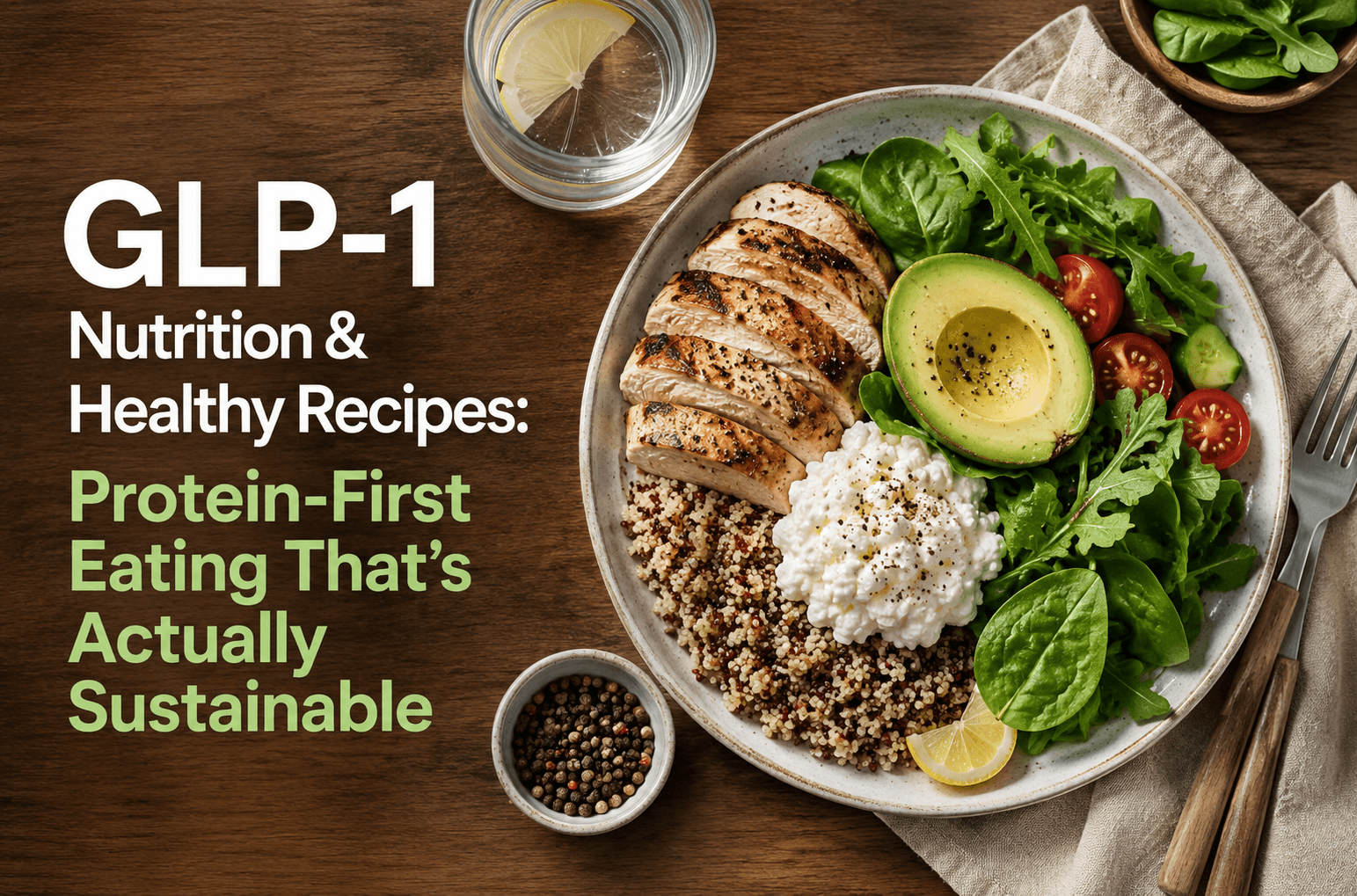
Best Diet While on GLP-1: Protein-First Meal Guide


If your appetite has changed on semaglutide, tirzepatide, Wegovy, Ozempic, Zepbound, or another GLP-1-related treatment, the question is not just how little you can eat. It is how to eat enough of the right foods when you feel full faster, get nauseated more easily, or struggle with constipation.
The best diet while on GLP-1 medication is usually a protein-first, fiber-aware, hydration-focused eating pattern that uses smaller portions without becoming overly restrictive. It should help preserve muscle, support digestion, reduce nausea triggers, and fit into normal life. For many patients, that means building meals around lean protein, soft or cooked vegetables, fruits, beans, whole grains, and simple recipes that are easy to repeat.
Quick Answer: The Best Diet While on GLP-1 Medication
The best diet while on GLP-1 medication is a sustainable pattern built around protein at each meal, fiber from tolerable plant foods, steady hydration, and smaller portions eaten slowly. Limit foods that worsen nausea or reflux, such as greasy, fried, very spicy, or very sugary foods. Nutrition should be individualized if side effects, diabetes, kidney disease, pregnancy, or other medical concerns are present.
Medical Disclaimer: Educational information only. Do not start, stop, or change any medication without speaking to your healthcare provider. If you have severe symptoms or think you’re having an emergency, call 911 or seek emergency care.
Why GLP-1 Nutrition Needs a Different Strategy
GLP-1-related medications can reduce appetite and slow stomach emptying. That can help some patients eat less, but it can also make large meals, greasy foods, or rushed eating harder to tolerate. Wegovy and Zepbound prescribing information lists gastrointestinal symptoms such as nausea, vomiting, diarrhea, constipation, abdominal pain, indigestion, belching, and heartburn among common side effects.
This is why the goal is not a crash diet. Eating too little can make fatigue worse, reduce protein intake, and make it harder to maintain muscle. A better approach is to make smaller meals more nutrient-dense.
A practical GLP-1 plate might look like this:
Meal priority
What it means
Examples
Protein first
Start with the food most likely to support muscle and fullness
Eggs, Greek yogurt, chicken, fish, tofu, beans, cottage cheese
Gentle fiber
Add fiber in forms your stomach tolerates
Oats, berries, cooked vegetables, lentils, beans, chia, quinoa
Hydration
Sip fluids through the day
Water, low-sugar electrolyte drinks when appropriate, broth
Smaller portions
Stop before uncomfortable fullness
Half portions, snack-sized meals, leftovers
Low-trigger foods
Reduce foods that worsen nausea or reflux
Fried foods, greasy meals, very spicy foods, large sugary portions
Maryland Trim Clinic offers nutritional counseling and coaching for patients who need a personalized nutrition plan rather than a generic meal list. The clinic’s service page describes one-on-one guidance, education, and accountability for sustainable weight loss and wellness.
The Protein-First Diet: What It Means on GLP-1s
A protein-first diet does not mean eating only meat or drinking shakes all day. It means you intentionally eat protein early in the meal because appetite may disappear before you finish your plate.
Protein matters during weight loss because calorie reduction can lead to loss of lean mass along with fat. The American Heart Association notes that the adult recommended dietary allowance for protein is 0.8 grams per kilogram of body weight per day, while protein can also make up 10% to 35% of daily calories. Some people losing weight or exercising may need a more individualized target, especially if they are older, physically active, or trying to preserve muscle.
A simple protein-first pattern:
Choose one protein anchor.
Add a fiber-containing food.
Add a small portion of carbohydrate or healthy fat if tolerated.
Eat slowly and stop before uncomfortable fullness.
Protein anchors that are usually easy to build around
Good options may include:
- Greek yogurt or skyr
- Eggs or egg bites
- Cottage cheese
- Chicken or turkey
- Salmon, tuna, shrimp, or white fish
- Tofu, tempeh, edamame, or soy milk
- Beans, lentils, or chickpeas
- Lean beef in smaller portions
- Protein smoothies when solid food feels too heavy
The American Medical Association recently highlighted a GLP-1 meal concept built around protein, fiber, and balanced macronutrients, using a Greek bean salad as an example of a practical, nutrient-dense meal.
Patients in a medical weight loss program may need protein targets adjusted around medical history, appetite, exercise, lab findings, and body-composition goals. MTC describes physician-led weight loss care with health assessments, personalized nutrition and exercise plans, behavioral coaching, and prescription medications when appropriate.
How Much Protein Should You Eat While Losing Weight?
A good starting point is to avoid going below basic protein needs, then individualize from there. The adult RDA is 0.8 grams per kilogram per day, but weight-loss patients may need a clinician or dietitian to help set a higher practical goal when appropriate.
For many people, a meal-based target is easier than doing math all day. A common practical approach is to aim for a protein source at breakfast, lunch, dinner, and possibly one snack. Some patients may tolerate 20 to 30 grams per meal, while others may need smaller protein portions more often because appetite is low.
The best target depends on factors such as:
- Current body size and body composition
- Age
- Strength training or activity level
- Kidney health
- Diabetes or other medical conditions
- Appetite and nausea
- Total calorie intake
- Whether weight loss is rapid
Do not force large amounts of protein if it worsens nausea, reflux, or fullness. A better option may be smaller servings spaced across the day.
High Fiber Diet for Weight Loss Without Making Nausea Worse
Fiber can support fullness, bowel regularity, blood sugar control, and heart health. It can also help with constipation, which some GLP-1 users experience. Cleveland Clinic describes protein and fiber as key nutrients to prioritize while taking GLP-1 medications, with fiber helping address constipation that may occur.
Still, more fiber is not always better on day one. If nausea, bloating, or constipation is active, suddenly adding large amounts of raw vegetables, bran, or beans may backfire.
Gentler fiber choices
Start with fiber sources that are easier to tolerate:
- Oatmeal
- Cooked carrots, zucchini, spinach, or green beans
- Berries
- Applesauce or peeled apples
- Lentil soup in small portions
- Chia pudding, if tolerated
- Quinoa or farro in small servings
- Beans mashed into soups, salads, or bowls
Higher-fiber foods to introduce slowly
These can be helpful, but may need gradual introduction:
- Large bean salads
- Raw cruciferous vegetables
- Big salads
- Bran cereals
- Large portions of lentils
- Fiber supplements
Expert consensus on managing GLP-1 gastrointestinal adverse effects emphasizes nutrition strategies such as smaller meals, avoiding foods that worsen symptoms, and individualized adjustment when nausea, vomiting, diarrhea, or constipation occurs.
GLP-1 Nausea Foods: What to Eat When Your Stomach Feels Off
GLP-1 nausea foods should be simple, lower in fat, and easy to portion. Cleveland Clinic notes that high-fat and spicy foods can contribute to gastrointestinal side effects because food remains in the stomach longer while on GLP-1 therapy.
Better tolerated options during nausea
Try small portions of:
- Plain Greek yogurt
- Scrambled eggs
- Toast with a light protein topping
- Banana
- Applesauce
- Broth-based soup
- Protein smoothie with a small scoop of protein powder
- Cottage cheese with berries
- Oatmeal
- Baked fish or chicken with cooked vegetables
Foods that may worsen nausea or heartburn
Common triggers include:
- Fried foods
- Large portions of pizza or fast food
- Cream-heavy meals
- Spicy sauces
- Very sugary foods or drinks
- Carbonated drinks, for some people
- Alcohol
- Large meals eaten quickly
Patients should also be careful not to reduce food intake so much that fatigue, dizziness, or weakness becomes a pattern. Persistent nausea, repeated vomiting, inability to keep fluids down, severe abdominal pain, or signs of dehydration should be discussed with a healthcare professional. Zepbound’s medication information advises patients to contact their provider for severe stomach problems or side effects that bother them or do not go away.
How to Prevent Constipation With Food Choices
Constipation prevention on GLP-1 treatment usually starts with steady hydration, gradual fiber, and regular movement. It is rarely solved by fiber alone.
A constipation-friendly eating pattern may include:
- Water or other low-sugar fluids spread through the day
- Cooked vegetables at one or two meals
- Oats, chia, or ground flax in small portions
- Beans or lentils introduced gradually
- Fruit such as berries, kiwi, pears, or prunes if tolerated
- Soups and stews for fluid plus fiber
- Walking or light activity after meals, if medically appropriate
Avoid jumping from very little fiber to a very high-fiber plan overnight. Fiber needs water. If appetite is low and fluid intake is poor, aggressive fiber loading may increase bloating or discomfort.
Constipation with severe abdominal swelling, vomiting, intense pain, or inability to pass stool or gas should not be treated as routine. Medical evaluation is appropriate when symptoms are severe or unusual.
Maryland Trim Clinic also offers metabolic testing and analysis, which may help patients understand resting metabolic needs and make nutrition planning more personalized. The clinic describes this service as using indirect calorimetry to measure resting metabolic rate and calorie needs.
Healthy GLP-1 Meal Ideas That Are Easy to Repeat
The best GLP-1 meal ideas are not necessarily fancy. They are meals you can tolerate, repeat, and adjust.
Breakfast ideas
Greek yogurt protein bowl
Use plain Greek yogurt, berries, chia seeds, and a small amount of nuts or granola if tolerated. This gives protein, fiber, and a soft texture.
Egg and veggie bites
Bake eggs with chopped spinach, peppers, cottage cheese, and a small amount of cheese. Keep portions small and pair with fruit if appetite allows.
Oatmeal with protein
Make oats with milk or soy milk, then add Greek yogurt or protein powder after cooking. Add berries or cinnamon.
Lunch ideas
Greek bean salad bowl
Use chickpeas or white beans, cucumber, tomato, parsley, a small amount of feta, grilled chicken or tuna if desired, and a lemon-yogurt dressing. Start with a smaller serving if beans cause bloating.
Chicken soup with vegetables
Use shredded chicken, carrots, celery, spinach, and a small amount of rice or quinoa. Soups can be easier when appetite is low.
Turkey and avocado lettuce wrap
Use turkey, hummus or avocado, cucumber, and lettuce. Add fruit on the side if tolerated.
Dinner ideas
Salmon, sweet potato, and cooked greens
This gives protein, a nutrient-dense carbohydrate, and fiber without relying on a large plate.
Tofu stir-fry with rice
Use tofu, cooked vegetables, ginger, and a modest portion of rice. Keep oil light if nausea is a concern.
Lean turkey chili
Use ground turkey, beans, tomatoes, peppers, and spices kept mild. Freeze small portions for easy meals.
Small snack ideas
- Cottage cheese with fruit
- Boiled egg
- Protein shake
- Edamame
- Tuna on whole-grain crackers
- Apple slices with a small amount of nut butter
- Hummus with soft pita or cooked vegetables
These meals can fit within a broader GLP-1 weight-loss injection plan when medication is appropriate and clinically supervised. MTC describes its GLP-1 service as physician-supervised care involving semaglutide and tirzepatide treatment options, follow-up, and monitoring.
Do You Need to Count Calories on GLP-1 Medication?
Not always. Some patients benefit from tracking calories for a limited period, especially if they are not losing weight, losing too quickly, under-eating, or struggling to meet protein needs. Others do better with a plate-based approach that focuses on protein, fiber, hydration, and portion awareness.
Counting calories can become counterproductive if it leads to anxiety, very low intake, or ignoring nutrition quality. A balanced approach may use a few anchor habits instead:
- Protein at each meal
- Vegetables or fruit daily
- Water throughout the day
- Smaller meals eaten slowly
- Planned snacks when appetite is too low for full meals
- Regular follow-up to review progress and side effects
A weight loss maintenance program may be useful after initial weight loss because maintaining results often requires different strategies than starting treatment. MTC describes its maintenance program as ongoing support, accountability, and education to help patients sustain healthy lifestyle changes.
How to Know Your GLP-1 Diet Is Not Sustainable
A plan may look healthy on paper and still fail in real life.
Warning signs include:
- You are skipping most meals because eating feels like a chore.
- You rely almost entirely on shakes.
- You are afraid to eat carbohydrates.
- Constipation is becoming frequent.
- Nausea is worse after most meals.
- You are losing strength or feeling unusually weak.
- You cannot eat socially without stress.
- Your diet has no plan for maintenance.
Sustainability is especially important because obesity treatment is often long-term. Patients may need to adjust food choices as appetite, weight, medications, activity, and side effects change.
MTC offers high-precision 3D body scanning, which may help patients track body-composition changes rather than relying only on scale weight. The clinic’s services page describes body scanning as a tool for tracking measurements, body composition, posture, and progress over time.
Building a Personalized GLP-1 Nutrition Plan in Laurel, MD
Patients in Laurel and nearby Maryland communities may need more than a list of recipes. GLP-1 nutrition should consider side effects, eating schedule, medication tolerance, cultural food preferences, body composition, metabolic needs, and medical history.
At Maryland Trim Clinic, relevant support may include medical weight loss care, GLP-1 treatment when appropriate, nutrition coaching, metabolic testing, body-composition tracking, and maintenance planning. The clinic’s services page describes physician-led care, personalized nutrition, clinician oversight, and follow-up.
A good consultation can help answer practical questions such as:
- Am I eating enough protein for my goals?
- Which foods are worsening nausea or reflux?
- How should I add fiber without bloating?
- Am I losing weight at a healthy pace?
- Do I need body-composition monitoring?
- What should maintenance look like after weight loss?
Not every patient needs every service. The right plan should match the person, not just the medication.
The Bottom Line
The best GLP-1 diet is not the strictest diet. It is the one that helps you eat enough protein, tolerate fiber, stay hydrated, reduce avoidable side effects, and keep meals realistic.
Start with protein first, add fiber gradually, choose gentler foods when nausea appears, and avoid large greasy or spicy meals if they trigger symptoms. Recipes should be simple enough to repeat on busy days. Medical guidance is especially important if side effects persist, appetite is extremely low, or you have diabetes, kidney disease, digestive problems, pregnancy plans, or other health concerns.
Frequently Asked Questions
How much protein should you eat while losing weight?
Protein needs vary, but the adult RDA is 0.8 grams per kilogram of body weight per day. Some people losing weight may need more individualized targets to help preserve lean mass, especially if they are active, older, or losing weight quickly. A practical starting habit is to include a protein source at each meal, then adjust with clinician or dietitian guidance.
What foods help with GLP-1 nausea and heartburn?
Small, lower-fat, bland or gently seasoned foods may be easier to tolerate. Examples include Greek yogurt, oatmeal, eggs, broth-based soup, bananas, applesauce, baked fish, chicken, and smoothies with modest portions. Greasy, fried, very spicy, very sugary, or very large meals may worsen nausea or reflux for some patients. Persistent vomiting, severe pain, or inability to keep fluids down needs medical review.
How can you prevent constipation with food choices?
Constipation prevention often starts with hydration, gradual fiber, and regular movement. Helpful foods may include oats, berries, cooked vegetables, beans, lentils, chia, flax, soups, and fruit such as pears or prunes if tolerated. Increase fiber slowly and drink enough fluids. Severe constipation with pain, vomiting, swelling, or inability to pass stool or gas should be evaluated medically.
Do you need to count calories to lose weight on GLP-1 medication?
You do not always need to count calories, but some patients benefit from temporary tracking. If calorie tracking helps you meet protein, fiber, and hydration goals without becoming restrictive, it may be useful. If it causes stress or leads to under-eating, a plate-based approach with medical or nutrition guidance may be more sustainable.
What is a protein-first diet?
A protein-first diet means eating the protein portion of your meal before filling up on other foods. This can be helpful on GLP-1 medication because appetite may drop quickly. Protein-first eating may include eggs, Greek yogurt, chicken, fish, tofu, beans, cottage cheese, or protein smoothies. It should still include fiber, fluids, and balanced meals.
Are smoothies good GLP-1 meal ideas?
Smoothies can be useful when solid food feels too heavy, but they should not become the whole diet. A balanced smoothie may include Greek yogurt or protein powder, fruit, spinach, and liquid such as milk, soy milk, or water. Keep portions moderate because very large smoothies can still cause fullness, nausea, or reflux.
What should you avoid eating while on GLP-1 medication?
You may need to limit foods that worsen your own symptoms. Common triggers include fried foods, greasy meals, large portions of fast food, very spicy foods, sugary drinks, alcohol, and large meals eaten quickly. Cleveland Clinic notes that high-fat and spicy foods can contribute to gastrointestinal side effects in some people taking GLP-1 medications.
Can GLP-1 medication make you eat too little?
Yes, some patients may eat too little because appetite drops significantly or nausea makes meals unappealing. Under-eating can make it harder to meet protein, fiber, fluid, and micronutrient needs. If you are skipping most meals, feeling weak, or unable to eat enough, speak with your healthcare provider or a qualified nutrition professional.
Make GLP-1 Nutrition Easier to Sustain
If you are taking or considering GLP-1 treatment, Maryland Trim Clinic can help you think beyond the medication itself. A personalized evaluation may review your nutrition, side effects, body-composition goals, metabolic needs, and long-term maintenance plan. Patients in Laurel, MD and nearby communities can contact Maryland Trim Clinic to ask about medical weight loss support and current treatment options.
Make GLP-1 Nutrition Easier to Sustain
If you are taking or considering GLP-1 treatment, Maryland Trim Clinic can help you think beyond the medication itself. A personalized evaluation may review your nutrition, side effects, body-composition goals, metabolic needs, and long-term maintenance plan. Patients in Laurel, MD and nearby communities can contact Maryland Trim Clinic to ask about medical weight loss support and current treatment options.