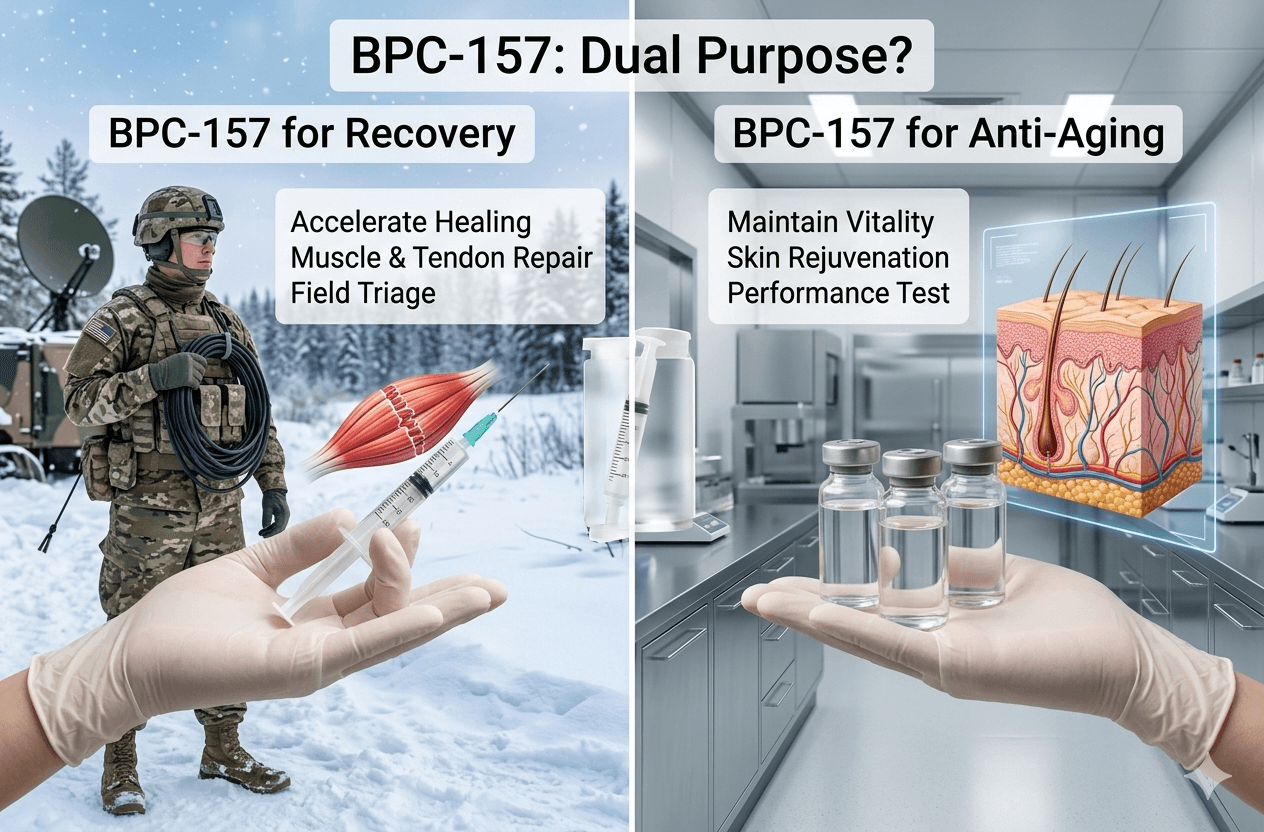
BPC-157: Is It a Miracle Recovery Peptide or an Anti-Aging Tool?

Athletes take BPC-157 to heal faster. Anti-aging researchers think it's doing something far more important.
That tension, between BPC-157 as a sports recovery shortcut and BPC-157 as a genuine longevity compound, sits at the center of one of the most quietly debated peptides in modern health science. If you're an active adult over 35, you've probably heard the name dropped in conversations about nagging tendon injuries, leaky gut, or someone's suspiciously fast comeback from knee surgery.
What you're less likely to have heard is a clear, honest breakdown of what the science actually says, what the safety risks are, and why this specific compound is attracting intense attention from two very different audiences at once.
This article is that breakdown.
ACT 1: What BPC-157 Actually Is — And How It Works at the Cellular Level
BPC-157 stands for Body Protection Compound-157. It's a synthetic pentadecapeptide — a chain of 15 amino acids — derived from a protective protein found naturally in human gastric juice.
That origin point matters. This is not some exotic, alien molecule invented from scratch in a lab. It is a stabilized, isolated sequence that appears to amplify the repair processes the human body already runs. The compound was first isolated by Croatian researcher Dr. Predrag Sikiric in the 1990s. Since then, thousands of animal studies have explored its effects, and the consistency of the results across different injury types is what keeps researchers paying attention.
Angiogenesis: Building the Infrastructure of Healing
At the cellular level, BPC-157's most heavily studied mechanism is its ability to promote angiogenesis — the formation of new blood vessels.
This is the absolute foundation of healing. When tissue is damaged (whether it's a torn ligament, a surgical wound, or a chronically inflamed gut), the body must deliver oxygen and nutrients to the site to repair it. New capillary networks are the required delivery infrastructure.
According to research indexed by the National Institutes of Health (NIH), BPC-157 appears to upregulate the expression of VEGFR2 (Vascular Endothelial Growth Factor Receptor 2), a key signaling receptor that tells the body to build these new vascular networks. In multiple animal studies, this translates directly to faster wound closure, accelerated tendon-to-bone healing, and improved muscle recovery.
The Nitric Oxide Pathway
BPC-157 also interacts heavily with the nitric oxide (NO) system, which regulates blood flow, inflammation, and cellular communication. Research suggests the peptide helps stabilize NO production. This is particularly relevant during oxidative stress, when NO signaling tends to break down.
This mechanism helps explain why BPC-157 appears to be both pro-healing and anti-inflammatory simultaneously: it isn't simply flooding the system with one blind signal; it is helping normalize a biological pathway that aging and injury naturally disrupt.
Tendon and Ligament Repair: Why Athletes Pay Attention
Tendons and ligaments are notoriously slow healers because they have poor blood supply and limited regenerative capacity. This is why a partial ACL tear or severe tennis elbow in a 40-year-old often becomes a multi-year ordeal.
In rodent models, BPC-157 has demonstrated the ability to:
- Accelerate tendon-to-bone reattachment
- Increase collagen synthesis
- Improve the organization of healing fibers (promoting functional recovery rather than just rigid scar tissue)
For an active adult dealing with patellar tendinopathy or an Achilles strain, this mechanism is incredibly compelling. But here is where the story gets even more interesting: the same pathways BPC-157 activates for musculoskeletal healing are deeply relevant to biological aging—particularly in the gut.
ACT 2: The Gut-Longevity Connection — Where BPC-157 Gets Genuinely Interesting
The gut lining is one of the most actively renewing tissues in the human body, and it's one of the first to show severe signs of dysfunction as we age.
By your mid-30s, chronic low-grade inflammation, poor diets, stress, and medication use (particularly NSAIDs like ibuprofen) begin to compromise your intestinal barrier. The result is informally called "leaky gut" — a state where the tight junctions between intestinal cells become permeable, allowing bacterial fragments and undigested proteins to leak into your systemic circulation.
Increased intestinal permeability is linked in peer-reviewed literature to chronic inflammation, autoimmune conditions, and metabolic dysfunction.
BPC-157 and the Gut Lining
Because BPC-157 was originally isolated from gastric juice, its most robust research base involves gut tissue. In animal models, BPC-157 has demonstrated:
- Accelerated intestinal wound healing: Highly relevant for conditions mimicking inflammatory bowel disease (IBD).
- Reduction of gut inflammation: Achieved through the modulation of pro-inflammatory cytokines.
- Restoration of tight junctions: Directly addressing the mechanism behind intestinal permeability.
- Protection from NSAID damage: Ibuprofen and aspirin are known to damage the gastric mucosa; BPC-157 appears to counteract this effect in rodent studies.
(Note: Active adults who regularly use NSAIDs to manage training soreness may be creating gut damage with one hand while trying to heal physical injuries with the other.)
Systemic Inflammation and the Aging Body
Anti-aging researchers care about BPC-157 because gut-derived systemic inflammation — often called "inflammaging" — is a primary driver of biological aging.
When the gut barrier is compromised, bacterial lipopolysaccharides (LPS) leak into the bloodstream and trigger a chronic immune response. Over decades, this constant low-level alarm contributes to cardiovascular disease, cognitive decline, and accelerated cellular aging.
If BPC-157 can genuinely restore gut barrier function and reduce this systemic inflammatory signaling, its implications extend far beyond sports recovery. In theory, it becomes a tool for interrupting one of the core feedback loops of aging itself.
The Critical Caveat: Rodent Data Is Not Human Data
It is essential to state this clearly: the overwhelming majority of BPC-157 research has been conducted in animal models. As of this writing, there are no completed, published Phase II or Phase III human clinical trials for BPC-157. It has not been approved by the FDA, the EMA, or any equivalent regulatory body for clinical use. While animal data is how many important drugs begin, the dose-response curves, long-term safety profiles, and true efficacy in human populations remain unknown.
ACT 3: The Reality Check — Legal Status, Sourcing Risks, and What to Consider
Where BPC-157 Stands Legally
BPC-157 occupies a highly uncomfortable regulatory gray zone that is rapidly shrinking.
- United States: The U.S. Food and Drug Administration (FDA) recently moved to restrict BPC-157's use in compounded medications, citing a lack of human clinical evidence and safety data. It is not an approved drug or dietary supplement.
- Australia: It is a Schedule 4 prescription-only substance.
- UK/EU: It is not an approved medicine, and selling it as one is illegal.
- Sports: The World Anti-Doping Agency (WADA) has BPC-157 on its monitoring list.
The Sourcing Problem: What's Actually in That Vial?
Because BPC-157 is not FDA-regulated, the peptide sold online—almost always labeled "for research purposes only"—is produced without any regulatory oversight. Independent testing of research peptides has repeatedly found:
- Incorrect concentrations (vials containing wildly more or less than labeled)
- Contamination (bacterial endotoxins, heavy metals, or residual solvents)
- Mislabeling (selling a completely different, cheaper compound as BPC-157)
For a compound that users typically administer via subcutaneous injection, contamination is not a trivial concern. Injecting non-sterile material is a direct pathway to infection, abscesses, and serious systemic illness.
Who Should Absolutely Not Use BPC-157
Given the lack of human safety data, certain populations face severe unknown risks:
- Cancer patients (or those with a history of cancer): Angiogenesis is a double-edged sword. The exact mechanism that helps heal injuries also potentially builds the blood vessels that support tumor growth.
- Pregnant or breastfeeding individuals: Zero safety data exists.
- Those on immunosuppressive medication: The immunomodulatory effects of BPC-157 are entirely unmapped in humans.
Maryland Trim Clinic (MTC) in Laurel, MD
Navigating the complex world of peptides, systemic inflammation, and recovery should never be a DIY internet experiment. If you are struggling with chronic pain, poor recovery, or metabolic issues, seeking professional clinical guidance is the only way to ensure your safety and success.
The Maryland Trim Clinic (MTC) in Laurel, MD, offers a medically supervised, evidence-based approach to wellness and longevity. Rather than guessing with unregulated compounds, the MTC team focuses on addressing the root causes of aging and inflammation through comprehensive lab testing and targeted treatments. Whether you are looking to optimize your body composition and reduce joint stress through a structured medical weight loss program, or you want to address age-related decline with balanced, clinically monitored hormone replacement therapy, finding a qualified clinical partner is essential. The dedicated providers at the Maryland Trim Clinic prioritize your long-term health, ensuring that every intervention is legally compliant, safely sourced, and tailored to your specific biology.
The Honest Bottom Line
BPC-157 is one of the most scientifically interesting peptides in the current landscape. This isn't because the human evidence is strong, but because the animal evidence is unusually consistent across a wide range of systems. The gut-healing and anti-inflammatory mechanisms are highly relevant to the biology of aging and deserve serious research funding.
But "scientifically interesting" and "proven safe for human use" are not the same thing.
The legal barriers are real, the sourcing risks are massive, and the absence of human clinical trials is a genuine gap. The athletes using BPC-157 right now are running an n=1 experiment on themselves. Some will report remarkable results, some will experience the placebo effect, and a small number may be taking on medical risks they don't yet understand.
Address your fundamentals first. Many of the gut-healing effects BPC-157 is theorized to produce can be supported through dietary changes, sleep optimization, and proven interventions. The science of BPC-157 is genuinely promising, but the human chapter of that science hasn't been written yet.
Frequently Asked Questions
Q: What is BPC-157 and where does it come from? A: BPC-157 stands for Body Protection Compound-157. It is a synthetic peptide made of 15 amino acids, derived from a protective sequence found naturally in human gastric (stomach) juice. Researchers isolated it to study its potential therapeutic effects on tissue repair and gut health.
Q: Has BPC-157 been tested in human clinical trials? A: No. The vast majority of BPC-157 research has been conducted in animal models (primarily rodents). There are no completed, published Phase II or Phase III human clinical trials, meaning its human efficacy and long-term safety profiles remain formally unestablished.
Q: Is BPC-157 legal to buy and use? A: BPC-157 exists in a shrinking regulatory gray zone. In the U.S., the FDA restricts its use in compounding pharmacies, and it is not an approved drug or dietary supplement. Buying it online labeled as a "research chemical" is a legal loophole that carries massive product safety risks.
Q: What are the primary mechanisms through which BPC-157 works? A: BPC-157 primarily works by promoting angiogenesis (the formation of new blood vessels) to accelerate healing. It also modulates the nitric oxide pathway to support blood flow and reduce inflammation, and it stimulates collagen synthesis.
Q: Why are anti-aging researchers interested in BPC-157? A: Researchers are interested because BPC-157 targets gut barrier function and systemic inflammation ("inflammaging"), which are central to biological aging. If BPC-157 can restore gut integrity and stop inflammatory signaling, it could theoretically interrupt a core driver of accelerated aging.
Q: What are the risks of sourcing BPC-157 from online suppliers? A: Online research peptide suppliers operate without FDA oversight. Independent testing frequently finds products with incorrect dosing, bacterial contamination, and residual solvents. Injecting contaminated, non-sterile material presents a serious risk of systemic infection.
Q: Should people with a history of cancer use BPC-157? A: No. Because BPC-157 promotes angiogenesis (new blood vessel formation), there is a strong theoretical concern that it could build the blood vessels necessary to support tumor growth. Anyone with a history of cancer should avoid this compound.
Q: What are some evidence-based alternatives to BPC-157 for gut health? A: For gut lining support, several interventions have stronger human evidence: zinc carnosine for gastric mucosal protection, L-glutamine for enterocyte energy, and dietary changes (increased fiber, reduced processed foods).
Ready to Optimize Your Health Safely?
Would you like me to help you draft a checklist of foundational, evidence-backed gut health strategies you can implement right away without the use of experimental peptides?