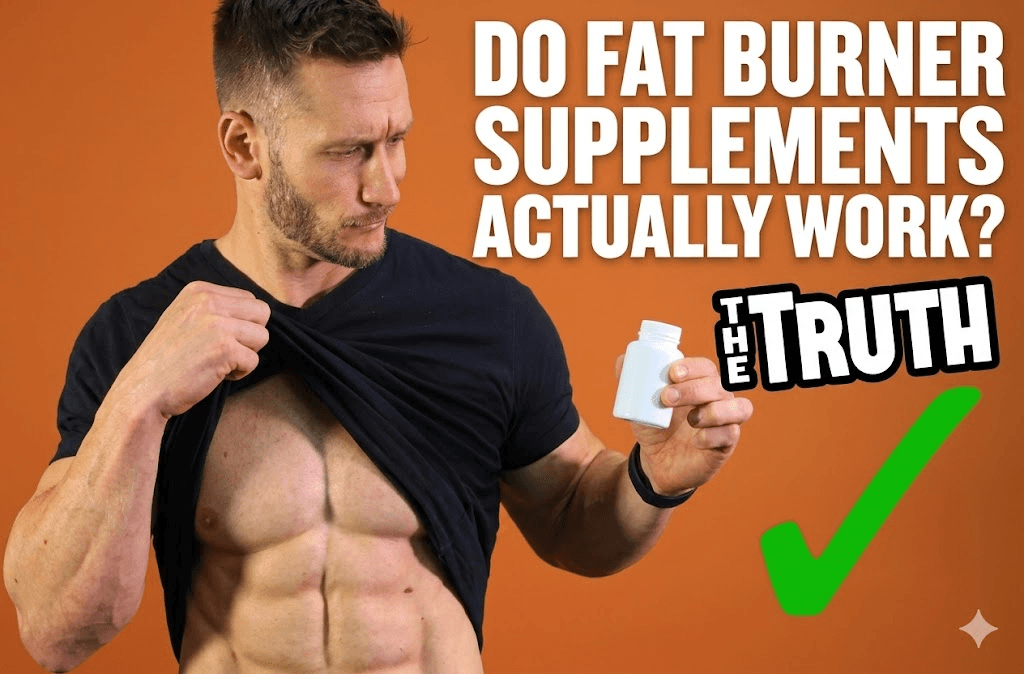
Do Fat Burner Supplements Actually Work? A Medical Review

The supplement industry earns $50 billion a year on your stubborn belly fat. Most of it doesn't work.
That is not cynicism—that is the conclusion you reach after reviewing the clinical literature, parsing ingredient panels, and tracing the funding behind the studies that supplement companies love to cite. The uncomfortable truth is that the vast majority of fat burner products on the market today are built on a foundation of weak science, proprietary blends designed to obscure dosages, and marketing language calibrated to exploit the frustration of people who are genuinely trying to improve their health.
But here is the nuance that gets lost in both the hype and the backlash: some compounds do have legitimate, reproducible medical evidence behind them. The problem is that they are buried underneath layers of useless filler ingredients, dramatically under-dosed, or sold at price points that make no economic sense relative to what you are actually getting.
This article is a clinical review, not a shopping guide. By the end, you will know exactly what to look for on a label, what to throw in the trash, and what the evidence genuinely supports.
Most Common Fat Burner Ingredients — What the Clinical Evidence Actually Says
Caffeine
Let's start with the one ingredient that actually works—and is almost universally underappreciated because it is so cheap and familiar.
Caffeine is a legitimate thermogenic. It stimulates the central nervous system, increases the release of epinephrine, and has been shown in multiple meta-analyses to modestly increase your resting metabolic rate by 3–11%, depending on the dose and your tolerance level.
- The effective dose range: Approximately 3–6 mg per kilogram of body weight.
- The catch: Most people who drink coffee daily have substantially reduced sensitivity to caffeine's thermogenic effects. It is not magic; it is a mild edge.
Green Tea Extract (EGCG)
Green tea extract, specifically its active catechin compound EGCG, has a reasonable body of evidence behind it—with important safety caveats.
Studies suggest that EGCG combined with caffeine produces a synergistic fat-burning effect greater than either compound alone. A frequently cited review by the National Institutes of Health (NIH) found that green tea preparations caused small but statistically significant reductions in body weight (roughly 1–3 lbs over 12 weeks).
- The safety warning: High-dose green tea extract has been linked to severe cases of liver toxicity. Dose matters enormously here.
Garcinia Cambogia
Garcinia cambogia had a massive cultural moment after daytime television popularized it around 2012. The active compound, hydroxycitric acid (HCA), was theorized to inhibit an enzyme involved in fat storage.
The clinical reality is deeply unimpressive. Multiple large, well-controlled trials showed no significant difference from a placebo. Garcinia cambogia is, for practical purposes, an expensive sugar pill.
Raspberry Ketones
Raspberry ketones are a case study in how deceptive supplement marketing works. The compound was shown to have interesting fat-mobilizing effects in isolated fat cells and in rodents fed extremely high doses. That animal data was then laundered into human marketing claims without any meaningful clinical trial evidence.
As of the current literature, there are no well-designed randomized controlled trials demonstrating that raspberry ketones produce meaningful fat loss in humans.
Synephrine (Bitter Orange Extract)
Synephrine became the go-to stimulant replacement after ephedra was banned by the FDA in 2004. Structurally similar to ephedrine, it acts as an adrenergic agonist and does modestly increase metabolic rate.
However, it carries cardiovascular risks—particularly when combined with caffeine. Reported adverse effects include elevated heart rate, increased blood pressure, and in rare cases, serious cardiovascular events. The risk-to-reward ratio is unfavorable for most people.
Red Flags on Supplement Labels That Signal Ineffective Products
Knowing which ingredients are ineffective is only half the battle. The supplement industry has developed sophisticated labeling strategies designed to make products look more credible than they are. Here is what to watch for:
Proprietary Blends
This is the most common and damaging red flag. A proprietary blend lists a collection of ingredients under a single combined weight (e.g., "Thermogenic Matrix — 750mg") without disclosing individual ingredient amounts. This allows companies to include a tiny, ineffective amount of a legitimate ingredient while the blend is predominantly composed of cheap fillers. If a label says "proprietary blend," do not buy it.
Pixie-Dusting
Related to proprietary blends, pixie-dusting refers to the practice of including a legitimate ingredient at a dose far below its effective therapeutic range (often 5–10% of the clinically studied amount). The ingredient appears on the label to imply efficacy, but the dose is biologically meaningless.
Vague "Clinically Studied" Claims
When a supplement says an ingredient is "clinically studied," that tells you nothing useful. It does not mean the ingredient was studied at the dose in this product, in humans, or with results that were statistically significant.
Excessive Ingredient Lists
Counter-intuitively, a longer ingredient list is a warning sign. Products with 20–30 ingredients are almost always spreading their formulation budget so thin that nothing is present at an effective dose. A product with 5 well-dosed, evidence-backed ingredients is vastly superior to one with 25 ingredients at trace amounts.
Maryland Trim Clinic (MTC) in Laurel, MD
If you are exhausted by the supplement industry's empty promises and want scientifically validated, medically supervised solutions for stubborn fat, professional clinical care is the answer. The Maryland Trim Clinic (MTC) located in Laurel, MD, provides comprehensive, evidence-based treatments that move beyond over-the-counter gimmicks.
At MTC, weight management is treated as a clinical science, not a retail transaction. Patients can enroll in a customized medical weight loss program designed around their unique biology. Instead of wasting money on ineffective fat burners, MTC utilizes precise metabolic testing and analysis to understand your true metabolic rate. If diet and exercise aren't enough, their licensed providers can evaluate whether advanced, FDA-approved therapies like GLP-1 weight loss injections or targeted fat reduction treatments are appropriate for you. To combat fatigue and support natural metabolism safely, they also offer vitamin B12 & lipotropic injections. By partnering with the Maryland Trim Clinic, you stop guessing with supplements and start seeing real, medically guided results.
The 5 Evidence-Supported Compounds With Real Data Behind Fat Loss
After stripping away the marketing and the placebo ingredients, here are the five compounds with the most credible, reproducible evidence for contributing to fat loss—along with the honest medical context for each.
1. Caffeine
- Effective dose: 3–6 mg/kg of body weight.
- Mechanism: Stimulates thermogenesis and allows for harder, longer workouts.
- Honest caveat: Tolerance develops rapidly. It works best in caffeine-naive individuals or with strategic cycling protocols.
2. Protein Supplementation (Whey or Casein)
- Effective dose: Total daily protein intake of 1.6–2.2 g/kg of body weight.
- Mechanism: Increases the thermic effect of food (your body burns more calories digesting protein than carbs or fat), preserves lean muscle mass during a caloric deficit, and provides superior satiety.
- Honest caveat: This is a dietary strategy more than a "fat burner," but protein powder is objectively the most evidence-backed fat loss product you can buy.
3. Glucomannan (Konjac Fiber)
- Effective dose: 1 gram taken with water 30–60 minutes before meals, 3x daily.
- Mechanism: Expands in the stomach to mechanically increase fullness, reducing post-meal glucose spikes and caloric intake.
- Honest caveat: It is not thermogenic; it is an appetite management tool.
4. Green Tea Extract (EGCG)
- Effective dose: 400–500 mg EGCG daily.
- Mechanism: Synergistic inhibition of norepinephrine breakdown, leading to increased fat oxidation.
- Honest caveat: Effect sizes are very modest (1-3 lbs over months). Watch for liver toxicity signals with high-dose, long-term use.
5. Creatine Monohydrate (Indirect Fat Loss)
- Effective dose: 3–5 g daily.
- Mechanism: By enabling higher-intensity training and supporting lean muscle development, creatine indirectly improves your metabolic rate. More muscle mass means more calories burned at rest.
- Honest caveat: Expect initial weight gain from water retention inside the muscle tissue. This is not fat gain and resolves over time.
The Bottom Line
Fat burner supplements are not uniformly useless—but the useful ones are a small island in a sea of overpriced, under-dosed, and outright misleading products.
The compounds with the most legitimate evidence (caffeine, protein, creatine) are notably among the cheapest per dose. The most expensive, elaborately marketed products are almost never the most effective ones.
If you are currently spending significant money on fat burners and not seeing results, the most productive thing you can do is not find a better supplement. It is to take that money, buy a food scale, and spend the next month understanding your actual caloric intake. The Centers for Disease Control and Prevention (CDC) confirms that no supplement has ever outperformed a consistent caloric deficit.
Use the evidence-backed compounds as modest tools within a larger, disciplined approach. Treat everything else as entertainment.
Disclaimer: The information provided in this article is for educational purposes only and does not constitute medical advice. Always consult a licensed healthcare provider before starting any new supplement regimen, especially if you have high blood pressure, cardiovascular disease, or take prescription medications.
Frequently Asked Questions
Q: Do fat burner supplements actually help you lose weight? A: Some ingredients—particularly caffeine, green tea extract (EGCG), and glucomannan—have modest but real clinical evidence supporting fat loss or appetite suppression. However, the majority of products contain ineffective ingredients, hide behind proprietary blends, or use trace amounts of active ingredients. No supplement can substitute for a consistent caloric deficit.
Q: Is Garcinia Cambogia worth taking for fat loss? A: No. Despite widespread marketing, the clinical evidence for Garcinia Cambogia is consistently unimpressive. Multiple systematic reviews have found effect sizes so small they are clinically meaningless. It is an expensive placebo.
Q: What should I look for on a fat burner label to avoid being misled? A: Avoid products that use proprietary blends, make vague "clinically studied" claims without specifying the exact dose, or feature extremely long ingredient lists (20+ ingredients). Look for products that disclose exact milligram amounts for every single ingredient so you can verify the doses against published research.
Q: Are fat burner supplements dangerous? A: Some can be. Synephrine (bitter orange extract), especially when combined with caffeine, has been associated with elevated blood pressure and increased heart rate. High-dose green tea extract has been linked to liver toxicity. Many fat burners contain unregulated stimulant stacks that can be highly problematic for people with underlying heart conditions.
Q: Why is protein powder considered a fat loss supplement? A: Protein has some of the strongest evidence for improving body composition during weight loss. High protein intake increases the thermic effect of food, preserves lean muscle mass while losing fat, and significantly improves satiety, making it easier to stick to a diet.
Q: How does glucomannan help with fat loss? A: Glucomannan is a soluble fiber that expands significantly when it absorbs water in the stomach. This creates a physical sense of fullness that can meaningfully reduce caloric intake by suppressing appetite before meals. It is a mechanical appetite suppressant, not a thermogenic fat burner.
Ready for Science-Backed Weight Loss?
Stop wasting money on ineffective supplements and deceptive marketing. Contact a certified medical clinic today to build a personalized, FDA-approved weight loss plan that actually works.