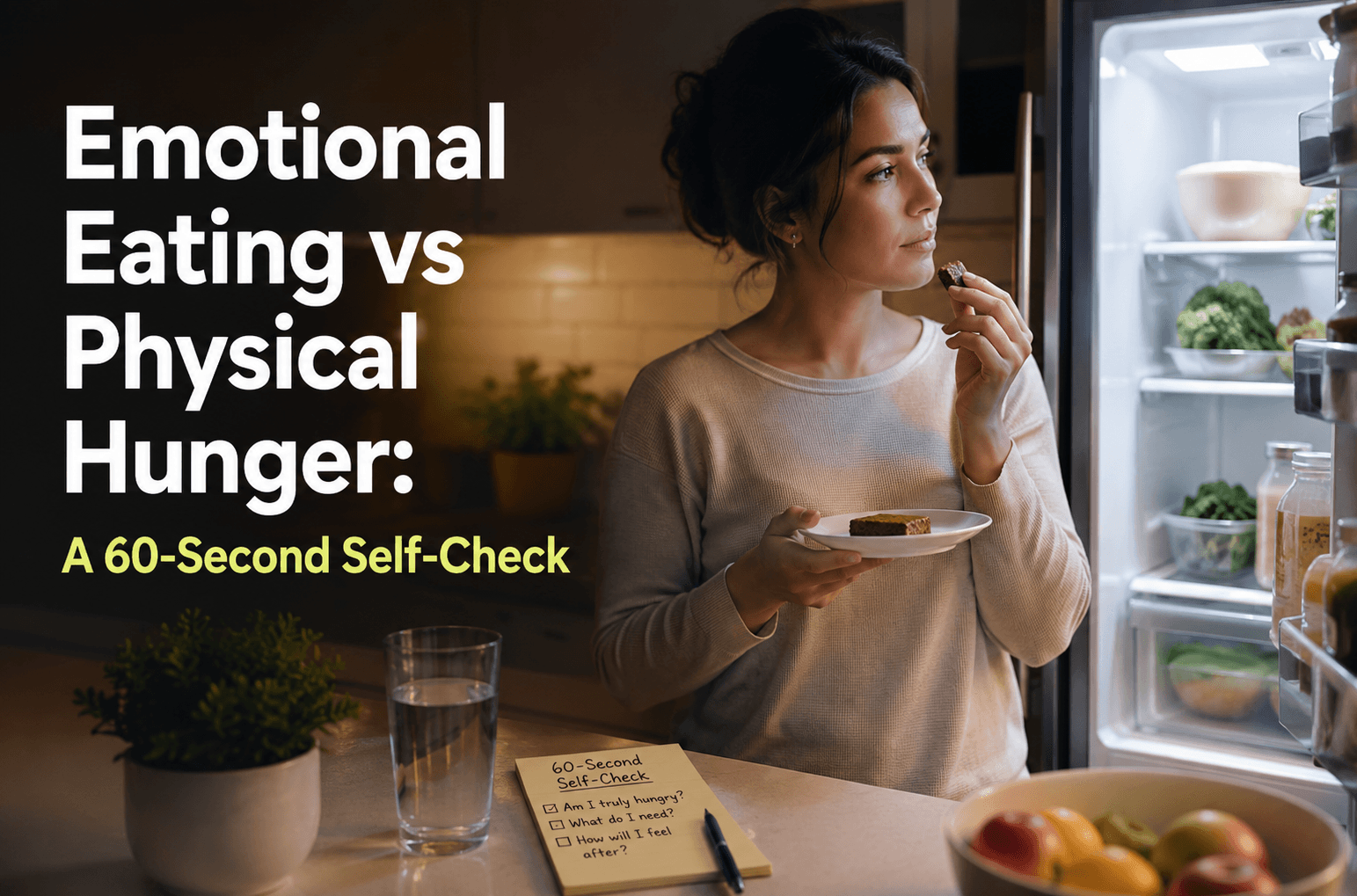
Emotional Eating vs Hunger: 60-Second Self-Check


A craving can feel urgent enough to sound like hunger, especially after a stressful workday, an argument, boredom, poor sleep, or a long stretch without a proper meal. The challenge is that emotional eating vs hunger is not always obvious in the moment. Both can involve food, appetite, and real body sensations.
Emotional eating means eating mainly in response to feelings, stress, boredom, or discomfort rather than physical hunger. Physical hunger is the body’s biological need for energy and nutrients. The goal is not to judge either one. The goal is to pause long enough to understand what your body or mind is asking for, then choose a response that supports your health.
Emotional Eating vs Hunger: The Quick Answer
Physical hunger usually builds gradually, can be satisfied by different foods, and is connected to body cues such as an empty stomach, low energy, or shakiness. Emotional eating often feels sudden, specific, and tied to stress, boredom, sadness, anxiety, reward, or comfort. A 60-second pause can help you tell the difference before reacting.
Medical Disclaimer: Educational information only. Not a substitute for professional medical advice, diagnosis, or treatment. For personalized guidance, consult a qualified clinician.
The 60-Second Self-Check
Use this before eating when you are unsure whether you are physically hungry, emotionally triggered, or both.
Step 1: Name the feeling
Ask yourself: What am I feeling right now?
Choose one word if possible: stressed, tired, bored, lonely, angry, anxious, overwhelmed, disappointed, rushed, or physically hungry.
Naming the feeling matters because emotional eating often begins before the food decision. Mayo Clinic notes that cravings may feel strongest when a person is emotionally vulnerable, such as when stressed, bored, or facing a difficult problem. (mayoclinic.org)
Step 2: Check the body
Ask: What physical hunger signals do I notice?
Look for:
- Stomach emptiness
- Low energy
- Mild shakiness
- Headache
- Difficulty concentrating
- A gradual increase in appetite
- Relief at the idea of eating a balanced meal
If several body cues are present, you may be physically hungry, even if emotions are also involved.
Step 3: Check the craving pattern
Ask: Would I eat a normal meal or only one specific food?
Physical hunger is usually flexible. You may prefer one food, but several options would work.
Emotional hunger often says, “Only chips,” “Only ice cream,” “Only fast food,” or “Only something sweet right now.”
Step 4: Ask what else might help
Ask: What do I need besides food?
Possible answers include rest, quiet, a short walk, a call with someone safe, water, a real meal, sleep, a boundary, or a break from screens.
Food can be part of the response. It does not have to be the only response.
Emotional Eating vs Physical Hunger: Key Differences
Question
Physical hunger
Emotional eating
How does it begin?
Often gradual
Often sudden or linked to a trigger
What food sounds good?
Many foods may work
Usually a specific food or texture
What does the body feel?
Empty stomach, low energy, shakiness, focus changes
Urgency, tension, restlessness, stress, boredom
What happens after eating?
Satisfaction and steadier energy
Relief may be brief, followed by guilt or frustration
What solves it best?
A meal or snack
Sometimes food, but often also coping, rest, support, or stress relief
This table is a guide, not a diagnosis. Many eating moments are mixed. You can be physically hungry and emotionally stressed at the same time.
Signs of Emotional Eating
Emotional eating is common and can happen occasionally without meaning something is wrong with you. Research has traditionally defined emotional eating as overeating in response to negative emotions, but researchers also note that the concept is complex and not always easy to measure. (pmc.ncbi.nlm.nih.gov)
Common signs include:
- Eating after stress, conflict, boredom, loneliness, sadness, or fatigue
- Feeling an urgent need for a specific food
- Eating quickly or while distracted
- Continuing to eat after comfortable fullness
- Using food to reward, numb, distract, or calm yourself
- Feeling guilt, shame, or frustration afterward
- Repeating the pattern even when you planned not to
- Noticing that cravings appear more often during certain moods or situations
One episode of emotional eating does not define your health. A pattern that happens frequently, feels out of control, or causes distress deserves more support.
Maryland Trim Clinic’s medical weight loss program includes behavioral and emotional support as part of its physician-led weight-management approach. The clinic describes helping patients build healthier habits, address emotional eating, and improve mindset within a broader medical plan. (marylandtrimclinic.com)
Cravings vs Hunger: Why the Difference Matters
A craving is a strong desire for a specific food. Hunger is a broader biological need to eat.
Cravings are not automatically bad. They can come from habit, memory, environment, stress, lack of sleep, food restriction, or normal pleasure. The problem starts when every craving is treated like an emergency.
If you are physically hungry, the answer may be food. If you are emotionally activated, food may provide short-term comfort, but it may not solve the stressor that triggered the craving.
Try this simple distinction:
- Hunger asks for nourishment.
- A craving asks for a specific experience.
- Emotional eating often asks for relief.
That does not mean you can never eat the craved food. It means you pause long enough to decide rather than react.
How to Pause a Craving Without Fighting Yourself
Many people try to stop emotional eating by using willpower alone. That often creates a cycle of restriction, cravings, overeating, and guilt.
A better pause is firm but nonjudgmental.
The 3-minute craving pause
Put a small delay between the urge and the action.Tell yourself, “I can eat if I still want to. First, I will pause for three minutes.”
Change your physical state.Stand up, stretch, drink water, step outside, breathe slowly, or move to another room.
Name the trigger.Ask, “What happened right before this craving?”
Choose with intention.Eat a planned snack, eat the craved food slowly, prepare a real meal, or use another coping strategy first.
This is mindful eating in practical form. Mindful eating encourages attention to hunger, fullness, emotions, and the sensory experience of food. A review of mindful eating describes it as a practice that can help people observe eating cues and stress-related eating patterns with more awareness. (pmc.ncbi.nlm.nih.gov)
A mindful pause is not punishment. It is a way to regain choice.
What to Do If You Are Actually Hungry
Sometimes emotional eating advice accidentally teaches people to distrust hunger. That can backfire.
If the 60-second check shows real physical hunger, eat. Skipping meals can increase later cravings, make hunger feel urgent, and make emotional regulation harder.
A balanced meal or snack may include:
- Protein, such as eggs, yogurt, fish, chicken, beans, tofu, or cottage cheese
- Fiber, such as vegetables, fruit, beans, lentils, or whole grains
- Fluids, especially water
- Enough food to feel satisfied, not stuffed
Patients working on weight loss may benefit from nutritional counseling and coaching, especially if they are unsure how to build meals that are satisfying without being overly restrictive. Maryland Trim Clinic describes its nutrition coaching as personalized guidance, education, and accountability for sustainable weight loss and wellness. (marylandtrimclinic.com)
Stress Eating Signs That Need More Than a Quick Tip
Stress eating becomes more concerning when it is frequent, distressing, secretive, or feels out of control.
Watch for these patterns:
- Eating to the point of discomfort
- Eating very quickly
- Eating when not physically hungry
- Eating alone because of embarrassment
- Feeling guilt, shame, or loss of control afterward
- Restricting food severely after an overeating episode
- Thinking about food constantly
- Avoiding social events because of food or body concerns
These signs can overlap with binge eating disorder, but they do not prove a diagnosis. The National Institute of Diabetes and Digestive and Kidney Diseases explains that binge eating involves eating a large amount of food in a short period and feeling unable to control what or how much you eat. If this happens regularly, at least once a week for three months, it may be binge eating disorder. (niddk.nih.gov)
Cleveland Clinic describes binge eating disorder as a mental health condition in which frequent episodes involve eating unusually large amounts of food and feeling unable to stop. Psychotherapy is described as a key treatment, with medication sometimes used as part of care. (my.clevelandclinic.org)
The main takeaway is simple: if eating feels out of control, you deserve support rather than shame.
How to Stop Emotional Eating Without Becoming Restrictive
The phrase “how to stop emotional eating” can sound like the goal is to never eat for comfort again. That is unrealistic for many people.
A more helpful goal is to reduce automatic emotional eating and build more choices.
1. Build regular meals first
Under-eating during the day can make nighttime cravings stronger. Before blaming willpower, check whether you are eating enough earlier.
2. Keep a trigger log, not a shame journal
Write down:
- Time of day
- What happened before the craving
- Emotion
- Hunger level from 1 to 10
- What you ate or wanted
- What helped, even a little
Do not use the log to punish yourself. Use it to find patterns.
3. Create a non-food coping menu
Choose options that actually fit your life:
- Five minutes outside
- A short walk
- A shower
- Music
- A phone call
- Prayer or quiet reflection
- Stretching
- Journaling
- Making tea
- Tidying one small area
- Going to bed earlier
The first coping strategy does not need to erase the feeling. It only needs to reduce the urgency enough to let you choose.
4. Avoid the “I already failed” mindset
One emotional eating episode is not a failed week. Return to the next meal without punishment.
Restricting heavily after overeating can make the cycle worse for some people.
5. Make your environment easier
If a certain snack is always eaten in a stressed, distracted way, consider changing the environment. You might keep it in a harder-to-reach place, portion it into a bowl, pair it with a more filling food, or avoid eating it while standing at the counter.
The goal is not moral control. It is friction against automatic behavior.
Emotional Eating and GLP-1 Treatment: A Careful Distinction
GLP-1 medications may reduce appetite and “food noise” for some patients, but emotional eating is not only about appetite.
Maryland Trim Clinic describes its GLP-1 weight-loss injections as physician-supervised support with semaglutide and tirzepatide when appropriate. The clinic notes that these medications may help with appetite and cravings, but treatment decisions require medical evaluation and monitoring. (marylandtrimclinic.com)
Medication may reduce biological hunger signals or persistent food thoughts for some patients. It may not automatically resolve grief, loneliness, stress, boredom, trauma, or an all-or-nothing relationship with food.
That is why behavioral support, nutrition planning, and medical supervision can matter even when medication is part of the plan.
What If Emotional Eating Happens Daily?
Daily emotional eating is a sign to slow down and look for patterns, not a reason to attack yourself.
Start with four questions:
Am I eating enough during the day?Missed meals and very low calorie intake can intensify evening eating.
Is my stress load too high for my current coping tools?Food may be acting as the fastest available relief.
Do I feel out of control during eating episodes?Loss of control deserves professional attention.
Am I using restriction to “make up for it”?This can keep the cycle going.
If daily emotional eating is affecting your weight, health, mood, confidence, or social life, professional support may help. That support might include a primary care clinician, registered dietitian, mental health professional, or a medically supervised weight-management team.
Maryland Trim Clinic’s weight loss maintenance program includes ongoing accountability, behavioral support, and adjustments as lifestyle changes over time. The clinic specifically describes coaching that addresses triggers, stress, and emotions that can lead to overeating. (marylandtrimclinic.com)
When Should You Seek Professional Support?
Seek professional support when emotional eating feels frequent, distressing, secretive, or difficult to control.
Support is especially important if you notice:
- Eating unusually large amounts of food in a short time
- Feeling unable to stop eating
- Eating until painfully full
- Eating alone because of embarrassment
- Strong guilt, shame, or distress afterward
- Restricting food severely after overeating
- Depression, anxiety, trauma symptoms, or body-image distress
- Self-harm thoughts or feeling unsafe
If you feel unsafe, may harm yourself, or are thinking about suicide, call or text 988 in the United States or seek emergency care.
For non-emergency but persistent emotional eating, a licensed mental health professional can help address emotional triggers and coping patterns. A registered dietitian can help rebuild regular meals without shame. A medical weight-loss clinician can review health factors, medications, and weight-related concerns.
How Maryland Trim Clinic Supports Behavior-Aware Weight Management in Laurel, MD
Weight management is not only about calories, injections, or the scale. Emotional patterns, stress, hunger cues, food environment, body composition, and medical history can all influence progress.
Maryland Trim Clinic in Laurel, MD offers medical weight-loss services that include medical evaluation, nutrition coaching, GLP-1 therapy when appropriate, metabolic testing, body-composition tracking, and maintenance support. Its services page describes behavioral and emotional support as part of medical weight loss and maintenance care. (marylandtrimclinic.com)
For someone dealing with emotional eating, a helpful plan may include:
- Reviewing meal timing and protein intake
- Identifying stress eating signs and patterns
- Understanding cravings vs hunger
- Tracking progress without relying only on weight
- Discussing whether medication is appropriate or not
- Building long-term maintenance strategies
Tools such as metabolic testing and analysis or 3D body scanning may support progress tracking for some patients, but emotional eating patterns usually need behavioral and nutrition support alongside measurement tools. (marylandtrimclinic.com)
Patients in Laurel and nearby Maryland communities can contact Maryland Trim Clinic to ask about individualized weight-management support.
The Bottom Line
Emotional eating and physical hunger can feel similar in the moment, but they often have different patterns. Physical hunger tends to build gradually and responds to a range of foods. Emotional eating often arrives suddenly, feels urgent, and is tied to stress, boredom, sadness, reward, or discomfort.
Use the 60-second self-check to name the feeling, check body cues, notice the craving pattern, and ask what else might help. Then choose your next step with more awareness.
Food is not the enemy. Shame is not a strategy. A sustainable plan helps you respond to hunger, cravings, and emotions with more support and less self-blame.
Frequently Asked Questions
What are signs of emotional eating?
Signs of emotional eating include sudden cravings, eating in response to stress or boredom, wanting one specific comfort food, eating when not physically hungry, and feeling guilt or frustration afterward. Emotional eating can happen occasionally without being a disorder. If it feels frequent, distressing, or out of control, professional support may help.
How can you pause a craving?
You can pause a craving by delaying action for three minutes, naming the emotion, checking your hunger level, and changing your physical state. Try drinking water, stepping outside, stretching, breathing slowly, or moving to another room. After the pause, you can decide whether to eat, choose a planned snack, or respond to the emotion another way.
What if emotional eating happens daily?
Daily emotional eating may mean your meals, stress levels, sleep, coping tools, or support system need attention. Start by tracking the trigger, emotion, hunger level, and time of day without judgment. If the pattern feels hard to control or causes distress, speak with a healthcare professional, registered dietitian, or licensed mental health professional.
When should you seek professional support?
Seek professional support when eating feels out of control, happens secretly, causes strong guilt or shame, involves very large amounts of food, or leads to severe restriction afterward. These signs can overlap with binge eating disorder. NIDDK notes that regular binge eating with loss of control, at least once a week for three months, may indicate binge eating disorder. (niddk.nih.gov)
What is the difference between cravings and hunger?
Hunger is the body’s need for energy and nutrients. It usually builds gradually and can be satisfied by different foods. A craving is a strong desire for a specific food or experience. Cravings may come from stress, habit, restriction, emotions, environment, or normal pleasure. You can be hungry and have a craving at the same time.
Does mindful eating help emotional eating?
Mindful eating may help some people notice hunger, fullness, emotions, and eating patterns with less automatic reaction. Research on mindful eating suggests it can support awareness around stress-related eating, although it should not replace medical or mental health care when eating feels out of control or distressing. (pmc.ncbi.nlm.nih.gov)
Can GLP-1 medication stop emotional eating?
GLP-1 medication may reduce appetite or food noise for some patients, but it does not automatically resolve emotional triggers such as stress, loneliness, boredom, trauma, or shame. Emotional eating often benefits from behavioral strategies, nutrition support, and sometimes mental health care. Medication decisions should be made with a qualified healthcare professional.
Is emotional eating the same as binge eating disorder?
No. Emotional eating is eating in response to feelings, stress, or discomfort. Binge eating disorder involves recurrent episodes of eating unusually large amounts of food with a sense of loss of control. Cleveland Clinic describes binge eating disorder as a mental health condition, and treatment often includes psychotherapy. (my.clevelandclinic.org)
Build a Healthier Response to Hunger, Cravings, and Stress
If emotional eating is affecting your weight-management progress, Maryland Trim Clinic can help you look at the full picture, including nutrition, habits, medical factors, cravings, progress tracking, and long-term maintenance. Patients in Laurel, MD can schedule a consultation to discuss a personalized plan that supports healthier choices without shame, pressure, or one-size-fits-all advice.
Build a Healthier Response to Hunger, Cravings, and Stress
If emotional eating is affecting your weight-management progress, Maryland Trim Clinic can help you look at the full picture, including nutrition, habits, medical factors, cravings, progress tracking, and long-term maintenance. Patients in Laurel, MD can schedule a consultation to discuss a personalized plan that supports healthier choices without shame, pressure, or one-size-fits-all advice.