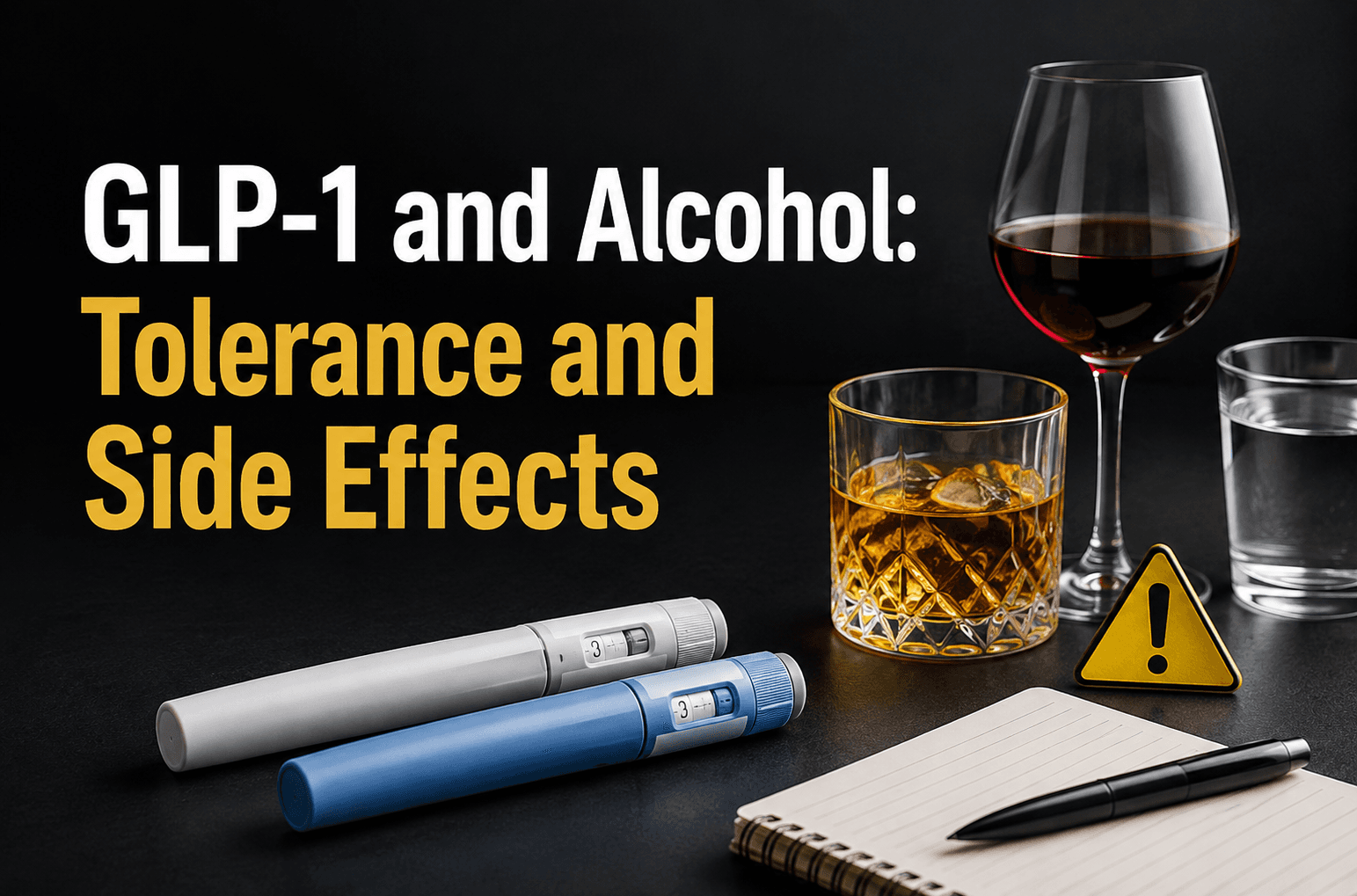
GLP-1 and Alcohol Safety: What to Know


Alcohol can feel different during GLP-1 treatment. Some patients notice they want fewer drinks. Others feel nauseated after an amount they used to tolerate. Some feel full faster, get reflux more easily, or struggle to stay hydrated after drinking. If you are using semaglutide, tirzepatide, or another GLP-1-related medication, alcohol deserves a more careful plan than “I’ll see how it goes.”
The safest way to think about GLP-1 and alcohol safety is this: alcohol may not be strictly forbidden for every patient, but it can overlap with GLP-1 side effects, blood sugar concerns, dehydration, slower digestion, reduced food intake, and weight-loss goals. Your personal limit may be lower than it used to be, and some patients should avoid alcohol completely depending on their health history, medication list, pregnancy status, alcohol-use history, liver health, diabetes medications, or side effects.
GLP-1 and Alcohol Safety: The Quick Answer
GLP-1 and alcohol safety depends on the patient. Alcohol can worsen nausea, vomiting, reflux, dehydration, dizziness, low food intake, and blood sugar concerns, especially during dose increases or when drinking on an empty stomach. The most cautious approach is to avoid alcohol, drink less than before, or discuss a personal limit with your clinician before drinking.
Medical Disclaimer: Educational information only. Do not start, stop, or change any medication without speaking to your healthcare provider. If you have severe symptoms or think you’re having an emergency, call 911 or seek emergency care.
Why Alcohol Can Feel Different on GLP-1 Therapy
GLP-1 medications affect appetite, fullness, digestion, and blood sugar regulation. Maryland Trim Clinic’s GLP-1 Weight-Loss Injections page explains that semaglutide and tirzepatide mimic gut hormones that regulate insulin secretion and slow gastric emptying, which can reduce appetite and increase feelings of fullness. It also notes common side effects such as nausea, vomiting, and diarrhea, with nutrition and hydration guidance used to help manage symptoms.
Alcohol can become more difficult to tolerate for several reasons:
- You may be eating less, so alcohol hits harder.
- You may lose weight, which can change how alcohol feels.
- You may feel full sooner and drink without enough food.
- Nausea, reflux, or delayed stomach emptying may already be present.
- Alcohol can irritate the stomach and worsen dehydration risk.
- Diabetes medications can change low-blood-sugar risk.
- Your interest in alcohol may decrease during treatment.
That does not mean everyone will react the same way. Some patients may tolerate an occasional drink. Others may feel sick after a small amount. The safest assumption is that your old tolerance may not apply.
Is Alcohol Safe on GLP-1 Therapy?
Alcohol is not automatically safe or unsafe for every GLP-1 patient. It depends on the medication, dose phase, side effects, blood sugar history, diabetes medications, alcohol pattern, liver health, hydration, food intake, and overall medical situation.
The CDC states that adults of legal drinking age can choose not to drink or drink in moderation, and defines moderate drinking as two drinks or fewer in a day for men and one drink or fewer in a day for women. The CDC also notes that even moderate drinking may carry health risks compared with not drinking.
For someone on GLP-1 therapy, “moderate” may still be too much if alcohol triggers nausea, vomiting, reflux, dizziness, low blood sugar symptoms, dehydration, or poor food intake.
You should consider avoiding alcohol if you:
- Are early in treatment or increasing your dose.
- Already have nausea, vomiting, diarrhea, constipation, or reflux.
- Have diabetes and use insulin or sulfonylureas.
- Have a history of pancreatitis or significant gallbladder disease.
- Have liver disease.
- Are pregnant, trying to become pregnant, or under 21.
- Are recovering from alcohol use disorder or cannot reliably limit drinking.
- Take medications that interact with alcohol.
- Have dizziness, fainting, dehydration, or low appetite.
- Are not sure how alcohol affects your symptoms yet.
NIAAA states that it is safest for patients to avoid alcohol altogether if they take certain medications, have medical conditions affected by alcohol such as liver disease, diabetes, hypertension, abnormal heart rhythm, or chronic pain, are recovering from alcohol use disorder, are pregnant or trying to become pregnant, or cannot control how much they drink.
Semaglutide Alcohol: What to Watch For
Semaglutide medications include products such as Wegovy and Ozempic. Alcohol is not the main warning patients usually hear about, but semaglutide’s common side effects can overlap with alcohol’s effects.
DailyMed’s Wegovy label lists nausea, diarrhea, vomiting, constipation, abdominal pain, fatigue, dizziness, dyspepsia, abdominal distension, eructation, hypoglycemia in patients with type 2 diabetes, and gastroesophageal reflux disease among common adverse reactions. It also states that Wegovy delays gastric emptying and may affect absorption of oral medications.
Alcohol may be more difficult to tolerate if you are already experiencing:
- Nausea
- Reflux or heartburn
- Burping
- Abdominal discomfort
- Low appetite
- Constipation
- Diarrhea
- Dizziness
- Vomiting
- Dehydration
- Fatigue
The Wegovy label also warns that dehydration from nausea, vomiting, or diarrhea can contribute to acute kidney injury risk, and it advises monitoring patients who report reactions that could lead to volume depletion.
That is why drinking while nauseated or under-hydrated is a poor idea, even if you previously tolerated alcohol well.
Tirzepatide Alcohol: What to Watch For
Tirzepatide medications include products such as Zepbound and Mounjaro. Tirzepatide also affects appetite, fullness, digestion, and blood glucose.
DailyMed’s Zepbound label states that Zepbound is administered with a reduced-calorie diet and increased physical activity, delays gastric emptying, and has been associated with gastrointestinal adverse reactions, sometimes severe. In weight-reduction trials, common adverse reactions included nausea, diarrhea, vomiting, constipation, abdominal pain, and dyspepsia.
The Zepbound label also warns that diarrhea, nausea, and vomiting may cause dehydration, which can lead to kidney problems, and it tells patients to contact their healthcare provider right away if nausea, vomiting, or diarrhea does not go away. It also lists low blood sugar risk, especially when used with insulin or sulfonylureas.
For patients using tirzepatide, alcohol may be more likely to cause trouble when:
- You drink without eating.
- You drink during a dose increase.
- You already feel nauseated or full.
- You use insulin or sulfonylurea medication.
- You drink several servings quickly.
- You choose sugary cocktails or carbonated drinks.
- You are not drinking enough water.
- You have vomiting, diarrhea, or reflux.
Why Tolerance Might Change
Alcohol tolerance is not just about habit. It is affected by body weight, food intake, hydration, sex, liver function, medications, sleep, and how quickly alcohol is absorbed.
You may eat less
GLP-1 therapy can reduce appetite and make meals smaller. Drinking after a smaller meal or on an empty stomach can feel stronger than drinking after a full meal. NIAAA explains that drinking on an empty stomach increases the rate of alcohol absorption and results in a higher blood alcohol level compared with drinking on a full stomach.
You may weigh less
As weight decreases, your previous alcohol tolerance may not match your current body. This does not mean everyone will feel a dramatic change, but it is one reason to restart cautiously if you drink.
You may be dehydrated more easily
GLP-1 side effects such as nausea, vomiting, diarrhea, constipation, and reduced thirst can make hydration more difficult. Alcohol can worsen this pattern by replacing water, contributing to poor sleep, and making nausea harder to manage.
Your digestion may be slower
GLP-1 medications can delay gastric emptying. This can make heavy meals feel uncomfortable and may make the timing of alcohol effects feel less predictable. It is best not to assume you can drink the same amount, at the same pace, with the same result.
Your desire to drink may decrease
Some patients report less interest in alcohol while using GLP-1 or GLP-1/GIP medications. Research into GLP-1 medications and alcohol use is still developing, and these medications should not be used as self-treatment for alcohol use disorder unless specifically prescribed and monitored for that purpose in a clinical setting. Patients with alcohol-use concerns should discuss them directly with a qualified clinician.
Side Effects More Likely With Alcohol and GLP-1s
Alcohol and GLP-1 medications can overlap in ways that make side effects harder to tolerate.
Concern
Why alcohol can make it worse
Nausea
Alcohol can irritate the stomach and worsen queasiness
Vomiting
Vomiting plus alcohol can raise dehydration risk
Heartburn
Alcohol, carbonation, and late meals can worsen reflux
Dizziness
Alcohol, dehydration, low intake, and blood sugar changes can overlap
Low blood sugar symptoms
Higher concern in diabetes or with insulin/sulfonylureas
Poor sleep
Alcohol may disrupt sleep quality and next-day cravings
Dehydration
Nausea, vomiting, diarrhea, and alcohol can compound fluid loss
Weight-loss stalls
Alcohol adds calories and can lower food-choice consistency
NIAAA also notes that alcohol can alter medication metabolism, and medications can influence alcohol absorption and metabolism, potentially producing higher blood alcohol concentrations or other adverse effects. Even when a specific GLP-1 label does not list alcohol as a strict contraindication, the patient’s full medication list and health history still matter.
Alcohol, Blood Sugar, and Diabetes Medications
Blood sugar risk deserves special attention.
Wegovy labeling states that semaglutide lowers blood glucose and can cause hypoglycemia, with increased risk when used with insulin or insulin secretagogues such as sulfonylureas. It also recommends informing patients about hypoglycemia signs and monitoring blood glucose in patients with diabetes.
Zepbound labeling similarly states that tirzepatide lowers blood glucose and can cause hypoglycemia, with increased risk when used with insulin or sulfonylureas. It lists symptoms such as dizziness, sweating, confusion, headache, blurred vision, shakiness, fast heartbeat, hunger, weakness, and feeling jittery.
Alcohol can complicate this because some people drink with less food, misread low-blood-sugar symptoms as intoxication, or sleep through symptoms later. Patients with diabetes should ask their clinician for individualized guidance before drinking, especially if they use insulin, sulfonylureas, or other medications that can lower blood sugar.
What Limits Are Most Cautious?
The most cautious limit is no alcohol, especially during treatment initiation, dose increases, active GI side effects, poor hydration, or blood-sugar instability.
If your clinician says occasional alcohol is acceptable for you, a cautious approach may include:
- Start with less than your old limit.
- Do not drink on an empty stomach.
- Avoid binge drinking.
- Avoid drinking during dose-increase weeks.
- Avoid alcohol if you are nauseated, vomiting, or dehydrated.
- Choose water between drinks.
- Avoid sugary mixers if blood sugar is a concern.
- Avoid carbonated drinks if they worsen burping or reflux.
- Stop at the first sign of nausea, dizziness, or unusual symptoms.
- Arrange transportation and do not drive after drinking.
The CDC defines one U.S. standard drink as 12 ounces of 5% beer, 5 ounces of 12% wine, or 1.5 ounces of 40% distilled spirits. Many restaurant pours and mixed drinks contain more than one standard drink, so “one drink” may not mean what you think it means.
Drinking While Losing Weight: Why It Can Affect Progress
Alcohol may affect weight loss even when it does not cause an obvious side effect.
Alcohol can:
- Add calories without much fullness.
- Lower food-choice consistency.
- Worsen sleep quality.
- Make late-night eating more likely.
- Replace protein or nutrient-dense foods.
- Increase dehydration and next-day fatigue.
- Make exercise feel harder the next day.
- Trigger reflux, nausea, or missed meals in some patients.
This does not mean one drink ruins progress. It means alcohol should be counted as part of the plan, not treated as separate from the plan.
Maryland Trim Clinic’s medical weight-loss program includes personalized nutrition, exercise guidance, behavioral and emotional support, medical interventions when appropriate, and ongoing monitoring. The program also includes medication monitoring and adjustment when clinically appropriate. This kind of follow-up is useful when alcohol, social eating, medication side effects, and weight-loss goals intersect.
A Practical Decision Guide Before You Drink
Before drinking on GLP-1 therapy, ask yourself:
Question
If yes, consider this
Am I in my first few weeks or increasing dose?
Wait or ask the clinic first
Am I nauseated, vomiting, constipated, or having reflux?
Avoid alcohol until symptoms improve
Have I eaten enough today?
Eat a balanced meal first
Am I dehydrated or dizzy?
Avoid alcohol and hydrate
Do I use insulin or sulfonylureas?
Ask your clinician about blood-sugar risk
Am I driving, working, or caring for others?
Do not drink
Do I struggle to stop once I start?
Avoid alcohol and ask for support
Am I drinking to cope with stress?
Use a safer coping tool and discuss support
This is not about guilt. It is about preventing a predictable problem.
What to Do If Alcohol Triggers Symptoms
If you drink and feel unwell, stop drinking and shift to safety.
Try:
- Stop alcohol immediately.
- Sip water or an electrolyte drink if tolerated.
- Eat a small, balanced snack if you can tolerate food.
- Avoid lying flat if reflux is present.
- Do not drive.
- Monitor blood sugar if you have diabetes or were told to do so.
- Contact your clinic if symptoms are persistent or concerning.
Call your clinician promptly if you have:
- Repeated vomiting
- Inability to keep fluids down
- Dark urine or very little urination
- Severe or worsening abdominal pain
- Pain that radiates to the back
- Confusion, fainting, or severe dizziness
- Signs of low blood sugar that do not resolve as instructed
- Fever or yellowing of the skin or eyes
- Symptoms after a recent dose increase
- Symptoms that keep returning after alcohol
Seek emergency care for severe symptoms, loss of consciousness, chest pain, severe abdominal pain, trouble breathing, or signs of a serious allergic reaction.
How Maryland Trim Clinic Helps Patients Navigate GLP-1 and Alcohol Questions
Maryland Trim Clinic in Laurel, MD offers physician-supervised GLP-1 treatment with assessment, eligibility review, side-effect monitoring, nutrition support, behavioral coaching, and regular follow-up. Its GLP-1 service page states that the program begins with a comprehensive assessment, includes nutritional counseling and behavioral support, and uses follow-ups to adjust dosage, monitor side effects, and track progress.
Relevant services may include:
- GLP-1 Weight-Loss Injections
- Medical Weight Loss Program
- Nutritional Counseling and Coaching
- Weight Loss Maintenance Program
- Metabolic Testing and Analysis
- 3D Body Scanning
MTC’s nutrition service includes personalized nutrition planning, portion control strategies, meal timing, label reading, and behavior-change support. It also addresses emotional eating, stress triggers, and sustainable habits.
A visit can help you clarify:
- Whether alcohol is appropriate with your medication plan
- How to manage nausea alcohol GLP-1 reactions
- Whether your blood sugar risk is higher
- How to avoid dehydration during treatment
- Whether semaglutide alcohol or tirzepatide alcohol questions apply differently to you
- What to do before vacations, weddings, parties, or holidays
- When side effects should prompt a clinic call
The clinic lists its location as 9201 Cherry Lane, Laurel, MD 20708, and its phone number as (301) 960-4811.
The Bottom Line
Alcohol may affect GLP-1 patients differently than it did before treatment. Some people lose interest in drinking. Some feel sick after less alcohol. Some are more vulnerable to nausea, reflux, dehydration, dizziness, low food intake, or blood-sugar concerns.
The safest plan is to avoid alcohol when starting or increasing a dose, when GI symptoms are active, when hydration is poor, or when blood sugar risk is a concern. If you do drink, use a smaller limit than before, eat first, hydrate, avoid binge drinking, and stop early if symptoms appear.
Do not change your GLP-1 medication because of alcohol plans. Ask your clinician for guidance that matches your medication, dose, health history, side effects, and weight-loss goals.
Frequently Asked Questions
Is alcohol safe on GLP-1 therapy?
Alcohol is not automatically safe for every GLP-1 patient. It may worsen nausea, vomiting, reflux, dehydration, dizziness, and blood sugar concerns, especially during dose increases or when drinking without food. Some patients should avoid alcohol completely because of medical conditions, medications, pregnancy, liver disease, or alcohol-use concerns. Ask your clinician for personal guidance.
Why might tolerance change?
Tolerance may change because GLP-1 therapy can reduce food intake, slow stomach emptying, change appetite, and support weight loss. Drinking after a smaller meal or on an empty stomach can feel stronger. NIAAA explains that alcohol is absorbed faster on an empty stomach and can produce a higher blood alcohol level than drinking with food.
What side effects are more likely?
The side effects most likely to worsen include nausea, vomiting, reflux, burping, abdominal discomfort, dizziness, dehydration, poor sleep, and low intake. Wegovy and Zepbound labels both list gastrointestinal side effects such as nausea, vomiting, diarrhea, constipation, abdominal pain, and reflux-related symptoms.
What limits are most cautious?
The most cautious limit is no alcohol, especially during dose increases, active nausea, vomiting, diarrhea, reflux, dehydration, or blood-sugar instability. If your clinician says occasional alcohol is acceptable, drink less than your old limit, eat first, sip water, avoid binge drinking, and stop at the first sign of nausea, dizziness, reflux, or unusual symptoms.
Can I drink alcohol on semaglutide?
Some patients may tolerate occasional alcohol on semaglutide, but others may feel more nausea, vomiting, reflux, or dizziness. Wegovy labeling notes common GI reactions and warns about dehydration related to nausea, vomiting, or diarrhea. If you have diabetes or use medications that lower blood sugar, ask your clinician before drinking.
Can I drink alcohol on tirzepatide?
Some patients may tolerate occasional alcohol on tirzepatide, but caution is important. Zepbound labeling notes delayed gastric emptying, gastrointestinal adverse reactions, dehydration risk, and hypoglycemia risk, especially with insulin or sulfonylureas. Avoid alcohol if you are nauseated, dehydrated, eating very little, increasing your dose, or unsure about your risk.
Can alcohol cause low blood sugar on GLP-1 medication?
Low blood sugar risk is more concerning for people with diabetes, especially those using insulin or sulfonylureas. Wegovy and Zepbound labels both warn that hypoglycemia risk can increase with these medications. Alcohol can make symptoms harder to recognize, especially if you drink without food or while using blood-sugar-lowering medication.
When should I call the clinic after drinking?
Call the clinic if you have repeated vomiting, symptoms of dehydration, nausea or diarrhea that does not go away, severe abdominal pain, pain radiating to the back, dizziness, fainting, blood sugar symptoms, fever, jaundice, or symptoms that started after a dose increase. Seek urgent care for severe symptoms or possible emergencies.
Get Personalized Guidance Before Alcohol Becomes a Problem
If you are using semaglutide, tirzepatide, or another GLP-1-related medication and alcohol now feels different, Maryland Trim Clinic can help you review your symptoms, dose phase, hydration, nutrition, blood sugar risk, side effects, and weight-loss goals. A clinician-guided plan can help you make safer decisions before nausea, dehydration, or tolerance changes disrupt your progress.
Get Personalized Guidance Before Alcohol Becomes a Problem
If you are using semaglutide, tirzepatide, or another GLP-1-related medication and alcohol now feels different, Maryland Trim Clinic can help you review your symptoms, dose phase, hydration, nutrition, blood sugar risk, side effects, and weight-loss goals. A clinician-guided plan can help you make safer decisions before nausea, dehydration, or tolerance changes disrupt your progress.