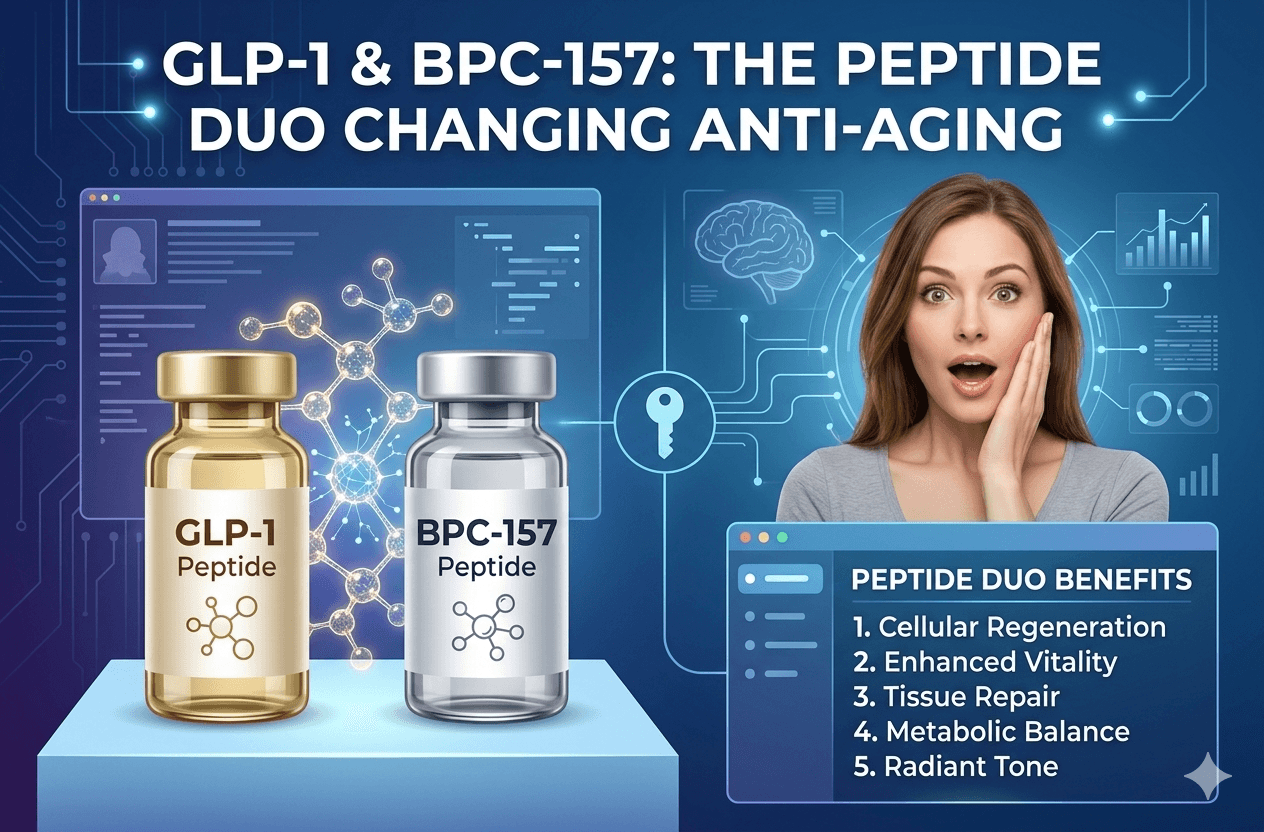
GLP-1 & BPC-157: The Peptide Duo Changing Anti-Aging

GLP-1 and BPC-157 are both called "peptides"—but they do completely different things to your body.
That single sentence is the most important concept you can grasp before stepping into the rapidly expanding world of peptide therapy. Yet, in wellness forums, biohacking communities, and even some clinical settings, these two compounds are routinely lumped together, as if "peptide" were a monolithic category the way "vitamin" or "supplement" might be.
It isn't. Not even close.
The confusion is understandable. Both GLP-1 agonists and BPC-157 are short chains of amino acids. Both are typically injected subcutaneously. Both sit squarely at the intersection of metabolic medicine and the booming longevity industry. But from a biological standpoint, comparing semaglutide to BPC-157 is like comparing insulin to ibuprofen. Yes, they are both used by people trying to optimize their health, but they act on entirely different systems for entirely different reasons.
If you are a health-conscious adult genuinely exploring peptide therapy, this breakdown will give you the clearest picture possible of what each compound does, which one belongs in your protocol, and what credible voices are currently saying about stacking them.
Act 1: The Mechanism Gap — Two Peptides, Two Completely Different Jobs
What GLP-1 Agonists Actually Are
GLP-1 stands for Glucagon-Like Peptide-1—a hormone your gut naturally produces in response to eating. Its native job is elegantly simple:
- Signal the pancreas to release insulin.
- Tell the liver to slow its glucose output.
- Slow gastric emptying so you feel full longer.
- Communicate with your brain's hypothalamus to suppress your appetite.
It is, in essence, your body's built-in meal regulator.
GLP-1 receptor agonists—the class of drugs that includes semaglutide (Ozempic, Wegovy), liraglutide (Victoza, Saxenda), and tirzepatide (Mounjaro, Zepbound)—are synthetic molecules engineered to mimic and amplify this exact hormonal signal. They bind to GLP-1 receptors throughout the body and produce a prolonged version of the natural response, dramatically reducing hunger, improving insulin sensitivity, and driving significant weight loss.
These are FDA-approved pharmaceutical drugs. They have been extensively studied in large-scale human clinical trials, with robust safety data spanning over a decade. Recent trials have demonstrated that they don't just reduce weight; they reduce major adverse cardiovascular events, giving GLP-1 agonists a medical profile far beyond simple "diet shots."
What BPC-157 Actually Is
BPC-157 stands for Body Protection Compound-157. It is a synthetic pentadecapeptide—15 amino acids long—derived from a protective protein found naturally in human gastric juice.
Unlike GLP-1 agonists, BPC-157 is not a hormone mimic. It does not slot neatly into an endocrine signaling cascade. Instead, it operates through a cluster of regenerative and cytoprotective pathways.
Here is what the current body of research (which is predominantly animal studies) suggests BPC-157 does:
- Promotes angiogenesis: It appears to upregulate VEGF (vascular endothelial growth factor) signaling, stimulating the growth of new blood vessels into damaged tissue. This is the foundation of rapid wound healing.
- Accelerates tendon and ligament healing: In rodent models, BPC-157 dramatically accelerates the healing of torn tendons with improved collagen organization—making it wildly popular in sports medicine circles.
- Protects and heals the GI tract: Ironically, this gastric-derived compound is highly protective of the gut. It has shown efficacy in animal models of inflammatory bowel disease (IBD), gastric ulcers, and "leaky gut."
- Systemic anti-inflammatory effects: It appears to dampen inflammatory cascades without the immune-suppressing risks associated with corticosteroids.
The critical distinction: GLP-1 agonists modulate metabolism and hormonal signaling. BPC-157 promotes structural repair and cellular regeneration. One tells your body how to manage energy; the other tells your body how to fix itself.
The Regulatory Reality
This is where the comparison becomes vital for consumers.
- GLP-1 agonists are highly regulated, FDA-approved prescription medications with defined dosing protocols and monitored side-effect profiles.
- BPC-157 is an experimental compound. According to recent guidance from the U.S. Food and Drug Administration (FDA), BPC-157 is not approved for any human therapeutic indication and has been restricted from use in compounding pharmacies due to a lack of safety data. Anyone considering BPC-157 is navigating an evolving, high-risk legal gray area.
Act 2: Anti-Aging vs. Weight Loss — Matching the Right Peptide to Your Goal
With the mechanistic foundations clear, the strategic question becomes: which peptide is actually relevant to your goal?
GLP-1 Agonists and the Anti-Aging Case
GLP-1 agonists were not originally designed as anti-aging interventions. However, the longevity community has taken sharp notice of them because obesity and metabolic dysfunction are among the most potent accelerants of biological aging.
Chronically elevated insulin, visceral fat, systemic inflammation, and oxidative stress are deeply intertwined with the hallmarks of aging (like cellular senescence and mitochondrial dysfunction). By dramatically improving these metabolic markers, GLP-1 agonists indirectly attack aging at its root.
Furthermore, emerging research suggests GLP-1 receptors exist in the brain, heart, and immune cells. Early data from Alzheimer's trials has generated genuine excitement, proposing that GLP-1 signaling may modulate the neuroinflammation that drives cognitive decline.
The Verdict: For weight loss and metabolic correction, GLP-1 agonists are the clinically validated choice. Full stop.
BPC-157 and the Anti-Aging Case
BPC-157's anti-aging proposition is structurally different. It doesn't target weight. It doesn't directly modulate hormones. What it targets is tissue integrity and systemic resilience—two things that decline precipitously with age.
As we age, tendons stiffen, gut barrier function deteriorates, wound healing slows, and chronic low-grade inflammation ("inflammaging") erodes organ function. BPC-157's proposed mechanisms map directly onto these exact processes.
The Verdict: For health-conscious adults whose anti-aging goals center on physical resilience, joint health, and injury recovery, BPC-157 offers a mechanistically compelling (if not yet human-validated) toolkit.
The Caveat: BPC-157 is not a weight-loss compound. It will not suppress your appetite or improve insulin sensitivity. Expecting it to do what GLP-1 agonists do is a massive category error.
Act 3: The Stacking Question — What Longevity Experts Say About Combining Both
The most sophisticated practitioners in the longevity space don't typically ask, "Should I use GLP-1 or BPC-157?" Instead, they ask, "When does each one belong in a protocol, and can they safely coexist?"
The Complementary Logic
Longevity-focused physicians and sports medicine practitioners have begun articulating a clear rationale for combining these compounds in specific patient profiles:
- The GLP-1 Layer: Addresses the metabolic side (reducing fat, improving insulin, lowering cardiovascular risk).
- The BPC-157 Layer: Addresses the structural side (protecting the gut lining from the GI distress GLP-1s often cause, and potentially mitigating the severe muscle loss that accompanies rapid weight reduction).
Sarcopenia (age-related muscle loss) is a massive longevity risk factor. If BPC-157's tissue-protective properties translate to humans, the compounds could theoretically be deeply synergistic: one driving fat loss, the other protecting the musculoskeletal architecture during the process.
What the Research Gap Means in Practice
Honesty demands acknowledging the obvious: the human clinical data on stacking BPC-157 with GLP-1 agonists is essentially nonexistent. This is a mechanistically reasoned hypothesis being tested cautiously by forward-leaning practitioners—with all the risks that implies.
If you are considering this path, credible researchers emphasize the following:
Sequencing Matters: Some practitioners introduce BPC-157 first to establish GI resilience before initiating GLP-1 therapy, anticipating the nausea many patients experience early on.
Protein & Lifting are Non-Negotiable: According to the Centers for Disease Control and Prevention (CDC), progressive resistance training is required to maintain muscle mass. No peptide stack can substitute for adequate dietary protein and lifting weights while on a GLP-1.
The Sourcing Risk is Real: The purity, dosing accuracy, and sterility of research peptides sourced outside pharmaceutical-grade channels are genuine safety concerns that no amount of mechanistic elegance can paper over.
Maryland Trim Clinic (MTC) in Laurel, MD
Navigating the intersection of metabolic health, peptide therapy, and longevity requires precision, not guesswork. Unsupervised biohacking with unregulated compounds can lead to serious health complications, muscle wasting, and endocrine disruption.
If you are looking to optimize your weight and your biological age safely, the Maryland Trim Clinic (MTC) in Laurel, MD, provides a medically supervised, evidence-based environment. To safely tackle metabolic dysfunction and obesity, MTC offers expertly managed GLP-1 weight loss injections as part of a comprehensive medical weight loss program.
Because rapid weight loss can negatively impact your lean muscle mass and structural health, the clinical team at MTC pairs these advanced medications with dedicated nutritional counseling and coaching to ensure you are fueling your body correctly. Furthermore, for patients experiencing age-related physical decline, MTC provides comprehensive hormone replacement therapy to address the root causes of fatigue and tissue degradation safely. By partnering with the Maryland Trim Clinic, you get the medical oversight necessary to achieve your longevity goals without the risks of internet experimentation.
The Bottom Line
GLP-1 and BPC-157 are not interchangeable. They are not rivals. They are not even playing on the same biological field.
One is a hormonally active, FDA-approved metabolic drug with robust human evidence. The other is a repair-and-regeneration research peptide with compelling animal data, but significant regulatory and sourcing caveats.
Understanding the difference isn't just an academic exercise. It directly determines whether the compound you're considering is appropriate for your goal, your body, and your risk tolerance. For anyone serious about longevity—not just leanness—that clarity is the foundation everything else is built on.
Frequently Asked Questions
Q: What is the main difference between GLP-1 agonists and BPC-157? A: GLP-1 agonists (like Ozempic or Wegovy) are FDA-approved hormonal drugs that mimic a gut hormone to regulate blood sugar, suppress appetite, and drive weight loss. BPC-157 is a synthetic research peptide derived from a gastric protein that works through tissue repair, angiogenesis, and cellular regeneration. One is a metabolic regulator; the other is a structural repair compound.
Q: Is BPC-157 legal and safe to use? A: BPC-157 is not FDA-approved for human therapeutic use and is legally classified as a research compound. Its availability exists in a highly restricted regulatory gray zone. While animal studies suggest a favorable safety profile, comprehensive human safety data is lacking. Anyone considering BPC-157 should consult a qualified physician and be aware of the severe risks related to injecting non-pharmaceutical-grade compounds.
Q: Can GLP-1 agonists be considered anti-aging drugs? A: Not officially—they are approved for Type 2 diabetes and weight management. However, their ability to dramatically improve metabolic health markers (insulin sensitivity, visceral fat, inflammation) addresses major drivers of biological aging. Emerging research into their cardiovascular and neuroprotective benefits has generated massive interest from the longevity community.
Q: What is the rationale for stacking GLP-1 and BPC-157 together? A: Some practitioners theorize they are highly complementary: GLP-1 addresses the metabolic layer of aging, while BPC-157 addresses structural repair. Practically, BPC-157's gut-healing properties may help counteract the severe nausea often caused by GLP-1s, and its tissue-protective effects may help mitigate the muscle loss associated with rapid weight reduction. Note: This combination has not been validated in human clinical trials.
Q: Which peptide is better for anti-aging goals specifically? A: It depends on your goal. GLP-1 agonists are better supported for metabolic anti-aging (reducing obesity, inflammation, and cardiovascular risk). BPC-157 is theoretically more relevant for structural anti-aging (joint health, gut integrity, and injury recovery).
Q: Do either of these peptides replace exercise and good nutrition? A: Absolutely not. GLP-1 agonists can drive significant weight loss, but without adequate dietary protein and resistance training, you will lose vital lean muscle mass—a serious longevity liability. BPC-157 may support tissue recovery, but it does not build strength. Both peptides must be considered adjuncts to foundational lifestyle habits, never replacements.
Ready to Optimize Your Health Safely?
Stop guessing with unregulated compounds. Contact Maryland Trim Clinic today to schedule a comprehensive medical consultation and discover how a supervised, science-backed protocol can help you reach your longevity and weight loss goals.