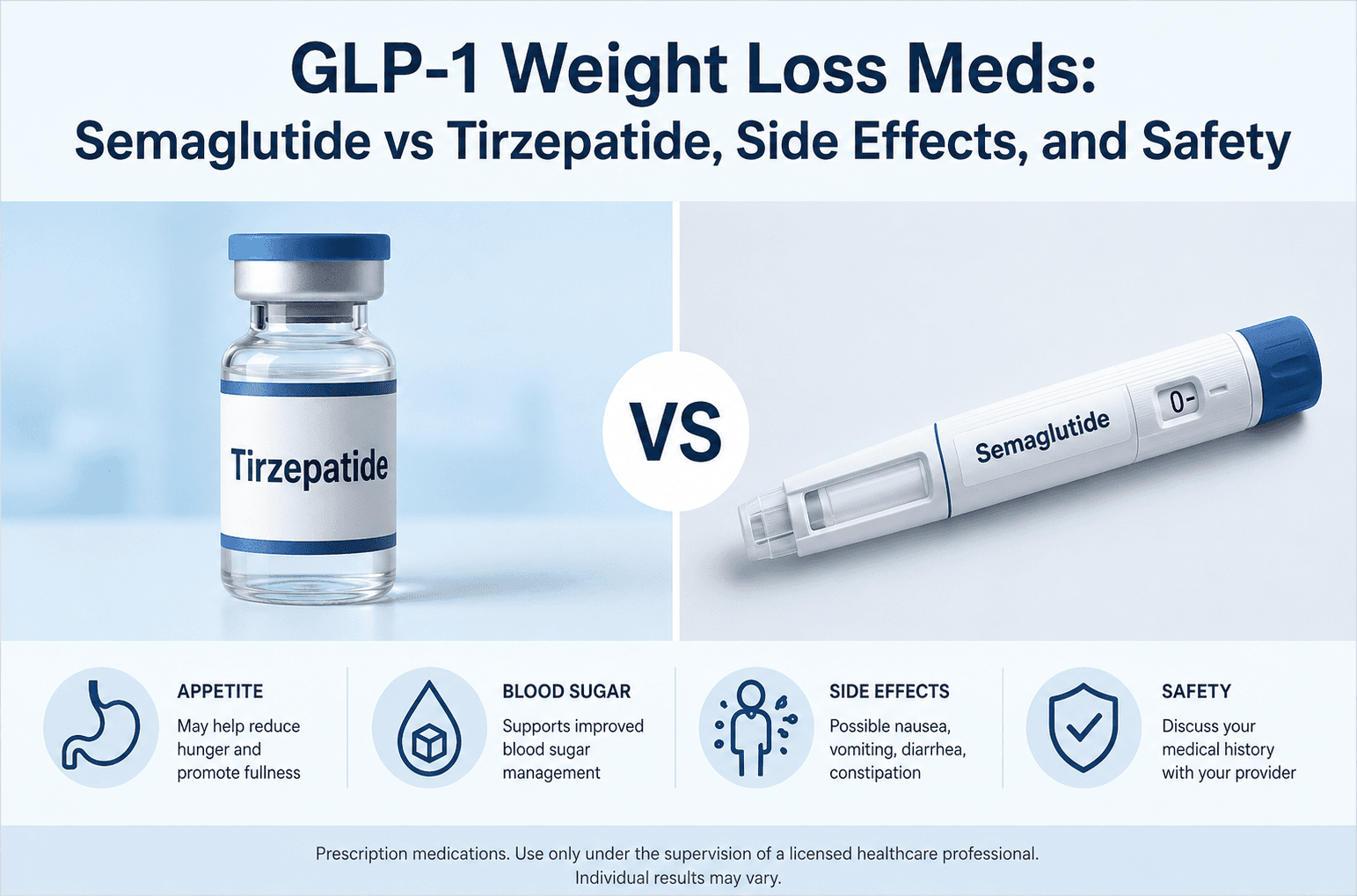
GLP-1 Weight Loss Medications Guide: Semaglutide vs Tirzepatide


Choosing between semaglutide and tirzepatide is no longer just a question of which medication causes more weight loss. Patients also want to understand side effects, serious risks, long-term expectations, and what medical monitoring actually looks like. This GLP-1 weight loss medications guide compares the two options with those practical questions in mind.
Both medications can support substantial weight reduction in appropriately selected patients, but they use different hormone pathways and have different FDA-labeled uses. Tirzepatide produced greater average weight loss in a direct 72-week obesity trial, while semaglutide has a cardiovascular risk-reduction indication for certain adults.
Semaglutide vs Tirzepatide: The Quick Answer
Semaglutide activates GLP-1 receptors. Tirzepatide activates both GIP and GLP-1 receptors. In a direct obesity trial, tirzepatide produced greater average weight loss, but both commonly caused gastrointestinal side effects. There is no universal safety winner. Medical history, goals, tolerance, current medications, and monitoring needs should guide the decision.
Medical Disclaimer: Educational information only. Do not start, stop, or change any medication without speaking to your healthcare provider. If you have severe symptoms or think you’re having an emergency, call 911 or seek emergency care.
GLP-1 Weight Loss Medications Guide: How These Drugs Work
GLP-1, or glucagon-like peptide-1, helps regulate appetite and glucose. Medicines that activate its receptor can increase fullness, influence appetite signaling, support insulin release when glucose is elevated, and slow stomach emptying.
Semaglutide is a GLP-1 receptor agonist. Wegovy is the semaglutide brand labeled for chronic weight management. Ozempic also contains semaglutide, but its FDA indication is centered on type 2 diabetes and related risk reduction.
Tirzepatide is often grouped with GLP-1 medications, but technically it is a dual GIP and GLP-1 receptor agonist. Zepbound is labeled for chronic weight management, while Mounjaro contains tirzepatide and is labeled for type 2 diabetes.
FDA-approved indications and formulations differ by product. Current U.S. labeling includes injection and tablet formulations of Wegovy, while Zepbound is an injection. Maryland Trim Clinic's GLP-1 service page currently focuses on GLP-1 weight-loss injections, so availability should be confirmed during evaluation.
Semaglutide vs Tirzepatide: The Core Differences
Comparison point
Semaglutide
Tirzepatide
Hormone pathway
GLP-1 receptor agonist
Dual GIP and GLP-1 receptor agonist
Weight-management brand
Wegovy
Zepbound
Diabetes brand with the same active ingredient
Ozempic
Mounjaro
Current weight-management forms
Injection and tablet
Injection
Direct 72-week obesity trial
13.7% mean weight reduction
20.2% mean weight reduction
Notable FDA-labeled consideration
Major cardiovascular event risk reduction in certain adults with established cardiovascular disease and overweight or obesity
Moderate to severe obstructive sleep apnea in adults with obesity
Main tolerability concern
Gastrointestinal symptoms
Gastrointestinal symptoms
SURMOUNT-5 was a randomized phase 3b trial of adults with obesity without diabetes treated with maximum tolerated doses for 72 weeks. Tirzepatide produced greater average weight and waist reduction, while gastrointestinal adverse events were most common with both medications and were generally mild to moderate.
Tirzepatide therefore has the stronger direct head-to-head weight-loss result. Still, a clinician may also consider cardiovascular disease, diabetes treatment, sleep apnea, previous response, gastrointestinal tolerance, pregnancy plans, current medicines, access, and whether treatment can be continued. A structured medical weight loss program can help put those factors into context.
GLP-1 Side Effects: What Is Most Common and When Do They Improve?
The most common GLP-1 side effects are gastrointestinal. Nausea, diarrhea, vomiting, constipation, abdominal discomfort, indigestion, bloating, and reflux appear prominently in current prescribing information for semaglutide and tirzepatide.
Symptoms are often most noticeable during treatment initiation or dose escalation. In SURMOUNT-5, gastrointestinal adverse events occurred primarily during dose escalation. Many gastrointestinal effects are transient, but persistent or severe symptoms should not be ignored.
Medical teams may review meal size, hydration, constipation, reflux triggers, and symptom timing. Nutrition also matters when appetite falls sharply. Inadequate protein or a very limited diet can make it harder to preserve lean mass and meet nutrient needs. Nutritional counseling and coaching can help patients build a practical eating plan around a reduced appetite.
Do not independently change a prescription dose because of nausea or other side effects. Persistent vomiting, inability to keep fluids down, severe abdominal pain, or worsening symptoms deserve medical evaluation.
Does tirzepatide cause more side effects than semaglutide?
Not in a simple, across-the-board way. Comparing adverse-event percentages from separate Wegovy and Zepbound trials can be misleading because study populations, doses, and reporting methods differ. The Wegovy prescribing information specifically cautions that adverse-reaction rates from one drug's clinical trials cannot be directly compared with another drug's trial rates.
SURMOUNT-5 found gastrointestinal events were common with both. Individual tolerability is more useful than assuming tirzepatide must cause worse side effects because it produces greater average weight loss.
GLP-1 Safety: Serious Risks and Warning Signs
Less common risks can affect eligibility, monitoring, and when to seek care. The current Wegovy prescribing information and current Zepbound prescribing information describe several overlapping concerns.
Thyroid C-cell tumor boxed warning
Both products carry a boxed warning based on thyroid C-cell tumors observed in rodents. It is unknown whether semaglutide or tirzepatide causes medullary thyroid carcinoma in humans. Both are contraindicated in patients with a personal or family history of medullary thyroid carcinoma or Multiple Endocrine Neoplasia syndrome type 2, also called MEN 2.
Pancreatitis and gallbladder problems
Acute pancreatitis has been observed with GLP-1 receptor agonists and tirzepatide. Severe, persistent abdominal pain, especially pain that may radiate toward the back and occur with vomiting, needs prompt medical evaluation.
Gallstones and gallbladder inflammation can also occur. Upper abdominal pain, fever, or yellowing of the skin or eyes warrants medical evaluation.
Dehydration and kidney injury
Repeated vomiting or diarrhea can cause volume depletion. Both labels warn about acute kidney injury related to dehydration and recommend renal monitoring when adverse reactions could lead to significant fluid loss.
Low blood sugar
Hypoglycemia is a greater concern when these medications are used with insulin or medicines that increase insulin secretion, such as sulfonylureas. Patients with diabetes may need closer glucose monitoring and clinician-directed adjustments to other diabetes medicines.
Severe gastroparesis and planned procedures
Both Wegovy and Zepbound are not recommended in patients with severe gastroparesis. Delayed gastric emptying also matters before procedures involving general anesthesia or deep sedation. Current labeling describes rare reports of pulmonary aspiration despite reported pre-procedure fasting.
Tell the surgical, anesthesia, and prescribing teams that you use a GLP-1 or tirzepatide medication before a planned procedure. Do not decide on your own when to hold or restart a prescription.
Diabetic retinopathy and serious allergic reactions
Rapid improvement in glucose control can temporarily worsen diabetic retinopathy in some patients. People with type 2 diabetes and a history of diabetic eye disease may need monitoring.
Prior serious hypersensitivity to semaglutide is a contraindication to Wegovy, and prior serious hypersensitivity to tirzepatide is a contraindication to Zepbound. Symptoms of a severe allergic reaction require urgent medical attention.
Who Should Not Use GLP-1 Therapy?
Wegovy or Zepbound should not be used by people with a personal or family history of medullary thyroid carcinoma, MEN 2, or a prior serious hypersensitivity reaction to the specific medication or its ingredients.
Weight-loss treatment with these medications is also not appropriate during pregnancy. Current labeling states that weight loss offers no benefit during pregnancy and may cause fetal harm. A patient who is pregnant, planning pregnancy, or becomes pregnant while receiving treatment should speak with the prescribing clinician promptly.
Severe gastroparesis is another major concern because both products are not recommended in patients with this condition.
Prior pancreatitis, gallbladder disease, kidney problems, diabetic retinopathy, significant gastrointestinal symptoms, and use of insulin or sulfonylureas may require closer risk assessment rather than automatic exclusion.
Tirzepatide also has a reproductive-health consideration. Delayed gastric emptying may reduce the effectiveness of oral hormonal contraceptives. Current Zepbound labeling includes specific contraception precautions around treatment initiation and dose escalation. Patients using oral hormonal birth control should discuss this with their prescriber.
How Clinicians Monitor GLP-1 Safety During Treatment
Good monitoring is more than recording the number on a scale.
Before treatment, a clinician may review weight history, medical conditions, medication use, diabetes treatment, gastrointestinal history, thyroid cancer history, pregnancy plans, previous weight-loss attempts, and goals. Relevant laboratory evaluation may be considered based on medical history and clinical judgment.
During early treatment, follow-up may focus on digestive symptoms, hydration, food intake, and whether side effects interfere with daily life. Glucose monitoring may be especially important for patients using insulin or sulfonylureas. Kidney function may need reassessment when vomiting or diarrhea raises dehydration risk.
During ongoing weight loss, high-precision 3D body scanning may help track body-composition trends, while metabolic testing and analysis may add information about resting energy needs as weight changes. Clinicians may also review strength, activity, and protein intake when lean-mass preservation is a concern.
A Better Way to Choose Between Semaglutide and Tirzepatide
Before asking only which medication causes more weight loss, consider these questions:
Is there an FDA-labeled benefit especially relevant to my health? Wegovy has a cardiovascular risk-reduction indication for certain adults with established cardiovascular disease and overweight or obesity. Zepbound has an indication for moderate to severe obstructive sleep apnea in adults with obesity.
What does my medication list change? Insulin, sulfonylureas, oral medications affected by delayed gastric emptying, and oral hormonal contraceptives may require special review.
Which medication can I tolerate? Average trial results cannot predict an individual's gastrointestinal response.
How will progress be measured beyond body weight? Body composition, waist measurements, metabolic health, strength, eating quality, and relevant lab markers may provide useful context.
What is the maintenance plan? Weight regain is common after stopping weight-management medication.
In the STEP 1 semaglutide extension, participants regained about two-thirds of their prior weight loss within one year after withdrawal. A 2026 BMJ systematic review also found weight regain after cessation of weight-management medications. This is why long-term planning matters before a patient reaches a goal weight.
Maryland Trim Clinic offers a weight loss maintenance program for patients seeking continued monitoring and support. Medication should not be stopped, restarted, or changed without discussion with the prescribing clinician.
Discussing GLP-1 Treatment With Maryland Trim Clinic in Laurel, MD
At Maryland Trim Clinic, GLP-1 treatment is presented as part of a broader medical weight-management approach. The clinic describes reviewing health history, goals, treatment options, follow-up, and monitoring, with prescription treatment considered when appropriate.
For patients in Laurel and surrounding Maryland communities, an evaluation may help place semaglutide or tirzepatide in the context of nutrition, lifestyle, body composition, metabolic factors, and previous weight-loss attempts. Not every patient needs every MTC service, and asking about a GLP-1 medication does not guarantee eligibility.
Patients ready to discuss their options can contact Maryland Trim Clinic to ask about a medical weight-loss evaluation and current treatment availability.
The Bottom Line
Tirzepatide produced greater average weight loss than semaglutide in a direct 72-week obesity trial, but that does not make tirzepatide automatically better or semaglutide automatically safer.
Both medications commonly cause gastrointestinal side effects and carry important warnings. Individual health history can make one option more appropriate, less appropriate, or unsuitable.
The best GLP-1 decision is based on eligibility, goals, tolerability, monitoring, and a realistic maintenance plan.
Frequently Asked Questions
What's the difference between semaglutide and tirzepatide?
Semaglutide activates the GLP-1 receptor, while tirzepatide activates both GIP and GLP-1 receptors. Wegovy is the semaglutide brand for chronic weight management, and Zepbound is the tirzepatide weight-management brand. In a direct 72-week obesity trial, tirzepatide produced greater average weight loss, but individual response and tolerability vary.
What side effects are most common, and when do they improve?
Nausea, diarrhea, vomiting, constipation, abdominal discomfort, indigestion, and reflux are among the most common side effects. They are often most noticeable during treatment initiation or dose escalation. Many gastrointestinal effects are transient, but severe, persistent, or worsening symptoms should be reported to a healthcare professional.
Who should not use GLP-1 therapy?
People with a personal or family history of medullary thyroid carcinoma, MEN 2, or a prior serious hypersensitivity reaction to the specific medication should not use Wegovy or Zepbound. Weight-loss use is not appropriate during pregnancy, and both are not recommended in severe gastroparesis. Other medical histories may require individualized risk assessment.
How do clinicians monitor safety during treatment?
Clinicians may monitor side effects, hydration, food intake, weight trends, and treatment response. Depending on health history, monitoring may also include blood glucose, kidney function when fluid loss is a concern, diabetic retinopathy follow-up, and review of planned procedures involving anesthesia or deep sedation. Monitoring should be individualized.
Which is safer, semaglutide or tirzepatide?
Neither medication is universally safer for every patient. Both have overlapping gastrointestinal effects and serious safety warnings. The safer choice depends on contraindications, other medications, diabetes treatment, gastrointestinal history, pregnancy considerations, and individual tolerance. Direct head-to-head evidence does not support a simple universal safety winner.
Which causes more side effects, semaglutide or tirzepatide?
There is no reliable rule that one always causes more side effects. Gastrointestinal events are common with both. Comparing percentages from separate trials can be misleading because trial populations and methods differ. In SURMOUNT-5, gastrointestinal adverse events were the most common with both medications and were generally mild to moderate.
What is the biggest side effect of GLP-1 medications?
Gastrointestinal symptoms are the most common side-effect category. Nausea is especially prominent, with diarrhea, vomiting, constipation, abdominal discomfort, and reflux also reported. The key safety issue is recognizing when symptoms are more than routine discomfort, such as persistent severe abdominal pain, repeated vomiting with dehydration, or symptoms of a serious allergic reaction.
Which is better for weight loss, semaglutide or tirzepatide?
Tirzepatide produced greater average weight reduction in the direct SURMOUNT-5 obesity trial, with mean weight loss of 20.2% compared with 13.7% for semaglutide at 72 weeks. That does not make it better for every patient. FDA-labeled benefits, medical history, side effects, current medicines, access, and long-term planning also matter.
Compare Your GLP-1 Options With Medical Guidance
If you are weighing semaglutide against tirzepatide, Maryland Trim Clinic can help you discuss the decision in the context of your health history, goals, previous weight-loss attempts, and safety considerations. A consultation does not guarantee medication eligibility. It offers a chance to review appropriate options and build a structured weight-management plan with follow-up. Contact the Laurel, MD clinic to ask about current GLP-1 treatment options and scheduling.
Schedule Your GLP-1 Consultation in Laurel, MD
Contact Maryland Trim Clinic today to compare semaglutide and tirzepatide with a qualified provider and determine which options may be appropriate for you.