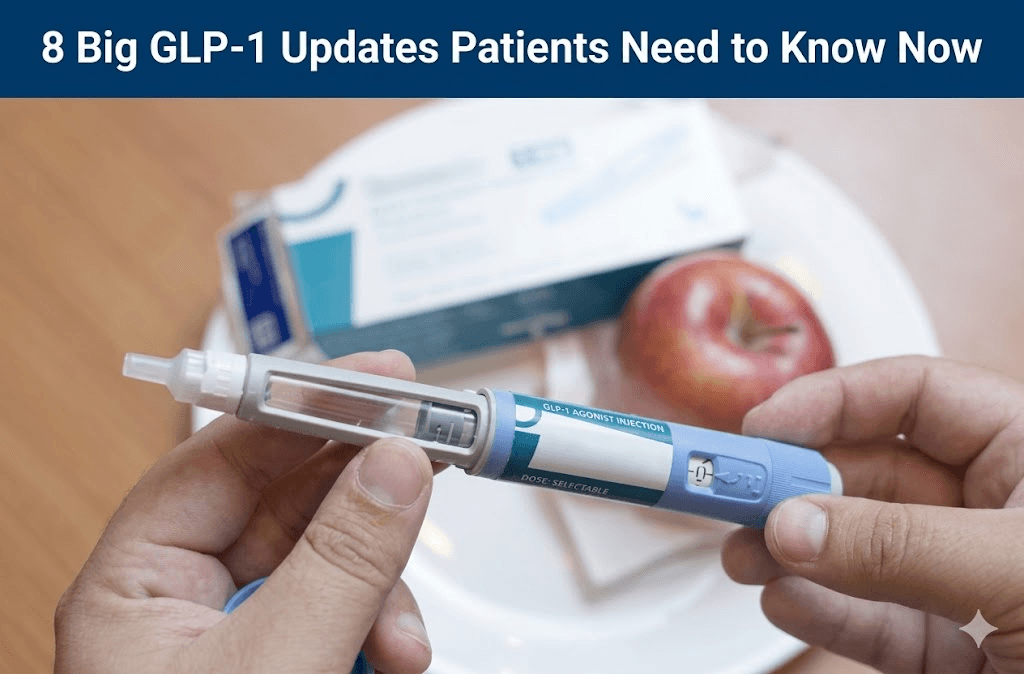
GLP-1 Weight Loss Drugs: Smart Tool or Dangerous Shortcut?

Millions are taking them. Far fewer understand what they're actually signing up for.
If you've spent any time online lately, you've encountered the conversation surrounding weight loss medications—in your social feed, in your doctor's waiting room, possibly at your own dinner table. Semaglutide, tirzepatide, and the broader class of drugs known as GLP-1 receptor agonists have gone from niche diabetes medications to cultural phenomena almost overnight. Celebrities quietly slim down. Pharmacies report massive shortages. Telehealth platforms offer prescriptions with the friction of ordering a pizza.
And somewhere in the middle of all this noise, a person—maybe you—is trying to figure out whether any of this actually makes sense for their body.
The problem isn't a shortage of opinions. The problem is a shortage of honest, balanced medical frameworks. The discourse tends to collapse into one of two camps: breathless enthusiasm from people who've lost significant weight, or moralistic hand-wringing about society taking the "easy way out." Neither camp is particularly useful if you're an adult trying to make a serious medical decision.
What you actually need is context: where these drugs came from, what the real risks look like, and how to think clearly about whether the calculus works in your specific situation. That is what this article is for.
ACT 1: These Drugs Were Never Designed for Your Reunion Photos
To understand GLP-1 agonists properly, you have to start at their actual origin—not the Instagram version of it.
The Biological Mechanism
Glucagon-like peptide-1 (GLP-1) is a hormone your gut naturally produces after you eat. According to physiological data from the National Institutes of Health (NIH), its job is elegant and precise: it signals the pancreas to release insulin, tells the liver to stop dumping excess glucose into the bloodstream, and sends satiety signals to the brain. In people with type 2 diabetes, this system is impaired.
GLP-1 weight loss injections (like semaglutide and tirzepatide) were engineered to mimic and amplify this hormonal response. The FDA first approved semaglutide for type 2 diabetes management in 2017. The weight loss was, initially, a notable side effect.
The Shift to Weight Management
Subsequent clinical trials confirmed that the weight loss effects were substantial—participants lost between 10% and 22% of body weight depending on the drug. The FDA eventually approved higher-dose semaglutide (Wegovy) specifically for chronic weight management in adults with obesity, or those overweight with at least one weight-related comorbidity (like hypertension or sleep apnea).
This origin story matters for a straightforward reason: a drug designed to correct a pathological hormonal deficit in metabolically ill patients operates very differently, ethically and physiologically, than the same drug used to shed fifteen pounds before a wedding. The risk-benefit math changes entirely depending on why you are taking it.
ACT 2: The Willpower Debate Is the Wrong Conversation
The fiercest cultural resistance to GLP-1 drugs tends to invoke some version of the same argument: people should eat less, move more, and exercise discipline. These medications, in this framing, are a shortcut.
This argument feels morally coherent. It is also scientifically wrong.
Biology vs. Willpower
Obesity research over the last three decades has fundamentally dismantled the "willpower" model of weight management. The biology is genuinely complex.
- Leptin Resistance: Leptin (the hormone that signals fullness) functions abnormally in many people with obesity. The brain essentially stops receiving the message that the body has enough fuel.
- Ghrelin Spikes: Ghrelin (the hunger hormone) remains persistently elevated in people who have lost weight through caloric restriction, which is why strict diets are so brutally hard to maintain.
- The Set Point: The body actively defends its highest sustained weight by increasing hunger and decreasing metabolic rate as weight drops.
In other words, many people with obesity are not failing to exercise willpower. They are fighting a physiological system that is actively working against them.
GLP-1 drugs work because they intervene at this biological level. They reduce "food noise"—the persistent, intrusive preoccupation with food that lean individuals rarely understand. For these patients, GLP-1 drugs aren't a shortcut around discipline. They are correcting a physiological impairment that made discipline an insufficient tool.
ACT 3: The Risks Nobody Puts in the Lead Paragraph
Positive outcomes dominate the news cycle because dramatic weight loss is visible and compelling. The risks are less photogenic, but they are real, and they deserve equal billing before you start treatment.
1. Muscle Loss
Rapid weight loss of any kind risks losing lean muscle mass alongside fat. Muscle is metabolically active tissue that drives insulin sensitivity, supports bone density, and underpins long-term metabolic health. Losing muscle while losing fat can leave you lighter but metabolically weaker.
The Fix: You must engage in progressive muscle building and toning exercises and prioritize protein intake while on these medications.
2. Dependency and Weight Regain
These drugs do not cure obesity; they manage it. And they manage it only as long as you keep taking them. In the STEP 4 clinical trial, participants who discontinued semaglutide after 68 weeks regained approximately two-thirds of the weight they had lost within a year. You are potentially committing to an indefinite, expensive pharmaceutical regimen to maintain a weight you could not otherwise sustain.
3. Gastrointestinal and Rare Risks
Nausea, vomiting, diarrhea, and constipation are common, particularly during dose escalation. More rarely, GLP-1 agonists have been associated with pancreatitis. There is also a black box warning regarding a potential risk of thyroid C-cell tumors based on rodent studies. Anyone with a personal or family history of medullary thyroid carcinoma or Multiple Endocrine Neoplasia syndrome type 2 is contraindicated.
Maryland Trim Clinic (MTC) in Laurel, MD
Navigating the complex realities of weight loss medications requires more than just a quick telehealth prescription; it requires comprehensive, holistic medical oversight. Located in Laurel, MD, the Maryland Trim Clinic (MTC) provides the specialized care necessary to ensure these powerful tools are used safely and effectively.
Rather than handing you a medication and sending you on your way, MTC focuses on preserving your metabolic health throughout your journey. When you enroll in a tailored medical weight loss program, our clinical team actively monitors for the common pitfalls of GLP-1 therapy, such as dangerous muscle loss. By integrating services like metabolic testing and analysis and robust nutritional counseling and coaching, MTC ensures that the weight you lose is fat, your muscle is protected, and you are building the dietary habits necessary to sustain your results for the long haul.
The Honest Verdict
GLP-1 drugs are not a scam. For people with type 2 diabetes, obesity with significant comorbidities, or metabolic dysfunction that hasn't responded to sustained lifestyle intervention, the evidence is genuinely compelling. As supported by the Centers for Disease Control and Prevention (CDC), obesity is a complex chronic disease that often requires clinical intervention.
But they are also not magic. They work best as part of a comprehensive approach that includes resistance training, adequate nutrition, and honest behavioral reflection—not as a replacement for those things. They require indefinite use to maintain their effects and carry real risks for specific populations.
The most useful question you can ask isn't Is this drug good or bad? It's a more personal one: Given my actual medical situation, my risk profile, and my long-term goals—does this tool make sense for me?
Medical Disclaimer: The information provided in this article is for educational purposes only and is not intended as a substitute for professional medical advice, diagnosis, or treatment. Always seek the advice of your physician regarding a medical condition, treatment options, or before starting any new weight loss medication.
Frequently Asked Questions
Q: What is the difference between Ozempic and Wegovy if they contain the same drug? A: Both contain the active ingredient semaglutide, but they are FDA-approved for different purposes and dose ranges. Ozempic is approved for type 2 diabetes management (max dose 2mg weekly). Wegovy is approved for chronic weight management (max dose 2.4mg weekly). The higher dose drives the greater weight loss seen in obesity trials.
Q: Who are the ideal candidates for GLP-1 drugs according to current evidence? A: The strongest clinical evidence supports use in adults with type 2 diabetes, adults with obesity (BMI ≥ 30), and adults who are overweight (BMI ≥ 27) with at least one weight-related comorbidity (e.g., hypertension, sleep apnea).
Q: Will I gain the weight back if I stop taking GLP-1 drugs? A: Based on current evidence, yes. Most people regain roughly two-thirds of their lost weight within a year of stopping the medication. These drugs manage hormonal dysregulation; they do not cure it. They are more analogous to blood pressure medication than to a finite course of antibiotics.
Q: How serious is the muscle loss concern with GLP-1 drugs? A: It is a highly legitimate concern. Rapid weight loss risks losing lean muscle mass, which slows your metabolism and weakens your body. It is critical to prioritize resistance training and high protein intake while on these medications to protect your muscle.
Q: Are there people who should not take GLP-1 drugs? A: Yes. They carry a black box warning for people with a personal or family history of medullary thyroid carcinoma (MTC) or Multiple Endocrine Neoplasia syndrome type 2 (MEN 2). People with a history of pancreatitis or severe gastrointestinal disease, as well as pregnant individuals, should avoid them.
Q: Is the 'willpower versus biology' debate actually settled? A: The scientific literature heavily favors biology. Decades of research show that hormones and metabolic adaptations make weight management far more complex than simple discipline. However, lifestyle factors (diet, exercise, sleep) still genuinely influence metabolic health. GLP-1 drugs correct the biological impairment, making your lifestyle efforts actually work.
Ready to Explore Your Medical Weight Loss Options Safely?
Don't navigate the complexities of weight loss medications alone. Visit the Maryland Trim Clinic homepage today to schedule a comprehensive consultation. Our medical experts in Laurel, MD, will help you understand your unique metabolic profile and build a safe, sustainable plan tailored to your body.