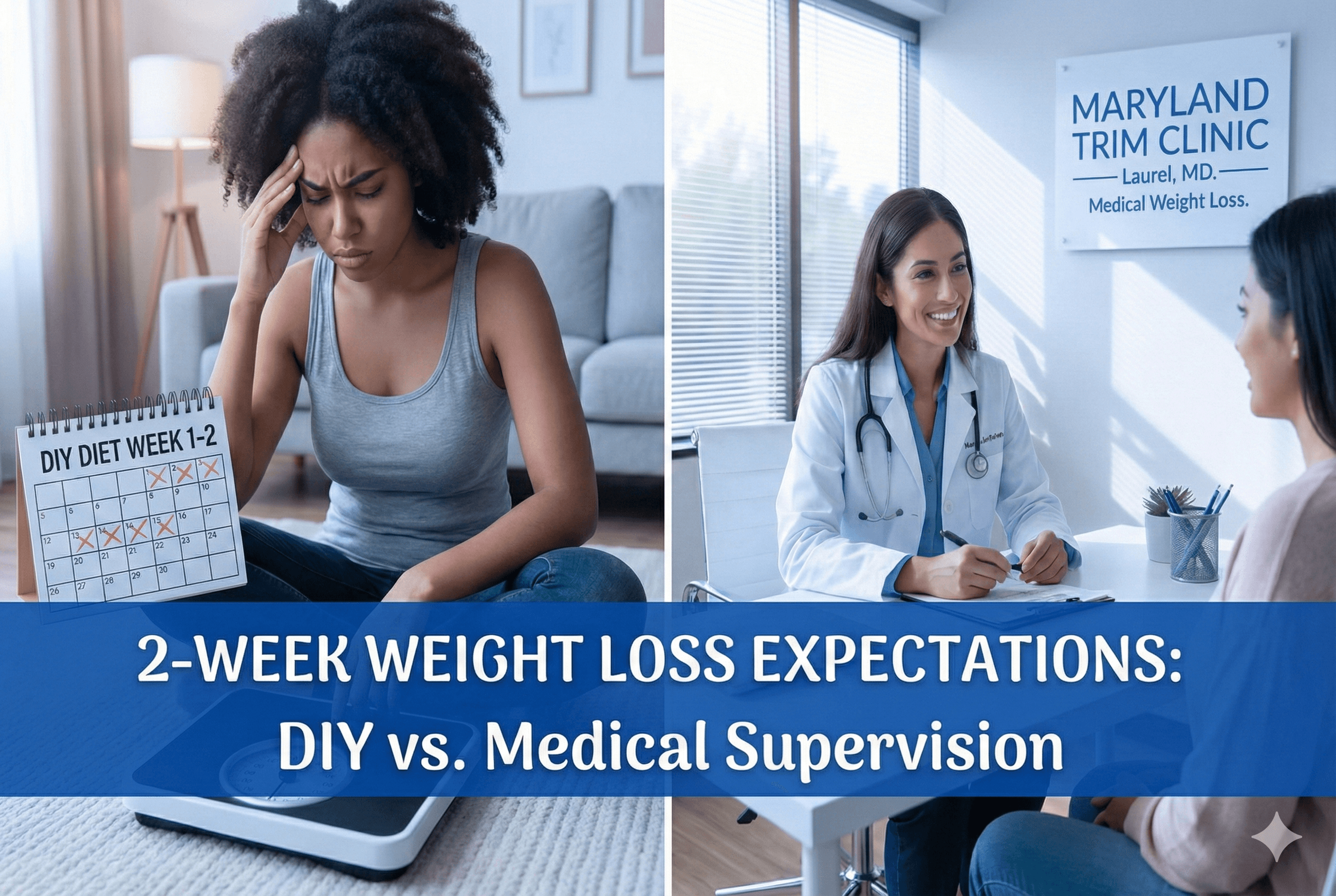
How Much Weight Can You Lose in 2 Weeks? What’s Fat vs Water Weight

How Much Weight Can You Lose in 2 Weeks? A Realistic, Safe Guide (Laurel, MD)

If you’re asking “how much weight can you lose in 2 weeks?” you probably want a clear number, and you want it to be safe. For many adults, a realistic pace is modest. Many public-health and medical sources recommend aiming for about 1–2 pounds per week for steady progress you can maintain. That means roughly 2–4 pounds in two weeks for many people, though your scale can swing higher or lower depending on water, digestion, and hormones.
This guide explains what’s normal, what’s risky, and what to do next. If you want medical support in the Laurel area, Maryland Trim Clinic (MTC) offers clinician-led options and a free consultation.
The honest 2-week answer: fat loss vs scale loss
In two weeks, your “weight” can change from:
- Body fat (the change most people want)
- Water (salt, carbs, stress, sore muscles, menstrual cycle)
- Food volume and digestion (constipation, bigger meals, alcohol)
- Muscle glycogen (stored carbohydrate that holds water)
So it’s possible to see a bigger early drop on the scale, but that does not automatically mean you lost that much body fat. Short-term fluctuations are common.
A simple way to think about it:
- Two-week fat loss tends to be gradual.
- Two-week scale loss can be jumpy.
Why the scale can move quickly in the first week
Here are the most common reasons people “drop weight fast” early on:
- Lower sodium or fewer ultra-processed foods can reduce water retention.
- Lower carbs can temporarily reduce stored glycogen and its associated water.
- Changing alcohol intake can shift hydration and appetite.
- Exercise soreness can cause short-term water retention while your body recovers.
- Hormonal changes and stress can shift water balance.
Daily or weekly changes on the scale often reflect these factors, not just fat loss.
A quick safety check: should you push for fast loss right now?
Use this decision framework before you attempt a more aggressive 14-day plan.
The “SAFE” filter
S: Symptoms first
If you have chest pain, fainting, severe weakness, confusion, or signs of dehydration, stop and seek medical care.
A: Avoid extremes if you’re higher risk
Be cautious with aggressive dieting if you’re pregnant, breastfeeding, have a history of eating disorders, uncontrolled medical conditions, or you take medications affected by food intake.
F: Fast loss has trade-offs
Rapid loss strategies can increase risks like gallstones, especially with very fast drops and very low calorie intake.
E: Expect a safer target
A steady pace is more likely to stick long term than a crash approach.
If you’re unsure, a medical weight loss consult can help you choose a safe target based on your history, labs, and medications.
A safe 14-day plan that works for real life
This is not a “detox.” It’s a short reset that prioritizes consistency.
Food levers (pick 3–4 and keep them simple)
- Build meals around protein + fiber. This supports fullness and helps reduce mindless snacking.
- Use a “plate method” most days: half non-starchy veggies, a palm of lean protein, a fist of whole-food carbs, and a thumb of healthy fats.
- Choose mostly water-based drinks. Sweet drinks can add calories quickly.
- Plan one default breakfast and lunch you can repeat on busy days.
- Aim for regular meal timing to reduce rebound hunger.
Movement levers (more reliable than “hard workouts”)
- Add steps first. A daily walk is easier to sustain than an all-or-nothing plan.
- Do 2 short strength sessions per week (even 15–25 minutes). Preserving muscle matters when you’re in a calorie deficit.
- For general health and weight management, many guidelines point toward 150 minutes/week of moderate activity plus strength work.
Sleep and stress levers (often the missing piece)
- Set a consistent bedtime for two weeks.
- Keep caffeine earlier in the day if sleep is fragile.
- If stress is high, choose “minimum effective” habits you can actually keep.
Options at Maryland Trim Clinic (MTC) in Laurel: What Fits a 2-Week Goal?
Here is a reality-based comparison so you don’t choose the wrong tool for your timeline.
1. DIY Habit Reset
- Best For: People who simply want a fresh start or a "reset."
- What You Might Notice in 2 Weeks: You will likely feel less bloating and enjoy better routine consistency, though scale changes may be modest at first.
- Key Consideration: This approach works best when you use tracking tools and set realistic, achievable targets.
2. Medical Weight Loss Program
- Best For: Individuals facing weight plateaus, medical complexities, or a history of rebounding after diets.
- What You Might Notice in 2 Weeks: You will have a clear, actionable plan, professional accountability, and safer, personalized guidance.
- Key Consideration: Success starts with a thorough evaluation and requires ongoing monitoring to ensure safety.
3. GLP-1 Therapy (Semaglutide, Tirzepatide)
- Best For: Patients who qualify medically and need help with appetite regulation and metabolic health.
- What You Might Notice in 2 Weeks: Many patients experience improved appetite control early on, though meaningful weight change is typically a conversation measured in months, not days.
- Key Consideration: These are prescription medications that require specific eligibility checks and medical oversight.
4. 3D Body Scanning
- Best For: People who dislike scale-only tracking and want a full picture of their progress.
- What You Might Notice in 2 Weeks: You get far better clarity on inch loss and body composition changes that the scale might miss.
- Key Consideration: This tool produces measurement-based progress reports rather than just a weight number.
5. Non-Invasive Body Contouring
- Best For: People who are already near their goal weight but want to target stubborn areas.
- What You Might Notice in 2 Weeks: Changes are technology-dependent and usually not "instant" within this window.
- Key Consideration: This is not a substitute for weight loss; timing and results vary by the specific treatment used.
- Local Note: MTC is located on Cherry Lane in Laurel, MD, and offers free consultations and telehealth options to help you find the right fit.*If you’re considering GLP-1s for weight loss, set the right expectations
GLP-1 and related medications are FDA-approved for chronic weight management in qualifying adults, used alongside nutrition and activity changes. They can be effective tools, but they are not a “drop 10 pounds in 14 days” plan.
At MTC, GLP-1 therapy is presented as a monitored program that includes assessment, follow-ups, and guidance. If you want the safest path, ask about:
- Eligibility (often based on BMI and health conditions)
- Side effects and how they’re managed
- Long-term maintenance planning (what happens after goal weight)
Myths vs facts (2-week edition)
Myth: “If I lose 6 pounds in week 1, I’ll lose 12 pounds in 2 weeks.”
Fact: Early drops often include water shifts and digestion changes.
Myth: “Eating as little as possible is the fastest way.”
Fact: Extreme restriction is hard to sustain and can carry medical risks; very fast loss can raise gallstone risk.
Myth: “I can spot-reduce belly fat in 14 days.”
Fact: You can reduce overall fat over time, but where fat comes off first is largely genetics and hormones.
Myth: “The scale is the only progress metric.”
Fact: Measurements, how clothes fit, and body composition tracking can be more motivating than daily weigh-ins.
Myth: "If I lose 10 lbs in 2 weeks, it's all fat."
Fact: Rapid drops usually include water and potentially muscle. Medical supervision ensures we prioritize fat loss by monitoring your protein intake.
Myth: "I can just stop eating to speed it up."
Fact: Starvation puts your body into "preservation mode," stalling weight loss. You need fuel to burn fat.
Myth: "Supplements burn fat instantly."
Fact: No pill replaces a deficit. Medical injections work on biology, not magic.
Consult prep checklist: what to bring (and what to ask)
Bring this to your appointment
- Current medication list and supplements
- Your goal and your deadline (if you have an event)
- Past attempts that worked and didn’t work
- Any recent labs (if you have them)
- A typical day of eating and activity (honest is helpful)
MTC consults include a health assessment, plan discussion, treatment options and pricing review, and Q&A, with no pressure to commit.
Questions to ask a weight loss clinic
- What is a realistic target for me in 2 weeks and in 12 weeks?
- How do you track progress beyond the scale?
- What happens if I plateau?
- If medication is recommended, what monitoring is included?
- What are the red flags that mean I should stop or call my clinician?
When to pause and talk to a clinician
- You’re considering a very low-calorie approach or you feel unwell doing it.
- You have diabetes, kidney disease, heart disease, or you’re on medications that interact with weight loss plans.
- You’re losing weight rapidly without trying.
- You have persistent nausea, vomiting, dizziness, or signs of dehydration.
Next steps in Laurel, MD
If you want a plan that matches your body, schedule, and health history, Maryland Trim Clinic (MTC) in Laurel can help you set a realistic two-week target and a longer runway for lasting results. Call (301) 960-4811 or schedule online for a free consultation.
Medical disclaimer: This article is for educational purposes and does not provide medical advice. Weight loss outcomes vary. Always talk with a qualified clinician before starting a new diet, exercise, or medication plan.
Frequently Asked Questions
How much weight can you lose in 2 weeks safely?
Many people do best with a modest pace, often around 1–2 pounds per week, depending on starting point and health factors. Your scale may move more due to water and digestion changes.
Can I lose 10 pounds in 2 weeks?
Some people may see a large scale drop, but losing 10 pounds in 14 days often requires extreme methods that can be unsafe and hard to maintain. If you’re tempted to try a very low-calorie plan, do it only under medical supervision.
Why did I lose weight fast in week 1, then stall?
Week 1 often includes water shifts (salt, carbs, soreness, hormones). Plateaus can happen even when fat loss continues in the background.
How do I know if I’m losing fat or just water weight?
Track more than the scale: waist measurement, how clothes fit, photos, and body composition tools. A 3D scan can add objective measurement detail beyond daily weigh-ins.
What’s the best exercise for 2-week weight loss?
The best exercise is what you can repeat. Start with daily walking and add 2 short strength sessions weekly. Many guidelines recommend aiming toward 150 minutes/week of moderate activity for health and weight management.
Do GLP-1 injections help in just 2 weeks?
Some people notice appetite control early, but meaningful weight change is usually part of a longer, monitored plan. GLP-1 medications are used for chronic weight management in qualifying adults alongside lifestyle changes.
What are the risks of trying to lose weight too fast?
Fast loss can increase health risks and may raise the chance of gallstones, especially with extreme restriction. If you feel unwell, stop and talk with a clinician.
Where can I get medical weight loss in Laurel, MD?
Maryland Trim Clinic (MTC) is located in Laurel and offers medical weight loss services with clinician oversight. A consult can help you choose a safe plan based on your history and goals.
Do you offer weight loss consultations near me if I live in Columbia, Bowie, or Silver Spring?
Many patients travel to Laurel from nearby areas. MTC also lists telehealth as an option, which may help with follow-ups depending on your needs.
What happens during a consultation at Maryland Trim Clinic?
MTC outlines a health assessment, personalized plan discussion, treatment options and pricing review, and a Q&A with no pressure to commit.
Is body contouring the same as weight loss?
Not exactly. Body contouring targets shape and specific areas, while weight loss changes overall body mass. It can be a complement, but it’s not a replacement for a medical weight loss plan.
How can I track progress if the scale stresses me out?
Use weekly check-ins instead of daily weigh-ins, and track inches, photos, energy, and habits. Objective tools like 3D body scanning can help you focus on measurable changes.
Ready to Start Your First 2 Weeks?
The next two weeks are going to pass regardless—the only question is whether you want to spend them guessing with a DIY plan or making real progress with a medical team. At Maryland Trim Clinic, we help patients in Laurel and the surrounding areas move past the "quick fix" mentality and into sustainable, healthy transformation. You don't have to navigate the confusion of dieting alone; let us help you build a plan that prioritizes both your results and your safety.