How to Avoid Muscle Loss on Mounjaro While Losing Weight

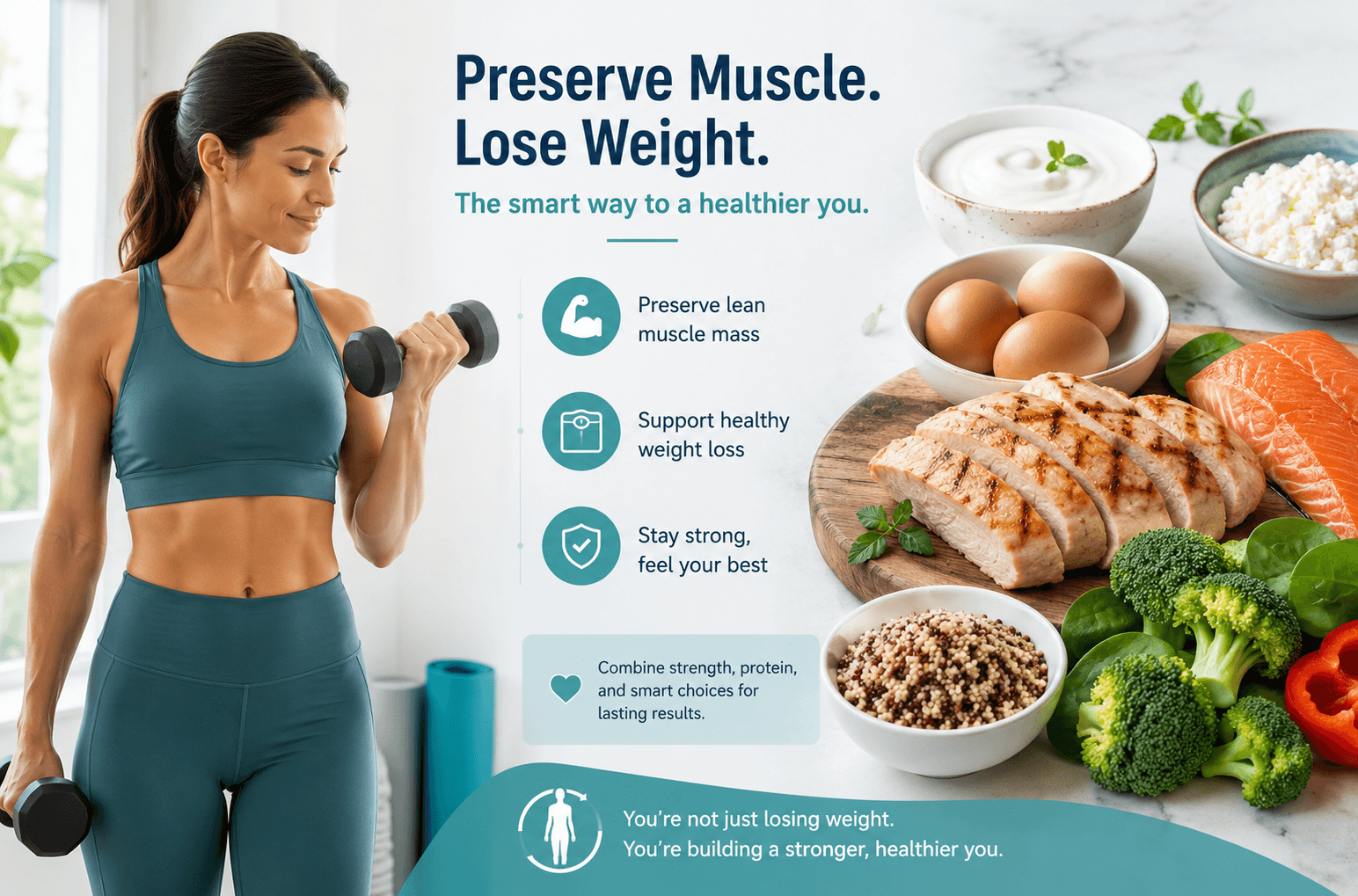
Mounjaro shrinks your appetite, but if you are not eating enough high-quality protein, your body may lose muscle along with fat.
That is not meant to create fear. It is a well-recognized physiological response to rapid weight loss and aggressive calorie reduction. Many people taking tirzepatide experience meaningful changes on the scale, but body weight alone does not tell the full story. If lean muscle mass drops too quickly, it can contribute to lower strength, reduced metabolic rate, increased fatigue, and a harder time maintaining weight loss over the long term.
This guide explains how to support muscle preservation while taking Mounjaro, using practical nutrition, movement, and recovery strategies grounded in current obesity medicine and sports nutrition principles.
The Hidden Risk Inside Mounjaro's Greatest Strength
How Mounjaro Changes Appetite and Energy Intake
Mounjaro works by mimicking the gut hormones GIP and GLP-1. These hormones help regulate blood sugar, slow stomach emptying, and increase feelings of fullness. For many people, this makes portion control dramatically easier.
According to the National Institute of Diabetes and Digestive and Kidney Diseases, medications used for chronic weight management can support meaningful weight reduction when combined with nutrition and lifestyle changes.
However, the same appetite suppression that helps reduce calorie intake can also unintentionally reduce protein intake.
When daily calories drop sharply, the body enters a calorie deficit. In that state, the body pulls energy from stored fat, but it may also break down lean muscle tissue if protein intake and physical activity are inadequate.
Why Muscle Loss Happens During Rapid Weight Loss
Muscle loss becomes more likely under three common conditions:
Severe Calorie Restriction
Some people on Mounjaro struggle to eat more than 800 to 1,200 calories per day, especially during dose increases or periods of nausea. When energy intake becomes extremely low, the body becomes more aggressive about conserving resources.
Low Protein Intake
Protein needs often increase during weight loss, yet appetite suppression can make protein-rich meals difficult to finish. Many people unintentionally eat too little protein while taking GLP-1 medications.
Reduced Physical Activity
Fatigue, nausea, or low energy can reduce daily movement. Without resistance exercise or regular muscle use, the body receives fewer signals that muscle tissue still needs to be maintained.
Why Preserving Lean Mass Matters
Muscle tissue is metabolically active. Maintaining it can support:
- Strength and mobility
- Physical function as you age
- Resting metabolic rate
- Blood sugar regulation
- Long-term weight maintenance
The goal is not simply to lose weight. The goal is to improve body composition by reducing excess fat while preserving as much lean mass as possible.
Not All Protein Is Created Equal — And This Distinction Matters More on Mounjaro
Why Protein Quality Matters
When you are eating smaller portions, every meal becomes more important. High-quality protein sources provide essential amino acids in amounts that better support muscle repair and maintenance.
The amino acid leucine is particularly important because it helps trigger muscle protein synthesis, the process responsible for building and repairing muscle tissue.
Complete vs. Incomplete Proteins
Complete proteins contain all nine essential amino acids your body cannot make on its own.
Examples include:
- Eggs
- Fish
- Poultry
- Dairy products
- Soy foods such as tofu and tempeh
Incomplete proteins are missing or low in one or more essential amino acids. Many plant proteins fall into this category, although combining different plant foods throughout the day can help improve amino acid balance.
The Best Protein Sources for Mounjaro Users
Prioritize These Protein Options
Eggs
Eggs are highly bioavailable and easy to prepare in small portions. They also tend to be easier to tolerate during periods of reduced appetite.
Greek Yogurt
Plain Greek yogurt provides concentrated protein in a relatively small serving. It can also work well in smoothies when solid foods feel unappealing.
Cottage Cheese
Cottage cheese is rich in casein protein, which digests more slowly and may help support muscle preservation between meals.
Chicken and Turkey
Lean poultry offers high protein density without excessive calories. Softer preparations, such as shredded chicken or turkey meatballs, may be easier to eat when fullness sets in quickly.
Fish
Salmon, tuna, cod, and other fish provide complete protein and important nutrients like omega-3 fatty acids. The Office of Dietary Supplements at NIH notes that omega-3s support several aspects of overall health, including cardiovascular function.
Whey Protein Isolate
For people struggling to meet protein targets through food alone, whey protein isolate can be a practical supplement. It is rapidly digested and naturally rich in leucine.
Plant-Based Protein Options
Plant-based eating patterns can still support muscle preservation when planned carefully.
Helpful options include:
- Tofu
- Tempeh
- Edamame
- Lentils
- Chickpeas
- Black beans
Pairing legumes with grains can improve amino acid balance across meals.
Protein Sources to Limit
Some products marketed as “high protein” are less effective for muscle preservation.
Be cautious with:
- Sugary protein bars with minimal protein density
- Collagen-only supplements used as primary protein sources
- Extremely high-fat protein choices that crowd out leaner options
Collagen may support skin or joint health, but it is not considered a complete protein for muscle-building purposes.
How Much Protein You Actually Need — And How to Hit It When You're Never Hungry
General Protein Targets During GLP-1 Weight Loss
The standard Recommended Dietary Allowance of 0.8 grams of protein per kilogram of body weight is generally considered too low for people in a significant calorie deficit.
Many obesity medicine and sports nutrition experts recommend approximately:
- 1.2 to 1.6 grams of protein per kilogram of body weight daily for muscle preservation
- Up to 2.0 grams per kilogram for some people doing regular resistance training
For example:
- A person weighing 180 pounds may aim for roughly 100 to 135 grams daily
- A person weighing 220 pounds may target approximately 120 to 160 grams daily
Practical Ways to Increase Protein Intake
Use a “Protein First” Approach
Start meals with protein before moving on to other foods. If fullness develops early, you are more likely to meet your most important nutrition priority.
Spread Protein Throughout the Day
Smaller, protein-focused meals are often easier to tolerate than one or two large meals.
A simple structure might include:
- Breakfast with 25 to 30 grams of protein
- Lunch with 30 to 40 grams
- Dinner with 30 to 40 grams
- Optional protein-rich snack or shake
Use Liquid Nutrition Strategically
Liquid protein can help during periods of nausea or low appetite.
Options may include:
- Whey protein shakes
- Greek yogurt smoothies
- High-protein soups
- Protein-fortified oatmeal
These options can reduce the discomfort of eating large portions while still supporting protein goals.
Track Intake Temporarily if Needed
Many people underestimate how much protein they are actually eating.
Using a food tracking app for a few weeks can help identify gaps and improve consistency. Some clinics also use tools like 3D body composition analysis and metabolic testing services to monitor progress beyond the scale alone.
Resistance Training Is Essential
Exercise remains one of the strongest signals for muscle retention during weight loss.
The Centers for Disease Control and Prevention recommends muscle-strengthening activities at least two days per week for adults.
You do not need an advanced bodybuilding program to benefit.
Helpful beginner-friendly options include:
- Squats
- Rows
- Chest presses
- Resistance band exercises
- Bodyweight movements
- Machine-based strength training
Consistency matters more than perfection.
Recovery and Hydration Also Matter
Muscle preservation is not only about protein.
Recovery factors also influence how your body responds to training and weight loss, including:
- Adequate sleep
- Hydration
- Stress management
- Electrolyte balance
- Consistent calorie intake
If persistent nausea, vomiting, weakness, or dehydration develops while taking Mounjaro, contact a healthcare professional promptly.
Maryland Trim Clinic (MTC) in Laurel, MD
People taking GLP-1 medications often benefit from structured medical guidance, nutrition support, and body composition monitoring during their weight loss journey. A clinic such as Maryland Trim Clinic in Laurel, MD may help individuals build a more sustainable plan focused on both fat loss and muscle preservation.
Depending on individual goals and medical needs, some patients explore services such as GLP-1 treatment options, nutrition coaching programs, or a broader medical weight management approach. Some people also use supportive tools like muscle-building and toning support or Vitamin B12 lipotropic injections as part of a personalized care plan discussed with a licensed provider.
The most effective weight management plans usually combine medication, nutrition, physical activity, and ongoing monitoring rather than relying on any single intervention alone.
The Bottom Line
Mounjaro can be a highly effective tool for weight management, but preserving muscle should remain part of the conversation from the beginning.
A sustainable approach typically includes:
- Prioritizing high-quality protein
- Eating enough total protein daily
- Strength training consistently
- Staying hydrated
- Monitoring recovery and energy levels
- Tracking body composition instead of focusing only on scale weight
Losing fat while maintaining lean muscle often leads to better long-term strength, metabolic health, and weight maintenance outcomes.
Frequently Asked Questions
Q: How much protein should I eat per day on Mounjaro?
A: Many experts recommend approximately 1.2 to 1.6 grams of protein per kilogram of body weight daily during aggressive weight loss. Individuals doing regular resistance training may require higher amounts depending on their goals and medical status.
Q: Why does Mounjaro sometimes lead to muscle loss?
A: Appetite suppression can lead to a sharp drop in calorie and protein intake. If the body does not receive enough dietary protein or resistance exercise stimulus, it may break down muscle tissue along with fat stores.
Q: What are the best protein foods while taking Mounjaro?
A: Commonly recommended options include eggs, Greek yogurt, cottage cheese, lean poultry, fish, tofu, tempeh, and whey protein isolate because they provide concentrated, high-quality protein in manageable portions.
Q: Is collagen protein enough for muscle preservation?
A: Collagen is not considered a complete protein and is relatively low in leucine, which is important for muscle protein synthesis. It should not be relied on as a primary protein source for preserving lean muscle mass.
Q: Do I need exercise while taking Mounjaro?
A: Resistance training significantly improves muscle retention during weight loss. Even two strength-training sessions per week can help maintain lean mass and physical function.
Q: What if I feel too nauseous to eat enough protein?
A: Liquid nutrition options such as protein shakes, Greek yogurt smoothies, or protein soups may feel easier to tolerate. Eating smaller, more frequent meals and prioritizing protein first can also help.
Finding Support That Fits Your Goals
Some people find it difficult to balance appetite suppression, protein intake, exercise, and recovery without additional structure or accountability. Working with qualified healthcare professionals can help create a more individualized plan based on medical history, body composition, and long-term goals. If you are looking for medically supervised support, Maryland Trim Clinic in Laurel, MD offers weight management and wellness services designed to support sustainable lifestyle changes alongside medical treatment when appropriate.