Increase Fiber Without Bloating: Gentle Food Tips


Fiber can help with fullness, bowel regularity, blood sugar support, cholesterol, and long-term weight management. The problem is that many people try to fix constipation or improve their diet by adding too much fiber at once, then end up with gas, cramping, bloating, or even worse constipation.
If you want to increase fiber without bloating, the safest approach is gradual. Start with small portions of gentler fiber foods, drink enough fluids, spread fiber across meals, and delay the highest-gas foods until your digestive system adjusts. This matters even more if you are eating less on a weight-loss plan, using GLP-1 medication, or already struggling with constipation.
Increase Fiber Without Bloating: The Quick Answer
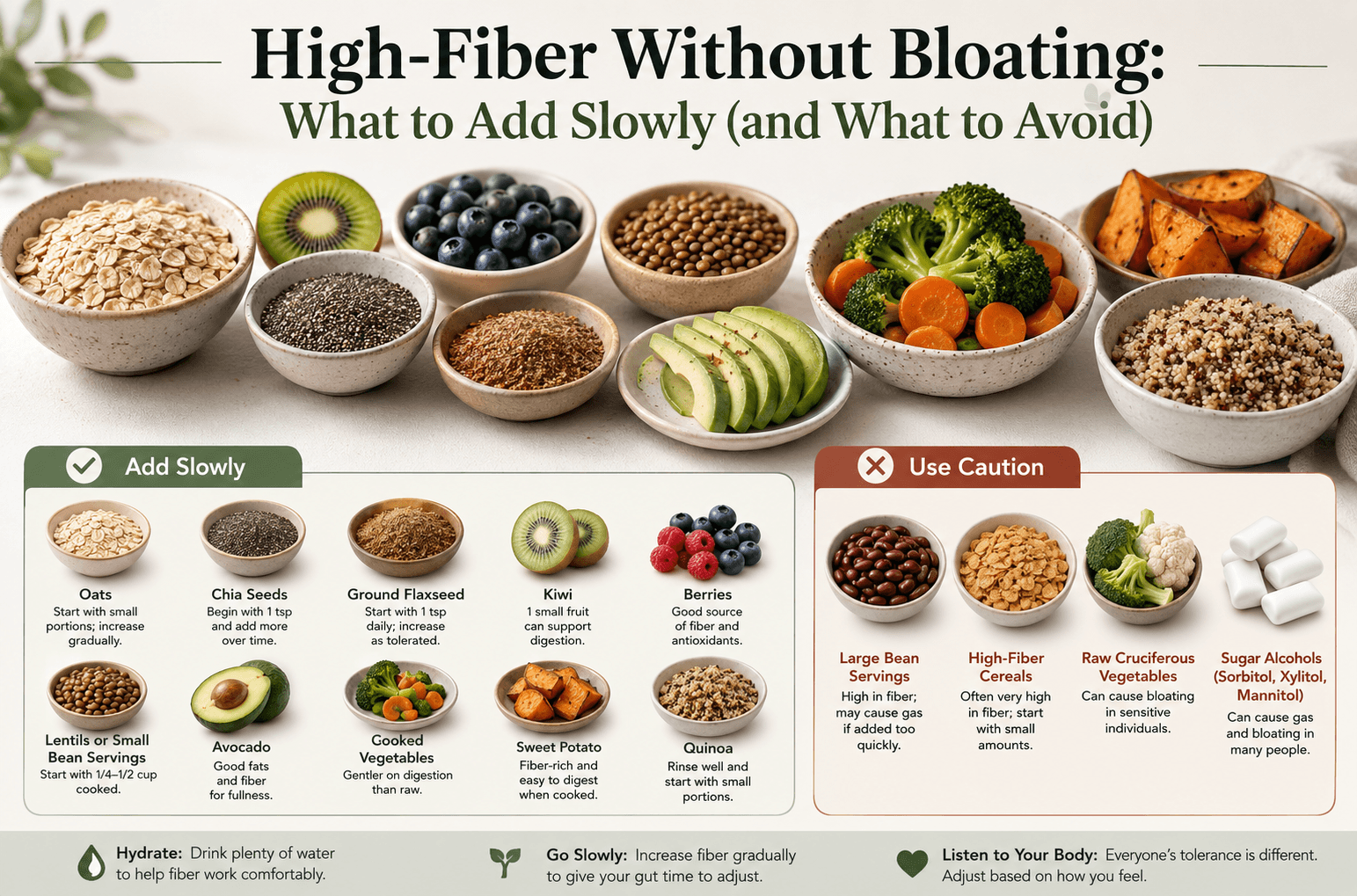
To increase fiber without bloating, add fiber slowly over several weeks, choose gentler foods such as oats, berries, kiwi, cooked vegetables, chia, ground flaxseed, and small portions of beans, and drink enough fluids. Avoid suddenly jumping to high-fiber cereals, large bean servings, raw cruciferous vegetables, sugar alcohols, or multiple supplements at once.
Medical Disclaimer: Educational information only. Not a substitute for professional medical advice, diagnosis, or treatment. For personalized guidance, consult a qualified clinician.
Why Fiber Causes Bloating
Fiber is a type of carbohydrate the body does not fully digest. That is part of why it is useful. It adds bulk, supports stool regularity, helps feed gut bacteria, and may support metabolic health.
Bloating can happen when gut bacteria ferment certain fibers and produce gas. Bloating can also worsen when fiber is added faster than the digestive system can adapt.
MedlinePlus explains that increasing dietary fiber too quickly can lead to gas, bloating, and cramps, and recommends adding fiber slowly. (medlineplus.gov)
Mayo Clinic also advises increasing fiber gradually over a few weeks and drinking plenty of fluids because some fibers work best when they absorb water. (mayoclinic.org)
The issue is not that fiber is bad. The issue is often too much, too quickly, without enough fluid or the right starting foods.
How Much Fiber Do Adults Need?
Fiber goals vary by age and sex. NIDDK states that adults should generally get 22 to 34 grams of fiber per day, depending on age and sex. NIDDK also recommends drinking plenty of water and other liquids when increasing fiber or taking a fiber supplement. (niddk.nih.gov)
Many people do not reach that range. The American Heart Association notes that the average recommended amount is about 28 grams per day, while average intake is much lower, around 14 grams. (heart.org)
Still, the solution is not to jump from 12 grams to 35 grams overnight.
A better plan is to add one small fiber change at a time, then watch how your body responds.
Soluble vs Insoluble Fiber: Which Is Gentler?
Both soluble and insoluble fiber matter, but they behave differently.
Fiber type
What it does
Examples
Bloating note
Soluble fiber
Absorbs water and forms a gel-like texture
Oats, barley, applesauce, chia, psyllium, beans, lentils
Often gentler for some people, but can still cause gas if added too quickly
Insoluble fiber
Adds bulk and helps stool move through the bowel
Wheat bran, whole grains, vegetable skins, many raw vegetables
Helpful for constipation for some people, but may feel rougher or more irritating when increased suddenly
Fermentable fibers
Feed gut bacteria and produce short-chain fatty acids
Beans, lentils, onions, garlic, some fruits, some fiber supplements
Beneficial, but may create more gas in sensitive people
For people with irritable bowel syndrome symptoms, NIDDK says soluble fiber may be more helpful than insoluble fiber and recommends adding fiber slowly because too much at once can cause gas and bloating. NIDDK also notes that adding fiber by 2 to 3 grams per day may help prevent gas and bloating in IBS. (niddk.nih.gov)
You do not need to memorize every fiber category. Start with foods that are easier to tolerate, then build from there.
The Slow-Add Method: How to Add Fiber Slowly
The best pace depends on your current intake, digestive history, medications, and symptoms. A practical approach is to add one small fiber serving every few days or each week rather than increasing everything at once.
Try this four-week structure:
Week
Goal
Example
Week 1
Add one gentle fiber food daily
Oatmeal, berries, kiwi, chia, or cooked vegetables
Week 2
Add a second fiber serving
Add lentil soup, whole-grain toast, or an extra fruit serving
Week 3
Introduce small portions of higher-fiber foods
Beans, chickpeas, bran cereal, or more vegetables
Week 4
Spread fiber across meals
Add fiber at breakfast, lunch, and dinner instead of one large dose
If gas or bloating increases, reduce the most recent addition for a few days, then restart with a smaller portion.
MedlinePlus gives similar practical guidance: slowly increase fiber, reduce the amount for a few days if bloating or gas occurs, and drink plenty of fluids because inadequate fluid can make constipation worse. (medlineplus.gov)
Gentle High-Fiber Foods to Start With
The best starting foods are easy to portion, familiar, and not too aggressive.
Oats
Oats are often a good first fiber step because they are soft, warm, and easy to pair with protein. Start with a small bowl rather than a huge portion.
Try oatmeal with Greek yogurt, berries, cinnamon, or ground flaxseed.
Berries
Berries provide fiber in a relatively easy format. Start with a small handful of raspberries, blackberries, blueberries, or strawberries.
They work well in yogurt, oatmeal, cottage cheese, or smoothies.
Kiwi
Kiwi is a useful constipation prevention diet option for many people because it provides fiber and fluid in a small portion. It is also easy to add without creating a heavy meal.
Cooked vegetables
Cooked vegetables are often easier than large raw salads when someone is prone to bloating.
Gentler options may include carrots, zucchini, green beans, spinach, squash, or peeled potatoes with skin reintroduced later if tolerated.
Chia or ground flaxseed
These can help increase fiber in small doses. Start with 1 teaspoon, not several tablespoons.
Drink fluids with them, especially if using chia, because it absorbs water.
Lentils and beans in small portions
Beans and lentils are high-fiber, nutrient-dense foods, but they are also common gas triggers when portions are too large too soon.
Start with 2 to 3 tablespoons added to soup, salad, rice bowls, or wraps.
Maryland Trim Clinic’s nutritional counseling and coaching can help patients personalize fiber, protein, meal timing, and portion strategies rather than guessing. MTC describes this service as individualized nutrition support that reviews eating habits, medical history, lifestyle factors, goals, calorie needs, macronutrients, portion control, and meal timing. (marylandtrimclinic.com)
Foods to Add Later or Use With Caution
Some foods are healthy but more likely to cause bloating when introduced quickly.
Large bean or lentil servings
Beans and lentils are excellent fiber sources, but large portions can overwhelm a gut that is not used to them. Start small, rinse canned beans, and increase gradually.
Raw cruciferous vegetables
Broccoli, cauliflower, cabbage, Brussels sprouts, and kale can be helpful foods, but raw or large portions may cause more gas. Try cooked small portions first.
Onion and garlic
Onion and garlic can trigger bloating in some people, especially those with IBS symptoms, because they contain fermentable carbohydrates. Monash University explains that a low FODMAP diet limits foods that can aggravate IBS symptoms such as bloating, gas, and pain. (monashfodmap.com)
That does not mean everyone must avoid onion or garlic. It means sensitive patients may need to test portions carefully or work with a dietitian.
High-bran cereals and fiber bars
Some products add a lot of fiber in a small serving. That can be convenient, but it can also cause bloating if your body is not ready.
Read labels and avoid stacking high-fiber cereal, fiber bars, fiber powders, and beans all in the same day at the beginning.
Sugar alcohols
Sugar-free gum, candy, protein bars, and “low-carb” desserts may contain sugar alcohols such as sorbitol, xylitol, maltitol, or erythritol. These can trigger gas, bloating, or diarrhea in some people.
If you are increasing fiber and also eating several sugar-free products, it may be hard to tell what is causing symptoms.
Fiber and Hydration Tips That Actually Help
Fiber and water work together. Increasing fiber while drinking too little can make constipation worse.
NIDDK recommends drinking plenty of water and other liquids when eating more fiber or taking a fiber supplement. (niddk.nih.gov)
Try these practical habits:
- Drink a glass of water with high-fiber meals.
- Add soups or broth-based meals if plain water is difficult.
- Sip fluids earlier in the day instead of waiting until evening.
- Increase fiber at breakfast and lunch, not only at dinner.
- Use fruit and cooked vegetables to add fiber and fluid together.
- Ask your clinician about fluid goals if you have kidney, heart, or fluid-restriction concerns.
Hydration needs vary. A generic water target is not right for everyone, especially for patients with medical restrictions.
Fiber on GLP-1 Medication: A Slower Approach May Be Better
Patients using semaglutide, tirzepatide, or other GLP-1-related treatments may need to increase fiber more carefully.
GLP-1 medications can reduce appetite, increase fullness, and slow stomach emptying. Maryland Trim Clinic’s GLP-1 weight-loss injections page describes semaglutide and tirzepatide as medications that slow gastric emptying, reduce appetite, and increase fullness, with guidance on dietary adjustments and hydration to manage side effects. (marylandtrimclinic.com)
That means a very large high-fiber meal may feel uncomfortable for some patients.
Better GLP-1-friendly fiber choices may include:
- Small oatmeal portions
- Greek yogurt with berries
- A small kiwi
- Cooked vegetables instead of raw salad
- Lentil soup in a modest serving
- Chia or ground flaxseed in small amounts
- Smoothies with fruit and protein, not huge added-fiber doses
If constipation, bloating, nausea, vomiting, or abdominal pain is persistent or worsening, contact your clinician rather than simply adding more fiber.
What Else Helps Constipation Besides Fiber?
Fiber is helpful, but it is not the whole constipation plan.
A constipation prevention diet usually works best when paired with movement, fluids, enough food volume, and a regular bathroom routine.
Move regularly
Regular physical activity can help bowel function. NIDDK includes regular physical activity among constipation treatment strategies. (niddk.nih.gov)
A 10-minute walk after a meal can be a simple starting point.
Eat enough total food
Very low food intake can reduce stool volume. This can happen during aggressive dieting or when appetite is very low on GLP-1 medication.
If you are eating very little, constipation may not be solved by fiber supplements alone.
Use a bowel routine
NIDDK recommends giving yourself enough time to have a bowel movement and trying to use the bathroom at a consistent time, such as 15 to 45 minutes after breakfast, because eating can help the colon move stool. (niddk.nih.gov)
Do not ignore the urge
Holding stool can make it harder and more difficult to pass later.
Review medications and supplements
Iron, calcium, some antacids, opioids, some antidepressants, and other medications or supplements may worsen constipation. Ask your clinician or pharmacist before changing medications.
Maryland Trim Clinic’s medical weight loss program includes physician-led evaluation, personalized nutrition and exercise planning, behavioral support, medication review when appropriate, and ongoing monitoring. That kind of support can be useful when constipation, bloating, appetite changes, or weight-loss medications overlap. (marylandtrimclinic.com)
When Fiber Supplements Make Sense
Food-first fiber is often the best starting point, but supplements may help some people who cannot reach their needs through food alone.
Common options include:
- Psyllium
- Methylcellulose
- Wheat dextrin
- Partially hydrolyzed guar gum
- Inulin, which may cause more gas in some people
Start with a small dose and increase slowly. Take supplements with enough fluid, and avoid taking them at the same time as certain medications unless your clinician or pharmacist says it is okay.
Supplements may not be a good fit if you have swallowing problems, a history of bowel obstruction, severe abdominal pain, vomiting, unexplained bowel changes, or strict fluid restrictions.
When to Call a Clinician
Call a healthcare professional if fiber changes do not help, symptoms are severe, or warning signs appear.
Seek medical advice if you have:
- New or worsening constipation
- Severe abdominal pain
- Persistent bloating or swelling
- Vomiting
- Blood in stool
- Black or tarry stool
- Unexplained weight loss
- Constipation lasting several weeks
- Constipation after starting a new medication
- No bowel movement for several days with discomfort
- A history of bowel disease or bowel obstruction
- Trouble eating or drinking enough
Fiber is not the right fix for every digestive problem. Some symptoms need medical evaluation.
A 7-Day Gentle Fiber Starter Plan
This plan is educational and should be adjusted for your needs, tolerance, and medical conditions.
Day
Add one change
Example
Day 1
Add oats
Small oatmeal bowl at breakfast
Day 2
Add berries
Handful of berries with yogurt
Day 3
Add cooked vegetables
Cooked carrots, spinach, or zucchini with lunch
Day 4
Add ground flaxseed
1 teaspoon in yogurt or oatmeal
Day 5
Add kiwi or prunes
1 kiwi or a small prune serving
Day 6
Add legumes
2 to 3 tablespoons of lentils or beans
Day 7
Review symptoms
Keep what worked, reduce what caused bloating
If bloating appears, do not abandon fiber completely. Reduce the newest change, increase fluids, spread fiber across meals, and try a smaller amount later.
How Maryland Trim Clinic Supports Fiber, Constipation, and Weight-Loss Nutrition
Maryland Trim Clinic in Laurel, MD supports patients with nutrition and weight-management care that can include nutritional counseling, medical weight loss, GLP-1 treatment when appropriate, metabolic testing, and 3D body scanning. The clinic’s services page lists these as part of its broader medical weight-loss and wellness offerings in Laurel, MD. (marylandtrimclinic.com)
For a patient trying to increase fiber without bloating, an individualized plan may review:
- Current fiber intake
- Constipation pattern
- GLP-1 side effects or appetite changes
- Hydration
- Protein intake
- Meal timing
- Food preferences
- Medical conditions
- Medications and supplements
- Whether fiber should come from food, supplements, or both
Patients can contact Maryland Trim Clinic to ask about nutrition support and medical weight-loss guidance.
The Bottom Line
Fiber is valuable, but the way you add it matters.
To increase fiber without bloating, start low, increase gradually, drink enough fluids, choose gentler fiber foods, spread fiber across the day, and delay the most gas-producing foods until your gut adapts. Oats, berries, kiwi, cooked vegetables, chia, ground flaxseed, and small portions of lentils or beans can be easier first steps than a sudden jump to fiber bars, bran cereal, large salads, and multiple supplements.
If bloating, constipation, nausea, pain, or bowel changes persist, get medical guidance. Your digestive symptoms deserve a plan that fits your body, not a generic fiber target.
Frequently Asked Questions
Why does fiber cause bloating?
Fiber can cause bloating because the body does not fully digest it. Gut bacteria ferment some types of fiber, producing gas. Bloating is more likely when fiber is increased too quickly, when portions are large, or when high-gas foods are introduced all at once. MedlinePlus recommends adding fiber slowly to reduce gas, bloating, and cramps. (medlineplus.gov)
Which fibers are gentler?
Gentler starting options often include oats, berries, kiwi, cooked vegetables, chia in small amounts, ground flaxseed, psyllium, and small portions of lentils or beans. People with IBS symptoms may tolerate soluble fiber better than insoluble fiber, though responses vary. NIDDK notes that soluble fiber may be more helpful for IBS symptoms than insoluble fiber. (niddk.nih.gov)
How fast should you increase fiber?
Increase fiber gradually over several weeks rather than all at once. A practical approach is to add one small fiber serving every few days or each week, then monitor bloating, stool changes, and comfort. NIDDK suggests that adding fiber slowly can help prevent gas and bloating, especially in people with IBS-type symptoms. (niddk.nih.gov)
What else helps constipation?
Constipation support often includes drinking enough fluids, regular movement, enough total food intake, a consistent bathroom routine, and responding when you feel the urge to go. NIDDK recommends high-fiber foods, plenty of water and liquids, regular physical activity, and trying to use the bathroom at a consistent time, such as after breakfast. (niddk.nih.gov)
Should I avoid beans if they make me bloated?
You do not always need to avoid beans permanently. Start with smaller portions, such as 2 to 3 tablespoons, rinse canned beans, and increase slowly. If beans repeatedly cause significant discomfort, try other fiber sources first and consider working with a dietitian. People with IBS may need a more structured approach to high-FODMAP foods.
Are fiber supplements better than food?
Fiber supplements can help some people, but food-first fiber is often a better starting point because whole foods provide fluid, micronutrients, and variety. Supplements such as psyllium or methylcellulose may be useful when food intake is not enough. Start with a low dose, drink enough fluids, and ask a clinician or pharmacist if you take medications or have digestive conditions.
Can too much fiber make constipation worse?
Yes, too much fiber too quickly, especially without enough fluid, can worsen bloating, gas, and constipation for some people. MedlinePlus notes that not getting enough fluids when increasing fiber may make constipation worse. If symptoms worsen after adding fiber, reduce the newest change and increase more slowly. (medlineplus.gov)
Is a low-FODMAP diet necessary for bloating?
A low-FODMAP diet is not necessary for everyone with bloating. It is mainly used for IBS symptoms under professional guidance. Monash University explains that low-FODMAP eating limits fermentable carbohydrates that can trigger IBS symptoms such as bloating, gas, and pain. For many people, simply increasing fiber more slowly is enough. (monashfodmap.com)
Build a Fiber Plan Your Gut Can Tolerate
If constipation, bloating, GLP-1 side effects, or weight-loss nutrition goals are making meal planning difficult, Maryland Trim Clinic can help you create a more personalized approach. A consultation can review your current fiber intake, hydration, medications, appetite, digestive symptoms, and weight-management goals so your plan supports comfort, nutrition, and sustainable progress.
Build a Fiber Plan Your Gut Can Tolerate
If constipation, bloating, GLP-1 side effects, or weight-loss nutrition goals are making meal planning difficult, Maryland Trim Clinic can help you create a more personalized approach. A consultation can review your current fiber intake, hydration, medications, appetite, digestive symptoms, and weight-management goals so your plan supports comfort, nutrition, and sustainable progress.