Lipotropic Injections or Semaglutide: Which Helps To Lose Weight Faster?

If you’ve been doing “the right things” and still feel stuck, it’s normal to look for support that doesn’t feel extreme. Lipotropic injections (sometimes called “lipo shots” or “skinny shots”) are nutrient-based injections often used alongside a structured weight-loss plan. Here’s the honest truth: formulas vary, and research on direct weight-loss impact is limited—so the smartest approach is medical guidance, realistic expectations, and a plan that fits your body and health history.
At Maryland Trim Clinic (MTC) in Laurel, MD, we help you sort through options—lipotropic injections, GLP-1 medications (like semaglutide), tirzepatide, nutrition support, and more—without hype or pressure.
What Lipotropic Injections Are (and What They Aren’t)
Lipotropic injections are shots that typically contain vitamins and nutrients often vitamin B12 plus other compounds, marketed to support fat metabolism and energy as part of a broader program.
They are not:
- A guaranteed fat-loss shortcut
- The same thing as aesthetic “fat-dissolving” injections
- A replacement for nutrition, activity, sleep, or medical care
Think of lipotropic injections as a support tool. For some patients, especially those with low energy tied to nutritional gaps, support can make it easier to stay consistent. But consistency (not the shot alone) is what moves the needle.
What’s Inside a “Lipo Shot” (MIC, B12, and Common Variations)
One reason people get confused is that there’s no single standardized formula. Clinics can use different ingredient blends.
Common components you’ll hear about:
- B12 (vitamin B-12): involved in normal nerve and blood cell function; useful when someone is deficient.
- MIC: shorthand for methionine, inositol, choline (often marketed for “fat metabolism” support).
- Other add-ons sometimes appear (names like “Lipo-C,” carnitine, B-complex), depending on the clinic.
Key point: because formulas vary, your first question should always be:
“What exactly is in the injection, and why is it appropriate for me?”
Do Lipotropic Injections Work for Weight Loss?
The most accurate answer is: they can support a weight-loss plan, but they’re not proven as a stand-alone weight-loss treatment.
- Major medical sources note very limited research on lipotropic injections for weight loss, and that any weight change is often more attributable to the overall program (nutrition, activity, calorie intake) than the injection alone.
- For B12 specifically, there isn’t evidence that B12 shots boost energy or performance unless you’re actually low in B12.
Which Helps You Lose More Weight: Lipotropic Injections or Semaglutide?
If your only question is “which works better for weight loss,” the evidence is clearer for semaglutide than for lipotropic injections—but “better” still depends on your health profile, goals, and what you can stick with long-term.
What the research supports:
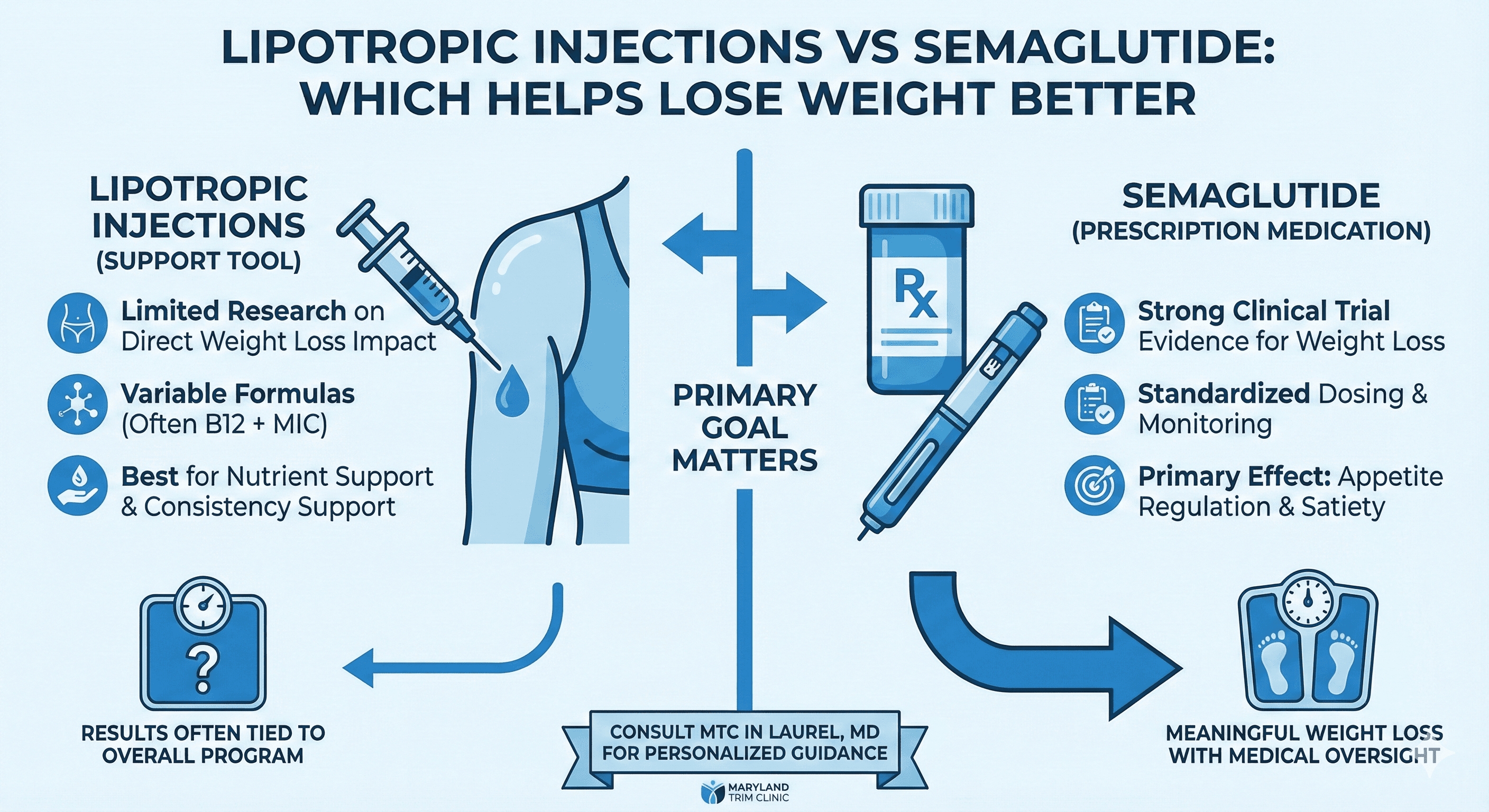
- Semaglutide (GLP-1 medication): Clinical trials show meaningful average weight loss for many people when used with lifestyle support and medical monitoring. This is why FDA-approved options exist for chronic weight management (for people who meet criteria).
- Lipotropic injections: These are nutrient-based blends (often B12 + MIC) used as an adjunct. Research on direct weight-loss impact is limited, formulas vary, and results—if any—are usually tied to the overall plan rather than the shot alone.
A fair “better for weight loss” conclusion
- If your primary goal is clinically meaningful weight loss and you meet medical criteria, semaglutide is typically the stronger option because it has stronger evidence and standardized prescribing/monitoring.
- If your goal is support (energy, adherence, routine) inside a broader program, lipotropic injections may be a supportive add-on—but they should not be positioned as the main driver of weight loss.
What can change the answer for an individual
- Your starting weight and health history
- Appetite and cravings (how much they drive overeating)
- Medication tolerance and contraindications
- Nutrition consistency, sleep, stress, and activity level
- Follow-up cadence and coaching support
Bottom line: For “which helps lose weight better,” semaglutide generally has the stronger evidence base, while lipotropic injections are best framed as supportive, especially when chosen thoughtfully and used inside a clinician-guided plan.
When lipotropic injections can still be useful
Lipotropic injections may be worth discussing if:
- You’re in a structured medical weight-loss plan and want an added support tool
- You have fatigue symptoms where nutritional evaluation makes sense
- You want a non-stimulant adjunct while you build sustainable habits
Safety, Side Effects, and Who Should Be Cautious
Because formulas vary, side effects depend on what’s in the injection. Injection-site irritation can happen with any shot, and ingredient-specific reactions are possible.
A safety-first approach matters because:
- Supplements aren’t regulated the same way as prescription medications, and dosages/quality can vary.
- Evidence on safety and optimal dosing schedules is limited.
Be especially cautious (and ask for medical guidance) if you:
- Are pregnant, trying to conceive, or breastfeeding
- Have significant liver/kidney disease history
- Have a history of allergies to B vitamins or injection ingredients
- Take medications that could interact with high-dose vitamins (your clinician should review this)
Lipotropic Injections vs Semaglutide or Tirzepatide
If you’re deciding between “support shots” and prescription appetite/weight-management meds, it helps to compare them plainly.
Semaglutide (Wegovy) is FDA-approved for chronic weight management (with criteria) and has strong clinical trial evidence for meaningful average weight loss when paired with lifestyle support.
Tirzepatide (Zepbound) is also FDA-approved for chronic weight management (with criteria) and has strong trial evidence for substantial average weight loss.
Comparison Card blocks
Lipotropic injections
- What it is: Vitamin/nutrient blends (often B12 + MIC; formulas vary)
- Primary effect: Supportive (energy/nutrition support; varies by formula)
- Evidence for weight loss: Limited
- What to know: Not standardized; works best as an add-on inside a structured plan
Semaglutide (GLP-1 medication)
- What it is: Prescription GLP-1 medication
- Primary effect: Appetite regulation and satiety
- Evidence for weight loss: Strong
- What to know: FDA-approved options exist for chronic weight management; requires screening and monitoring
Tirzepatide (GLP-1/GIP medication)
- What it is: Prescription GLP-1/GIP medication
- Primary effect: Appetite regulation and satiety
- Evidence for weight loss: Strong
- What to know: FDA-approved options exist for chronic weight management; requires screening and monitoring
Lifestyle + medical coaching
- What it is: Nutrition, movement, sleep, and behavior supports
- Primary effect: Foundation (improves consistency and maintenance)
- Evidence for weight loss: Strong
- What to know: Makes every other option work better and supports long-term results
Important safety note on “online” GLP-1s: If you’re considering semaglutide/tirzepatide, avoid sketchy sources and dosing confusion. The FDA has reported adverse events tied to dosing errors with compounded versions and urges caution and clear instruction.
Is This Right for Me?
Use this quick filter before spending money or starting anything new:
What’s the main barrier right now?
- Mostly hunger/cravings and portion control → discuss GLP-1 options (if medically appropriate).
- Mostly low energy, inconsistency, “I fall off the plan” → lipotropic injections may be a supportive add-on after you review basics and labs.
Do I want a supportive tool or a prescription treatment?
- Support tool: lipotropic injections (variable evidence; not a stand-alone).
- Prescription path: semaglutide/tirzepatide (strong evidence; requires screening).
Am I ready for the plan that makes results more likely?
Even the best medication works best when your plan is realistic: protein, steps, sleep, and a follow-up cadence you can maintain.
Myths vs Facts on Lipotropic Injection
- Myth: “Lipotropic injections melt fat.”
Fact: They’re nutrient blends with limited direct weight-loss evidence; results depend mainly on the overall plan. - Myth: “B12 shots automatically boost energy and cause weight loss.”
Fact: B12 shots aren’t likely to improve energy or performance unless you’re deficient. - Myth: “More ingredients = better results.”
Fact: More ingredients can also mean more variables (tolerability, interactions, unclear dosing).
What to Expect at Maryland Trim Clinic in Laurel, MD
When you book with Maryland Trim Clinic, the goal is to match you with the safest, most sensible option based on your history and your goals.
A typical consult may include:
- Health history review (medications, past weight-loss attempts, symptoms)
- Goal setting and realistic timeline planning
- Discussion of options: lipotropic injections, GLP-1 medications (semaglutide), tirzepatide, nutrition support, and body contouring services when appropriate
- Optional tools that can improve clarity and accountability (like a 3D body scan) if that’s part of your program
If you’re searching “lipotropic injections near me” in Laurel, MD, we’ll help you understand what’s real, what’s marketing, and what fits your body.
Ready for a clear plan? Schedule a consultation with Maryland Trim Clinic in Laurel to review options and build a program you can actually stick with.
How Often, How Long, and What Results Depend On
There’s no official universal schedule for lipotropic injections. Many clinics use weekly or twice-weekly patterns, but protocols vary.
What affects whether you notice anything at all:
- Whether you had a true nutrient deficiency to correct (especially for B12-related fatigue)
- Your calorie intake, protein, and consistency
- Sleep, stress, and movement
- Whether you’re also using evidence-based tools (like FDA-indicated GLP-1 options when appropriate)
Medical disclaimer
This article is for education only and is not medical advice. Weight-loss treatments should be personalized. Always consult a qualified clinician to review your medical history, medications, and risks before starting injections or prescription weight-loss medications.
Frequently Asked Questions
Do lipotropic injections actually help you lose weight?
They’re commonly used as a support tool, but research on direct weight-loss effects is limited. If weight changes happen, they’re often more tied to the overall plan (nutrition and activity) than the shot alone.
What’s in lipotropic injections?
Many formulas include vitamin B12 plus compounds like methionine, inositol, and choline (often called “MIC”). Ingredients and doses vary widely by clinic, so ask for a full ingredient list.
Are lipotropic injections the same as B12 shots?
Not always. Some “lipo shots” include B12 plus other ingredients, while a B12 shot is just B12. And B12 isn’t likely to boost energy unless you’re deficient.
Are lipotropic injections safe?
Safety depends on the ingredients, your health conditions, and who’s administering them. Because supplements and dosing aren’t standardized the same way as prescription drugs, medical guidance matters.
What side effects can happen with lipotropic injections?
Injection-site irritation can occur with any shot, and ingredient-specific reactions are possible. Because research is limited, side-effect information is not as strong as it is for FDA-approved medications.
How often do people get lipotropic injections?
There’s no official frequency guideline. Many clinics use weekly patterns, but the right schedule (if any) should be individualized after a consult.
Can I do lipotropic injections and semaglutide together?
Possibly, but this should be clinician-guided. Semaglutide is a prescription medication with clear indications and monitoring needs, so your provider should review your full plan, medications, and tolerability.
Are semaglutide and tirzepatide “stronger” than lipotropic injections?
They’re different categories. GLP-1/GIP medications have strong clinical trial evidence for average weight loss and are FDA-approved for chronic weight management under specific criteria, while lipotropic injections have limited evidence as a weight-loss treatment.
Where can I get lipotropic injections in Laurel, MD?
Look for a clinic that offers a medical consult, reviews your history/medications, and explains exactly what’s in the injection. Maryland Trim Clinic in Laurel can walk you through options and whether lipotropic injections make sense for you.
How much do lipotropic injections cost in Laurel, MD?
Pricing varies by clinic, formula, and whether it’s bundled into a program. A consult is the best way to get a clear estimate tied to your goals and what’s actually included.
Do I need labs before starting?
Not everyone does, but labs can be helpful especially if fatigue or suspected deficiencies are part of the story. Your provider can advise what’s appropriate for you and what would actually change the plan.
How soon will I notice anything?
Some people notice changes in energy sooner, especially if correcting a deficiency. Weight changes (if they happen) typically track with the overall program and consistency rather than the injection alone.
Start Your weight Loss Journey With Expert Guidance
Lipotropics or GLP-1s? Find Your Perfect Fit. Text: Don't spend another month wondering which "shot" is right for you. At Maryland Trim Clinic, we compare the science, the safety, and the costs to ensure you're investing in the treatment that aligns with your health history and your goals.