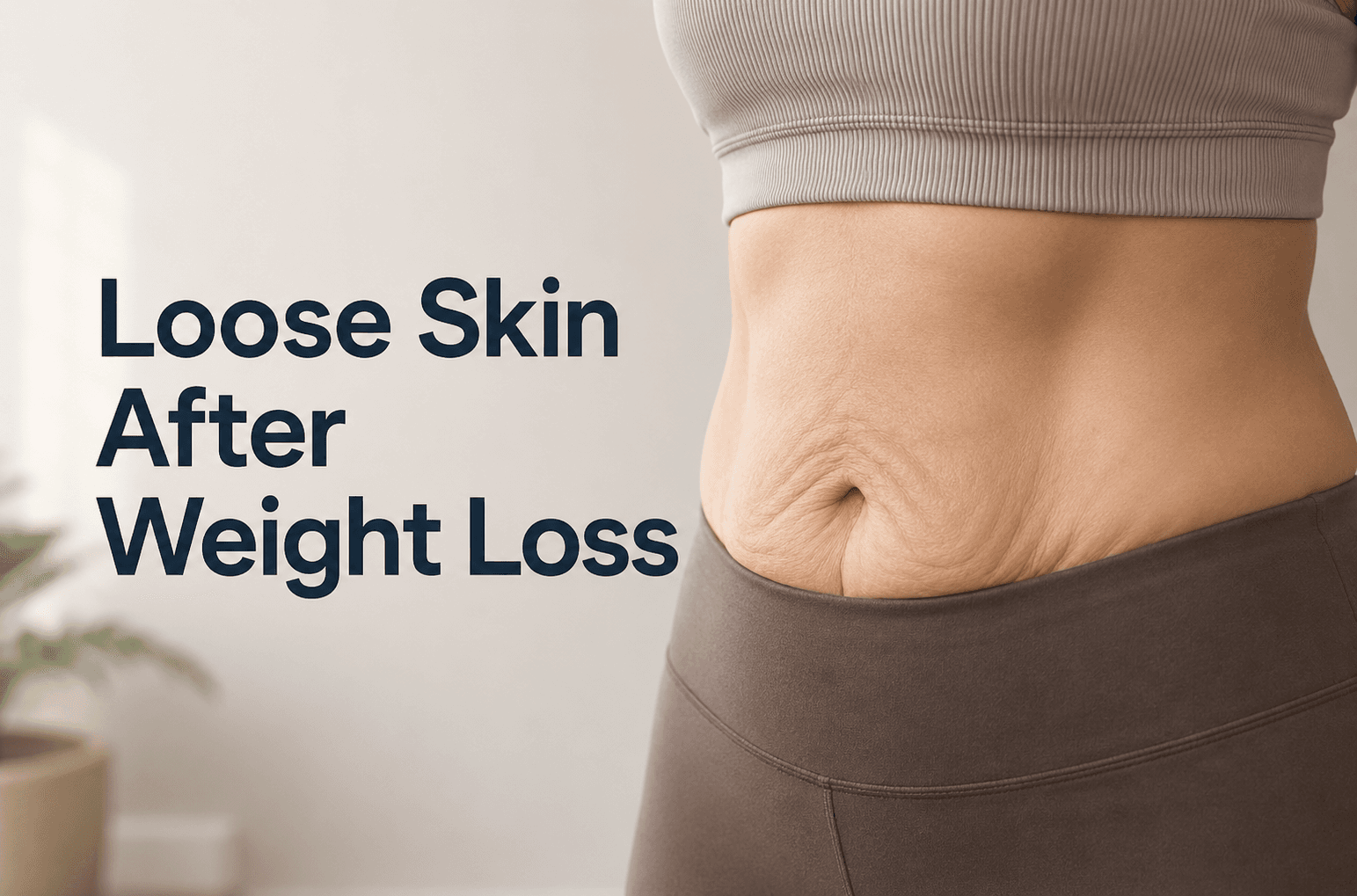
Loose Skin After Weight Loss: What Helps


Loose skin after weight loss can feel frustrating because it often shows up after real progress. You may feel healthier, move more easily, and see the scale change, but still notice softness, folds, crepey texture, or sagging around the abdomen, arms, thighs, chest, or neck.
The honest answer is that loose skin is common after significant weight loss, and it does not always mean you did anything wrong. Skin elasticity after weight loss depends on age, genetics, how long the skin was stretched, how much weight was lost, how quickly weight changed, sun exposure, smoking history, nutrition, hydration, muscle mass, and overall health. Some skin may tighten gradually, but larger folds usually do not disappear with lotion, collagen powder, or exercise alone.
Loose Skin After Weight Loss: The Quick Answer
Loose skin after weight loss happens when the skin and its support structures cannot fully retract after body size changes. Mild laxity may improve gradually with time, stable weight, protein, strength training, hydration, and skin-tightening treatments. Significant hanging folds usually need a surgical consultation if removal is the goal.
Medical Disclaimer: Educational information only. Results and suitability vary. A clinician should review your history, contraindications, and goals before recommending any medical/aesthetic treatment or prescription.
Why Loose Skin Happens
Skin is elastic, but not unlimited. When the body carries extra weight for a long period, the skin stretches to accommodate the increased volume beneath it. After weight loss, the fat layer under the skin becomes smaller, but the skin may not fully shrink back.
Several factors affect how much the skin can retract:
- How much weight was lost
- How long the skin was stretched
- Age
- Genetics
- Pregnancy history
- Sun exposure
- Smoking history
- Nutrition status
- Hydration
- Strength and muscle mass
- Weight stability
- Skin quality before weight loss
The American Society of Plastic Surgeons explains that after substantial weight loss, skin and tissues may lack the elasticity to conform to the reduced body size, and surgical body contouring after major weight loss can remove excess sagging skin and fat while improving the shape of the underlying support tissue. (plasticsurgery.org)
The key distinction is this: loose skin is not the same as stubborn fat. A soft, pinchable area may include fat. Thin, wrinkled, folded, or hanging tissue may be skin laxity. Many people have both.
What’s Normal After Weight Loss?
Loose skin can appear in different ways. Some changes are mild and mostly cosmetic. Others can affect comfort, hygiene, mobility, or clothing fit.
Common areas include:
- Lower abdomen
- Upper arms
- Inner thighs
- Chest or breast area
- Back
- Neck and jawline
- Buttocks
- Flanks
Normal changes may include:
- Softness where fat used to be
- Crepey texture
- Fine wrinkling
- Mild sagging
- Folds when sitting or bending
- Skin that looks looser after more weight loss
- Uneven firmness across body areas
More significant loose skin may cause:
- Chafing
- Irritation
- Rashes
- Odor
- Moisture trapped in folds
- Difficulty finding comfortable clothing
- Discomfort during exercise
- Skin pulling or heaviness
If loose skin is causing pain, recurrent rashes, skin breakdown, infection signs, or mobility issues, it is worth discussing with a clinician. That kind of concern is not only cosmetic.
How Long for Skin to Tighten After Weight Loss?
Skin tightening after weight loss is gradual. Some natural retraction may happen over months, especially if weight loss was moderate, the person is younger, skin quality is good, and weight becomes stable.
A realistic timeline may look like this:
Time after weight loss
What may happen
First 3 months
Body shape is still changing, fluid shifts and fat loss may make laxity more noticeable
3 to 6 months
Some skin retraction may occur, especially with stable weight and strength training
6 to 12 months
Texture and firmness may continue to change gradually
12 to 24 months
Natural tightening may plateau for many people
After major weight loss
Larger folds often remain unless treated surgically
This timeline varies. A person who lost 25 pounds gradually may see a different skin response from someone who lost 100 pounds or more. Weight regain and repeated weight cycling can also affect skin quality.
What Helps Loose Skin Look Better?
No lifestyle habit can fully remove major excess skin, but several steps can improve the appearance of mild laxity and support better results if you later choose treatment.
Stabilize your weight first
Weight stability matters. If you are still actively losing weight, skin appearance may continue changing. It is usually better to avoid judging your final skin result too early.
Maryland Trim Clinic offers medical weight loss support, GLP-1 weight-loss injections when clinically appropriate, and weight loss maintenance planning for patients who need help moving from active weight loss into a more stable phase. MTC’s services page describes physician-led weight-loss care, nutrition support, behavioral coaching, metabolic testing, and maintenance support. (marylandtrimclinic.com)
Prioritize protein and nutrient density
Protein supports lean mass and tissue repair. It does not “snap” skin back into place, but too little protein during weight loss can make body composition and recovery harder.
A skin-supportive nutrition pattern may include:
- Protein at each meal
- Fruits and vegetables
- Foods rich in vitamin C
- Healthy fats
- Adequate fluids
- Fiber-rich carbohydrates
- Enough total calories to avoid under-nutrition
Maryland Trim Clinic’s nutritional counseling and coaching can help patients build realistic nutrition plans, portion strategies, nutrient timing, and accountability during weight loss or maintenance. (marylandtrimclinic.com)
Build muscle under the skin
Strength training cannot remove loose skin, but it can improve the appearance of certain areas by building a firmer base under the skin. It may also support body recomposition, strength, posture, and long-term maintenance.
Strength training may help when:
- The area looks “deflated”
- Muscle tone is low
- Weight loss reduced both fat and lean mass
- The person wants better shape without relying only on scale weight
- The goal is firmness, strength, and function
The CDC recommends that adults do muscle-strengthening activities at least two days per week, along with aerobic activity. (cdc.gov)
Patients who want to track changes beyond the scale may benefit from 3D body scanning. MTC states that its 3D scanning service measures body fat percentage, muscle mass, posture, circumference, and other metrics, and that scans may be repeated every 2 to 3 months to track fat loss and muscle gain. (marylandtrimclinic.com)
Hydrate consistently
Hydration will not remove excess skin, but it can support skin texture, energy, digestion, and exercise consistency. If you are dehydrated, skin may appear less supple and workouts may feel harder.
Hydration is especially important if you are using a weight-loss medication that affects appetite, nausea, vomiting, diarrhea, constipation, or thirst. If you cannot keep fluids down, have dark urine, dizziness, or signs of dehydration, contact a clinician.
What Doesn’t Usually Work
Loose skin attracts a lot of unrealistic promises. Some products can improve texture or moisture, but they should not be presented as skin-removal solutions.
Lotion
Moisturizer can improve dryness, comfort, and skin feel. It cannot remove large folds of skin or rebuild stretched tissue enough to erase significant laxity.
Collagen powder
Collagen supplements may support skin hydration or elasticity modestly in some contexts, but they should not be expected to remove loose skin after major weight loss. If you use supplements, review them with a clinician, especially if you are pregnant, have kidney disease, take medications, or have allergies.
Waist trainers and compression garments
Compression can help clothing fit and reduce friction. It does not permanently tighten skin. Waist trainers can also cause discomfort or encourage unrealistic expectations if used as a “fix.”
Endless cardio
Cardio supports health and weight maintenance, but excessive cardio without strength training, protein, and recovery can worsen a “soft” look by failing to support muscle. Strength training has a better role when the goal is firmness and body composition.
Detoxes and body wraps
Wraps may temporarily change water or skin appearance, but they do not remove loose skin or produce lasting structural tightening.
Does Lotion or Collagen Help?
Lotion and collagen may help skin feel better, but they are not reliable solutions for significant loose skin.
A practical way to think about it:
Option
What it may help
What it cannot do
Moisturizer
Dryness, comfort, texture
Remove excess skin
Retinoids
Texture and collagen signaling in some skin areas
Correct large folds
Collagen supplements
Possible modest skin hydration or elasticity support
Reverse major laxity
Protein-rich diet
Tissue support and lean mass preservation
Tighten hanging skin by itself
Strength training
Shape and muscle support
Remove skin
Non-surgical tightening
Mild to moderate laxity in selected patients
Replace surgery for major folds
If the issue is mild texture, topical support may be worth discussing. If the issue is hanging tissue, topical products are unlikely to match the goal.
When Do People Consider Non-Surgical Skin Tightening?
Non-surgical skin tightening may be considered when laxity is mild to moderate, the skin still has some elasticity, and the patient wants gradual improvement without surgery.
Maryland Trim Clinic’s non-invasive body contouring and sculpting page describes radiofrequency and ultrasound therapies as options that may stimulate collagen and improve skin texture and firmness. It also states that non-invasive body contouring is best suited for people near their ideal weight, people seeking muscle definition, patients unwilling or unable to undergo surgery, and patients with mild to moderate skin laxity. (marylandtrimclinic.com)
MTC’s Ultimate Contour Body Sculpting page describes ultrasound body contouring and radiofrequency skin-tightening support for stubborn areas and smoother-looking skin, while noting that results vary and consultation is required. (marylandtrimclinic.com)
Non-surgical treatments may be worth discussing if:
- Skin laxity is mild to moderate.
- You are near a stable weight.
- You do not need major skin removal.
- You want gradual firmness support.
- You understand multiple sessions may be needed.
- You are willing to maintain results with nutrition and activity.
They may not be a good fit if:
- Skin hangs in heavy folds.
- The concern is mostly excess skin, not fat or mild laxity.
- You expect surgical-level tightening.
- You have medical contraindications.
- You are still losing weight quickly.
- You want a guaranteed result.
The FDA states that non-invasive body contouring procedures do not remove tissue, including fat or skin, from the body, and they are different from procedures such as tummy tuck surgery or liposuction. The FDA also states that non-invasive body contouring does not treat obesity and does not result in weight loss. (fda.gov)
When Surgery May Be the More Realistic Conversation
For major loose skin after significant weight loss, surgery is often the only option that physically removes excess skin. This does not mean surgery is right for everyone. It means the treatment goal should match the anatomy.
The American Society of Plastic Surgeons describes surgical body contouring after major weight loss as a procedure category that removes excess sagging skin and fat and improves the shape of underlying support tissue. Procedures may include arm lift, breast lift, lower body lift, thigh lift, tummy tuck, and other body-lift approaches depending on the area. (plasticsurgery.org)
Surgery may be discussed when:
- Loose skin hangs in folds.
- Skin causes recurring irritation, rash, or hygiene issues.
- Weight has been stable.
- The patient understands scars, recovery, and surgical risk.
- A non-surgical option is unlikely to address the concern.
- The goal is removal, not mild tightening.
A board-certified plastic surgeon is the appropriate specialist for surgical skin removal. Maryland Trim Clinic can help identify when non-invasive support may be reasonable and when a surgical consultation may be a better next step.
Loose Skin, Stubborn Fat, or Low Muscle Tone?
Many people use “loose skin” to describe any area that feels soft. A consultation should separate the main issue.
What you notice
Possible explanation
Better starting point
Thin, wrinkled, hanging folds
Loose skin
Skin-tightening or surgical consultation depending on severity
Soft pinchable layer
Subcutaneous fat
Weight loss, body contouring evaluation, nutrition plan
Firm round abdomen
Possible visceral fat or bloating
Medical weight-loss or metabolic evaluation
Softness after weight loss
Fat loss plus low muscle tone
Strength training, protein, body composition tracking
Uneven contour
Fat, skin, posture, muscle, or all of the above
3D scan and clinical evaluation
The FDA explains that cryolipolysis targets pinchable fat and that fat released from damaged cells is slowly cleared by the body, usually within two to three months. It also cautions that risks and limitations vary by device and patient factors. (fda.gov)
This is why “What treatment removes loose skin?” is not the first question. The better first question is, “Is this actually loose skin, remaining fat, muscle tone, or a combination?”
How Maryland Trim Clinic Helps Patients Evaluate Loose Skin in Laurel, MD
Maryland Trim Clinic in Laurel, MD supports patients who are navigating body changes after weight loss, including concerns about loose skin, stubborn fat, muscle tone, body composition, and maintenance.
Relevant services may include:
- 3D body scanning to measure body composition, circumference, posture, and progress over time
- Medical weight loss when weight is still actively changing
- Nutritional counseling and coaching to support protein, hydration, and long-term habits
- GLP-1 weight-loss support when clinically appropriate
- Non-invasive body contouring and sculpting for selected concerns
- Ultimate Contour Body Sculpting for non-surgical contouring and skin-firming support
- Weight loss maintenance planning for patients working to maintain progress
A visit may help clarify:
- Whether the concern is loose skin, fat, muscle tone, or a mix
- Whether weight should stabilize before treatment
- Whether non-surgical skin tightening is realistic
- Whether 3D body scanning can help track progress
- Whether medical weight loss or nutrition support should come first
- Whether a plastic surgery consultation may be more appropriate
MTC’s services page lists the clinic at 9201 Cherry Lane, Laurel, MD 20708, with phone number (301) 960-4811. (marylandtrimclinic.com)
The Bottom Line
Loose skin after weight loss is common, especially after larger or faster weight changes. Some mild laxity may improve over time with stable weight, strength training, protein, hydration, and supportive skin care. Non-surgical skin tightening may help selected patients with mild to moderate laxity.
But major loose skin is different. Lotions, wraps, collagen powders, and exercise cannot remove hanging folds. If the concern is significant excess skin, surgery may be the more realistic conversation.
The best next step is not guessing. It is evaluating whether your concern is skin, fat, muscle tone, or a combination, then choosing a plan that matches your body, health history, timeline, and expectations.
Frequently Asked Questions
Why does loose skin happen?
Loose skin happens when skin has stretched and cannot fully retract after weight loss. The likelihood depends on age, genetics, amount of weight lost, how long the skin was stretched, speed of weight loss, sun exposure, smoking history, nutrition, and skin quality. ASPS notes that after substantial weight loss, skin and tissues often lack the elasticity to conform to the reduced body size. (plasticsurgery.org)
Does lotion or collagen help?
Lotion may help dryness, comfort, and texture, but it cannot remove significant loose skin. Collagen supplements may support modest skin hydration or elasticity in some situations, but they should not be expected to reverse major skin laxity. If skin hangs in folds, topical products are unlikely to match the goal.
Can strength training improve appearance?
Yes, strength training can improve the appearance of some areas by building muscle under the skin and supporting body composition. It does not remove loose skin. CDC recommends that adults do muscle-strengthening activities at least two days per week, along with aerobic activity. (cdc.gov)
When do people consider skin tightening treatments?
People often consider non-surgical skin tightening when laxity is mild to moderate, weight is stable, and they want gradual firmness support without surgery. MTC’s non-invasive body contouring service describes RF and ultrasound therapies as options that may improve skin texture and firmness in selected patients. (marylandtrimclinic.com)
How long for skin to tighten after weight loss?
Some natural tightening may happen over several months, and mild laxity may continue changing for 6 to 24 months. The amount varies widely. If loose skin is significant, hanging, or folded, time alone may not remove it. A clinician can help determine whether continued observation, skin tightening, or surgical consultation fits the situation.
Can non-surgical skin tightening remove loose skin?
No, non-surgical skin tightening cannot remove large amounts of loose skin. It may help selected patients with mild to moderate laxity by supporting a firmer appearance. The FDA states that non-invasive body contouring procedures do not remove tissue, including fat or skin, from the body. (fda.gov)
Is loose skin the same as stubborn fat?
No. Loose skin is stretched skin and supporting tissue that has not fully retracted. Stubborn fat is remaining fat under the skin. Some areas contain both. A 3D body scan, measurements, physical exam, and consultation can help clarify whether the concern is skin, fat, muscle tone, or a combination.
When should I consider surgery for loose skin?
Surgery may be worth discussing when loose skin hangs in folds, causes rashes or hygiene problems, affects comfort or mobility, or cannot be addressed realistically with non-surgical options. A board-certified plastic surgeon is the appropriate specialist for surgical skin removal after major weight loss.
Understand Your Skin, Shape, and Next Step
If loose skin after weight loss is making it hard to understand your progress, Maryland Trim Clinic can help you evaluate whether the issue is skin laxity, stubborn fat, muscle tone, or body-composition change. A consultation may include 3D body scanning, nutrition support, weight maintenance planning, and discussion of non-surgical skin-tightening options when appropriate.
Understand Your Skin, Shape, and Next Step
If loose skin after weight loss is making it hard to understand your progress, Maryland Trim Clinic can help you evaluate whether the issue is skin laxity, stubborn fat, muscle tone, or body-composition change. A consultation may include 3D body scanning, nutrition support, weight maintenance planning, and discussion of non-surgical skin-tightening options when appropriate.