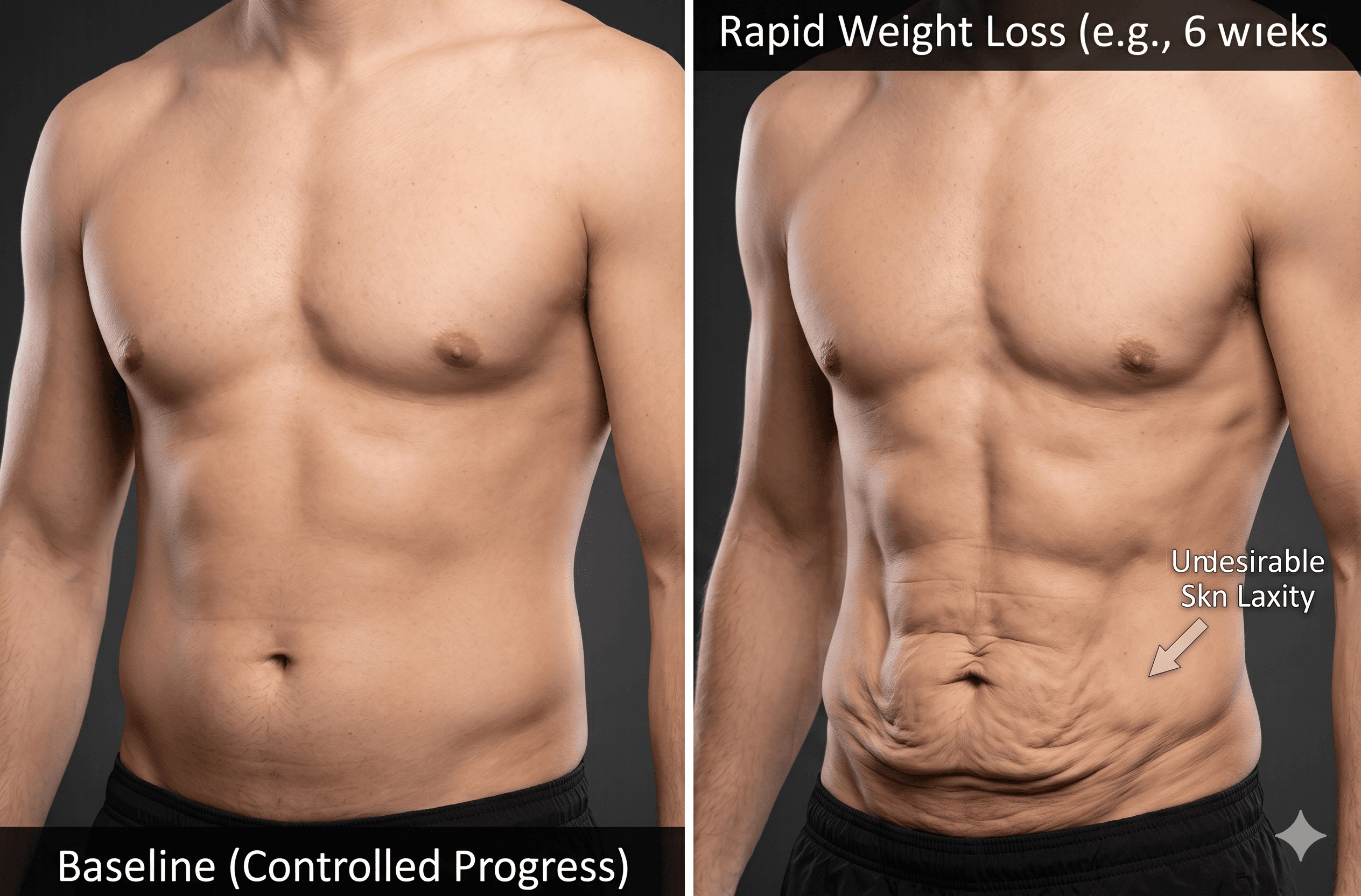
The Risks of Losing Weight Too Fast on GLP-1s (Ozempic, Wegovy)

Losing 30 pounds in two months sounds like the ultimate success story — until you realize the silent toll it can take on your body.
For millions of people starting GLP-1 medications like semaglutide (Ozempic, Wegovy) or tirzepatide (Mounjaro, Zepbound), the early results can feel almost magical. The appetite suppression is dramatic, the scale drops quickly, and motivation is through the roof. But underneath those exciting headline numbers, something much more complicated is happening biologically. If you are not paying close attention, rapid weight loss on these drugs can set you up for serious long-term problems that undermine the very health progress you are working so hard to achieve.
This isn’t about scaring you away from GLP-1 therapy. These medications are genuinely transformative and life-saving for many people. It is simply about understanding that how fast you lose weight matters just as much as how much you lose — and that the medications themselves don't automatically make rapid loss safe.
The Medical Risks Nobody Warns You About
Muscle Loss: The Silent Thief
When your body loses weight rapidly — generally defined in most clinical contexts as more than 1 to 2 pounds per week — it doesn't exclusively burn body fat. It burns muscle tissue, too. This is called lean mass loss, and it is one of the most underappreciated risks of aggressive GLP-1-driven weight reduction.
GLP-1 medications suppress your appetite so effectively that many users end up eating dramatically below their baseline caloric needs, sometimes consuming fewer than 800 to 1,000 calories a day without even realizing it. At that intake level, especially without sufficient protein, the body turns to its own muscle as a fuel source. Studies examining semaglutide trials have found that a meaningful percentage of total weight lost — in some cases 25 to 40 percent — can come from lean mass rather than fat.
Why does this matter? Muscle is highly metabolically active tissue. Losing it slows your resting metabolic rate, meaning you burn fewer calories at rest. This creates the perfect biological conditions for weight regain once the drug is discontinued or the dose stabilizes. It also increases the risk of sarcopenia (age-related muscle loss), which is associated with weakness, falls, fractures, and a reduced quality of life, particularly in older adults.
Nutritional Deficiencies
Eating less sounds like a simple math equation, but it carries a hidden biological cost: when your food volume drops sharply, your intake of essential vitamins and minerals drops right alongside it. GLP-1 users consuming very low calories are at an elevated risk for developing significant deficiencies.
Quick Check: Key Nutrients at Risk
- Protein: Critical for muscle preservation, immune function, and tissue repair.
- Iron: Especially concerning for premenopausal women; a lack of iron leads to severe fatigue and anemia.
- Vitamin B12: Essential for neurological function, red blood cell formation, and daily energy.
- Calcium and Vitamin D: Bone health becomes a genuine concern, particularly for postmenopausal women losing weight rapidly.
- Zinc and Magnesium: Involved in hundreds of enzymatic processes, often insufficient in heavily reduced-calorie diets.
These deficiencies don't announce themselves loudly. They develop quietly over weeks and months, showing up as deep fatigue, brain fog, hair shedding, and weakened immunity — symptoms that are frequently (and mistakenly) brushed off as "just part of losing weight."
Gallstones: A Frequently Overlooked Complication
Rapid weight loss is one of the most well-established clinical risk factors for gallstone formation. According to the National Institute of Diabetes and Digestive and Kidney Diseases (NIDDK), as the body metabolizes fat rapidly during quick weight loss, it causes the liver to secrete extra cholesterol into bile, which can crystallize and form stones in the gallbladder.
GLP-1 medications have also been shown to slow gallbladder motility independently of weight loss, which compounds this risk. Gallstones can sit silently for months before causing sudden, severe upper abdominal pain, nausea, or necessitating emergency surgical intervention.
Metabolic Adaptation and the "Rebound" Problem
Aggressive caloric restriction, even when drug-assisted, triggers "metabolic adaptation" — your body's evolutionary survival mechanism of downregulating energy expenditure to compensate for a perceived famine. The faster and more severe the restriction, the more pronounced this adaptation becomes.
For GLP-1 users, this creates a frustrating trap: lose weight too fast now, and you make sustainable maintenance significantly harder later. When doses are eventually tapered or the medication is stopped, the combination of reduced muscle mass and a slower metabolism creates the perfect environment for rapid weight regain.
Is Your Weight Loss Rate Actually Unsafe?
The Benchmarks That Matter
So, what is the threshold between impressive progress and dangerous speed? The Centers for Disease Control and Prevention (CDC) and most obesity medicine specialists point to 1 to 2 pounds per week as the general safe, sustainable range for weight loss.
Some individuals — particularly those with significantly higher starting body weights or those dealing with initial water weight — may safely lose at the higher end or slightly above this range in the very early weeks. But consistently exceeding 2 pounds per week for extended periods raises meaningful red flags.
A loss of 30 pounds in 8 weeks works out to nearly 4 pounds per week. That is approximately double the upper boundary of what's considered safe for most people. At that pace, muscle loss, nutrient depletion, and gallstone risks all escalate significantly.
Warning Signs Your Body Is Sending
Beyond the numbers on the scale, your body will often signal that the rate of loss is too aggressive. Take these physical symptoms seriously:
- Persistent, heavy fatigue that does not improve with a good night's rest.
- Significant hair thinning or shedding (known as telogen effluvium, a physical stress response to rapid weight loss).
- Muscle weakness or difficulty with everyday physical activities that were previously easy.
- Dizziness or lightheadedness, especially when standing up quickly.
- Difficulty concentrating or enduring "brain fog."
- Upper right abdominal pain, particularly after eating fatty foods (a potential sign of gallbladder involvement).
- Feeling cold all the time, which is a classic sign of metabolic slowdown.
- Mood changes, irritability, or deeply low motivation linked to caloric and nutrient insufficiency.
When to Contact Your Provider
If you are consistently losing more than 2 pounds per week, experiencing any of the symptoms listed above, or find yourself eating fewer than 1,000 to 1,200 calories daily without explicit medical guidance, that warrants an immediate conversation with your prescribing provider. These are not minor inconveniences to push through — they are critical data points about what's happening inside your body.
How to Slow Down Safely and Protect Your Progress
Dosing Strategies: Slow and Steady Wins
One of the most underutilized tools in GLP-1 therapy is intentional dose management. The standard titration schedules for these medications — gradually increasing doses over weeks or months — exist precisely to allow the body to adapt. But in practice, many users push through titration aggressively just to reach the highest effective dose as quickly as possible.
If your weight loss is outpacing safe benchmarks, discuss these options with your provider:
- Holding your current dose rather than escalating, until your weight loss rate normalizes.
- Reducing to a lower dose temporarily if severe appetite suppression and rapid loss are happening concurrently.
- Extending the time between dose injections (under medical supervision) to soften the medication's effects.
The goal of GLP-1 therapy is not maximum speed. It is sustainable fat loss with preserved muscle and long-term metabolic health.
Protein: Your Most Important Nutritional Priority
If there is one dietary intervention that outweighs all others for GLP-1 users, it is adequate protein intake. Protein is the primary nutritional defense against muscle loss during a caloric deficit.
Most clinical recommendations for people on GLP-1s call for 1.2 to 1.6 grams of protein per kilogram of body weight per day — significantly higher than standard dietary recommendations. For someone weighing 200 pounds (approx. 91 kg), that means targeting 110 to 145 grams of protein daily.
Because of the severe appetite suppression from GLP-1 medications, hitting this target requires deliberate effort:
- Prioritize eating your protein at every meal before eating anything else on your plate.
- Lean heavily on high-quality, dense protein sources: eggs, Greek yogurt, cottage cheese, chicken, fish, and legumes.
- Consider supplementing with whey, casein, or high-quality plant-based protein powders if solid food is too filling.
Resistance Training: Non-Negotiable
Exercise, specifically resistance training, is the other vital pillar of muscle preservation. You simply cannot "out-protein" a lack of physical stimulus for your muscles. Even two to three sessions per week of bodyweight exercises, resistance bands, or weight lifting provides significant protection against lean mass loss. Resistance training also helps mitigate the metabolic slowdown associated with eating fewer calories.
Supplementation and Monitoring
Based on the deficiency risks outlined in Act 1, most GLP-1 users losing weight at a meaningful pace should consider:
- A comprehensive, high-quality multivitamin as a baseline safety net.
- Vitamin D and Calcium supplementation, particularly for women over 40.
- B12 vitamins, especially if appetite suppression is making you avoid animal proteins.
- Iron monitoring through periodic bloodwork.
Regular lab work — ideally every three to six months — allows you and your medical provider to catch invisible deficiencies before they become highly symptomatic.
Reframe What "Working" Means
Finally, and perhaps most importantly: recalibrate your expectations around what "good progress" actually looks like. GLP-1 medications are not a sprint to the finish line — they are a long-term metabolic intervention.
Losing 0.75 to 1.5 pounds per week consistently, while preserving your muscle, maintaining your energy, and building sustainable habits, is a vastly superior clinical outcome to losing 4 pounds per week for two months and then plateauing on a damaged metabolic foundation.
Maryland Trim Clinic (MTC) in Laurel, MD
Navigating the complexities of GLP-1 medications is rarely a straight line, and you don't have to do it without expert support. If you are experiencing rapid weight loss, severe fatigue, or muscle loss, having a dedicated medical team ensures your journey remains safe and sustainable. The Maryland Trim Clinic (MTC) located in Laurel, MD, provides personalized, medically supervised care designed to protect your overall health while you lose weight.
At MTC, weight management is treated as a comprehensive medical intervention, not just a numbers game. Patients enrolled in their medical weight loss program receive careful oversight to ensure they are losing fat, not essential lean muscle. If you are struggling to eat enough due to the intense effects of GLP-1 weight loss injections, their staff offers expert nutritional counseling and coaching to help you hit vital protein and micronutrient goals. Furthermore, to combat the profound fatigue and potential metabolic slowdown that accompanies rapid weight loss, MTC provides metabolic testing and analysis alongside restorative vitamin B12 & lipotropic injections. By partnering with the Maryland Trim Clinic, you gain the clinical safety net necessary to transform your health the right way.
Rapid weight loss on GLP-1s isn't a badge of honor. It is a biological warning sign. The good news is that with a patient dosing approach, a smart nutritional strategy, and proper medical oversight, you can harness everything these medications have to offer while protecting the body you are working so hard to rebuild.
Disclaimer: The information provided in this article is for educational and informational purposes only and is not intended as medical advice. Always consult with a licensed healthcare provider before starting any weight loss program, adjusting medication dosages, or starting new dietary supplements.
Frequently Asked Questions
Q: How much weight loss per week is considered safe on GLP-1 medications? A: Most obesity medicine specialists and health organizations consider 0.5 to 2 pounds per week to be the safe and sustainable range for weight loss. Consistently exceeding 2 pounds per week — particularly without adequate protein intake and resistance exercise — increases the risk of muscle loss, nutritional deficiencies, and gallstone formation.
Q: Why am I losing so much hair on a GLP-1 medication? A: Hair shedding (telogen effluvium) is a common response to rapid weight loss and sudden caloric restriction, not necessarily a direct side effect of GLP-1 medications themselves. When the body undergoes significant physiological stress from dropping weight quickly, hair follicles shift into a resting phase and shed. Slowing the rate of weight loss and ensuring adequate protein and micronutrient levels can help resolve this over time.
Q: Can I ask my doctor to keep me on a lower GLP-1 dose to slow my weight loss? A: Absolutely, and this is a medically sound request. The standard titration schedules for GLP-1 medications are guidelines, not absolute mandates. If your weight loss is occurring too rapidly, your provider can hold your current dose rather than escalating. Advocating for a pace that preserves your muscle mass is entirely appropriate.
Q: Do I really need to take supplements while on a GLP-1 medication? A: For most people experiencing significant appetite suppression, some level of supplementation is advisable as a safety net. At minimum, a quality multivitamin helps cover gaps. Vitamin D, calcium, and B12 are also commonly recommended, while iron should be monitored through bloodwork. Discuss your specific needs with your provider.
Q: What percentage of weight lost on GLP-1s is muscle versus fat? A: This varies considerably based on individual factors like protein intake, exercise, age, and rate of weight loss. Studies suggest that without deliberate protein optimization and resistance training, 25 to 40 percent of total weight lost can come from lean mass (muscle). With adequate protein and regular resistance exercise, this proportion can be significantly reduced.
Q: Is rapid weight loss on GLP-1s dangerous if I feel fine? A: Feeling fine in the short term does not mean rapid weight loss is without risk. Many of the most significant consequences — muscle loss, metabolic adaptation, and gallstone formation — develop gradually and don't produce noticeable symptoms until they are well established. Proactive monitoring through regular lab work is the best way to catch problems early.
Ready to Build a Sustainable Weight Loss Strategy?
If you are concerned about muscle loss, fatigue, or the pace of your weight loss, professional guidance can make all the difference. Reach out to a certified medical weight loss provider today to create a personalized, safe, and highly effective care plan.