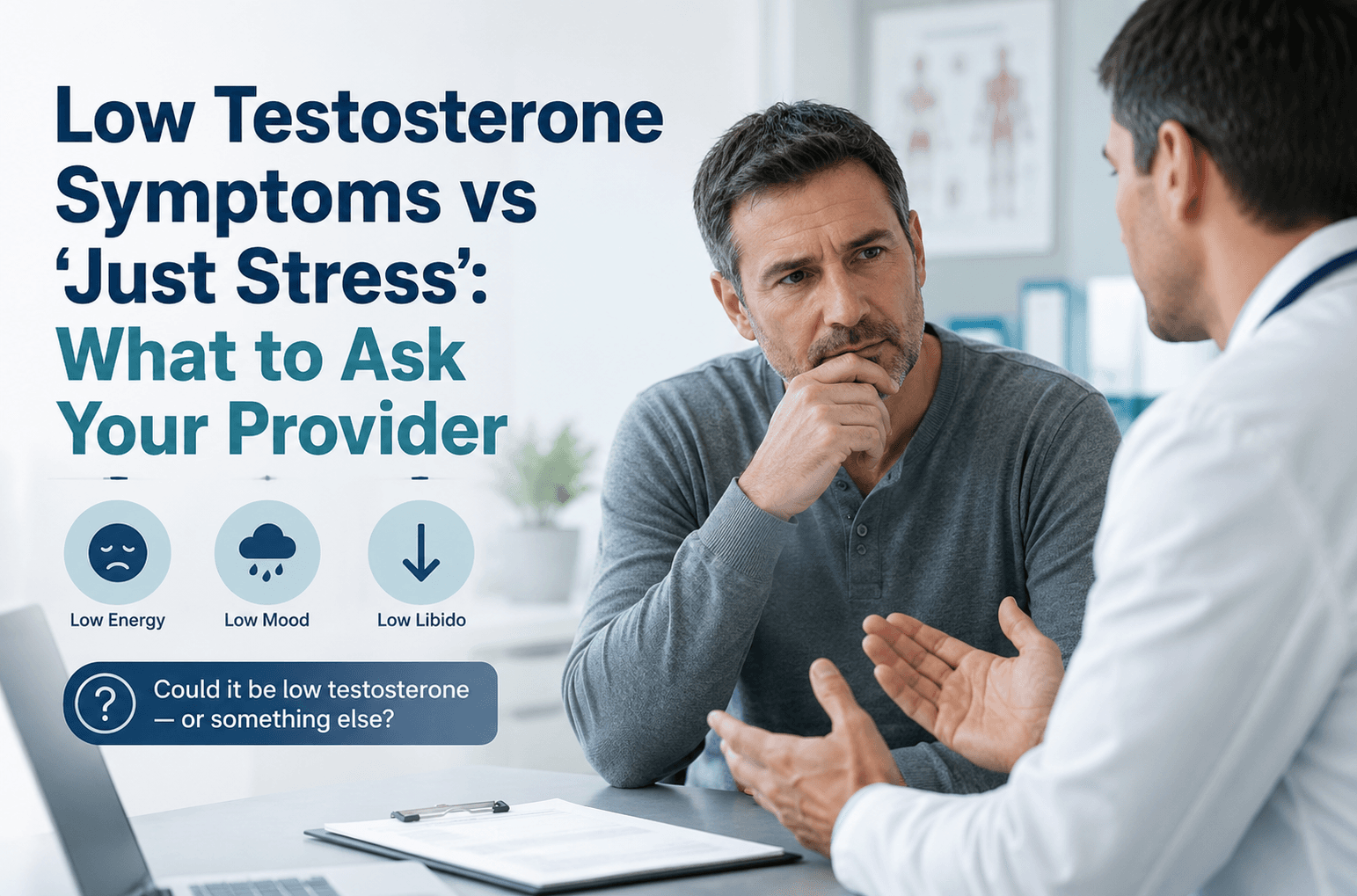
Low Testosterone Symptoms Checklist: Low T vs Stress


Fatigue, low libido, weight gain, brain fog, poor sleep, and low motivation can be easy to blame on stress. Sometimes stress really is part of the problem. But these symptoms can also overlap with low testosterone, sleep apnea, thyroid disease, depression, diabetes, medication effects, obesity, and other health issues.
This low testosterone symptoms checklist is designed to help you prepare for a better conversation with your provider. It does not diagnose low T. A diagnosis requires symptoms plus consistently low testosterone levels measured with appropriate blood testing. The goal is to help you understand what to track, what else can mimic low T, what tests are commonly considered, and what questions to ask before discussing treatment.
Low Testosterone Symptoms Checklist: The Quick Answer
Common low testosterone symptoms can include low sex drive, fewer morning erections, erectile dysfunction, fatigue, depressed mood, reduced muscle mass, increased body fat, low endurance, concentration changes, infertility, and sometimes hot flashes. Because these symptoms overlap with stress, sleep problems, thyroid disease, diabetes, obesity, depression, and medications, testing and clinical evaluation are needed before treatment.
Medical Disclaimer: Educational information only. Do not start, stop, or change any medication without speaking to your healthcare provider. If you have severe symptoms or think you’re having an emergency, call 911 or seek emergency care.
Why Low T and Stress Can Feel So Similar
The phrase “low T vs stress” matters because both can affect energy, mood, sleep, motivation, sexual desire, and performance.
A stressful season can reduce sleep quality, raise alcohol use, change eating patterns, reduce exercise, increase fatigue, and affect sexual function. Low testosterone can also be associated with sexual symptoms, fatigue, low mood, reduced muscle mass, and body-composition changes.
The overlap is why guessing is risky.
Cleveland Clinic notes that low testosterone symptoms vary, but sexual symptoms such as low libido, loss of morning or spontaneous erections, and difficulty getting or maintaining an erection are more specific than general symptoms like fatigue or poor concentration. Cleveland Clinic also states that providers consider symptoms plus low blood levels when diagnosing male hypogonadism. (my.clevelandclinic.org)
Common Low Testosterone Symptoms
Use this checklist to organize what you are experiencing before your appointment.
Sexual and reproductive symptoms
These are often the most important symptoms to discuss:
- Lower sex drive
- Fewer morning or spontaneous erections
- Erectile dysfunction
- Reduced sexual confidence
- Infertility or difficulty conceiving
- Lower semen volume, when relevant
Mayo Clinic lists reduced sex drive, erectile dysfunction, infertility, reduced facial or body hair, less muscle mass, breast tissue growth, bone loss, and low energy among possible adult male hypogonadism symptoms. (mayoclinic.org)
Energy, mood, and cognitive symptoms
These symptoms are common reasons men ask about testosterone, but they are not specific to low T:
- Persistent fatigue
- Low motivation
- Depressed mood
- Irritability
- Brain fog
- Trouble concentrating
- Poor memory
- Lower endurance
- Sleep disruption
These symptoms deserve evaluation, but they should not automatically be treated as testosterone deficiency.
Body-composition and physical symptoms
Some men notice:
- Increased body fat
- More abdominal weight gain
- Reduced muscle strength
- Reduced muscle mass
- Lower exercise tolerance
- Enlarged breast tissue
- Reduced body or facial hair
- Bone density concerns
A clinician may look at the whole pattern rather than one symptom. Low libido plus consistently low morning testosterone is more meaningful than fatigue alone.
What Else Can Mimic Low T?
A strong article about testosterone levels symptoms should not pretend testosterone is the answer to everything. Many conditions can create similar symptoms.
Symptom pattern
Possible non-testosterone contributors
Fatigue and brain fog
Poor sleep, sleep apnea, depression, thyroid disease, anemia, medication effects, chronic illness
Low libido
Stress, relationship concerns, depression, medications, low sleep, alcohol, low testosterone
Erectile dysfunction
Diabetes, obesity, vascular disease, high blood pressure, stress, anxiety, low testosterone, medications
Weight gain
Calorie intake, lower activity, sleep loss, insulin resistance, thyroid disease, medications, aging
Low strength
Inactivity, low protein intake, aging, nerve or muscle conditions, low testosterone
Mood changes
Stress, depression, anxiety, sleep disruption, alcohol, medical illness, low testosterone
NIDDK explains that erectile dysfunction may be a symptom of another health problem and can be caused by diseases affecting blood vessels, nerves, or hormones. It lists diabetes, obesity, heart and blood vessel disease, high blood pressure, low testosterone, thyroid imbalance, certain medications, anxiety, depression, and stress among possible contributors. (niddk.nih.gov)
This is why “men fatigue low libido” should lead to a medical conversation, not a self-diagnosis.
When Testosterone Testing Makes Sense
Testing is most useful when symptoms and history suggest a real possibility of testosterone deficiency.
The Endocrine Society recommends diagnosing hypogonadism only in men who have symptoms and signs consistent with testosterone deficiency plus unequivocally and consistently low serum testosterone concentrations. It also recommends confirming the diagnosis by repeating morning fasting total testosterone testing and evaluating the cause when low testosterone is confirmed. (endocrine.org)
The American Urological Association guideline uses a total testosterone level below 300 ng/dL as a reasonable cut-off in support of diagnosis and states that diagnosis should be made only after two early-morning total testosterone measurements on separate occasions. (auanet.org)
Testing may be reasonable if you have several of the following:
- Low libido that is persistent
- Fewer morning erections
- Erectile dysfunction
- Unexplained fatigue with sexual symptoms
- Loss of muscle mass or strength
- Infertility concerns
- Hot flashes
- Gynecomastia
- History of pituitary, testicular, chemotherapy, opioid, steroid, or major chronic disease factors
- Obesity, type 2 diabetes, or sleep apnea with compatible symptoms
Routine screening in men without symptoms is generally not recommended by the Endocrine Society. (endocrine.org)
What Tests Are Typically Ordered?
Testing depends on symptoms, age, health history, medications, and exam findings.
Common tests a provider may consider include:
Morning total testosterone
This is often the first test. Testosterone is usually measured in the morning, when levels tend to be higher. Cleveland Clinic notes that diagnosis usually requires two separate morning blood samples. (my.clevelandclinic.org)
Repeat testosterone test
One low result is often not enough. Illness, poor sleep, calorie restriction, medications, alcohol, and lab variability can affect results. Repeating the test helps confirm whether testosterone is consistently low.
Free testosterone and SHBG
Free testosterone or sex hormone-binding globulin may be considered when total testosterone does not fully explain symptoms, especially in people with obesity, aging-related changes, diabetes, thyroid disease, liver disease, or medication factors. Your provider decides whether these are useful.
LH and FSH
Luteinizing hormone and follicle-stimulating hormone can help distinguish primary hypogonadism, where the testes are not producing enough testosterone, from secondary hypogonadism, where pituitary or hypothalamic signaling is involved. The Endocrine Society specifically recommends LH and FSH measurement to distinguish primary from secondary hypogonadism in men with confirmed hypogonadism. (endocrine.org)
Additional labs based on the situation
Depending on the patient, a clinician may consider:
- Thyroid testing
- Prolactin
- Complete blood count
- Metabolic panel
- A1C or glucose
- Lipid panel
- PSA when appropriate before testosterone therapy discussions
- Iron studies
- Sleep apnea evaluation
- Fertility assessment, when relevant
Maryland Trim Clinic’s medical weight-loss program describes an initial evaluation that may include medical history, body-composition analysis, lab work, lifestyle review, and assessment for underlying conditions such as diabetes, thyroid issues, or hormonal imbalances. (marylandtrimclinic.com)
Questions for Doctor Visits About Low T
Bring specific questions rather than asking only, “Do I have low testosterone?”
Questions about symptoms
- Which of my symptoms are more specific to low testosterone?
- Which symptoms could be explained by stress, sleep apnea, thyroid disease, diabetes, depression, or medication effects?
- Could my erectile dysfunction be related to cardiovascular or metabolic health?
- Should we review my sleep, alcohol use, exercise, and medication list?
Questions about testing
- Should I have a morning total testosterone test?
- Should the test be repeated on a different morning?
- Would free testosterone or SHBG be useful in my case?
- Should LH and FSH be checked if testosterone is low?
- Should we check thyroid, glucose, A1C, lipids, CBC, prolactin, or other labs?
- Could recent illness, poor sleep, or calorie restriction affect the result?
Questions about treatment
- If my testosterone is low, what is the likely cause?
- Are lifestyle or medical changes appropriate before treatment?
- Am I trying to have children soon?
- What are the fertility risks of testosterone therapy?
- What are the possible side effects and monitoring requirements?
- How will we decide if treatment is working?
- What would make testosterone therapy unsafe or inappropriate for me?
This structure helps the visit become a real evaluation rather than a quick prescription conversation.
When Is Treatment Considered?
Testosterone treatment is typically considered when a man has symptoms consistent with testosterone deficiency and confirmed, consistently low testosterone levels, after evaluation of causes, risks, and goals.
The Endocrine Society recommends testosterone therapy in hypogonadal men to correct symptoms and maintain secondary sex characteristics, but it also recommends against starting testosterone therapy in men planning fertility in the near term or in men with certain conditions such as breast or prostate cancer, elevated hematocrit, untreated severe obstructive sleep apnea, severe lower urinary tract symptoms, uncontrolled heart failure, recent heart attack or stroke, or thrombophilia. (endocrine.org)
The FDA states that testosterone products are approved only for men who have low testosterone levels with an associated medical condition. In 2025, the FDA required class-wide labeling changes for testosterone products, including information about blood pressure increases and updated cardiovascular safety language based on the TRAVERSE trial and ambulatory blood pressure monitoring studies. (fda.gov)
This is why treatment should be monitored, individualized, and tied to a clear diagnosis.
Treatment Is Not Always Testosterone Therapy
Some men need a different first step.
If testosterone is borderline, fluctuating, or low because of a reversible contributor, a provider may discuss treating the underlying issue first.
Potential contributors may include:
- Obesity
- Poor sleep or sleep apnea
- Diabetes or insulin resistance
- High alcohol intake
- Opioid or steroid use
- Certain medications
- Severe calorie restriction
- Acute illness
- Depression, anxiety, or chronic stress
- Low physical activity
For men with weight, metabolic health, or energy concerns, a structured medical weight-loss evaluation may help identify factors that overlap with low T symptoms. MTC’s program includes medical oversight, nutrition and exercise planning, behavioral support, medications when appropriate, and ongoing monitoring. (marylandtrimclinic.com)
MTC also offers metabolic testing and analysis, which measures resting energy expenditure through indirect calorimetry and may help personalize calorie and macronutrient planning. (marylandtrimclinic.com)
Low T, Erectile Dysfunction, and Sexual Health
Low testosterone can contribute to low libido and may contribute to erectile concerns, but ED is often multifactorial.
NIDDK notes that ED can result from diabetes, obesity, chronic kidney disease, cardiovascular disease, high blood pressure, stroke, low testosterone, thyroid imbalance, nerve disorders, medications, anxiety, depression, and stress. (niddk.nih.gov)
That means an ED visit should often include broader health questions:
- Do you have high blood pressure?
- Has your blood sugar been checked?
- Are you taking antidepressants, blood pressure medicines, appetite suppressants, or pain medicines?
- Do you wake up gasping or snore heavily?
- Is stress or performance anxiety part of the pattern?
- Is libido low, or is desire present but erections are inconsistent?
Maryland Trim Clinic’s telehealth treatment page lists men’s sexual health as a category and sildenafil as a prescription option that may be discussed after clinician review. The page states that prescription treatment is provided only when clinically appropriate after evaluation and that not every patient is a candidate. (marylandtrimclinic.com)
How Weight and Metabolic Health Fit Into Low T Conversations
Low testosterone, weight, and metabolic health can be connected, but the relationship is not always simple.
Cleveland Clinic notes that most males with symptoms of low testosterone do not have a pituitary or testicular problem and often have issues related to obesity or diabetes. It also lists obesity, poorly managed type 2 diabetes, obstructive sleep apnea, chronic disease, and older age as risk factors. (my.clevelandclinic.org)
This does not mean weight loss automatically fixes low testosterone for every man. It means weight, sleep, blood sugar, and cardiovascular health should be part of the conversation.
A clinician may consider:
- Body weight and waist circumference
- Sleep apnea symptoms
- Blood pressure
- A1C or diabetes risk
- Lipid profile
- Exercise and strength training
- Alcohol use
- Medication review
- Fertility goals
- Sexual symptoms and relationship context
Patients working on weight-related contributors may benefit from nutritional counseling and coaching, 3D body scanning, or a broader weight loss maintenance program, depending on their goals and clinical needs.
What About Hormone Replacement Therapy?
“Hormone replacement therapy” means different things in different contexts. Testosterone therapy for male hypogonadism is not the same as menopause hormone therapy, and the risks, monitoring, candidates, and goals differ.
Maryland Trim Clinic’s Hormone Replacement Therapy & Metabolic Balance page focuses on menopause-related estrogen and progesterone therapy, describing symptom review, medical history, risk discussion, follow-up visits, blood pressure checks, and monitoring for side effects. (marylandtrimclinic.com)
For a man asking about low testosterone, the same general principle applies: hormone-related treatment should follow evaluation, lab confirmation, discussion of risks and benefits, and monitoring. Do not use over-the-counter “testosterone boosters,” borrowed medication, online-only shortcuts, or anabolic steroids as a substitute for medical care.
Red Flags That Need Prompt Medical Attention
Most low T symptoms are not emergencies, but some symptoms should not wait for a routine hormone visit.
Seek prompt medical care if you have:
- Chest pain, shortness of breath, or fainting
- Sudden neurologic symptoms such as weakness, facial droop, or trouble speaking
- Severe depression or thoughts of self-harm
- Testicular pain, swelling, or injury
- Blood in urine
- New severe headaches with vision changes
- Sudden erectile dysfunction with other concerning symptoms
- Severe sleep apnea symptoms, such as repeated gasping or extreme daytime sleepiness
For mental health emergencies or self-harm thoughts in the U.S., call or text 988 or seek emergency care.
Building a Better Low T Conversation in Laurel, MD
Patients in Laurel and nearby Maryland communities may come to Maryland Trim Clinic because fatigue, weight gain, low energy, or sexual health concerns feel connected. The important step is to evaluate the pattern rather than assume one cause.
At Maryland Trim Clinic, relevant support may include medical weight-loss evaluation, metabolic testing, nutrition coaching, body-composition tracking, telehealth review for eligible sexual health concerns, and hormone-related education when appropriate. The clinic is located at 9201 Cherry Lane, Laurel, MD 20708. (marylandtrimclinic.com)
A useful visit may review:
- Symptoms and timeline
- Sleep, stress, alcohol, exercise, and medication history
- Weight and body-composition changes
- ED, libido, fertility, and relationship concerns
- Labs that may clarify testosterone and metabolic health
- Whether treatment, lifestyle support, referral, or further testing is appropriate
The goal is not to label every tired man as “low T.” The goal is to find the cause and choose a safe plan.
The Bottom Line
Low testosterone and stress can look similar, but they should not be handled by guesswork. Low libido, fewer morning erections, ED, persistent fatigue, mood changes, increased body fat, and reduced muscle mass may justify a medical conversation, especially when symptoms persist or affect quality of life.
A diagnosis of low testosterone generally requires symptoms plus consistently low morning testosterone levels. Treatment is considered only after the cause, fertility goals, contraindications, risks, and monitoring needs are reviewed.
The strongest next step is not self-treatment. It is asking better questions and getting an evaluation that considers testosterone, stress, sleep, metabolic health, sexual health, and the whole person.
Frequently Asked Questions
What are common low testosterone symptoms?
Common low testosterone symptoms can include low libido, fewer morning or spontaneous erections, erectile dysfunction, fatigue, depressed mood, poor concentration, increased body fat, reduced muscle mass, lower endurance, gynecomastia, infertility, and sometimes hot flashes. Sexual symptoms tend to be more specific than general fatigue or stress symptoms, but testing is needed before diagnosis. (my.clevelandclinic.org)
What else can mimic low T?
Stress, poor sleep, sleep apnea, thyroid disease, diabetes, obesity, depression, anxiety, alcohol use, chronic illness, and medication side effects can mimic low T. Erectile dysfunction can also come from vascular disease, high blood pressure, nerve problems, mental health concerns, and medications. A provider should evaluate the full picture rather than relying on symptoms alone. (niddk.nih.gov)
What tests are typically ordered?
A provider commonly starts with morning total testosterone, often repeated on a separate morning. Depending on the results, symptoms, and medical history, tests may include free testosterone, SHBG, LH, FSH, prolactin, thyroid testing, CBC, metabolic panel, A1C, lipids, PSA when appropriate, or sleep apnea evaluation. The Endocrine Society recommends confirming low testosterone and evaluating the cause. (endocrine.org)
When is treatment considered?
Treatment is generally considered when symptoms are consistent with testosterone deficiency and testosterone levels are clearly and consistently low on appropriate testing. Before treatment, a provider should review the cause, fertility goals, contraindications, prostate-related considerations, hematocrit, sleep apnea, cardiovascular history, blood pressure, and monitoring needs. Testosterone therapy is not appropriate for every patient. (endocrine.org)
Is low testosterone the same as normal aging?
Not always. Testosterone can decline with age, but symptoms should not be dismissed automatically as aging. At the same time, age-related symptoms do not automatically mean testosterone therapy is appropriate. The FDA states testosterone products are approved only for men with low testosterone levels associated with a medical condition. (fda.gov)
Can low testosterone cause erectile dysfunction?
Low testosterone can contribute to erectile dysfunction, especially when low libido is also present, but ED often has multiple causes. Diabetes, obesity, blood vessel disease, high blood pressure, medications, stress, anxiety, depression, thyroid imbalance, and nerve problems can also contribute. ED may be an early sign of another health issue and should be discussed with a healthcare professional. (niddk.nih.gov)
Can weight loss improve testosterone?
Weight and metabolic health can influence testosterone levels in some men, especially when obesity, type 2 diabetes, or sleep apnea are involved. Weight loss may help some patients, but it is not a guaranteed cure for low testosterone. A clinician may review weight, sleep, blood sugar, medications, and symptoms before deciding whether testosterone testing or treatment is appropriate.
What questions should I ask my doctor about low testosterone?
Ask whether your symptoms are specific to low T, whether you need two morning testosterone tests, whether free testosterone or SHBG is useful, what else could mimic low T, and whether LH, FSH, thyroid, A1C, CBC, prolactin, or sleep apnea evaluation should be considered. Also ask about fertility, treatment risks, monitoring, and non-testosterone options.
Get Clear Answers Before Treating Low T Symptoms
If fatigue, low libido, ED, weight changes, or low motivation are affecting your quality of life, Maryland Trim Clinic can help you start with a structured health conversation. A consultation may review metabolic health, weight history, symptoms, lifestyle factors, and whether labs, telehealth support, medical weight loss, nutrition coaching, or referral are appropriate. The safest plan begins with evaluation, not guesswork.
Get Clear Answers Before Treating Low T Symptoms
If fatigue, low libido, ED, weight changes, or low motivation are affecting your quality of life, Maryland Trim Clinic can help you start with a structured health conversation. A consultation may review metabolic health, weight history, symptoms, lifestyle factors, and whether labs, telehealth support, medical weight loss, nutrition coaching, or referral are appropriate. The safest plan begins with evaluation, not guesswork.