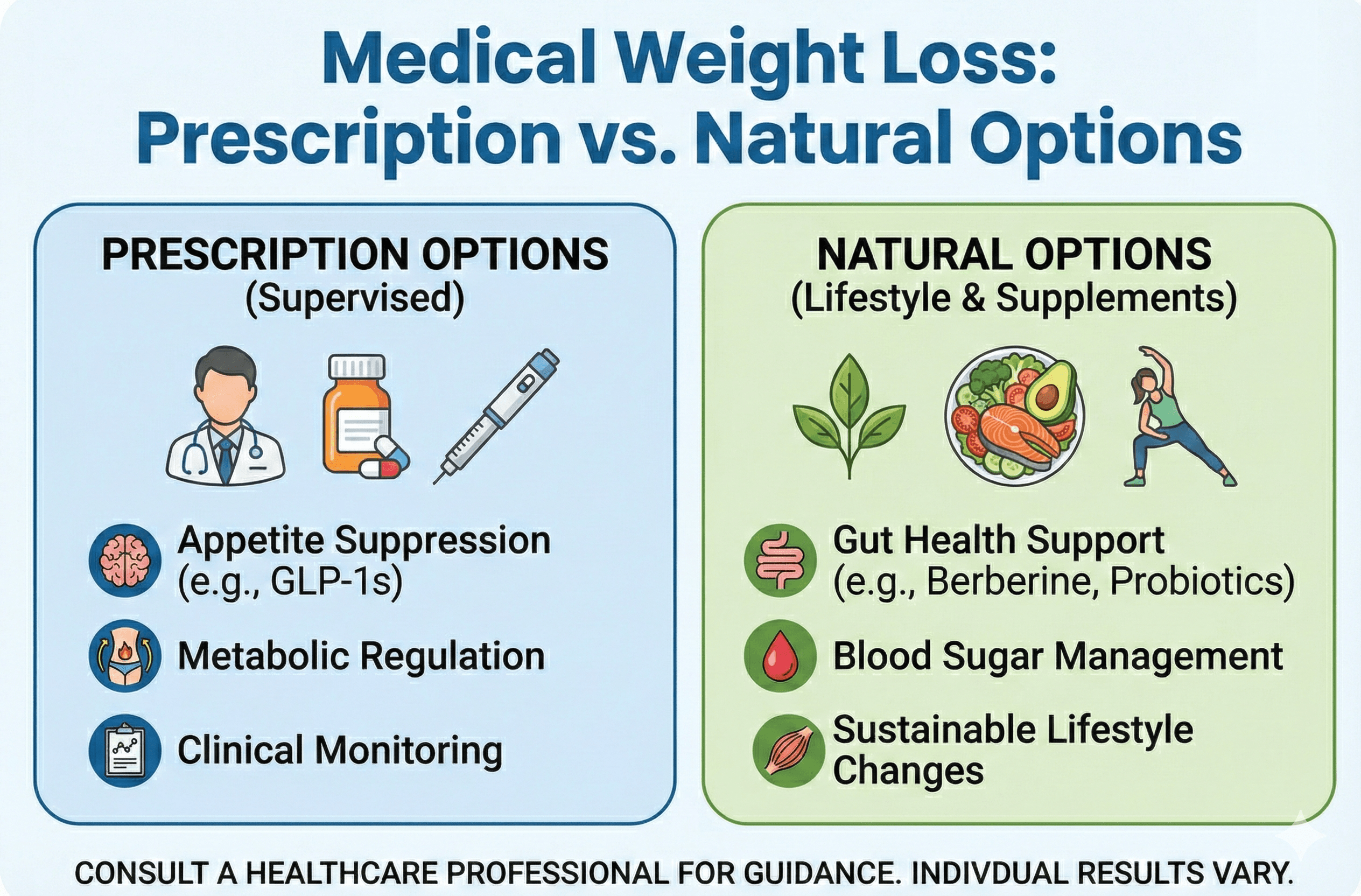
Medical Weight Loss: Prescription vs. Natural Options

Should you choose GLP-1 medications or natural supplements? A medical perspective on this question reveals that the answer isn't one-size-fits-all. As obesity rates continue climbing and weight loss options proliferate, from prescription medications like Ozempic and Wegovy to natural supplements like berberine and green tea extract, patients face an increasingly complex decision landscape.
Understanding when to pursue pharmaceutical intervention versus natural approaches, or whether combining both makes medical sense, requires a nuanced examination of efficacy, safety, and individual patient factors. Losing weight is deeply personal, and the right choice depends entirely on your unique metabolic health, medical history, and long-term goals.
Understanding the Landscape: Prescription Medications vs Natural Supplements
To make an informed decision, it is crucial to understand how both ends of the treatment spectrum work inside your body.
The Pharmaceutical Approach: GLP-1 Receptor Agonists
The current gold standard in prescription weight loss centers on GLP-1 (glucagon-like peptide-1) receptor agonists, including semaglutide (Wegovy, Ozempic) and tirzepatide (Mounjaro, Zepbound). Because these medications powerfully alter metabolic pathways, many patients seek out clinically supervised GLP-1 weight loss injections to ensure they are administered safely and effectively.
- Mechanism of Action: GLP-1 medications slow gastric emptying, reduce appetite through central nervous system pathways, and improve insulin sensitivity. Tirzepatide adds a dual action by also activating GIP (glucose-dependent insulinotropic polypeptide) receptors, potentially enhancing the weight loss effects.
- Clinical Efficacy: The evidence supporting GLP-1 medications is highly robust. Clinical trials demonstrate that Semaglutide 2.4mg (Wegovy) yields an average weight loss of 15-17% of body weight over 68 weeks. Tirzepatide (Zepbound) shows an average weight loss of 15-22.5%, depending on the dosage.
- Safety Profile: The U.S. Food and Drug Administration (FDA) heavily monitors these medications. Common side effects include nausea, vomiting, diarrhea, and constipation. More serious but rare risks include pancreatitis, gallbladder disease, and potential thyroid C-cell tumors (seen in rodent studies; human risk is still under observation).
The Natural Approach: Evidence-Based Supplements
Natural weight loss supplements vary enormously in quality and scientific backing. The most promising options with actual clinical support include:
Berberine This alkaloid compound has gained attention on social media as "nature's Ozempic," though this comparison significantly oversimplifies the medical evidence.
- Mechanism: Activates AMPK (AMP-activated protein kinase), improves insulin sensitivity, and may positively modulate gut microbiota.
- Evidence: Meta-analyses show modest weight loss of 2-5 pounds over 12 weeks, alongside improvements in metabolic parameters like blood sugar.
- Safety: Generally well-tolerated. Gastrointestinal side effects are common, and it can interact with medications metabolized by liver enzymes.
Fiber Supplements (Glucomannan, Psyllium)
- Mechanism: Increases satiety, slows gastric emptying, and reduces caloric absorption naturally.
- Evidence: Produces modest weight loss of 1-3 pounds when explicitly combined with caloric restriction.
- Safety: Excellent safety profile, though it must be taken with adequate water to prevent choking or intestinal blockages.
Green Tea Extract
- Mechanism: Catechins (especially EGCG) may increase resting metabolism and fat oxidation.
- Evidence: Meta-analyses show approximately 2-3 pounds of additional weight loss over a placebo.
- Safety: Generally safe; however, there are rare cases of liver toxicity associated with high-dose, isolated extracts.
Head-to-Head Comparison
When comparing pharmaceutical and natural options objectively, clear distinctions emerge across four key categories:
- Efficacy Comparison: Prescription GLP-1 medications demonstrate significantly greater weight loss (15-22% of total body weight) compared to natural supplements (2-5% of body weight maximum). This 3-to-7-fold difference in outcomes is clinically meaningful for those with severe obesity.
- Safety Comparison: Natural supplements generally boast milder side effect profiles but are not risk-free. Prescription medications carry more significant potential adverse effects but undergo rigorous, ongoing FDA safety monitoring.
- Cost Comparison: Natural supplements are dramatically less expensive (typically $20-$50 monthly) versus prescription medications ($900-$1,400 monthly out-of-pocket). However, insurance may cover prescriptions for qualifying patients.
- Evidence Quality: Pharmaceutical medications are backed by large, well-designed, randomized controlled trials. Natural supplements often rely on smaller studies with variable quality and inconsistent results.
Who Should Choose Which Approach?
Candidates for Prescription Medications
Clinical guidelines from organizations like the National Institute of Diabetes and Digestive and Kidney Diseases (NIDDK) recommend considering prescription weight loss medications based on specific criteria.
Consider a prescription approach if you meet these benchmarks:
- You have a BMI ≥30 kg/m² (obesity), OR a BMI ≥27 kg/m² accompanied by weight-related comorbidities (e.g., type 2 diabetes, hypertension, sleep apnea).
- You face significant obesity-related health complications requiring substantial, urgent weight loss.
- You have failed previous attempts at lifestyle modification alone over 6+ months.
- You are prepared for long-term medication use, as weight typically returns upon discontinuation.
Candidates for Natural Approaches
Natural supplements may be more appropriate for a different clinical profile.
Consider a natural approach if:
- You have a BMI of 25-30 kg/m² (overweight category) without significant comorbidities.
- Your goal is modest weight loss (10-20 pounds).
- You are in the early stages of lifestyle modification and want gentle metabolic support.
- You have explicit medical contraindications to pharmaceutical options.
- You prefer interventions with a lower side-effect burden.
The Critical Role of Medical Supervision
Regardless of the approach, medical supervision remains essential. Even "natural" does not mean "safe for everyone." A healthcare provider should continuously assess underlying causes of weight gain (like hormonal imbalances or medication-induced weight gain), screen for contraindications, monitor for drug interactions, and address your comprehensive health optimization.
Combining Prescription and Natural Approaches Safely
While research specifically examining GLP-1 medications paired with natural supplements is limited, some patients and clinicians cautiously explore combination approaches.
Potential Benefits of Combining:
- Addressing multiple metabolic pathways simultaneously.
- Supporting metabolic health naturally during and after medication use.
- Building sustainable lifestyle habits for maintenance after medication discontinuation.
Safety Check: Combining Interventions
- GLP-1 + High-Fiber Diet/Supplements: Generally safe. Fiber enhances satiety and metabolic effects with no known major contraindications.
- GLP-1 + Berberine: Proceed with high caution. While they have theoretically complementary mechanisms, combining them requires strict monitoring for additive gastrointestinal side effects and excessive glucose-lowering (hypoglycemia risk, especially in diabetics).
- GLP-1 + Omega-3 Fatty Acids: Generally safe. May support cardiovascular health and reduce systemic inflammation without significant interactions.
Always inform your healthcare providers about every medication and supplement you take. Start one intervention at a time to identify individual effects, and monitor your blood glucose carefully if you are diabetic or pre-diabetic.
The Non-Negotiable Foundation: Lifestyle Modification
Neither pharmaceutical nor natural interventions replace fundamental lifestyle changes. Without addressing your daily habits, any weight lost will likely return. Engaging in professional nutritional counseling and coaching is often the missing link between temporary results and lifelong success.
Nutrition Essentials:
- Maintain a caloric deficit appropriate to your goals (typically a 500-750 calorie reduction).
- Emphasize a whole-food-based diet rich in lean protein, vegetables, and fiber.
- Minimize ultra-processed foods and hidden added sugars.
Physical Activity Guidelines:
- Commit to a minimum of 150 minutes of weekly moderate-intensity cardiovascular exercise.
- Include resistance training 2-3 times weekly to preserve vital lean muscle mass during weight loss.
- Increase your daily NEAT (non-exercise activity thermogenesis) by walking more, taking stairs, and standing.
Behavioral Factors for Long-Term Maintenance:
- Prioritize adequate sleep (7-9 hours nightly).
- Implement daily stress management techniques.
- Address emotional eating patterns rather than ignoring them.
Studies show that 80-95% of weight lost through any method is regained within 5 years without sustained behavioral intervention. Medications work only as long as they are taken; supplements similarly require ongoing use. Lifestyle habits provide the only truly sustainable foundation.
The Verdict: Personalized Medicine Wins
The prescription versus natural debate presents a false dichotomy. Optimal weight management requires highly personalized approaches based on individual factors like your degree of obesity, metabolic health status, financial resources, and ability to tolerate side effects.
Many clinicians recommend a stepped care approach:
Foundation: Lifestyle modification for all patients.
Enhancement: Natural supplements for those seeking modest additional support.
Medical Escalation: Prescription medications when obesity severity, health complications, or failed previous attempts warrant pharmaceutical intervention.
Combination: Thoughtful integration of approaches under strict medical supervision for appropriate candidates.
The Bottom Line: Prescription GLP-1 medications represent powerful tools for substantial weight loss in appropriate candidates, offering robust evidence but carrying higher costs and side effect risks. Natural supplements offer modest additional support with gentler side effect profiles but shouldn't be expected to produce dramatic, drug-level results alone.
Maryland Trim Clinic (MTC) in Laurel, MD
Navigating the complexities of prescription weight loss medications, supplements, and lifestyle changes can feel deeply overwhelming. Having a trusted medical partner is essential to ensure you are choosing a path that is safe, effective, and tailored to your unique biology. At Maryland Trim Clinic, located in Laurel, MD, we understand that weight loss is a highly individualized medical journey.
We offer a comprehensive, physician-led medical weight loss program designed to address the root causes of metabolic dysfunction. Our team helps you cut through the noise, carefully evaluating whether a prescription GLP-1 approach, natural enhancements, or behavioral coaching is right for you. We prioritize long-term sustainability over quick fixes, ensuring you have the ongoing supervision and support required to achieve lasting health.
Disclaimer: The information provided in this article is for educational purposes only and is not intended as a substitute for professional medical advice, diagnosis, or treatment. Always seek the advice of your physician or other qualified health provider with any questions you may have regarding a medical condition or weight management plan.
Frequently Asked Questions
Q: Are natural supplements like berberine really as effective as GLP-1 medications like Ozempic? A: No, natural supplements are not as effective as prescription GLP-1 medications. Clinical trials show GLP-1 medications like semaglutide produce 15-22% body weight loss, while berberine and other natural supplements typically result in 2-5% weight loss at most. While berberine has legitimate metabolic benefits and some evidence supporting modest weight loss, calling it 'nature's Ozempic' significantly overstates its efficacy. Natural supplements can be valuable as complementary support, but they don't match pharmaceutical weight loss results.
Q: Can I safely combine prescription weight loss medications with natural supplements? A: Potentially yes, but only under medical supervision. Some combinations may be safe and even complementary, such as GLP-1 medications with fiber supplements or omega-3 fatty acids. However, certain combinations pose real risks, berberine can affect medication metabolism through liver enzymes, and combining multiple glucose-lowering interventions may cause dangerous hypoglycemia in diabetics. Always inform your healthcare provider about all supplements and medications you're taking.
Q: Who should consider prescription weight loss medications versus natural approaches? A: Prescription medications are generally appropriate for people with a BMI ≥30, or a BMI ≥27 with weight-related health conditions like diabetes or hypertension, especially after lifestyle interventions alone have proven insufficient. Natural approaches may be more suitable for those with a lower BMI (25-30), seeking modest weight loss, preferring gentler interventions, or unable to afford prescription options. Consultation with a healthcare provider is essential to determine the most appropriate approach for your specific situation.
Q: Will I regain weight if I stop taking weight loss medications or supplements? A: Yes, weight regain is highly likely when stopping weight loss medications or supplements without maintained, permanent lifestyle changes. Studies show that discontinuing GLP-1 medications typically results in regaining most of the lost weight within 1-2 years. Stopping natural supplements similarly removes their metabolic support. Successful long-term weight maintenance requires sustained lifestyle modifications including dietary changes, regular physical activity, and behavioral strategies.
Q: Are natural weight loss supplements actually safe since they're not regulated like medications? A: "Natural" doesn't automatically mean "safe." While many supplements like fiber and berberine have good safety profiles, they can still cause side effects and severe drug interactions. Unlike prescription medications, dietary supplements aren't required to prove safety and efficacy to the FDA before marketing, and quality control varies significantly between manufacturers. Choose reputable brands with third-party testing, and always inform your doctor about supplement use.
Ready to Find the Right Weight Loss Path for Your Body?
Stop guessing and start working with a medical team that understands your unique metabolic needs. Visit our homepage to schedule a consultation with Maryland Trim Clinic today, and take the first step toward a personalized, sustainable weight loss strategy.