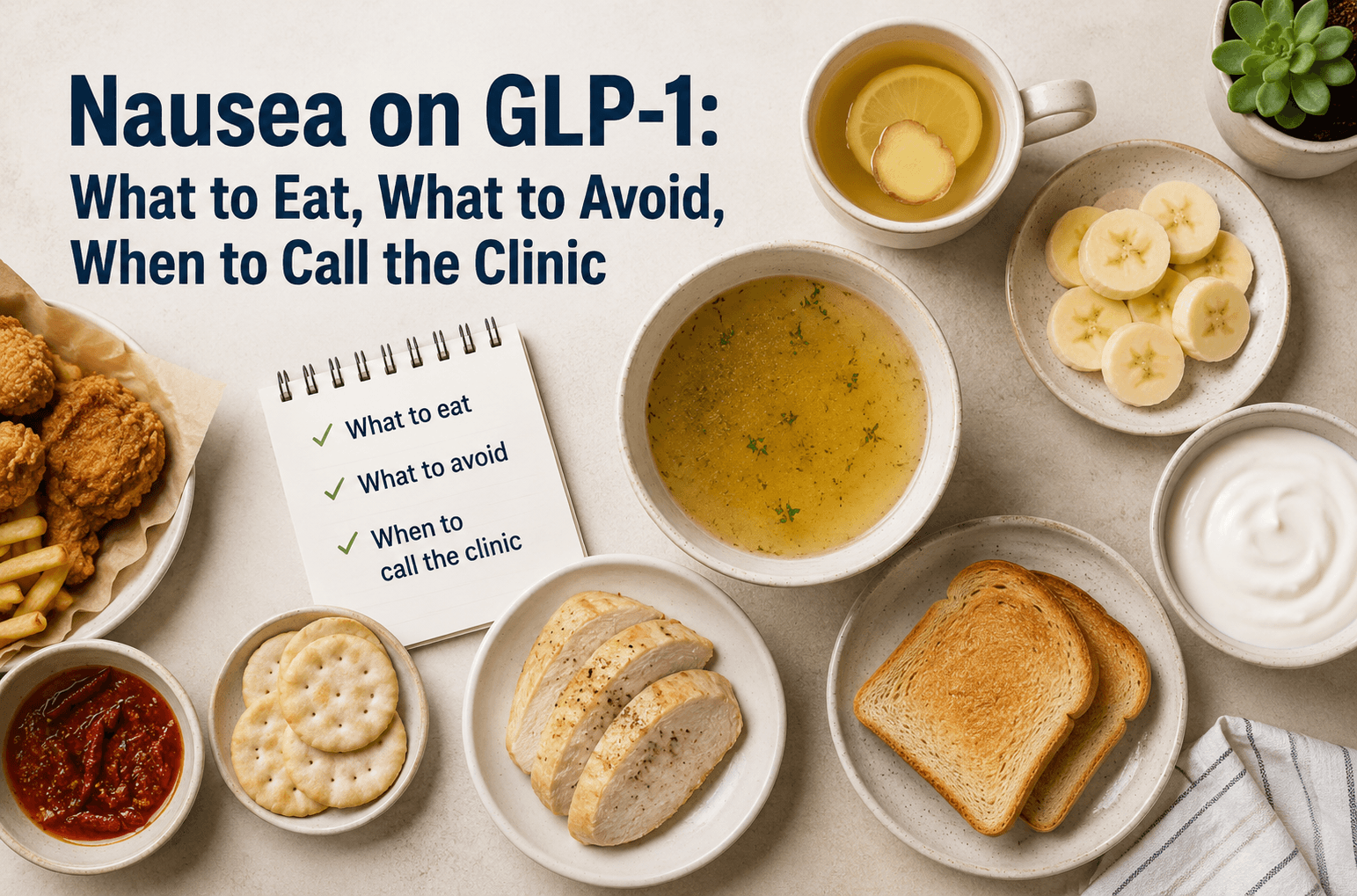
Nausea on GLP-1: What to Eat and Avoid


Nausea is one of the most common reasons people feel unsure about continuing a GLP-1 weight-loss plan. It may happen early in treatment, around dose increases, after eating too much at once, or after meals that are greasy, rich, spicy, or sugary.
If you are searching nausea on GLP-1 what to eat, the safest answer is not to stop eating completely or force large meals. A better approach is to use smaller portions, choose bland and protein-supportive foods, sip fluids steadily, avoid common triggers, and know when symptoms are no longer “normal adjustment.” Mild nausea may improve, but severe or persistent nausea, vomiting, dehydration, or abdominal pain should be discussed with a clinician.
Nausea on GLP-1: The Quick Answer
For nausea on GLP-1 medication, eat small, slower meals built around bland foods and gentle protein, such as toast, rice, oatmeal, soup, crackers, Greek yogurt, eggs, tofu, chicken, or fish. Avoid large portions, fried foods, heavy fat, alcohol, spicy meals, and sugary foods. Call your clinician if nausea is severe, persistent, or paired with vomiting, dehydration, or abdominal pain.
Medical Disclaimer: Educational information only. Do not start, stop, or change any medication without speaking to your healthcare provider. If you have severe symptoms or think you’re having an emergency, call 911 or seek emergency care.
Why GLP-1 Medications Can Cause Nausea
GLP-1 medications used for weight management can reduce appetite, increase fullness, and slow stomach emptying. Maryland Trim Clinic’s GLP-1 weight-loss injections page explains that semaglutide and tirzepatide mimic gut hormones that help regulate insulin, slow gastric emptying, reduce appetite, and increase fullness.
That slower stomach emptying is one reason a meal that used to feel normal may suddenly feel too heavy. Food may stay in the stomach longer, and large or high-fat meals may worsen fullness, nausea, indigestion, or reflux.
DailyMed prescribing information for Wegovy lists nausea, vomiting, diarrhea, abdominal pain, constipation, dyspepsia, flatulence, gastroesophageal reflux disease, gastritis, and other gastrointestinal reactions among reported adverse reactions. It also states that severe gastrointestinal adverse reactions have been reported and that Wegovy is not recommended in patients with severe gastroparesis.
For Zepbound, DailyMed notes that nausea, diarrhea, vomiting, constipation, abdominal pain, dyspepsia, injection-site reactions, fatigue, hypersensitivity reactions, eructation, hair loss, and gastroesophageal reflux disease are common adverse reactions. It also warns that diarrhea, nausea, and vomiting may cause dehydration, which can lead to kidney problems.
What Triggers Nausea During Dose Increases?
Nausea may appear or worsen when the dose is increased because the digestive system is adjusting to a stronger medication effect. It can also be triggered by eating patterns that clash with slower gastric emptying.
Common triggers include:
- Eating large meals
- Eating quickly
- Fried or greasy foods
- Heavy cream, cheese, butter, or high-fat meals
- Sugary foods or drinks
- Alcohol
- Spicy or strongly seasoned meals
- Carbonated drinks
- Lying down soon after eating
- Skipping meals, then overeating later
- Drinking a large amount of fluid with meals
- Eating past the first sign of fullness
Cleveland Clinic explains that because food stays in the stomach longer on GLP-1 agonists, spicy and high-fat foods can contribute more to gastrointestinal side effects. Cleveland Clinic also notes that greasy or high-fat foods may increase indigestion, nausea, vomiting, or heartburn because food sits in the stomach longer.
A dose increase does not mean you must “push through” severe symptoms. If nausea affects hydration, nutrition, work, sleep, or daily function, it is worth contacting the prescribing clinic.
Small Meals, Protein First: The Eating Pattern That Often Helps
A GLP-1-friendly meal is usually smaller, slower, and more intentional. The goal is to get enough nutrition without overwhelming the stomach.
A helpful rule is: small meals, protein first, gentle fiber, steady fluids.
That may look like:
- Eat 4 to 6 smaller eating moments instead of 2 very large meals.
- Stop eating at mild fullness, not uncomfortable fullness.
- Start with protein so a smaller meal still supports muscle and satiety.
- Use cooked vegetables or soft fruit when raw foods feel too heavy.
- Avoid drinking large volumes during the meal if that worsens fullness.
- Eat slowly and pause midway through the meal.
- Stay upright after eating.
UCHealth’s guidance for people using GLP-1 weight-loss drugs emphasizes protein, fiber, and hydration, and notes that smaller, more frequent meals can help people tolerate eating while appetite is reduced. It also advises avoiding greasy foods such as fried foods and fast food because they can make nausea and digestion worse.
Maryland Trim Clinic’s nutritional counseling and coaching may help patients personalize meal timing, protein, hydration, portion size, and side-effect strategies rather than relying on generic meal lists. MTC describes its nutrition service as one-on-one support for personalized nutrition plans, portion control, label reading, nutrient timing, and accountability.
What Foods Are Easiest on the Stomach?
The best GLP-1 nausea foods are often bland, lower-fat, easy to portion, and not overly aromatic.
Bland carbohydrates
These can be useful when nausea is active:
- Toast
- Rice
- Plain crackers
- Applesauce
- Bananas
- Plain oatmeal
- Potatoes
- Noodles or pasta in small portions
- Low-fat broth-based soups
Mayo Clinic recommends slowly returning to bland, easy-to-digest foods after nausea or vomiting, including crackers, toast, gelatin, bananas, applesauce, rice, and chicken.
Gentle protein options
Protein matters because GLP-1 medications can reduce appetite. If intake becomes too low for too long, it may be harder to meet nutrition needs and preserve lean mass.
Try small portions of:
- Greek yogurt
- Cottage cheese
- Eggs
- Chicken breast
- Fish
- Turkey
- Tofu
- Beans or lentils in small amounts if tolerated
- Protein smoothies that are not too thick or sweet
- Bone broth or protein-containing soups
Cleveland Clinic advises focusing on protein-rich foods and smaller, more frequent meals while using GLP-1 medication, rather than putting all nutrition into one large meal that may worsen nausea.
Cold or room-temperature foods
Some people tolerate cold foods better because they have less smell. Options may include:
- Greek yogurt with banana
- Cottage cheese with fruit
- Turkey roll-ups
- Chilled rice bowl in a small portion
- Smoothie made with protein and fruit
- Hard-boiled egg
- Cold chicken salad made lightly
If smells trigger nausea, avoid cooking strong-smelling foods when symptoms are active.
Soups and soft meals
Soup can be helpful because it combines fluid, sodium, protein, and gentle texture. Good choices may include:
- Chicken and rice soup
- Lentil soup in a small portion
- Miso soup with tofu
- Bone broth with noodles
- Vegetable soup with soft-cooked vegetables
- Turkey or chicken broth-based soup
Avoid very creamy, greasy, or spicy soups when nausea is active.
What to Avoid When Nausea Is Active
Some foods may be tolerated later, but they are more likely to worsen symptoms during a nauseous period.
Food or habit
Why it may worsen nausea
Fried foods
High fat can slow digestion further and worsen fullness
Large portions
The stomach may empty more slowly on GLP-1 medication
Spicy meals
May irritate reflux or nausea in sensitive patients
Alcohol
Can irritate the stomach and worsen dehydration risk
Sugary drinks
May worsen nausea or trigger rapid fullness
Carbonated drinks
May increase belching, pressure, or reflux
Heavy cream or rich sauces
High-fat texture can feel too heavy
Eating late and lying down
May worsen heartburn on GLP-1
Skipping meals all day
Can lead to overeating later and worse nausea
The goal is not to create a permanent “never eat” list. It is to reduce triggers while the body adjusts, then reintroduce foods carefully based on tolerance.
Heartburn on GLP-1: Why Reflux May Show Up
Some patients notice heartburn, sour burps, belching, or a heavy “food is sitting there” feeling. This can happen because slower stomach emptying may increase pressure and make rich meals linger longer.
Heartburn on GLP-1 may improve with:
- Smaller meals
- Lower-fat meals
- Avoiding late-night eating
- Staying upright after meals
- Reducing carbonated drinks
- Limiting alcohol
- Avoiding trigger foods such as spicy meals, fried foods, chocolate, or peppermint if they worsen symptoms
- Discussing persistent reflux with a clinician
Do not assume all upper abdominal discomfort is simple reflux. Severe, persistent, or worsening abdominal pain, especially with vomiting or inability to eat or drink, needs medical attention.
How Hydration Helps With Nausea
Hydration can help because vomiting, low intake, diarrhea, and reduced thirst can all increase dehydration risk. Nausea can also make plain water feel unappealing, which creates a cycle: nausea reduces drinking, dehydration worsens how you feel, and eating becomes even harder.
Hydration strategies that may help include:
- Sip fluids slowly throughout the day.
- Use small sips rather than large gulps.
- Try ice chips if drinking feels difficult.
- Use broth, diluted electrolyte drinks, or low-sugar oral rehydration options if appropriate.
- Avoid drinking a large amount at meals if it worsens fullness.
- Watch urine color and frequency.
- Ask your clinician for fluid guidance if you have kidney disease, heart failure, fluid restrictions, or take diuretics.
MedlinePlus lists signs of dehydration with nausea and vomiting, including dry mouth, infrequent urination, and dark urine. Mayo Clinic also advises prompt medical attention when nausea and vomiting occur with dehydration signs such as excessive thirst, dry mouth, infrequent urination, dark-colored urine, weakness, dizziness, or lightheadedness when standing.
A 24-Hour GLP-1 Nausea Meal Reset
This sample reset is educational and should be adjusted to your medical needs, allergies, medication plan, and clinician guidance.
Morning
Start with a few sips of water or ginger tea. If tolerated, try:
- Plain toast with egg
- Greek yogurt with banana
- Oatmeal in a small portion
- Crackers with cottage cheese
Do not force coffee on an empty stomach if it worsens nausea or reflux.
Midday
Keep the portion modest and protein-supported:
- Chicken and rice soup
- Tofu with rice and cooked vegetables
- Turkey roll-up with crackers
- Fish with mashed potato
- Greek yogurt smoothie, not too sweet or thick
Stop before uncomfortable fullness.
Afternoon
Use a planned snack if appetite is low:
- Applesauce
- Banana
- Cottage cheese
- Crackers
- Small protein shake
- Broth
- Hard-boiled egg
Skipping all afternoon may lead to a larger evening meal that worsens nausea.
Evening
Choose a gentle dinner:
- Chicken soup
- Baked fish with rice
- Egg and toast
- Tofu and cooked carrots
- Turkey with potatoes
- Small bowl of oatmeal if savory foods are unappealing
Stay upright after eating and avoid late heavy meals.
When OTC or Prescription Nausea Options Come Up
Some patients ask about anti-nausea medications, antacids, or reflux medicines. These may be appropriate in some situations, but they should be discussed with a clinician or pharmacist, especially if symptoms are persistent, severe, or related to dose changes.
Ask your clinician:
- Is this level of nausea expected at my current dose?
- Should my next dose be delayed, adjusted, or reassessed?
- Could another medication be worsening nausea?
- Is my heartburn actually reflux, delayed gastric emptying, gallbladder pain, or something else?
- Is an OTC antacid or acid reducer appropriate for me?
- Is an anti-nausea medication appropriate?
- What symptoms should make me stop waiting and seek urgent care?
Do not independently change GLP-1 dosing because nausea is better or worse. Dose decisions should be made with the prescribing provider.
Maryland Trim Clinic’s medical weight loss program includes physician-led care, health assessments, personalized nutrition and exercise planning, behavioral support, prescription medication when appropriate, and ongoing monitoring. This broader structure is useful when side effects begin to interfere with nutrition or adherence.
When Is Nausea a Warning Sign?
Mild nausea can occur with GLP-1 medications, but nausea becomes more concerning when it is severe, persistent, worsening, or paired with other symptoms.
Call your clinician promptly if you have:
- Nausea that does not improve or keeps returning
- Vomiting
- Inability to keep fluids down
- Signs of dehydration
- Severe abdominal pain
- Pain that radiates to the back
- Significant bloating or abdominal swelling
- Fever
- Yellowing of the skin or eyes
- Dark urine with abdominal pain
- Blood in vomit or stool
- Dizziness or fainting
- Very low food intake for more than a short period
- Symptoms after a recent dose increase
- Nausea that prevents work, sleep, hydration, or medication adherence
Zepbound prescribing information tells patients to stop using the medication and call a healthcare provider right away for severe stomach pain that will not go away, with or without nausea or vomiting. It also warns that nausea, vomiting, and diarrhea may cause dehydration and kidney problems.
MedlinePlus states that nausea and vomiting can be early warning signs of more serious medical problems, and patients should seek care for dehydration signs or concerning symptoms.
How Maryland Trim Clinic Helps Patients Manage GLP-1 Nausea in Laurel, MD
Maryland Trim Clinic in Laurel, MD positions GLP-1 treatment as clinician-supervised weight-loss care, not a self-managed medication shortcut. Its GLP-1 service page describes medical evaluation, personalized treatment planning, ongoing monitoring, nutrition guidance, hydration guidance, and side-effect support.
Depending on the patient, support may include:
- Reviewing when nausea started
- Checking whether symptoms relate to dose changes
- Reviewing meal size, fat intake, hydration, and protein
- Adjusting nutrition strategies for nausea or heartburn
- Monitoring weight-loss progress and side effects
- Discussing whether medication timing, dose plan, or follow-up should be reviewed
- Helping protect lean mass with protein and activity guidance
- Escalating care if red-flag symptoms are present
Relevant MTC services may include GLP-1 weight-loss injections, nutritional counseling and coaching, medical weight loss, metabolic testing, 3D body scanning, and weight loss maintenance support. Patients can also use the contact page to ask about next steps.
The Bottom Line
Nausea on GLP-1 medication is common, but it should still be managed thoughtfully. Start with smaller meals, slower eating, bland foods, gentle protein, steady hydration, and fewer high-fat, spicy, sugary, or late meals. Avoid overeating past early fullness, especially during dose increases.
Mild symptoms may improve, but severe or persistent nausea deserves clinical review. Call your clinician if nausea interferes with hydration or nutrition, if vomiting occurs, or if you develop warning signs such as severe abdominal pain, dehydration, fever, jaundice, blood, dizziness, or inability to keep fluids down.
Frequently Asked Questions
What foods are easiest on the stomach?
The easiest foods are often bland, lower-fat, and simple to portion, such as toast, crackers, rice, applesauce, bananas, oatmeal, broth-based soup, Greek yogurt, eggs, chicken, fish, tofu, and potatoes. Cold or room-temperature foods may also be easier if smells trigger nausea. Mayo Clinic recommends bland, easy-to-digest foods after nausea or vomiting.
What triggers nausea during dose increases?
Nausea during dose increases can be triggered by stronger appetite and gastric-emptying effects, large meals, eating quickly, greasy foods, spicy foods, alcohol, sugary foods, carbonated drinks, late meals, or eating past fullness. Cleveland Clinic notes that high-fat and spicy foods may worsen GLP-1 gastrointestinal side effects because food stays in the stomach longer.
How can hydration help?
Hydration can help because nausea, vomiting, diarrhea, low intake, and reduced thirst can increase dehydration risk. Sip fluids steadily rather than drinking large amounts at once. Broth, ice chips, diluted electrolyte drinks, or low-sugar oral hydration options may help some patients. Seek care if you have dry mouth, dark urine, infrequent urination, dizziness, or weakness.
When is nausea a warning sign?
Nausea is a warning sign when it is severe, persistent, worsening, or paired with vomiting, dehydration, severe abdominal pain, bloating, fever, jaundice, blood in vomit or stool, dizziness, fainting, or inability to keep fluids down. Zepbound prescribing information advises calling a healthcare provider right away for severe stomach pain that will not go away, with or without nausea or vomiting.
Should I skip meals when GLP-1 nausea is bad?
Skipping all meals can make it harder to meet protein, fluid, and nutrient needs, and it may lead to overeating later. A better approach is usually smaller, gentler eating moments, such as crackers, soup, yogurt, eggs, toast, oatmeal, or a small protein smoothie. If you cannot keep food or fluids down, contact your clinician.
Can high-fat foods make GLP-1 nausea worse?
Yes, high-fat foods can make nausea, indigestion, vomiting, or heartburn worse for some people on GLP-1 medications because digestion may already be slower. Fried foods, fast food, cream sauces, greasy meats, and heavy desserts are common triggers. Try lower-fat, protein-supported meals until symptoms improve.
What should I do if I have heartburn on GLP-1?
For heartburn on GLP-1, start with smaller meals, avoid lying down soon after eating, reduce high-fat and spicy foods, limit carbonated drinks and alcohol, and avoid late heavy dinners. If reflux is frequent, worsening, painful, or paired with vomiting or abdominal pain, ask your clinician whether further evaluation or medication review is needed.
Should I change my GLP-1 dose because of nausea?
Do not change, skip, increase, stop, restart, or stretch your GLP-1 dose without speaking to your healthcare provider. Mild nausea may be managed with food and hydration strategies, but persistent or severe symptoms may require clinician review. Dose decisions should consider your medication, symptoms, hydration, nutrition, side effects, and overall treatment plan.
Get Help Managing GLP-1 Nausea Safely
If nausea, heartburn, vomiting, low appetite, or food aversions are making GLP-1 treatment difficult, Maryland Trim Clinic can help you review your symptoms, meals, hydration, dose timing, side-effect pattern, and nutrition needs. Patients in Laurel, MD can schedule a consultation for clinician-guided GLP-1 support that prioritizes safety, comfort, and sustainable progress.
Get Help Managing GLP-1 Nausea Safely
If nausea, heartburn, vomiting, low appetite, or food aversions are making GLP-1 treatment difficult, Maryland Trim Clinic can help you review your symptoms, meals, hydration, dose timing, side-effect pattern, and nutrition needs. Patients in Laurel, MD can schedule a consultation for clinician-guided GLP-1 support that prioritizes safety, comfort, and sustainable progress.