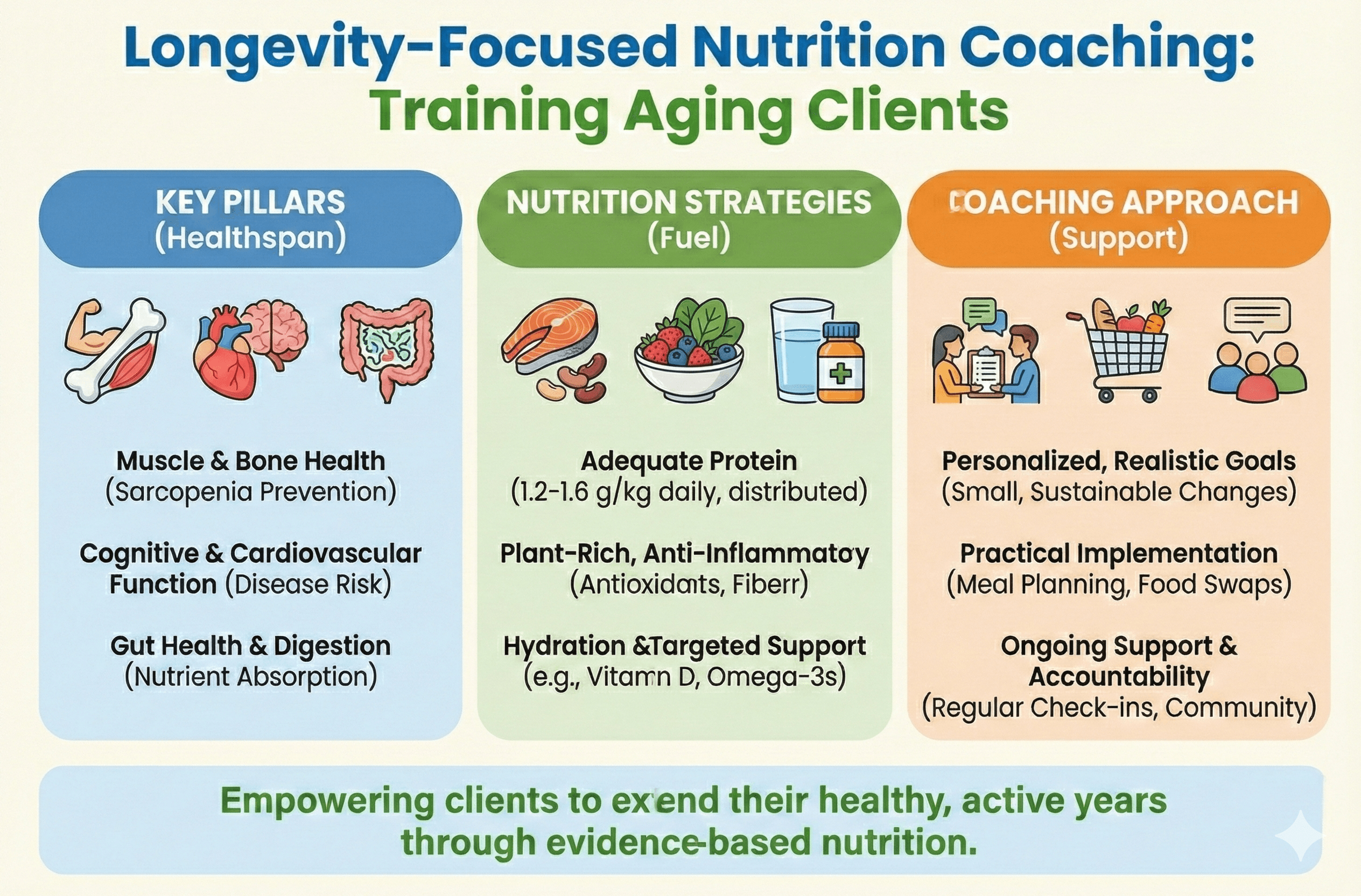
Longevity-Focused Nutrition Coaching: Training Aging Clients

Training 20-year-olds versus 50-year-olds: what actually changes in nutrition?
If you are still prescribing the exact same macros, meal timing, and aggressive calorie targets to your 50-year-old clients that worked perfectly for your 25-year-old physique competitors, you are missing the fundamental shift in biological priorities that occurs with aging.
The standard nutrition framework that builds Instagram aesthetics in young adults often completely undermines the very biological markers that predict healthspan and longevity in older populations. Aging clients do not just need "fewer calories" or instructions on "cleaner eating." They require a complete, science-backed recalibration of their nutrition priorities, from muscle protein synthesis efficiency to micronutrient absorption, and from systemic inflammatory response to bone mineral density.
This isn't about patronizing older clients with watered-down, "light" programs; it is about applying what the clinical science actually tells us about aging physiology. The goal is to create superior outcomes for the metrics that matter most: functional capacity, metabolic health, and quality-adjusted life years.
ACT 1: Protein and Resistance Training for Aging Populations
The Anabolic Resistance Problem
The single most important nutritional shift when coaching aging clients is understanding and combating anabolic resistance, the body's reduced muscle protein synthesis response to both dietary protein intake and resistance training stimuli.
Research consistently demonstrates that older adults (typically defined as 40+) require approximately 30% to 40% more protein per meal just to achieve the exact same anabolic response as younger individuals.
This isn't theoretical. A 25-year-old might easily maximize their muscle protein synthesis with just 20-25g of high-quality protein per meal. Your 55-year-old client? They need 35-40g minimum to hit the same leucine threshold and trigger comparable mTOR activation (the pathway responsible for muscle growth).
The Practical Implication: Standard government recommendations (like 0.8g/kg) or even standard fitness recommendations (like 1.6g/kg) are often insufficient for aging populations who are actively focused on muscle preservation and growth.
Elevated Protein Requirements: The Evidence
Major meta-analyses examining protein needs in older adults point to optimal ranges of 1.6 to 2.2g/kg of bodyweight, which is significantly higher than general population recommendations.
For a 165lb (75kg) client, that translates to 120-165g daily. Crucially, this must be distributed evenly across 3 to 4 meals to repeatedly stimulate muscle protein synthesis throughout the day.
The Leucine Threshold Matters: Each meal must contain approximately 2.5 to 3g of leucine (the primary amino acid responsible for triggering anabolic signaling).
- Animal Protein: This translates to roughly 35-40g of high-quality animal protein per meal.
- Plant Protein: This translates to roughly 45-50g of plant protein per meal (due to lower natural leucine density).
- Timing: Space these meals 4 to 5 hours apart to allow the body's refractory period to reset.
Muscle as the Longevity Organ
Why obsess over muscle in aging clients? Because skeletal muscle is now recognized by the medical community as an active endocrine organ that is absolutely critical to metabolic health, glucose disposal, inflammation regulation, and long-term physical independence.
Sarcopenia (age-related muscle loss) is a massive health crisis that directly predicts:
- Increased all-cause mortality.
- Severe metabolic dysfunction and insulin resistance.
- An increase in devastating falls, bone fractures, and loss of independence.
- Accelerated cognitive decline.
The Non-Negotiable Training Component
Nutrition coaches working with aging clients must explicitly advocate for progressive resistance training (or closely collaborate with personal trainers who understand aging physiology).
The synergistic effect of mechanical tension (lifting weights) plus elevated protein intake is the only proven way to prevent the 3% to 8% per decade muscle loss that typically begins after age 30. Protein without training is highly inefficient; training without adequate protein is entirely futile.
ACT 2: Nutrition Priorities That Shift With Age
From Calorie Deficit Obsession to Nutrient Density
Young clients can often "get away with" highly aggressive calorie deficits, "If It Fits Your Macros" (IIFYM) approaches loaded with processed food, and prioritizing macronutrients while completely ignoring micronutrients. Aging clients absolutely cannot.
The coaching shift must move aggressively toward nutrient density per calorie—maximizing vitamins, minerals, polyphenols, and dietary fiber while still meeting elevated protein targets.
Why the shift is mandatory: Aging is biologically associated with several absorption hurdles:
- Reduced stomach acid (which impairs B12, iron, and calcium absorption).
- Decreased natural vitamin D synthesis from sun exposure.
- Lower conversion efficiency of precursor nutrients (like turning plant-based beta-carotene into usable vitamin A).
- Chronically increased oxidative stress and systemic inflammation.
A 500-calorie daily deficit filled with processed protein shakes and white rice might "work" for a 22-year-old bodybuilder's aesthetic goals. For a 52-year-old, that exact same approach creates severe micronutrient deficiencies that actively accelerate biological aging.
Critical Micronutrients for Aging Populations
When coaching for healthspan, prioritize these specific micronutrients:
- Vitamin D: Aim for serum blood levels of 40-60 ng/mL (not just "sufficient" by minimum lab standards). Vitamin D status heavily correlates with muscle strength, bone density, immune function, and reduced mortality risk. Most aging clients in modern environments require 2,000-4,000 IU of daily supplementation.
- Magnesium: Involved in over 300 enzymatic reactions in the body, yet chronically under-consumed by the US population. Target 400-500mg daily from whole food sources (dark leafy greens, nuts, seeds, whole grains) plus potential targeted supplementation like magnesium glycinate.
- Calcium: Critical for bone health, but intestinal absorption decreases with age. Whole food sources (dairy, bone-in sardines, fortified foods) are vastly superior to heavy calcium supplements for reducing fracture risk without calcifying arteries.
- Vitamin B12: Because stomach acid naturally declines, aging clients often need sublingual (under the tongue) or methylcobalamin forms of B12, rather than just relying on dietary sources, to maintain cognitive and nerve health.
- Omega-3 Fatty Acids (EPA/DHA): Vital for anti-inflammatory effects, cognitive protection, and cardiovascular benefits. Target 2-3g of combined EPA/DHA daily from fatty fish or high-quality supplements.
Inflammation Management Through Diet
Chronic, low-grade inflammation (often termed "inflammaging") is a primary hallmark of biological aging and directly predicts virtually every major age-related disease. Nutrition coaching for aging clients must heavily prioritize anti-inflammatory eating patterns.
Quick Anti-Inflammatory Swaps:
- Increase Polyphenol-rich foods: Emphasize berries, dark leafy greens, green tea, dark chocolate, and extra virgin olive oil.
- Prioritize Fiber intake: Aim for 30-40g daily to support a diverse gut microbiome and reduce systemic inflammation.
- Optimize Omega-3 to Omega-6 ratio: Emphasize fatty fish, walnuts, and flax seeds, while actively reducing refined seed oils and ultra-processed convenience foods.
- Limit Pro-inflammatory foods: Drastically reduce excess refined carbohydrates, artificial trans fats, and high-sugar items.
Gut Health and Protein Absorption
Aging is strongly associated with decreased gut microbiome diversity and a reduced ability to digest protein. This creates a vicious biological cycle: older clients need more protein due to anabolic resistance, but they absorb it less efficiently.
Coaching strategies to combat this:
- Emphasize probiotic and prebiotic foods daily (fermented foods, resistant starches, and diverse fiber sources).
- Consider recommending broad-spectrum digestive enzymes with protein-heavy meals, especially for clients with diagnosed gut issues or frequent bloating.
- Meal pacing: Consuming smaller, more frequent protein doses (e.g., 30g four times a day) may significantly improve total absorption compared to massive single servings (e.g., 60g twice a day).
Metabolic Flexibility vs. Fat Loss
While young clients often focus purely on getting "shredded," aging clients benefit immensely from optimizing metabolic flexibility, the body's ability to efficiently switch back and forth between burning carbohydrates and burning fat for fuel. This matters far more for long-term longevity than achieving single-digit body fat.
Practical application:
- Avoid chronic, extreme low-carb diets (like strict keto) long-term, as they may impair thyroid function and high-intensity training performance in older athletes.
- Implement strategic carbohydrate timing, placing the majority of daily carbs around resistance training sessions.
- Heavily prioritize sleep and stress management (poor sleep ruins metabolic flexibility faster than bad macros do).
Bone Density Considerations
Osteoporosis and severe fracture risk escalate dramatically with age, particularly for post-menopausal women. Nutrition coaching must proactively address bone health before it becomes a crisis.
- Adequate Calcium and Vitamin D: (As previously mentioned).
- Sufficient Protein: Despite old myths, higher protein intakes actually improve bone mineral density, provided calcium intake is adequate.
- Vitamin K2: Works synergistically with vitamin D to ensure calcium is deposited into bones rather than arteries.
- Resistance Training: Heavy mechanical loading is the absolute primary stimulus for signaling the body to remodel and strengthen bone tissue.
ACT 3: Evidence-Based Longevity Nutrition Strategies
The Practical Coaching Framework
Here is a clear hierarchy of nutrition priorities when coaching aging clients focused on longevity and healthspan:
Tier 1 (The Non-Negotiable Foundation)
Protein: 1.6-2.2g/kg distributed across 3-4 meals, containing 35-40g per serving.
Resistance training: 3-4x weekly, focusing on progressive overload.
Micronutrient adequacy: Prioritizing whole, colorful, nutrient-dense foods over processed "macro-friendly" alternatives.
Tier 2 (High-Impact Optimizations) 4. Anti-inflammatory eating: High omega-3s, rich polyphenols, and fiber >30g daily. 5. Vitamin D optimization: Targeted supplementation to achieve 40-60 ng/mL in bloodwork. 6. Sleep and stress management: 7-9 hours of quality sleep to ensure proper cortisol regulation and recovery.
Tier 3 (Individual Optimization) 7. Gut health support: Probiotics and digestive enzymes if needed for absorption. 8. Strategic supplementation: Creatine monohydrate, vitamin K2, and magnesium. 9. Meal timing refinements: Nutrient timing specifically placed around training windows.
Periodization for Aging Clients
Unlike young clients who can aggressively cut calories and bounce back quickly, aging clients benefit deeply from conservative, highly cyclical approaches:
- Extended Maintenance Phases: Spend 8-12 weeks at true maintenance calories, focusing purely on strength gains and slow body composition recomposition.
- Modest Deficits: Use 10-20% caloric deficits maximum when fat loss is required, and implement structured "diet breaks" every 8-10 weeks to prevent metabolic adaptation.
- Refeed Strategies: Use strategic carbohydrate increases to support intense training, thyroid hormone function, and psychological adherence.
Supplement Protocols Worth Considering
Beyond basic micronutrients, evidence-supported supplements for aging populations include:
- Creatine Monohydrate: 5g daily safely improves physical strength, muscle mass, and even cognitive function in older adults. It is one of the most thoroughly researched and safest supplements on earth.
- Collagen Peptides: 15-20g daily may actively support joint health, skin elasticity, and bone density.
- Curcumin: Offers potent anti-inflammatory properties (note: bioavailability requires formulations containing piperine or liposomal delivery).
- Vitamin K2 (MK-7): 100-200mcg daily for bone and cardiovascular health, especially vital if the client is not regularly consuming fermented foods.
Monitoring Biomarkers Beyond Scale Weight
Aging clients need metrics that actually predict their healthspan, not just their relationship with gravity.
- Body composition: Utilize DEXA scans to specifically track muscle mass retention, not just total body weight.
- Functional tests: Track grip strength, walking gait speed, and the ability to stand from a chair unassisted.
- Blood markers: Monitor HbA1c (blood sugar), advanced lipid panels, hs-CRP (a key inflammation marker), vitamin D, and B12.
- Performance metrics: Track strength progression in the gym and total training volume tolerance.
- Subjective measures: Have clients rate their daily energy levels, joint recovery, and sleep quality.
Scale weight alone is nearly meaningless for this demographic. A client who maintains the exact same scale weight while gaining 3 pounds of muscle and losing 3 pounds of visceral fat is winning the longevity game.
Maryland Trim Clinic (MTC) in Laurel, MD
Navigating the complex physiological changes of aging requires more than just a generic diet plan; it requires precise, medical-grade insight into your unique biology. At the Maryland Trim Clinic (MTC) in Laurel, MD, we specialize in helping aging populations optimize their healthspan, preserve vital muscle mass, and improve metabolic flexibility.
We understand that losing weight and keeping it off in your 50s and 60s is vastly different than in your 20s. Whether you need an evidence-based medical weight loss program that respects your changing metabolism, or advanced metabolic testing and analysis to precisely identify your current nutritional needs, our team provides the sophisticated care required for healthy aging. We also offer hormone replacement therapy for clients whose foundational lab work indicates a need for endocrine support alongside their nutritional changes. If you are ready to stop fighting your body and start training for a longer, healthier life, visit the Maryland Trim Clinic online to explore our comprehensive longevity solutions.
Conclusion: Coaching for the Long Game
The nutrition framework that actually works for aging clients focused on longevity fundamentally differs from protocols designed for young adults chasing short-term aesthetic goals.
Anabolic resistance absolutely demands higher protein intakes. Declining micronutrient absorption requires significantly greater nutrient density. "Inflammaging" necessitates strict anti-inflammatory eating patterns. And the threat of bone and muscle loss makes progressive resistance training non-negotiable.
As coaches and health practitioners, our job isn't to impose lazy, cookie-cutter approaches, but to apply deep physiological principles to individual contexts. For clients over 40, this means prioritizing:
- Muscle preservation through elevated protein and weight training.
- Micronutrient optimization to support declining absorption.
- Anti-inflammatory nutrition to combat chronic aging markers.
- Metabolic health markers (like blood sugar and grip strength) over purely aesthetic outcomes.
- Sustainable approaches that support decades of healthy living, not just 12-week transformations.
The professionals who master longevity-focused nutrition will build incredible careers serving the fastest-growing demographic in the world—and they will deliver outcomes that actually matter: more healthy years, maintained independence, and genuine quality of life. That is a much more meaningful legacy than before-and-after photos.
Disclaimer: The information provided in this article is for educational purposes only and is not intended as a substitute for professional medical advice, diagnosis, or treatment. Always seek the advice of your physician or other qualified health provider before making drastic changes to your diet, supplement routine, or exercise program, especially if you have pre-existing medical conditions.
Frequently Asked Questions
Q: Why do aging clients need more protein than younger clients? A: Aging clients experience a phenomenon called 'anabolic resistance'—a significantly reduced muscle protein synthesis response to the protein they eat. While younger adults might maximize muscle building with just 20-25g of protein per meal, clients over 40 typically need 35-40g per meal just to achieve the exact same anabolic response. Research strongly supports total daily protein intakes of 1.6-2.2g/kg of bodyweight for aging populations, which is significantly higher than general government recommendations, to actively preserve muscle mass and function.
Q: What are the most important micronutrients for aging clients? A: Critical micronutrients for longevity include: Vitamin D (targeting blood levels of 40-60 ng/mL for muscle, bone, and immune function), Magnesium (400-500mg daily for over 300+ enzymatic reactions), Vitamin B12 (often requiring direct supplementation due to naturally reduced stomach acid), Omega-3 fatty acids (2-3g of EPA/DHA for potent anti-inflammatory effects), and Calcium (preferably from whole food sources for bone health). Aging reduces both nutrient absorption from food and synthesis efficiency, making nutrient-dense diets essential.
Q: Should aging clients focus heavily on fat loss like younger clients? A: No—the priority must shift from purely aesthetic fat loss to long-term metabolic health and muscle preservation. Highly aggressive calorie deficits that might "work" for young clients can rapidly accelerate muscle loss and create severe micronutrient deficiencies in aging populations. Instead, focus should be placed on modest, slow deficits (10-20% maximum), body recomposition at maintenance calories, and tracking metrics like muscle mass retention, strength gains, and biomarkers (HbA1c, inflammation markers) rather than obsessing over scale weight.
Q: How does resistance training interact with nutrition for aging clients? A: Resistance training is absolutely non-negotiable for aging clients—it is the primary stimulus for preventing sarcopenia (devastating age-related muscle loss). However, training without adequate protein is highly ineffective due to anabolic resistance. The combination of progressive resistance training 3-4 times weekly plus elevated protein intake (1.6-2.2g/kg) creates the necessary synergistic effect to maintain and build muscle in aging populations. Neither intervention alone produces optimal results.
Q: What specific biomarkers should coaches track beyond body weight? A: Coaches should track metrics that actively predict healthspan. This includes: body composition via DEXA scans (looking at muscle mass specifically, not just fat), functional physical performance (testing grip strength, walking gait speed, and unassisted chair stands), blood markers (HbA1c, lipid panels, hs-CRP for systemic inflammation, vitamin D, and B12), strength progression in the gym, and subjective measures like daily energy, joint recovery, and sleep quality.
Ready to Optimize Your Nutrition for a Longer, Healthier Life?
Stop guessing with generic diet plans and start building a nutritional framework that supports healthy aging. Contact the clinical experts at Maryland Trim Clinic today to schedule a comprehensive consultation. Let us help you design a personalized, evidence-based strategy to protect your muscle, improve your metabolic health, and optimize your healthspan.