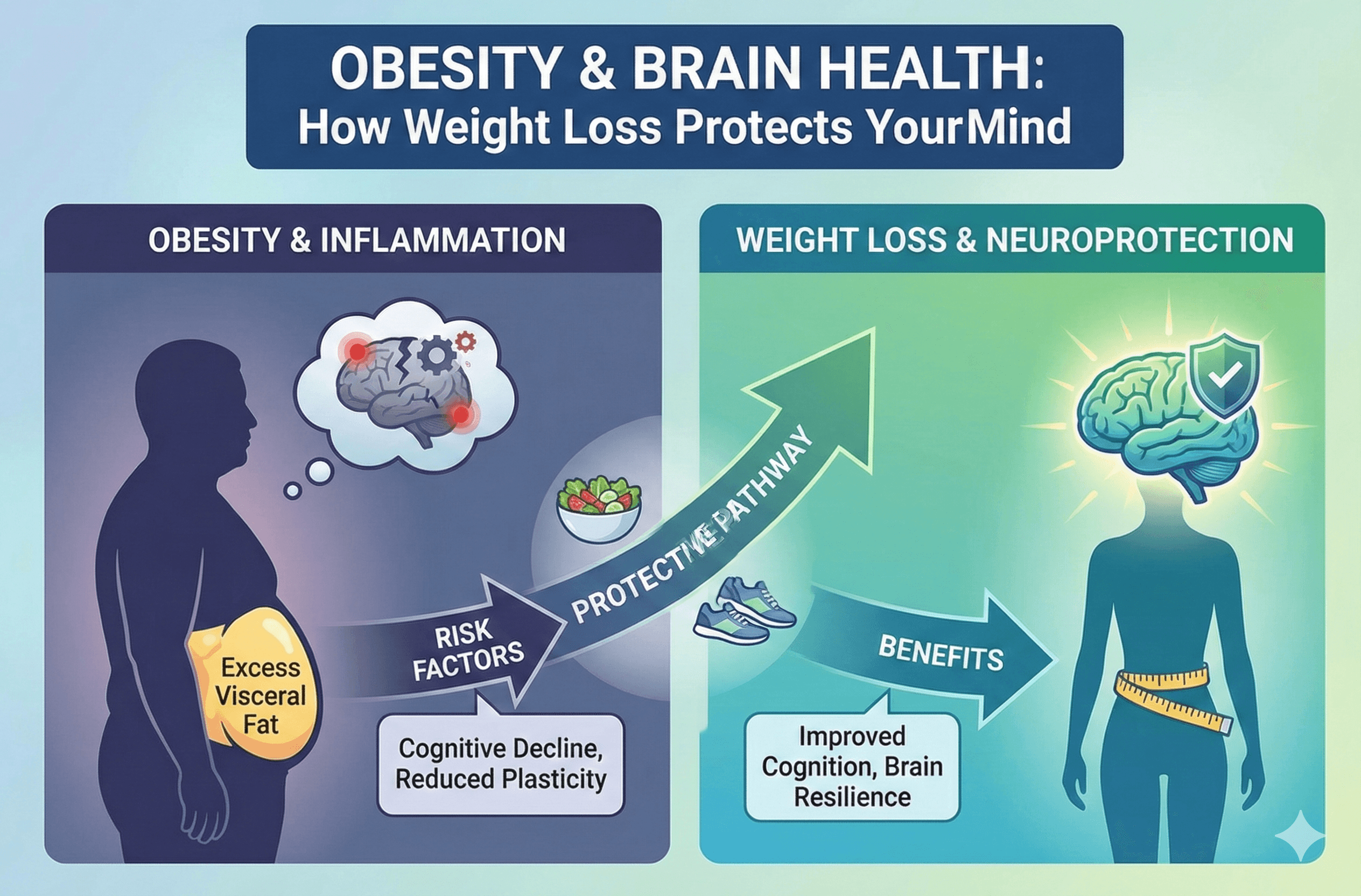
Obesity & Brain Health: How Weight Loss Protects Your Mind

Disclaimer: The information provided in this article is for educational purposes only and does not constitute medical advice. Always consult with a qualified healthcare provider before starting any weight loss program, making dietary changes, or starting new medications.
As a board-certified obesity medicine physician, I've witnessed countless patients transform not just their bodies, but their cognitive function. The connection between excess weight and brain health isn't merely correlational, it is a complex metabolic relationship. When understood and addressed, weight management offers profound protective benefits for your long-term cognitive wellness.
The intersection of obesity medicine and neurology represents one of the most critical frontiers in preventive healthcare. While most people understand that carrying excess weight affects their heart, joints, and metabolic health, fewer realize that obesity fundamentally alters brain structure and function in ways that can accelerate cognitive decline and increase dementia risk.
ACT 1: The Metabolic Pathways Connecting Obesity to Cognitive Decline
Insulin Resistance: The Brain's Energy Crisis
The brain, despite comprising only 2% of your body weight, consumes approximately 20% of your body's glucose. When obesity triggers insulin resistance—a hallmark of metabolic dysfunction, the brain's ability to utilize this glucose becomes severely compromised.
This condition, sometimes referred to in medical literature as "type 3 diabetes," creates an energy deficit in your neurons. This deficit impairs memory formation, executive function, and processing speed.
Insulin isn't merely a glucose regulator in the brain; it serves as a crucial neurotrophic factor that supports synaptic plasticity (the mechanism underlying learning and memory). When insulin signaling becomes disrupted due to chronic hyperinsulinemia from obesity, the hippocampus, the brain's memory center—experiences reduced neuroplasticity and accelerated atrophy.
In fact, research from the Framingham Heart Study demonstrates that individuals with metabolic syndrome show measurably smaller brain volumes and faster rates of cognitive decline compared to metabolically healthy individuals of a similar age.
Chronic Inflammation: The Silent Neural Destroyer
Adipose (fat) tissue in obesity isn't just metabolically inert storage; it functions as an active endocrine organ. It secretes pro-inflammatory cytokines, including interleukin-6 (IL-6), tumor necrosis factor-alpha (TNF-α), and C-reactive protein (CRP). These inflammatory mediators don't remain confined to your body—they cross the blood-brain barrier and trigger neuroinflammation.
Chronic neuroinflammation activates microglia, the brain's resident immune cells. This shifts them from their protective state into a pro-inflammatory state that damages neurons and synapses.
This inflammatory cascade contributes to:
- Impaired neurogenesis (the formation of new neurons).
- Accelerated neuronal death.
- Disrupted neurotransmitter systems.
- Breakdown of the blood-brain barrier.
- Accumulation of amyloid-beta and tau proteins (which are heavily associated with Alzheimer's disease).
Vascular Dysfunction: Strangling the Brain's Blood Supply
Obesity profoundly affects cerebrovascular health through multiple mechanisms. Excess adiposity promotes endothelial dysfunction, arterial stiffness, and atherosclerosis, all of which reduce cerebral blood flow.
The brain requires approximately 750 milliliters of blood per minute to function optimally. When obesity compromises this vascular supply, even subtle reductions in blood flow can impair cognitive performance. Furthermore, obesity increases the risk for overt cerebrovascular events, including stroke and transient ischemic attacks (TIAs), each of which accelerates cognitive decline.
Adipose Tissue as an Endocrine Disruptor
Beyond inflammation, adipose tissue secretes hormones that directly influence brain function. Leptin, produced by fat cells, normally signals satiety and supports hippocampal function. However, obesity creates leptin resistance. This is analogous to insulin resistance, whereby elevated leptin levels paradoxically fail to activate their protective neurological functions.
Conversely, adiponectin, a hormone with anti-inflammatory and neuroprotective properties, decreases in obesity. This dual hormonal dysfunction creates a perfect storm for cognitive vulnerability.
ACT 2: Evidence-Based Interventions for Brain and Weight Optimization
Nutritional Strategies That Protect Both Brain and Metabolism
From an obesity medicine perspective, nutrition represents the most powerful intervention for simultaneously optimizing weight and cognitive health. The evidence strongly supports specific dietary patterns to protect the brain.
Recommended Nutritional Approaches:
- The Mediterranean Diet: Extensive research demonstrates that a dietary pattern rich in olive oil, nuts, fatty fish, vegetables, and whole grains reduces both obesity and cognitive decline. It provides polyphenols that reduce neuroinflammation and Omega-3 fatty acids (DHA and EPA) that support neuronal membrane integrity.
- Low-Carbohydrate Approaches: For select patients, particularly those with significant insulin resistance, well-formulated low-carbohydrate diets offer unique neurological benefits. Ketone bodies can serve as an alternative fuel source for the brain, bypassing impaired glucose metabolism.
- Time-Restricted Eating: Emerging evidence suggests that limiting eating to an 8-10 hour window may enhance metabolic health and cognitive function by improving insulin sensitivity and enhancing cellular cleanup (autophagy).
Exercise: The Neuroplasticity Amplifier
Physical activity represents perhaps the most robust intervention for both weight management and brain protection. Exercise induces the production of brain-derived neurotrophic factor (BDNF), often called "Miracle-Gro for the brain," which stimulates the growth of new neurons.
A brain-protective exercise routine includes:
- Aerobic exercise (150+ minutes weekly): Increases hippocampal volume and improves cerebral blood flow.
- Resistance training (2-3 sessions weekly): Improves insulin sensitivity and preserves lean muscle mass during weight loss.
- High-intensity interval training (HIIT): Maximizes metabolic benefits and BDNF production in time-efficient protocols.
Critically, exercise benefits the brain independent of weight loss, though the combined effect of fitness and weight reduction provides synergistic protection.
Sleep Optimization: The Forgotten Metabolic Reset
Sleep dysfunction both contributes to obesity and independently impairs cognitive function. During deep sleep, the brain's waste clearance mechanism removes neurotoxic proteins. Sleep deprivation impairs this clearance while simultaneously increasing appetite-stimulating hormones and elevating cortisol.
Addressing sleep disorders, particularly obstructive sleep apnea (which is present in over 40% of individuals with obesity), represents a critical intervention for both metabolic and cognitive health.
Pharmacotherapy in Obesity Medicine
Modern obesity pharmacotherapy offers tools that address both weight and potentially cognitive health. Medications like GLP-1 receptor agonists (such as semaglutide) produce substantial weight loss. Beyond the scale, emerging clinical research suggests these medications may offer direct neuroprotective effects by reducing neuroinflammation.
When combined with lifestyle interventions, these medications enable many patients to achieve the 5-10% weight loss threshold associated with measurable metabolic and cognitive improvements.
ACT 3: Preventive Strategies from an Obesity Medicine Perspective
The Critical Window: Early Intervention
The relationship between obesity and cognitive decline begins decades before symptoms emerge. Midlife obesity (ages 40-60) represents a particularly vulnerable period when metabolic dysfunction establishes the pathological cascade that manifests as dementia in later life.
Waiting until cognitive symptoms appear means addressing neurological damage that may be partially irreversible. Brain protection begins with metabolic optimization in your 30s, 40s, and 50s.
Weight loss of even 5-10% of body weight produces measurable improvements in:
- Insulin sensitivity
- Inflammatory markers
- Blood pressure and lipid profiles
- Sleep quality and mood
These improvements translate directly into reduced cognitive risk.
Metabolic Monitoring: Know Your Numbers
Preventive obesity medicine employs comprehensive metabolic monitoring to identify and address dysfunction early. Key markers to track with your doctor include:
- Fasting insulin and glucose: To detect insulin resistance early.
- Hemoglobin A1c: To assess average glucose control.
- Lipid panel: To understand cardiovascular and cerebrovascular risk.
- High-sensitivity CRP: To measure systemic inflammation.
Regular tracking allows for early course correction before metabolic dysfunction entrenches and brain health suffers.
Maryland Trim Clinic (MTC) in Laurel, MD
At the Maryland Trim Clinic (MTC) in Laurel, MD, we understand that treating obesity is about far more than the number on the scale, it is about protecting your long-term vitality and cognitive future. Because excess weight is a complex metabolic condition, we provide comprehensive, medically supervised solutions tailored to your unique biology.
Through our structured medical weight loss program, patients receive integrated care that targets the root causes of metabolic dysfunction. To help jumpstart metabolic health and reduce systemic inflammation, our providers often utilize advanced GLP-1 weight loss injections or targeted appetite suppressant medications.
Furthermore, because brain health is deeply tied to nutritional status and energy metabolism, we utilize metabolic testing and analysis alongside personalized nutritional counseling and coaching to ensure your brain is receiving the optimal fuel it needs. If you are ready to take control of your metabolic and cognitive health, visiting our clinic provides the medical expertise necessary to build a sustainable, protective lifestyle.
The Verdict: Your Brain Depends on Metabolic Health
The science is unequivocal: obesity accelerates cognitive decline through insulin resistance, chronic inflammation, vascular dysfunction, and hormonal disruption. Conversely, evidence-based weight management through nutrition, exercise, sleep, stress management, and, when appropriate, pharmacotherapy, protects brain structure and function.
The time to act is now, not when cognitive symptoms emerge. Every pound lost, every improvement in metabolic health, and every lifestyle change implemented represents an investment in your cognitive future.
In obesity medicine, we don't just treat weight; we protect brains, preserve memories, and extend cognitive healthspans. That is the profound connection between obesity medicine and brain health that every patient deserves to understand.
Frequently Asked Questions
Q: How much weight loss is needed to see cognitive benefits? A: Research shows that even a modest weight loss of 5-10% of your body weight produces measurable improvements in metabolic markers that affect brain health, including insulin sensitivity and inflammatory markers. Studies demonstrate that individuals who achieve this level of weight loss often show improvements in memory and processing speed within 6-12 months.
Q: At what age does obesity start affecting brain health? A: The relationship begins much earlier than most realize. Midlife obesity (ages 40-60) is a critical window when metabolic dysfunction establishes pathways toward later dementia. However, obesity at any age affects brain function; studies show that even young adults with obesity demonstrate altered brain structure compared to healthy-weight peers. It is never too early to address weight for brain health.
Q: Can you reverse cognitive decline that's already started due to obesity? A: The potential for reversal depends on the extent of the damage. In cases of mild cognitive impairment related to metabolic dysfunction, significant improvement is possible through weight loss, improved nutrition, and exercise. Addressing insulin resistance and inflammation can improve cognitive test scores. However, advanced neurodegenerative changes may not be fully reversible, making early intervention critical.
Q: Do weight loss medications affect brain health positively or negatively? A: Modern obesity medications, particularly GLP-1 receptor agonists, show promising neuroprotective effects beyond their weight loss benefits. Emerging research suggests these medications may reduce neuroinflammation and improve cerebral glucose metabolism. When medications produce significant weight loss and metabolic improvement under a doctor's supervision, the net effect on brain health is generally highly positive.
Q: Is exercise or diet more important for protecting the brain in obesity? A: Both are essential and work synergistically. Diet typically has a greater impact on driving weight loss, but exercise provides unique neurological benefits that diet alone cannot deliver, particularly through the production of BDNF (which grows new brain cells) and enhanced cerebral blood flow. Optimal brain protection requires both a nutrient-dense diet and regular physical activity.
Ready to Protect Your Cognitive Future?
Don't wait for symptoms to appear before taking control of your metabolic health. Partner with the medical experts at Maryland Trim Clinic to build a personalized, evidence-based weight loss plan that protects your body and your brain. Contact our Laurel, MD office today to schedule your comprehensive metabolic consultation.