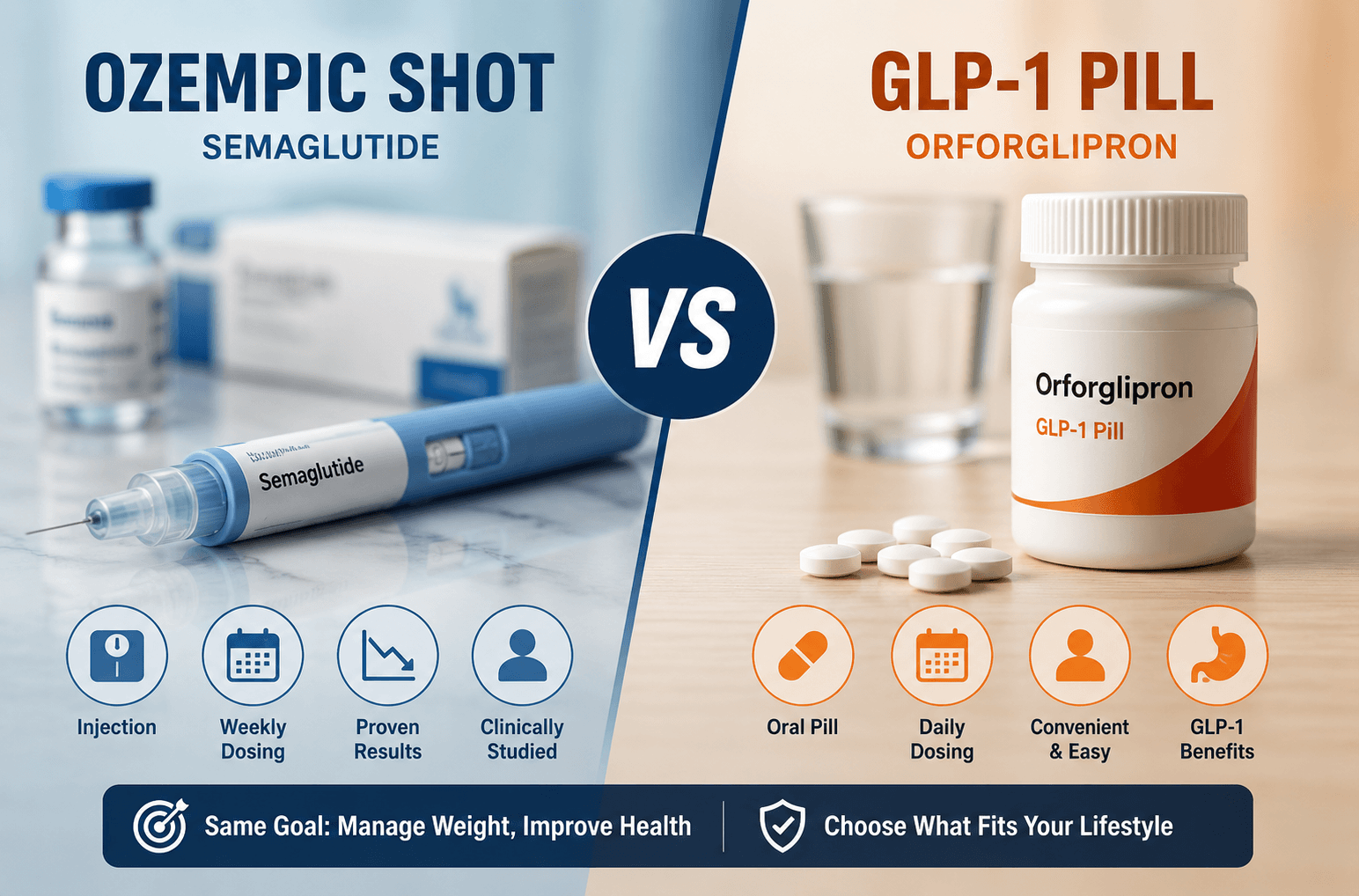
Ozempic Shot vs GLP-1 Pill: Orforglipron vs Semaglutide

Ozempic Shot vs. The New GLP-1 Pill: Key Differences
What if you could get Ozempic results without the needle? There's now a pill — but does it actually work?
Most people deep in the GLP-1 research rabbit hole know about semaglutide injections such as Ozempic for type 2 diabetes and Wegovy for weight loss. What far fewer people realize is that a daily oral GLP-1 receptor agonist has entered the picture, and it is not simply a rebranded version of existing medications.
Orforglipron, approved under the brand name Foundayo, represents a different category of GLP-1 therapy. If you have been hesitant about injections, or you are trying to understand whether a daily pill or weekly shot better fits your health goals and lifestyle, understanding the differences matters.
Both approaches target the same GLP-1 receptor pathways involved in appetite regulation, blood sugar control, and gastric emptying. However, how they are absorbed, taken, tolerated, and integrated into daily life can differ in meaningful ways.
Before starting any GLP-1 medication, it is important to review your personal medical history with a qualified healthcare professional. The FDA's overview of GLP-1 medications also highlights the importance of using these medications under appropriate medical supervision.
A Molecular Fork in the Road — Peptide vs. Small Molecule
Why Injectable Semaglutide Requires a Needle
Injectable semaglutide (Ozempic/Wegovy) is a peptide-based medication. Peptides are short chains of amino acids that behave similarly to proteins in the body.
The digestive system is designed to break down proteins and peptides. If semaglutide were swallowed in a standard pill form, stomach acid and digestive enzymes would destroy most of the medication before it could enter the bloodstream. That is why injectable semaglutide is delivered under the skin rather than through the digestive tract.
The weekly injection schedule is also tied to the drug's long half-life. Once injected, semaglutide remains active in the body for an extended period, allowing once-weekly dosing for many patients.
How Orforglipron Differs
Orforglipron (Foundayo) uses a different molecular design. It is a non-peptide small-molecule GLP-1 receptor agonist.
Rather than copying the peptide structure of the natural GLP-1 hormone, it uses a chemically engineered small molecule capable of activating the same receptor. Because it is not peptide-based, it can survive digestion and be absorbed through the gastrointestinal tract.
That distinction is clinically important because it removes many of the limitations associated with peptide medications.
How Orforglipron Differs From Rybelsus
This is where confusion often happens.
Rybelsus is also an oral GLP-1 medication, but it still contains peptide semaglutide. To make oral absorption possible, it relies on a specialized absorption enhancer called SNAC.
Because of this mechanism, Rybelsus must be taken:
• On an empty stomach • With a small amount of water • At least 30 minutes before food, beverages, or other medications
Orforglipron does not appear to require the same strict timing rules. That flexibility may improve convenience and long-term adherence for some patients.
What Both Medications Do Inside the Body
Although the delivery systems differ, both medications activate the GLP-1 receptor and trigger similar downstream effects:
• Increased insulin release in response to elevated blood sugar • Reduced glucagon secretion • Slower gastric emptying • Reduced appetite signaling • Increased satiety after meals
According to the National Institute of Diabetes and Digestive and Kidney Diseases, these mechanisms can support improved blood sugar regulation and meaningful weight reduction when combined with lifestyle interventions.
What the Clinical Data Actually Shows
Weight Loss Outcomes
Clinical trial data for orforglipron showed meaningful weight loss results, though current evidence still suggests injectable semaglutide produces greater average weight reduction overall.
In Phase 3 studies:
• Participants without diabetes taking orforglipron lost approximately 9% to 10% of body weight over roughly 36 to 40 weeks • Participants with type 2 diabetes generally lost around 7% to 8%
By comparison, Wegovy's landmark STEP trials reported approximately 14.9% average weight loss over 68 weeks.
However, direct comparisons require caution because:
• Trial lengths differed • Dosing protocols differed • Patient populations differed • Long-term orforglipron data is still developing
A 5% to 10% reduction in body weight can still produce clinically meaningful improvements in blood pressure, insulin sensitivity, mobility, and metabolic health.
Blood Sugar Control
For type 2 diabetes management, the oral pill appears competitive with injectable GLP-1 medications.
Clinical trials showed HbA1c reductions of roughly 1.3% to 1.6%, placing it within the range expected for GLP-1 receptor agonists currently used in diabetes care.
For many patients, the convenience of a daily oral medication may outweigh the modest difference in weight-loss ceiling between the two formats.
Cardiovascular and Metabolic Effects
Injectable semaglutide currently has stronger long-term cardiovascular outcome data.
The SELECT trial associated semaglutide with reduced major cardiovascular events in certain high-risk populations. Long-term cardiovascular evidence for orforglipron is still accumulating.
Early trial data for the pill has shown improvements in:
• Blood pressure • Lipid markers • Insulin sensitivity • Waist circumference
But healthcare providers will likely continue evaluating long-term cardiovascular outcomes before considering the evidence equally mature.
Side Effects and Tolerability
The side-effect profiles are broadly similar because both medications activate the same receptor pathways.
Common side effects include:
• Nausea • Vomiting • Diarrhea • Constipation • Bloating • Reduced appetite
Many patients experience these symptoms most strongly during dose escalation.
Helpful strategies often include:
• Eating smaller meals • Avoiding high-fat meals early in treatment • Staying hydrated • Increasing dose slowly under medical supervision
One advantage of the pill is the absence of injection-site irritation such as bruising, redness, or soreness.
The Mayo Clinic's guidance on GLP-1 medications also emphasizes gradual dose titration to improve tolerability.
The Verdict — Who Should Consider the Pill?
The Pill May Be Better For
People Who Dislike Needles
For some individuals, injections are a genuine barrier to treatment adherence. A medication that feels easier to take consistently may ultimately produce better long-term outcomes.
People Who Prefer Simpler Daily Logistics
The pill removes several practical challenges associated with injections:
• No sharps disposal • No injection-site management • No injection technique learning curve • Less travel complexity
Patients Prioritizing Diabetes Management
If blood sugar control is the primary goal, oral GLP-1 therapy may provide meaningful glycemic improvement in a format that feels easier to integrate into daily routines.
Patients Frustrated With Rybelsus Timing Rules
Patients who struggled with fasting requirements for oral semaglutide may find orforglipron more manageable.
The Injection May Still Be Better For
Patients Seeking Maximum Weight Loss
Current evidence still favors injectable semaglutide for peak average weight reduction.
For patients with severe obesity-related complications, providers may lean toward therapies with the strongest efficacy data currently available.
Patients With Established Cardiovascular Disease
Injectable semaglutide currently has more mature cardiovascular outcome data.
That evidence may matter significantly for patients with:
• Prior heart attack • Stroke history • Significant cardiovascular risk factors
Patients Who Prefer Weekly Rather Than Daily Dosing
Some people are actually more consistent with once-weekly routines than with daily medications.
Medication adherence patterns matter more than many people realize.
The Shared Reality of Long-Term Use
One of the most important conversations around GLP-1 medications is sustainability.
Research consistently shows that weight regain commonly occurs after discontinuation of GLP-1 therapy. That does not mean the medications failed. It reflects the biological role these drugs play in appetite regulation and metabolic signaling.
Patients considering either option should discuss:
• Long-term expectations • Cost considerations • Side-effect management • Nutrition support • Physical activity plans • Ongoing monitoring
GLP-1 medications work best as part of a broader metabolic health strategy rather than as isolated quick fixes.
Maryland Trim Clinic (MTC) in Laurel, MD
For patients exploring medically supervised weight management options, Maryland Trim Clinic in Laurel, MD offers support focused on personalized metabolic and wellness care.
A clinic like MTC may help patients evaluate whether injectable or oral GLP-1 therapy aligns with their goals, medical history, and lifestyle preferences. Depending on individual needs, some patients may benefit from structured programs that combine medication support with nutrition, body composition analysis, and long-term lifestyle guidance.
Services available through the clinic include:
•medical weight management support•GLP-1 treatment options•nutrition counseling and coaching programs•metabolic testing and body composition analysis•3D body scanning assessments
Some individuals may also explore supportive services such as muscle-building and toning programs or non-invasive body contouring treatments as part of broader wellness planning.
Patients considering care can review educational resources and treatment information directly through the Maryland Trim Clinic homepage.
The Bottom Line
Orforglipron (Foundayo) is not simply "Ozempic in pill form." It represents a different molecular strategy for activating the GLP-1 receptor, and that difference may significantly expand access for people who are unwilling or unable to use injectable medications.
Injectable semaglutide still appears to hold an advantage for maximum average weight loss and long-term cardiovascular evidence. However, the convenience and accessibility of a once-daily oral option may make GLP-1 therapy more practical for many patients.
The best choice is rarely about chasing the single highest clinical trial number. It is about identifying the treatment approach a patient can realistically tolerate, maintain, and integrate into long-term health management.
Medical Disclaimer
This article is for educational purposes only and should not replace individualized medical advice, diagnosis, or treatment. GLP-1 medications may not be appropriate for everyone and can carry risks and side effects. Always speak with a licensed healthcare professional before starting, stopping, or changing any prescription medication or weight management plan.
Frequently Asked Questions
Q: What is orforglipron (Foundayo) and how is it different from Ozempic?
A: Orforglipron is a once-daily oral GLP-1 receptor agonist, while Ozempic is a once-weekly injectable semaglutide medication. The major difference is molecular structure: orforglipron is a non-peptide small molecule that survives digestion, while semaglutide is peptide-based and requires injection.
Q: How much weight can you lose with the GLP-1 pill compared to the Ozempic injection?
A: Current trial data suggests orforglipron may produce around 9% to 10% body weight reduction in some populations, while injectable semaglutide has shown higher average weight-loss outcomes in longer trials. Individual results vary significantly between patients.
Q: Is the GLP-1 pill taken the same way as Rybelsus?
A: No. Rybelsus requires strict fasting instructions because it uses oral semaglutide technology. Orforglipron does not appear to require the same food timing restrictions.
Q: Does the pill have the same side effects as injectable GLP-1 medications?
A: Many side effects overlap because both activate the GLP-1 receptor. Common symptoms include nausea, constipation, diarrhea, bloating, and appetite suppression.
Q: Who may prefer the GLP-1 pill over injections?
A: People who dislike needles, prefer simpler routines, travel frequently, or struggled with injectable adherence may prefer the pill format.
Q: Can you stop GLP-1 therapy after reaching your goal weight?
A: Many patients regain weight after stopping GLP-1 medications. Long-term treatment planning is an important conversation to have with a healthcare provider before starting therapy.
Q: Is orforglipron FDA approved?
A: Yes. Orforglipron received FDA approval under the brand name Foundayo. Patients should still discuss appropriateness, safety, and monitoring with a qualified healthcare professional before use.
Ready to Explore Your Weight Loss Options?
Whether you prefer a weekly injection or a daily GLP-1 pill, the right treatment is the one you can follow consistently and safely. Maryland Trim Clinic in Laurel, MD offers medically supervised support including GLP-1 weight loss treatments, medical weight management, and nutrition coaching tailored to your goals.