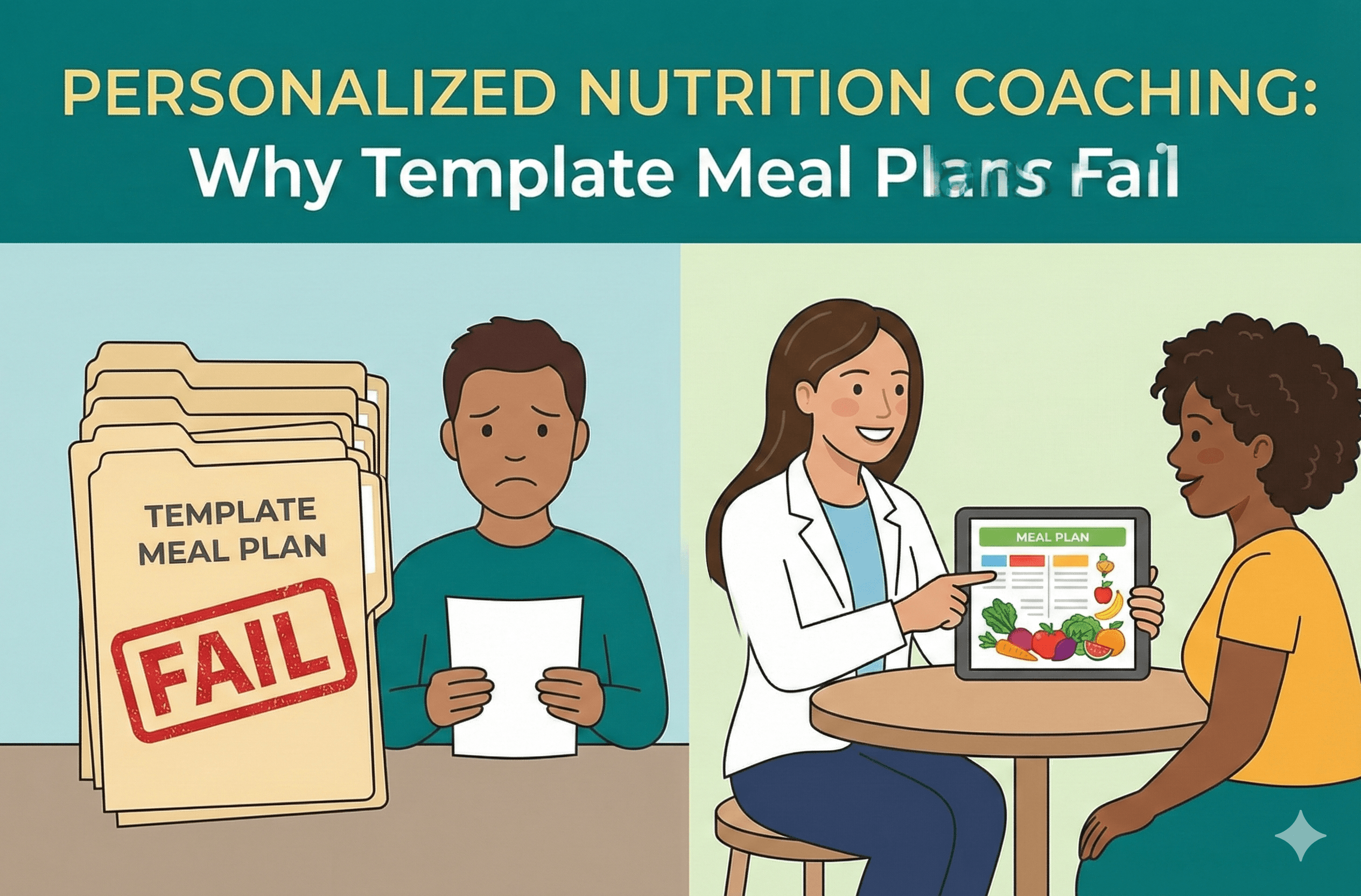
Personalized Nutrition Coaching: Why Template Meal Plans Fail

Disclaimer: The information provided in this article is for educational and informational purposes only and does not constitute medical advice. Always consult with a qualified healthcare provider before making significant changes to your diet, exercise routine, or medical care.
Template meal plans are severely limiting your coaching results. Here is how to transition to true personalization.
You have likely seen it happen: A client comes to you frustrated after downloading their third "customized" meal plan from an influencer or a cookie-cutter fitness program. They followed it religiously for six weeks. Maybe they lost a few pounds initially, but then they hit a hard plateau. Or worse, they gained weight, felt completely exhausted, and now believe something is fundamentally wrong with their body.
The truth? Nothing is wrong with your client. Something is wrong with the template.
Generic meal plans consistently fail because they do not account for individual variability. Human metabolism is a complex interplay of genetics, lifestyle, medical history, cultural context, and psychosocial factors. A one-size-fits-all approach ignores the very elements that make each person's nutritional needs unique.
As nutrition coaches and health professionals committed to excellence, we must move beyond the seductive simplicity of templates. It is time to build genuinely personalized nutrition therapy based on comprehensive client assessment and evidence-based individualization.
This guide will equip you with the frameworks, collaboration strategies, and therapeutic interventions to transform your coaching practice from template-driven to genuinely personalized.
Act 1: Assessment Frameworks for Individual Nutrition Needs
The Foundation: Comprehensive Client Intake
True personalization begins with a thorough assessment, not a hasty prescription. Before recommending a single dietary change, you need a 360-degree view of your client's unique nutritional landscape.
Your initial assessment should capture data across three primary pillars:
1. Medical and Health History
- Chronic conditions: Note any history of diabetes, PCOS, autoimmune disorders, or cardiovascular disease. According to the Centers for Disease Control and Prevention (CDC), managing chronic diseases effectively requires lifestyle interventions that are tailored to the individual, not generalized.
- Medications and supplements: Many common prescriptions can affect nutrient absorption and daily requirements.
- Digestive health status: Look for signs of IBS, SIBO, or inflammatory bowel disease.
- Hormonal status: Assess thyroid function, reproductive hormones, and cortisol patterns.
- Family health history: Note any genetic predispositions to metabolic conditions.
2. Lifestyle and Context
- Daily schedule: Evaluate work hours, sleep quality, and daily stress levels.
- Physical activity: Document exercise frequency, intensity, and history.
- Food access: Understand their budget constraints and grocery shopping habits.
- Kitchen skills: Assess their cooking ability and available kitchen equipment.
- Cultural and social factors: Identify cultural food traditions, religious dietary practices, and family eating dynamics.
3. Psychosocial Factors
- Relationship with food: Discuss their eating history and any past dieting attempts.
- Body image: Understand their weight history and personal body image goals.
- Mental well-being: Note any history of high stress, anxiety, or depression that might impact eating habits.
This comprehensive intake immediately reveals why template plans are ineffective. A rigid, 1,500-calorie Mediterranean meal plan might work perfectly for a sedentary office worker, but it will utterly fail a shift nurse who works irregular hours, exercises at 5 AM, and struggles with hormonal imbalances.
Biomarker Analysis: Beyond Basic Blood Work
While nutrition coaches cannot diagnose or treat medical conditions, understanding relevant biomarkers allows you to personalize recommendations safely within your scope of practice, and helps identify when a medical referral is necessary.
Key biomarkers for personalization include:
- Metabolic Markers: Fasting glucose and HbA1c (to gauge insulin sensitivity), along with a comprehensive lipid panel (HDL, LDL, triglycerides).
- Nutritional Status: Vitamin D, B12, folate, ferritin (iron), magnesium, and omega-3 indices.
- Hormonal Markers: Thyroid panels (TSH, T3, T4) and cortisol patterns.
Two clients with identical demographics can have vastly different biomarker profiles. One might have excellent insulin sensitivity, while the other shows early signs of metabolic dysfunction. Their meal timing, macronutrient distribution, and carbohydrate quality recommendations should differ accordingly.
Metabolic Individuality: The Genetics Factor
Emerging research in nutrigenomics reveals how genetic variations heavily influence nutritional needs. While formal genetic testing isn't strictly necessary for all clients, acknowledging metabolic individuality helps explain why identical interventions produce widely different results.
Even without genetic testing, careful observation will reveal a client's metabolic signature. Some clients thrive on higher carbohydrate intakes, while others perform and feel much better with moderate carbs and higher healthy fats. Your role is to discover this unique signature through systematic iteration, not to force them into a predetermined box.
Act 2: Medical Provider Collaboration and When to Refer
Understanding Your Scope of Practice
The line between lifestyle nutrition coaching and Medical Nutrition Therapy (MNT) is critical for client safety. As a nutrition coach (unless you are a licensed registered dietitian or physician), you can provide general education, but you cannot prescribe diets to treat diagnosed diseases.
Within a Coach's Scope:
- General healthy eating education and meal planning for healthy individuals.
- Weight management coaching and behavior change strategies for healthy adults.
- Recreational sports nutrition and general supplement education.
Outside a Coach's Scope (Requires RD or Medical Provider):
- Medical nutrition therapy for diagnosed conditions (e.g., prescribing a diet to treat diabetes).
- Interventions for active eating disorders.
- Specialized care for high-risk populations, such as severe clinical obesity or pregnancy complications.
Red Flags Requiring Medical Referral
Certain signs and symptoms require an immediate pause on nutrition coaching and a direct referral to an appropriate medical provider.
Immediate Medical Referral Checklist:
- If you observe severe caloric restriction, purging, or excessive exercise → Refer to an eating disorder specialist or mental health professional.
- If the client reports unexplained, significant weight loss or gain → Refer to a primary care physician.
- If the client experiences chronic diarrhea, blood in stool, or severe abdominal pain → Refer to a gastroenterologist.
- If you notice signs of severe nutrient deficiencies (e.g., sudden hair loss, neurological symptoms) → Refer to a physician for comprehensive lab testing.
The most effective nutrition coaching happens within an integrated care team. Develop strong collaborative relationships with Registered Dietitians, physicians, and mental health professionals to ensure your clients receive safe, holistic care.
Act 3: Therapeutic Nutrition Interventions for Specific Conditions
Evidence-Based Personalization Frameworks
Once you have completed a comprehensive assessment and established appropriate medical collaboration, you can begin designing personalized interventions.
The 6-Step Personalization Process:
Identify primary goals and constraints based on the intake assessment.
Select evidence-based dietary approaches relevant to the client's unique context.
Customize macronutrient distribution based on their metabolic individuality.
Incorporate cultural foods and lifestyle factors to ensure the plan is sustainable.
Implement the plan systematically with clear, trackable metrics.
Iterate and adjust based on individual response, rather than demanding rigid adherence to the initial plan.
Condition-Specific Customization Examples
Rather than relying on templates, use these targeted approaches as starting frameworks that you adjust over time.
Insulin Resistance and Blood Sugar Management
- The Template Approach: "Just eat low-carb and cut out all sugar."
- The Personalized Approach: The National Institute of Diabetes and Digestive and Kidney Diseases (NIDDK) notes that while lifestyle modifications are foundational for managing insulin resistance, they must be tailored. Start by assessing current carbohydrate quality. Shift the focus to whole-food, fiber-rich sources rather than severe restriction. Implement meal timing strategies that fit the client's work schedule, and adjust total carbohydrates gradually based on their energy levels and glucose response.
Cardiovascular Health
- The Template Approach: "Follow a strict Mediterranean diet."
- The Personalized Approach: Review the client's lipid panel (if provided by their doctor) and assess current dietary patterns. Personalize fat quality recommendations by identifying realistic ways to increase omega-3s based on foods they actually enjoy. Furthermore, adapt the principles of the Mediterranean diet to fit their specific cultural cuisine—whether that is Latin American, Asian, or African food traditions.
Digestive Health
- The Template Approach: "Go completely gluten-free and dairy-free."
- The Personalized Approach: After ruling out medical conditions that require a doctor, use a food-symptom journal to identify likely triggers. Implement a highly specific, temporary elimination of only the suspected foods, rather than a blanket restriction. Systematically reintroduce foods to identify true triggers versus placebo effects, avoiding unnecessary long-term dietary restrictions.
Monitoring and Iterating: The Key to True Personalization
Personalization does not end when you hand over the initial plan—it begins there.
Establish clear feedback loops. Check in weekly to assess subjective measures like energy, mood, digestion, and sleep quality. Review objective measures like performance metrics and body composition monthly. Change only one variable at a time so you can clearly identify what is working.
A client who doesn't respond to your initial approach isn't failing; they are providing valuable data. Templates are static, but personalized coaching must be dynamic.
Maryland Trim Clinic (MTC) in Laurel, MD
If you are looking for a medical team that understands the limitations of generic diets, Maryland Trim Clinic (MTC) in Laurel, MD, offers a comprehensive, medically sound approach to wellness. We know that cookie-cutter solutions do not work for complex human bodies. At Maryland Trim Clinic, patients receive holistic, physician-guided support tailored to their specific metabolic and lifestyle needs.
For example, our nutritional counseling and coaching focuses on your unique biological markers rather than handing you a generic template. Furthermore, to truly understand your baseline, services like metabolic testing and analysis can reveal how your body uniquely processes energy, allowing for a highly customized care plan. Whether you are exploring a structured medical weight loss program or just need expert guidance to optimize your daily health, visiting our clinic provides the individualized, evidence-based attention necessary for long-term, sustainable wellness.
Frequently Asked Questions
Q: What is the difference between a nutrition coach and a registered dietitian? A: Nutrition coaches provide general nutrition education, meal planning for healthy individuals, and behavior change support. Registered Dietitians (RD/RDNs) are licensed healthcare professionals who can officially diagnose and provide Medical Nutrition Therapy (MNT) for specific diseases. If a client has a diagnosed medical condition requiring dietary intervention, they should work with an RD or a medical physician.
Q: How do I personalize nutrition plans without genetic testing? A: Genetic testing is an optional tool, not a strict requirement. You can personalize effectively through comprehensive intake assessments (medical history, lifestyle, cultural context), biomarker analysis (standard blood work provided by their doctor), and careful observation. Track how the client responds to different macronutrient distributions and meal timing, then refine the approach based on their feedback.
Q: When should I refer a client to a medical provider? A: Refer immediately if you suspect eating disorders, unexplained significant weight changes, persistent digestive pain, signs of nutrient deficiencies, or uncontrolled chronic conditions. You should also establish collaborative care for clients managing complex medical histories or taking multiple prescription medications.
Q: How long should I wait before adjusting a personalized nutrition plan? A: Most metabolic adaptations require a minimum of 2 to 4 weeks. Collect weekly subjective feedback (energy, hunger, digestion), but avoid making drastic changes before allowing adequate adaptation time. Change one variable at a time to accurately identify what is driving progress.
Q: Can I use templates as a starting point and then personalize? A: While tempting, relying on templates often anchors you to rigid thinking. Instead, develop flexible, evidence-based frameworks for specific goals. Use these frameworks to guide your personalization, adjusting macros, food selection, and timing based on the client's unique assessment.
Ready to Move Beyond Generic Meal Plans?
Stop struggling with template diets that were never built for your unique body. Partner with the experts at Maryland Trim Clinic to build a personalized, evidence-based nutrition and wellness strategy. Contact us today to schedule your comprehensive assessment and take the first step toward sustainable, lifelong health.