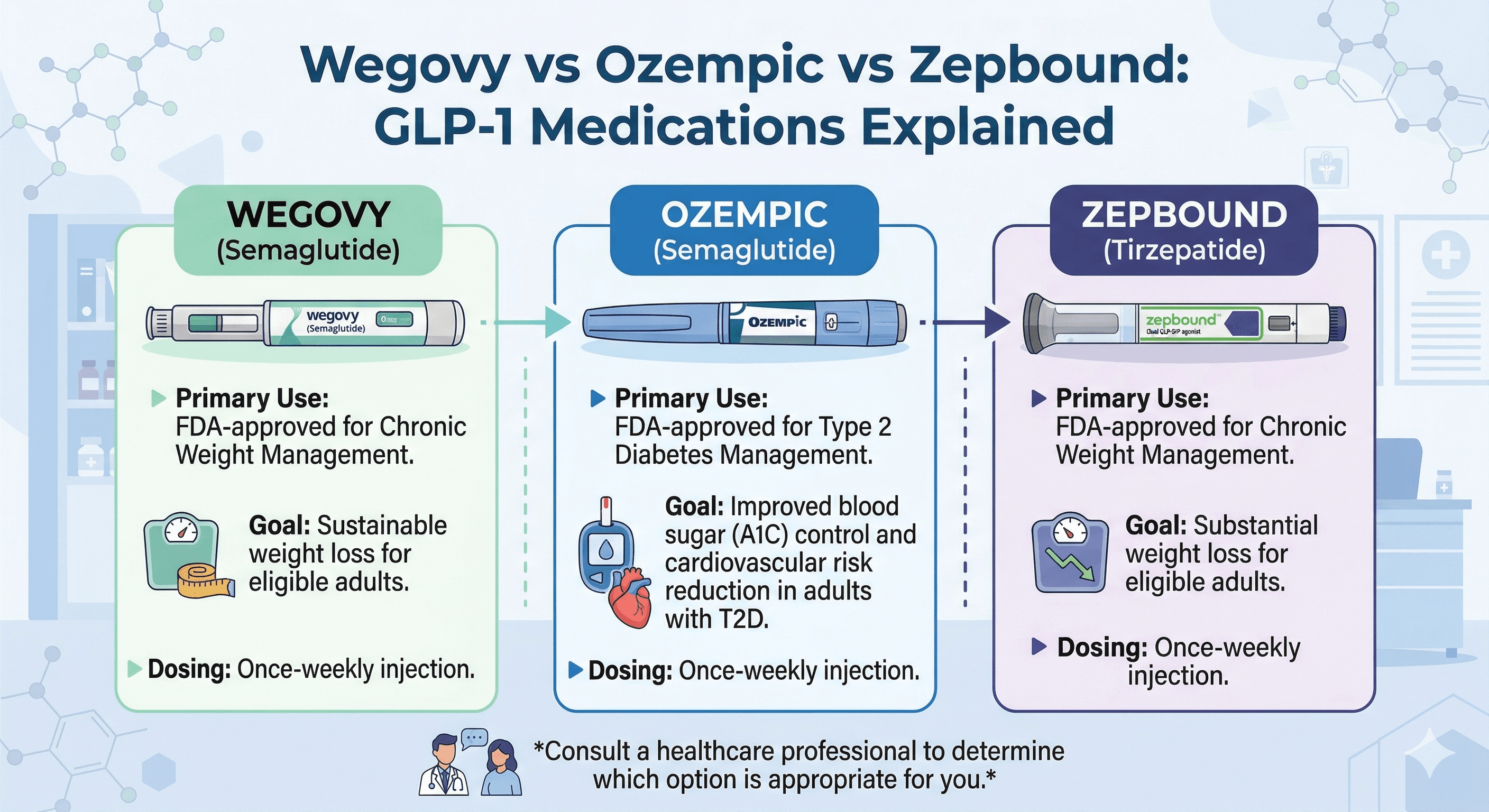
Wegovy vs Ozempic vs Zepbound: GLP-1 Medications Explained

If you have been researching GLP-1 drugs, you have probably seen the same names come up again and again: Wegovy, Ozempic, Zepbound, Saxenda, Victoza, and Trulicity. Some are prescribed for type 2 diabetes, some are prescribed for weight loss, and some are compared for both their metabolic and cardiovascular effects.
That is where confusion starts for many patients.
A good GLP-1 comparison starts with one important point: these medications are not all interchangeable. They may belong to the same broader treatment conversation, but they are approved for different uses, come in different forms, and may affect blood sugar, appetite, and body weight in different ways. Some are mainly used for type 2 diabetes management. Others are specifically approved for chronic weight loss treatment in people who meet clinical criteria.
What GLP-1 drugs actually do
GLP-1 (glucagon-like peptide-1) medications work by mimicking natural hormone signals in your body. When operating optimally, these hormones manage several critical functions:
- Appetite Regulation: They signal to your brain that you are full, helping to reduce overall hunger and cravings.
- Stomach Emptying: They slow down how quickly food leaves your stomach, keeping you satisfied longer after meals.
- Insulin Release: They prompt the pancreas to release insulin when blood sugar levels are high.
- Glucose Control: They prevent the liver from releasing too much excess sugar into the bloodstream.
In practical terms, this means they can help lower blood sugar, reduce hunger, and support weight loss in the right patient. However, not every medication in this space works exactly the same way. For example, Zepbound contains tirzepatide, which acts on both GIP and GLP-1 pathways, while Wegovy and Ozempic are semaglutide-based medications that target only the GLP-1 pathway.
Which medications are mainly for weight loss, and which are mainly for type 2 diabetes?
Understanding the primary FDA-approved purpose of each medication is the easiest way to narrow down your options. According to guidance from the National Institute of Diabetes and Digestive and Kidney Diseases (NIDDK), prescription weight management medications are generally intended for adults with obesity or overweight who have weight-related medical problems.
Medications primarily for weight loss
For patients focused on obesity treatment or a medical weight loss program, the following medications are most often discussed:
- Wegovy (Injection): Approved for chronic weight management in adults and adolescents (12+). It is also approved for cardiovascular risk reduction in adults with established cardiovascular disease and overweight or obesity.
- Wegovy (Pill): Approved for chronic weight management in adults who prefer an oral medication over an injection.
- Zepbound: Approved for chronic weight management in adults, as well as for moderate to severe obstructive sleep apnea in adults with obesity.
- Saxenda: An older daily injection approved for chronic weight management in adults and certain adolescents.
Medications primarily for type 2 diabetes
For patients primarily managing type 2 diabetes, the conversation centers around improving glycemic control:
- Ozempic: Approved for adults with type 2 diabetes. Its labeling also includes cardiovascular and kidney-risk reduction in appropriate patients.
- Trulicity: A weekly injection approved for adults and children (10+) with type 2 diabetes, also carrying cardiovascular benefit language.
- Victoza: A daily injection approved for adults and pediatric patients (10+) with type 2 diabetes.
Wegovy vs Ozempic: same ingredient, different role
One of the biggest misunderstandings in this category is the difference between Wegovy and Ozempic.
Both use the active ingredient semaglutide, but they are not marketed for the same primary purpose. * Ozempic is FDA-approved to treat type 2 diabetes, not for weight loss—even though many people do experience weight reduction as a side effect.
- Wegovy is specifically approved for chronic weight loss treatment in eligible patients. Its label also includes cardiovascular risk reduction for certain adults, and it recently added an indication for adults with noncirrhotic MASH (metabolic dysfunction-associated steatohepatitis) and moderate to advanced fibrosis.
The addition of the Wegovy pill changes the conversation further. For patients who do not want injections, this oral option may sound appealing. But it is still not a simple one-size-fits-all substitution. The Wegovy pill is approved for adults (not pediatrics) and comes with highly specific dosing and absorption instructions. Ultimately, the choice depends on your treatment goals, tolerance, insurance coverage, and whether your priority is weight loss, cardiovascular health, or metabolic control.
Where Zepbound fits in
Zepbound has quickly become one of the most talked-about medications in obesity care. It is approved specifically for chronic weight loss and for moderate to severe obstructive sleep apnea in adults with obesity.
It is important to note that Zepbound is not approved to treat type 2 diabetes under this brand name, even though its active ingredient (tirzepatide) is used in diabetes care under a different brand name (Mounjaro). For many patients comparing modern obesity medications, Zepbound is now firmly planted on the core shortlist alongside Wegovy.
Zepbound vs Wegovy: what patients usually want to know
When patients ask their providers to compare Zepbound and Wegovy, the conversation usually comes down to three main factors:
Mechanism of Action: Wegovy (semaglutide) works through the GLP-1 receptor alone. Zepbound (tirzepatide) acts as a "dual agonist," targeting both GIP and GLP-1 pathways.
Expected Weight Loss: In the head-to-head SURMOUNT-5 trial published in The New England Journal of Medicine, tirzepatide was shown to be superior to semaglutide for reduction in body weight and waist circumference at 72 weeks among adults with obesity (without diabetes).
Overall Clinical Fit: "More weight loss on average" does not automatically mean "best choice for every patient."
Your doctor will consider medication tolerability, insurance coverage, existing comorbidities, and your personal medical history when deciding between the two. Both are once-weekly injections, but they are distinct medications that require tailored clinical judgment.
Saxenda, Victoza, and Trulicity still matter
It is easy for older medications to get overlooked in a conversation dominated by semaglutide and tirzepatide, but Saxenda, Victoza, and Trulicity still have an important place in care.
- Saxenda (liraglutide): Approved for chronic weight management. It requires a daily injection but may still be appropriate for patients who are not candidates for newer agents or who need a different insurance access pathway.
- Victoza (liraglutide): Approved for type 2 diabetes management via daily injection.
- Trulicity (dulaglutide): Remains a reliable once-weekly diabetes option with cardiovascular risk-reduction language in its FDA labeling.
In medicine, newer does not always mean more appropriate for your unique body.
How to think about the right option
The right medication choice is usually based on a holistic combination of lifestyle and medical factors. A proper GLP-1 evaluation should involve a clinician-led review, rather than relying on social media before-and-after stories.
Your clinician will likely evaluate:
- Your Primary Goal: Is the focus blood sugar control, weight loss, or both?
- Your Medical History: Do you have type 2 diabetes, established cardiovascular disease, thyroid issues, or a history of pancreatitis?
- Your Preferences: Are you comfortable with a weekly injection, a daily injection, or do you require a daily pill?
- Tolerability: Can your GI tract handle the common side effects associated with these medications?
- Logistics: What does your insurance plan actually cover, and what is your out-of-pocket budget?
Safety still matters more than trendiness
Disclaimer: This article is for informational purposes only and does not constitute medical advice. Always consult a healthcare professional before starting or stopping any medication.
These medications are powerful tools, but they are not right for everyone. Several current labels carry boxed warnings related to thyroid C-cell tumors in rodents and strongly advise against use in patients with a personal or family history of medullary thyroid carcinoma (MTC) or Multiple Endocrine Neoplasia syndrome type 2 (MEN 2).
Gastrointestinal side effects (like nausea, vomiting, and diarrhea) are very common. Some medication labels also warn about more severe risks, including pancreatitis, gallbladder disease, acute kidney injury, and hypersensitivity reactions.
Furthermore, the FDA has issued warnings regarding mass-marketed, non-FDA-approved compounded GLP-1 alternatives. Patients should be incredibly careful about where their treatment is coming from to ensure they are receiving safe, regulated medication.
Maryland Trim Clinic (MTC) in Laurel, MD
If you are feeling overwhelmed by these options, partnering with a dedicated clinical team can make all the difference. Located in Laurel, MD, the Maryland Trim Clinic (MTC) provides compassionate, medically supervised support tailored to your unique metabolic health needs. Rather than taking a one-size-fits-all approach, a clinic like MTC can evaluate your medical history, discuss your wellness goals, and help determine if therapies like GLP-1 weight loss injections are a safe and appropriate fit for you. Expert guidance ensures that your journey is focused on long-term, sustainable health in a supportive environment.
Bottom line
If you are comparing Wegovy, Ozempic, Zepbound, Saxenda, Victoza, and Trulicity, the biggest takeaway is simple: the best medication depends entirely on the clinical goal.
Ozempic, Trulicity, and Victoza are established options for type 2 diabetes and blood sugar management. Wegovy, the Wegovy pill, Saxenda, and Zepbound are more directly tied to chronic weight loss treatment in eligible patients. And in the increasingly common Zepbound vs Wegovy discussion, the best answer is never "which one is more popular," but "which one is more appropriate for this patient, with this history, under clinician supervision."
Ready to Find Clarity on Your Weight Loss Journey?
Navigating the world of GLP-1 medications shouldn't be something you have to do alone. If you're looking for personalized guidance, evidence-based options, and a supportive medical team, visit the Maryland Trim Clinic today to schedule a consultation and discuss which path is right for your health goals.
Ready to Find Clarity on Your Weight Loss Journey?
Wondering if Wegovy, Zepbound, or another GLP-1 medication is the right fit for your body? The experts at Maryland Trim Clinic are here to provide the medical supervision and tailored support you need. Contact our Laurel, MD clinic to book your comprehensive evaluation and start a wellness plan designed just for you.