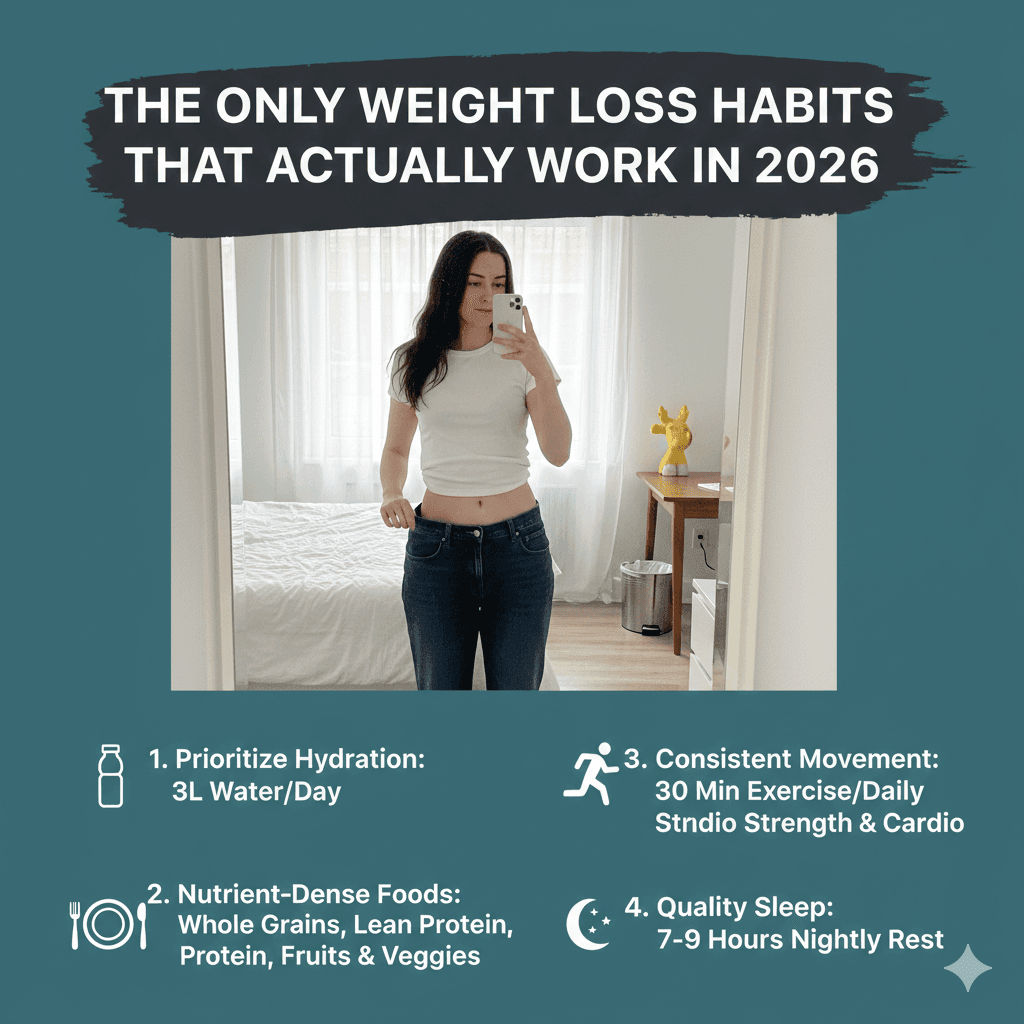
Weight Loss Habits That Actually Work in 2026

Throw out everything you learned about weight loss. Here's what the science says now.
For decades, we've been fed the same weight loss gospel: eat less, move more, avoid fat, and count every calorie. But despite following this advice religiously, millions continue to struggle with yo-yo dieting, metabolic slowdown, and frustrating plateaus.
The problem isn't your willpower. The reality is that much of what we've been told about weight loss is outdated or simply wrong. Recent research has fundamentally reshaped our understanding of how the body regulates weight, why traditional methods fail, and what actually works for sustainable fat loss.
ACT 1: The Outdated Approaches Science Has Left Behind
The Calorie Myth Gets Complicated
The "calories in, calories out" model isn't technically wrong, it's just catastrophically incomplete. A 2023 study published in Nature Metabolism tracked participants who reduced their caloric intake by 500 calories daily. While initial weight loss occurred, their metabolic rate decreased by an average of 300 to 500 calories per day within 12 weeks, effectively canceling out most of the deficit.
This phenomenon is called adaptive thermogenesis. It means your body isn't a static calculator; it actively fights against sustained caloric restriction by pulling several physiological levers:
- Reducing NEAT: It naturally lowers non-exercise activity thermogenesis (those unconscious movements, like fidgeting, that burn calories).
- Hormonal Shifts: It decreases thyroid hormone production to slow down your baseline metabolism.
- Altered Satiety: It increases hunger hormones while suppressing satiety signals, making you feel perpetually hungry.
- Energy Conservation: It slightly lowers your core body temperature to save energy.
The 2024 follow-up to The Biggest Loser study confirmed what researchers suspected: contestants who lost massive amounts of weight through extreme calorie restriction still had severely suppressed metabolic rates six years later, making weight maintenance nearly impossible without perpetual under-eating.
Fat-Free Diets: A Failed Experiment
The low-fat craze of the 1980s through the early 2000s has been thoroughly dismantled by modern science. A 2025 meta-analysis examining 127 studies found that low-fat diets showed absolutely no metabolic advantage over higher-fat approaches for weight loss.
In fact, participants on moderate-fat diets (where fat makes up 30-40% of daily calories) demonstrated much better outcomes:
- Better adherence rates: 68% stuck to the plan compared to 43% on low-fat diets at 12 months.
- Metabolic improvements: Greater improvements in insulin sensitivity.
- Appetite control: Higher reported satiety scores (feeling full and satisfied).
- Body composition: Superior maintenance of lean muscle mass.
The real culprit behind weight gain during that era wasn't dietary fat. It was the highly processed, sugar-laden "low-fat" products that replaced whole foods, which spiked insulin and drove persistent hunger.
The "Just Exercise More" Oversimplification
Perhaps no advice has been more misleading than "burn it off at the gym." Research from the International Journal of Obesity (2024) tracking 2,400 participants found that adding exercise without dietary changes resulted in an average weight loss of just 2.1 pounds over an entire 12 months.
Why does this happen? The body compensates:
- You experience increased hunger signals post-workout, leading you to eat back the burned calories.
- You unconsciously reduce your physical activity outside of structured exercise (e.g., sitting more on the couch after a long run).
- You overestimate the calories you burned. (Fitness trackers notoriously inflate calorie burn numbers by 20-40%).
- Your metabolic efficiency improves, meaning your body eventually requires less energy to perform the exact same activity.
This doesn't mean exercise is useless! Its benefits for cardiovascular health, mental wellbeing, and muscle preservation are undeniable. It simply isn't the primary driver of initial fat loss.
ACT 2: How Weight Loss Actually Works: The Current Scientific Understanding
Metabolic Adaptation: Your Body's Survival Mode
Metabolic adaptation isn't a glitch in your system, it's an evolutionary survival feature. Your body interprets sustained caloric deficits as potential starvation, triggering multiple defensive mechanisms. Research and guidance from leading health authorities, including the National Institutes of Health (NIH), continuously highlight how these complex biological shifts make long-term weight maintenance challenging.
The Biological Defenses:
- Leptin Resistance: Leptin, the "satiety hormone" produced by fat cells, signals your brain when you have adequate energy stores. As you lose weight, leptin drops precipitously, often more than expected based on fat loss alone. A person who lost 30 pounds may have the leptin levels of someone 50 pounds lighter, creating disproportionate and overwhelming hunger.
- Ghrelin Elevation: This "hunger hormone" increases both in frequency and amplitude after weight loss. Studies show ghrelin levels remain elevated for at least one year post-diet, explaining why maintaining weight loss feels like fighting constant hunger.
- Metabolic Rate Suppression: Beyond the expected decrease from simply weighing less, your body becomes "hyper-efficient." People maintaining a 50-pound weight loss burn roughly 300-500 fewer calories daily than people who naturally weigh that same amount.
The Protein Leverage Hypothesis
Emerging research suggests humans have a powerful, innate drive to consume a specific amount of protein. When we eat "protein-diluted" foods (meals high in carbs and fats but low in protein), we unconsciously overeat total calories in a biological attempt to reach our protein target.
A 2024 randomized controlled trial demonstrated this dramatically:
- Group A (15% protein diet): Consumed an average of 2,400 calories/day.
- Group B (30% protein diet): Consumed an average of 1,900 calories/day.
- Note: Both groups were allowed to eat until satisfied with no imposed calorie restrictions.
This massive 500-calorie spontaneous reduction occurred without conscious effort or restriction, simply by prioritizing protein-dense foods.
The Sleep and Stress Connection
Two 2025 studies fundamentally changed how the medical community views non-dietary factors. Proper sleep hygiene is now recognized as essential. As outlined by the Centers for Disease Control and Prevention (CDC), adequate rest is a pillar of overall health, and its impact on weight is profound.
The Impact of Sleep Deprivation: Participants restricted to just 5 hours of sleep nightly showed:
- An 18% reduction in fat loss, despite maintaining identical caloric deficits to well-rested peers.
- Preferential loss of valuable lean muscle rather than fat.
- A 24% increase in hunger hormone levels.
- Reduced insulin sensitivity equivalent to pre-diabetic states.
The Impact of Chronic Stress: Elevated cortisol from chronic stress promotes:
- Visceral fat accumulation (the dangerous, inflammatory belly fat).
- Increased neurological cravings for hyper-palatable comfort foods.
- Reduced effectiveness of your body's natural satiety signals.
- Impaired fat oxidation (burning) during exercise.
Individual Variability: Why Cookie-Cutter Approaches Fail
The PREDICT studies (2024-2025) tracked metabolic responses to identical meals in thousands of participants, finding a staggering 10-fold variation in blood sugar and insulin responses.
Your unique genetic makeup, gut microbiome composition, daily stress levels, sleep quality, and personal metabolic history all influence how you will respond to specific dietary interventions. This explains why your coworker thrives on keto while you feel miserable, or why intermittent fasting works perfectly for your friend but completely tanks your daily energy.
ACT 3: What Actually Works: Evidence-Based Interventions for 2026
Medical Interventions: The GLP-1 Revolution
The biggest development in obesity medicine in recent years has been GLP-1 receptor agonists (such as semaglutide and tirzepatide). Clinical trials (like STEP and SURMOUNT) have shown staggering results:
- Average weight loss of 15-22% of total body weight.
- Preservation of lean muscle mass (when properly combined with resistance training).
- Significant improvements in cardiovascular markers, independent of the weight loss itself.
- Sustainable results with continued use.
Let's be clear: these medications aren't "cheating." They work by normalizing the physiological and hormonal signals that become dysregulated in obesity. By considering options like GLP-1 weight loss injections, patients can quiet the "food noise" that makes traditional dieting so difficult.
However, they do require medical supervision, long-term commitment, and robust lifestyle modifications to achieve the safest and best results.
Protein Prioritization: The Foundation
Every major research institution now recommends protein as the cornerstone of a healthy weight management plan. Proper nutritional counseling and coaching almost always starts by addressing this macronutrient.
The Target: Aim for 1.6 to 2.2 grams of protein per kilogram of body weight daily.
The Benefits:
- Increases satiety through multiple hormonal mechanisms.
- Preserves lean muscle mass during caloric deficits.
- Has the highest thermic effect of any macronutrient (your body burns roughly 30% of protein calories just during the digestion process).
- Reduces late-night cravings by up to 60% in clinical intervention studies.
Practical Application: Build every single meal around a palm-sized source of high-quality protein before adding your carbohydrates and fats.
Resistance Training Over Cardio
The exercise paradigm has shifted dramatically. A 2025 meta-analysis comparing resistance training to cardiovascular exercise for fat loss found:
- Similar total weight loss on the scale.
- 63% greater fat loss specifically among the resistance training group (because lifting weights preserved heavy, metabolically active muscle tissue).
- Continued elevated metabolism for up to 48 hours post-workout.
- Greatly improved insulin sensitivity and glucose disposal.
Minimum effective dose: Aim for 2 to 3 sessions weekly focusing on compound movements (like squats, deadlifts, and presses) with progressive overload.
Time-Restricted Eating: Nuanced Benefits
Intermittent fasting has been heavily overhyped in popular media, but research shows it does have specific benefits when applied correctly:
- An 8 to 10-hour eating window is the sweet spot (avoiding extreme 4-to-6-hour variants).
- It primarily works by naturally reducing your total daily caloric intake.
- It offers secondary benefits for circadian rhythm alignment.
- It may improve insulin sensitivity independent of weight loss.
The Key Takeaway: Most of fasting's benefits disappear when calories are matched with a non-fasting diet. This means it is an excellent behavioral tool for appetite control, not a form of metabolic magic.
Behavior Change Frameworks That Stick
The most robust predictor of long-term weight loss success isn't the specific type of diet you choose, it's your ability to adhere to it. Evidence-based behavioral strategies include:
Environmental Design:
- Keep hyper-palatable, heavily processed foods entirely out of the home.
- Pre-portion your snacks into small containers rather than eating from the bag.
- Use smaller plates to naturally control portion sizes (psychologically, this actually works).
Implementation Intentions ("If-Then" Planning):
- Create a rule: "If I crave something sweet after dinner, then I will have Greek yogurt with berries."
- This removes decision fatigue in moments of weakness and has been shown to double diet adherence rates.
Self-Monitoring Without Obsession:
- Rely on weekly weigh-ins rather than daily to reduce anxiety while maintaining awareness.
- Take progress photos every 4 weeks.
- Focus on strength and performance metrics in the gym as a primary source of motivation.
The Combination Approach: Strongest Evidence
No single intervention works perfectly in isolation. The strongest clinical evidence points to a combination approach. Modern medical guidelines recommend blending these elements:
A protein-forward, whole-foods diet.
Resistance training 2-3 times weekly, plus daily walking.
7 to 9 hours of quality sleep nightly.
Proactive stress management practices.
Medical intervention when clinically appropriate.
Strong behavioral support and accountability.
Studies combining all of these elements showed an impressive 18-25% body weight reduction at 12 months, with a 73% maintenance rate at the 2-year mark.
Maryland Trim Clinic (MTC) in Laurel, MD
If you’re feeling overwhelmed by the science and need professional guidance to build a personalized plan, the Maryland Trim Clinic (MTC) in Laurel, MD, offers evidence-based support tailored to your unique biology. Recognizing that cookie-cutter diets frequently fail, MTC focuses on comprehensive, medically supervised strategies that prioritize your long-term metabolic health.
Whether you are seeking a customized medical weight loss program to navigate hormonal imbalances safely, or you need expert guidance on nutrition and body composition, MTC provides a compassionate, structured environment. Their approach aligns perfectly with modern science: treating weight loss as a holistic medical process rather than a simple test of willpower.
The Bottom Line
Weight loss in 2026 looks radically different than the outdated advice still circulating on the internet. The science is incredibly clear:
- Your body actively defends against weight loss through powerful biological mechanisms.
- Calorie quality, protein intake, sleep, and stress matter just as much as calorie quantity.
- Medical interventions are legitimate, powerful tools, not moral failures.
- Resistance training beats endless hours of cardio.
- Individual variation means you must find the specific combination of tools that works for your biology.
The goal isn't absolute perfection. The goal is finding a sustainable approach that works with your physiology rather than against it. Stop fighting your biology with willpower alone, and start using evidence-based strategies that acknowledge how your body actually functions.
Medical Disclaimer: The information provided in this article is for educational and informational purposes only and is not intended as medical advice. Always consult with a qualified healthcare professional before starting any new diet, exercise program, or medical treatment.
Frequently Asked Questions
Q: Are GLP-1 medications like Ozempic considered 'cheating' for weight loss? A: Absolutely not. GLP-1 agonists work by normalizing hormonal signals (like leptin and ghrelin) that become severely dysregulated in patients with obesity. They are evidence-based, FDA-approved medical interventions. Using prescribed medication to manage a complex biological condition isn't cheating—it's responsible, appropriate healthcare.
Q: Why does my weight loss always plateau after a few weeks? A: This is due to metabolic adaptation. As you lose weight, your body actively reduces its energy expenditure. It lowers thyroid hormone production, decreases your core body temperature, and unconsciously reduces your spontaneous daily movements. Studies show your metabolic rate can drop up to 500 calories below what would normally be expected for your new weight.
Q: How much protein do I actually need for weight loss? A: Current research recommends 1.6 to 2.2 grams per kilogram of body weight daily (roughly 0.7 to 1g per pound). For a 180lb person, that's roughly 125 to 180g daily. Protein is vital because it increases satiety, preserves your metabolism-boosting muscle mass during a calorie deficit, and reduces cravings.
Q: Is cardio or weight training better for fat loss? A: Resistance training is the clear winner for long-term fat loss. While a cardio session might burn slightly more calories in the moment, lifting weights preserves and builds lean muscle mass. This elevates your resting metabolism for up to 48 hours post-workout and ensures the weight you lose comes from fat tissue, not valuable muscle.
Q: Does intermittent fasting have special metabolic benefits? A: The metabolic benefits are actually quite limited. When calories are matched between an intermittent fasting group and a regular eating group, most of the "magic" benefits disappear. Fasting's primary advantage is that it helps control your appetite by restricting your eating to an 8-10 hour window, naturally reducing your total caloric intake.
Take the First Step Toward Sustainable Health
Ready to stop fighting your biology? If you are tired of yo-yo dieting and want a medically sound approach to fat loss, expert help is available. Partner with a dedicated clinical team to build a plan that finally works for you. Visit Maryland Trim Clinic today to learn more about comprehensive, science-backed weight management options.