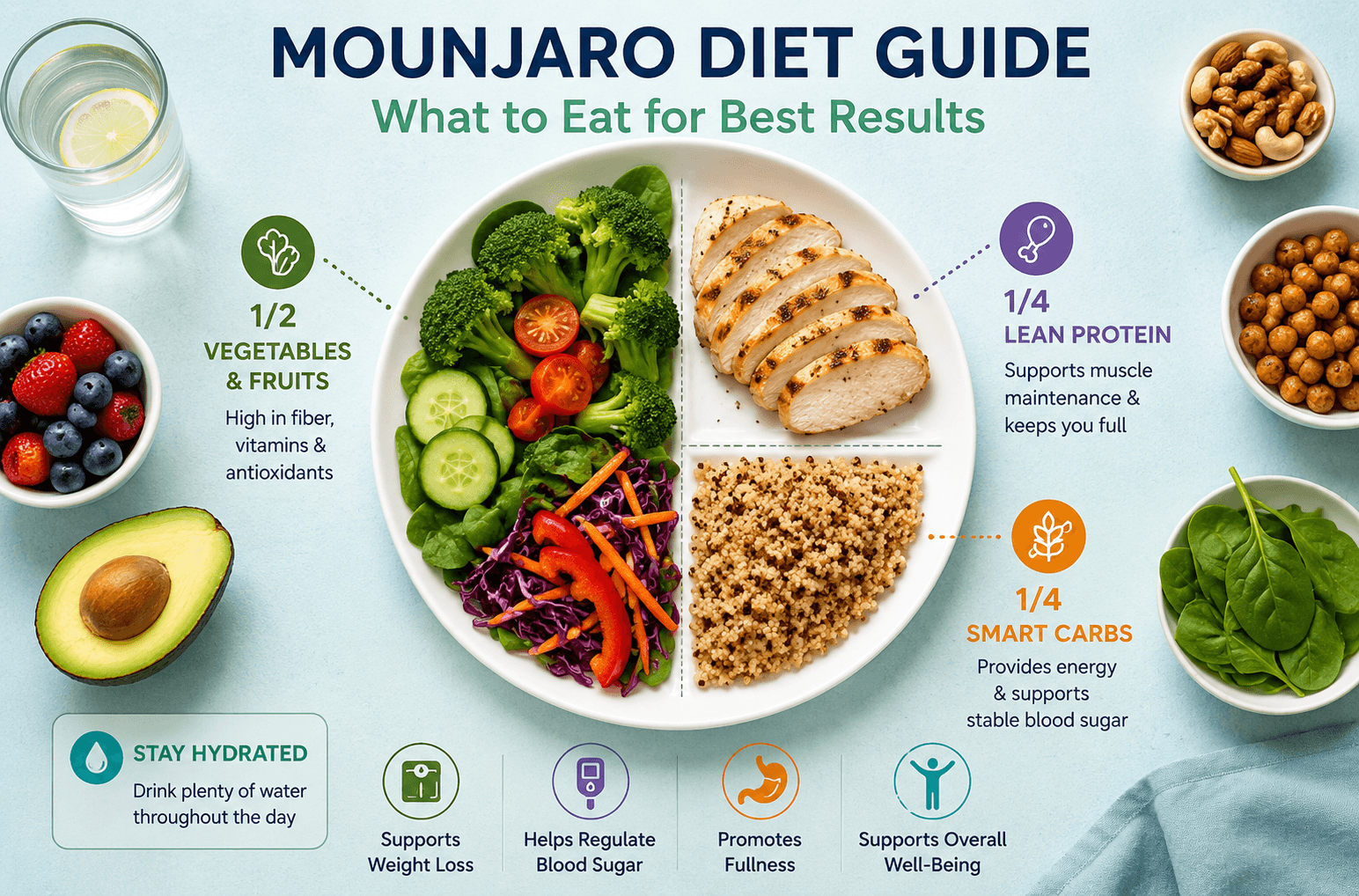
What to Eat on Mounjaro for Better Weight Loss Results

Mounjaro does the heavy lifting — but your food choices still shape how well the medication works day to day.
If you've recently started tirzepatide (Mounjaro) or you're a few months in and wondering why the scale has slowed down, the answer often lives on your plate. Most people notice quickly that their appetite drops dramatically, but fewer understand how to eat strategically around that shift. The medication changes the rules of hunger, digestion, fullness, and portion tolerance — and your meals need to adapt with it.
This guide breaks down what to eat on Mounjaro, how to prioritize protein without forcing huge meals, and which eating patterns help support steady, sustainable progress.
For background on how tirzepatide works in the body, the FDA’s medication information for Mounjaro explains its role in blood sugar regulation and appetite signaling.
Foods That Work With GLP-1 Slowed Digestion (Without Making You Feel Worse)
Mounjaro works partly by mimicking two gut hormones — GIP and GLP-1 — that slow gastric emptying. In simple terms, food stays in your stomach longer. That’s one reason you feel full faster and stay satisfied longer between meals.
But the slower digestion that helps with appetite control can also make certain foods feel much heavier than they used to.
Why Heavy, Fatty, or Highly Processed Foods Backfire
When digestion is already slowed, large greasy meals can create what feels like a digestive traffic jam. Many people experience:
- Nausea
- Bloating
- Acid reflux
- Burping
- Cramping
- A heavy “stuck” feeling after eating
This often happens after fried foods, fast food, oversized restaurant meals, or highly processed snacks.
The medication itself is not always the direct problem. Often, it is the combination of slowed digestion plus foods that are harder to process comfortably.
What to Eat Instead
The goal is not “perfect eating.” The goal is choosing foods that are:
- Easier to digest
- Higher in nutrients
- Supportive of muscle retention
- Less likely to trigger nausea
Lean Proteins
Protein becomes even more important on Mounjaro because appetite suppression can unintentionally reduce overall nutrition intake.
Good options include:
- Grilled chicken breast
- Turkey
- White fish like cod or tilapia
- Eggs and egg whites
- Plain Greek yogurt
- Cottage cheese
- Tofu and tempeh
These foods tend to digest more comfortably than heavily marbled meats or fried proteins.
Some people also benefit from structured nutrition coaching programs that help them build realistic meal plans while adjusting to appetite changes on GLP-1 medications.
Non-Starchy Vegetables
Vegetables provide fiber, volume, hydration, and micronutrients without overwhelming your stomach.
Well-tolerated choices often include:
- Spinach
- Zucchini
- Cucumbers
- Bell peppers
- Mushrooms
- Broccoli
- Cauliflower
- Asparagus
If raw vegetables feel uncomfortable early on, lightly steaming or roasting them may help.
Complex Carbohydrates in Smaller Portions
Carbohydrates are not the enemy on Mounjaro. In fact, balanced carbohydrates can help support energy levels and workout recovery.
Better choices include:
- Oats
- Sweet potatoes
- Brown rice
- Quinoa
- Lentils
- Beans
Because fullness comes faster on tirzepatide, many people find smaller portions work best. Sometimes a few spoonfuls of rice or half a sweet potato is enough.
Foods to Limit During the Adjustment Phase
Especially during the first 8 to 12 weeks, these foods commonly worsen side effects:
- Fried foods
- Fast food
- Sugary drinks
- Alcohol
- Carbonated beverages
- Ultra-processed snacks
- Large high-fat meals
The Mayo Clinic’s guidance on GLP-1 medications also notes that gastrointestinal side effects are common when starting these therapies or increasing dosage.
A Simple “Feel Better Faster” Checklist
If meals are making you uncomfortable:
- Eat slower
- Stop before feeling overly full
- Keep portions smaller
- Prioritize protein first
- Drink water consistently throughout the day
- Avoid lying down immediately after meals
Small adjustments often make a noticeable difference within days.
How to Hit Your Protein Targets When You Barely Feel Like Eating
One of the biggest surprises on Mounjaro is how easy it becomes to undereat protein.
Because appetite drops so sharply, many people unintentionally eat too little overall. When protein intake stays low for long periods, the body may lose muscle mass along with fat. That can reduce strength, energy levels, and metabolic rate over time.
How Much Protein Do You Actually Need?
A practical target for many adults using GLP-1 medications is roughly 0.7 to 1.0 grams of protein per pound of goal body weight daily.
That does not mean you need huge meals. It means protein needs to stay intentional even when appetite disappears.
Protein-First Eating
The simplest strategy is often the most effective:
Eat your protein first before moving on to other foods.
Because fullness can arrive quickly on Mounjaro, starting with bread, chips, or fruit may leave little room for the nutrients your body actually needs most.
High-Protein Foods That Work Well in Small Portions
Some foods are easier to tolerate when appetite is low:
- Greek yogurt
- Cottage cheese
- Protein shakes
- Hard-boiled eggs
- Tuna packets
- Edamame
- Lentil soup
- Rotisserie chicken
- Soft tofu
Protein shakes are not “cheating.” For many people, they are simply a practical way to maintain nutrition during low-appetite periods.
Spread Protein Throughout the Day
Instead of forcing three large meals, many Mounjaro users feel better with smaller eating windows.
For example:
- Greek yogurt in the morning
- Eggs or tuna midday
- A protein shake in the afternoon
- Fish or chicken at dinner
This approach works with the medication instead of against it.
The “Soft Foods” Phase Is Common
After dose increases, many people temporarily tolerate only softer foods.
During that period, focus on:
- Scrambled eggs
- Smooth soups
- Protein smoothies
- Greek yogurt
- Cottage cheese
- Oatmeal with protein added
Try not to survive solely on crackers or toast for extended periods. Those foods may feel easier temporarily but often leave you undernourished.
People who struggle with persistent low energy sometimes explore supportive options like Vitamin B12 lipotropic injections alongside broader medical weight management strategies.
For evidence-based nutrition guidance during weight loss treatment, MedlinePlus nutrition resources provide reliable information for patients navigating dietary changes.
Simple Meal Patterns That Prevent Plateaus on Mounjaro
Weight loss on tirzepatide rarely follows a perfectly straight line.
Many people lose weight rapidly at first, then experience a slowdown several months later. That does not automatically mean the medication stopped working.
Usually, plateaus happen because the body adapts — and meal structure often plays a role.
Why Plateaus Happen
Common causes include:
- Protein intake dropped too low
- Calories became excessively restricted
- Hydration slipped
- Activity levels decreased
- Sleep quality worsened
- Food variety became too limited
Sometimes people are eating far less than they realize, which can make energy levels crash and reduce consistency.
The Meal Structure That Often Works Best
Structure 1: One “Anchor Meal”
Choose one meal each day to be your nutritional foundation.
A balanced anchor meal usually includes:
- Lean protein
- Vegetables
- A moderate complex carbohydrate
- Healthy fats in sensible portions
This helps prevent the “snacking all day but never really nourishing yourself” pattern that some people fall into on GLP-1 medications.
Structure 2: Smaller Protein Bridges
Instead of large breakfasts and lunches, use smaller protein-focused meals or snacks.
Examples include:
- Greek yogurt
- Cottage cheese
- Protein shakes
- Eggs
- Turkey roll-ups
- Edamame
These smaller eating occasions help maintain energy without overwhelming digestion.
Structure 3: Hydration Support
Hydration is commonly overlooked on Mounjaro because thirst signals can feel weaker.
Aim for consistent water intake throughout the day rather than trying to “catch up” at night.
Signs you may need more fluids include:
- Constipation
- Fatigue
- Headaches
- Dizziness
- Dry mouth
Practical Ways to Break a Stall
If progress has stalled for several weeks:
- Reassess protein intake honestly
- Add resistance training if possible
- Improve sleep consistency
- Rotate new vegetables or protein sources into meals
- Review portion sizes
- Increase daily movement gradually
Some people also benefit from professional metabolic testing and analysis to better understand calorie needs and energy expenditure during long-term weight management.
The Long-Term Mindset
The people who maintain the best long-term results on Mounjaro usually are not eating perfectly. They are eating consistently and intentionally.
That means:
- Prioritizing protein
- Keeping meals relatively simple
- Staying hydrated
- Protecting muscle mass
- Avoiding an “all or nothing” mindset
The medication can reduce hunger dramatically, but sustainable habits still matter.
Maryland Trim Clinic (MTC) in Laurel, MD
For people who want more structured guidance while using GLP-1 medications like Mounjaro, Maryland Trim Clinic in Laurel, MD offers medically supervised support focused on long-term weight management and metabolic health.
A clinic setting can help patients navigate issues like nutrition planning, appetite changes, body composition goals, and plateau management without relying on restrictive dieting alone. Depending on individual needs, some people may benefit from services such as a medical weight loss program, personalized GLP-1 treatment options, or progress tracking through 3D body scanning technology.
Supportive care can also include strategies for preserving muscle mass, improving eating consistency, and building sustainable habits that work alongside medications rather than replacing lifestyle changes.
Frequently Asked Questions
Q: What foods should I avoid completely while on Mounjaro?
A: Most people do not need a permanent banned-food list. However, fried foods, greasy meals, sugary drinks, alcohol, and heavily processed snacks commonly worsen nausea and bloating, especially during the first few months of treatment.
Q: How much protein should I eat per day on Mounjaro?
A: Many adults benefit from aiming for roughly 0.7 to 1.0 grams of protein per pound of goal body weight. Exact needs vary based on age, activity level, medical history, and muscle mass goals.
Q: Why do I feel nauseated after eating on Mounjaro?
A: Tirzepatide slows gastric emptying, meaning food stays in the stomach longer. Large high-fat meals, fried foods, or overeating can intensify nausea and discomfort.
Q: What should I eat when I have almost no appetite on Mounjaro?
A: Soft, protein-rich foods are often easiest to tolerate. Greek yogurt, protein shakes, eggs, cottage cheese, soups, and smoothies can help maintain nutrition during low-appetite phases.
Q: Why has my weight loss slowed down on Mounjaro?
A: Plateaus are common during long-term weight loss. Common contributors include low protein intake, reduced activity, dehydration, poor sleep, or metabolic adaptation after prolonged calorie restriction.
Q: Can I still eat carbohydrates on Mounjaro?
A: Yes. Complex carbohydrates like oats, quinoa, sweet potatoes, beans, and brown rice can still fit into a balanced eating plan. Pairing carbohydrates with protein usually improves fullness and blood sugar stability.
Q: How important is hydration on Mounjaro?
A: Hydration is extremely important. Reduced thirst signals can increase the risk of dehydration, constipation, headaches, and fatigue. Consistent water intake throughout the day is usually more effective than drinking large amounts all at once.
Finding Support That Fits Your Goals
Some people do well managing nutrition changes on their own, while others benefit from additional structure and accountability. If maintaining protein intake, hydration, or consistent meal patterns feels difficult, professional guidance may help simplify the process. Working with a provider who understands medical weight management support can make it easier to create a sustainable plan that fits your health goals, lifestyle, and response to treatment.