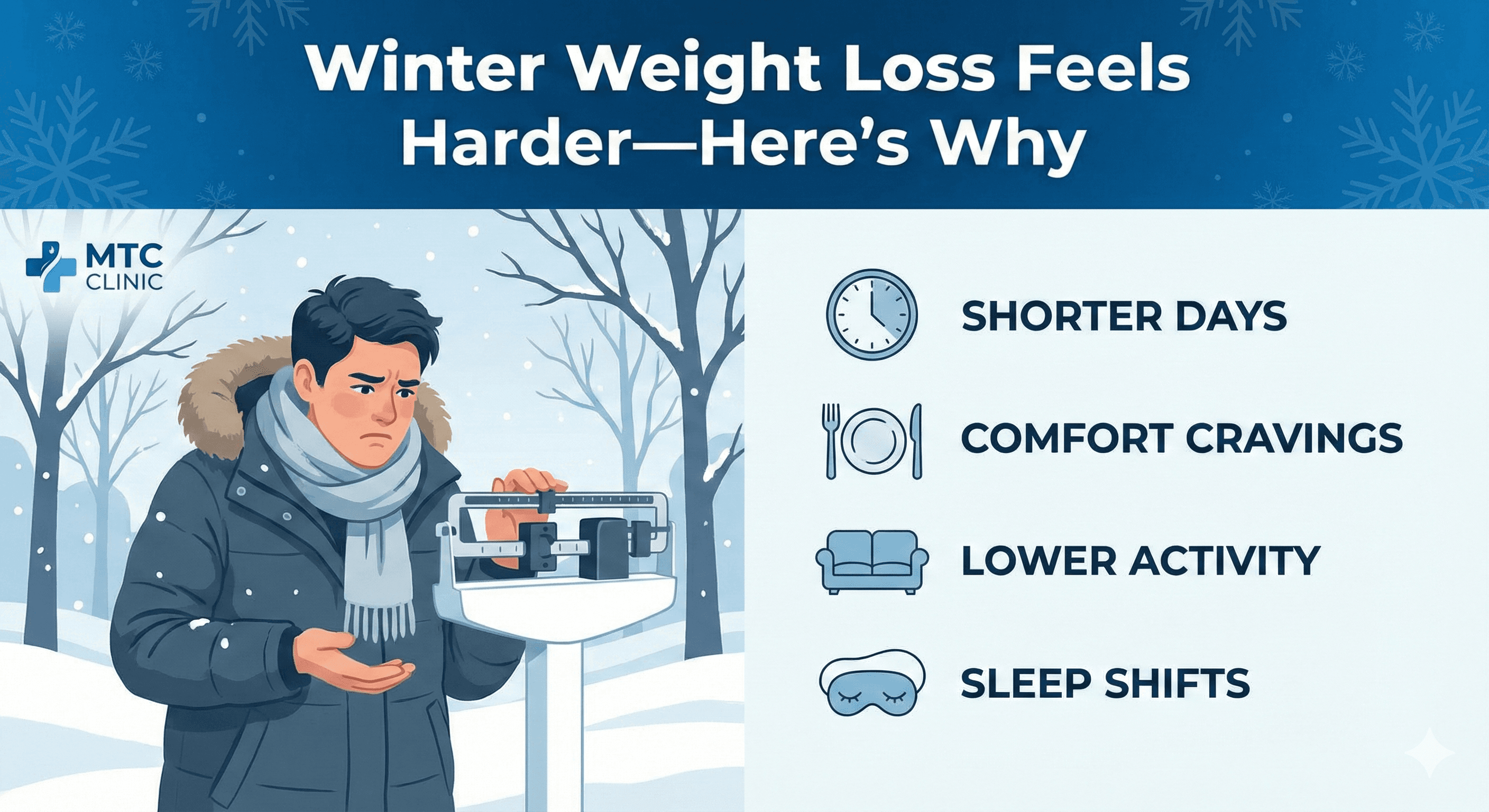
Winter Weight Loss Feels Harder—Here’s Why

Winter Weight Loss Feels Harder—Here’s Why
Winter weight loss often feels harder because daily life changes in small but important ways: we move less, crave richer foods, sleep shifts, and routines get disrupted. For many people, the problem is not “willpower.” It’s winter friction. The good news: you can usually make progress by identifying your biggest barrier and adjusting one or two habits that matter most.
What changes in winter?
Winter tends to stack the deck toward lower activity and higher-calorie comfort eating, especially around holidays and early darkness.
If you also sleep less or feel “down,” appetite and food choices can get tougher to manage.
6 reasons winter weight loss feels harder
1) Shorter days make movement feel harder to start
When it gets dark early, walking after work, running errands, and even basic motivation can drop. Many people end up more sedentary in winter.
2) Holiday routines push calories up without you noticing
Holiday weeks add parties, travel, comfort foods, and less consistent schedules. In a well-known prospective study, the average holiday weight gain was 0.37 kg (about 0.8 lb) from November to January.
Mayo Clinic’s Dr. Donald Hensrud summarizes it this way: “people averaged a weight gain… about three quarters of a pound.”
3) Comfort-food cravings get stronger
Colder weather and seasonal habits often pull people toward calorie-dense foods.
If you notice carbohydrate cravings and overeating paired with low energy or social withdrawal, it can also overlap with winter-pattern seasonal affective disorder for some people.
4) Sleep shifts can increase hunger and late-night snacking
Sleep is not a bonus habit. A joint consensus statement notes: “Adults should sleep 7 or more hours per night” and links shorter sleep with adverse outcomes including weight gain.
In winter, people may stay up later, snack more at night, and feel hungrier the next day.
5) Mood changes can change appetite and routines
NIMH describes SAD as a seasonal pattern of depression with symptoms lasting about 4–5 months for many people who experience it.
For winter-pattern SAD, additional symptoms can include overeating with carbohydrate cravings leading to weight gain.
This does not mean you have SAD, but it explains why winter can feel different.
6) “All-or-nothing” dieting backfires in winter
Restrictive plans often feel extra punishing during cold, dark months and can lead to rebound eating.
A winter-proof approach usually keeps comfort foods, but changes portions, timing, and frequency.
The Winter Weight Loss Barrier Checklist
Start here: What’s the biggest problem right now?
- A) I’m moving less than usual → Do 10 minutes of indoor movement right after one daily cue.
- B) I snack hardest at night → Plan a protein-forward evening snack + hide/relocate tempting snacks.
- C) My schedule is messy → Use a default meal template + keep 2 backup meals ready.
- D) My sleep is off → Keep a consistent wake time + aim for 7+ hours most nights.
- E) My mood is low → Move 10 minutes first, then decide on food; if persistent, talk to a clinician.
- F) I’m plateauing → Track weekly trend + one non-scale metric for 2 weeks before adjusting.
What to do this week (a realistic 7-day plan)
Day 1: Set your “winter floor,” not a perfect plan
Your goal is a minimum you can repeat when it’s cold and busy:
- Movement floor: 10 minutes per day (walk, stairs, bodyweight circuit).
- Food floor: 1 protein-forward meal per day plus a fiber choice (fruit/veg/beans).
- Sleep floor: move toward 7+ hours when possible.
Day 2: Use the Winter-Proof Plate
At your main meal, aim for:
- 1 palm of protein (chicken, fish, eggs, tofu, beans, Greek yogurt)
- 1–2 fists of vegetables (fresh or frozen)
- 1 cupped hand of carbs (rice, potatoes, whole grains)
- 1 thumb of fat (olive oil, nuts, avocado)
This keeps comfort foods on the menu while controlling the “calorie creep.”
Day 3: Plan for cravings, do not “hope” them away
- Decide your evening snack in advance (protein + fiber).
- Reduce friction: portion snacks into a bowl, not the bag.
Day 4: Make indoor movement automatic
CDC guidance: “Adults need at least 150 minutes of moderate-intensity physical activity a week.”
If that feels big, start with consistency:
- 10 minutes after one daily cue
- Two short strength sessions per week (push, pull, squat, carry)
Day 5: Create two backup meals for chaos days
Examples:
- Rotisserie chicken + microwaved frozen veg + rice
- Bean chili or lentil soup + salad kit
These match the cozy winter style many people sustain better.
Day 6: Track trends, not daily emotions
Daily scale swings happen. Watch:
- weekly average weight (if you weigh)
- waist/fit of clothing
- energy and cravings
A body measurement or scan-based progress check can help some patients focus on trend data rather than one number.
Day 7: Adjust one lever only
If you made the plan 5 out of 7 days, that is a win. Change only one lever next week:
- reduce late-night snacking frequency, or
- add 10 minutes of movement on two more days, or
- tighten weekend structure
When to talk to a clinician
Consider a clinician conversation if you have:
- persistent low mood, oversleeping, or appetite changes that last weeks
- repeated binge episodes or feeling out of control around food
- medical conditions or medications that may affect weight
- sleep problems you cannot correct with routine changes
- goals that may require medical support rather than lifestyle alone
A clinician can help you screen for causes, set safe targets, and discuss options (nutrition plan, behavior support, and for eligible patients, prescription-based medical weight loss).
How MTC can support you (Laurel, MD)
If you want more structure than DIY winter tips, Maryland Trim Clinic in Laurel supports patients with medical weight loss programs and clinician-guided options. If appropriate for your situation, you can also ask about tracking progress beyond the scale (for example, body measurements or scan-based check-ins) and whether prescription-based weight loss tools are a fit for you.
If your goal is to book a consultation, choose one question from the FAQ below and bring it to your visit so you leave with a clear winter plan.
Frequently Asked Questions
1) Is it normal for winter weight loss to slow down?
Yes. Many people move less and eat more calorie-dense foods in winter, especially around holidays, which can slow progress. If your habits stayed consistent but progress stalled, consider sleep, stress, and tracking weekly trends before making big changes.
2) Do you actually burn more calories in the cold?
Sometimes, but it is usually not enough to offset bigger drivers like reduced activity and higher-calorie comfort foods. Focus on controllables: routine movement and consistent meals.
3) How much weight do people gain during the holidays on average?
One prospective study found an average gain of 0.37 kg (about 0.8 lb) during the holiday interval. That sounds small, but the study suggests it often does not fully reverse later.
4) Why do I crave carbs more when it’s cold and dark?
Cravings can increase with routine changes, comfort-seeking, and sleep disruption. For some people, winter-pattern SAD can include carbohydrate cravings and overeating. If cravings come with persistent low mood, talk to a clinician.
5) What are the best indoor workouts for winter weight loss?
The best plan is the one you repeat. Aim to build toward CDC guidance over time. Start with walking indoors, stairs, or short strength circuits (squats, wall push-ups, rows with bands) 10–20 minutes at a time.
6) I snack more at night in winter. What’s the simplest fix?
Add a planned evening snack with protein and fiber, and change the environment: portion snacks, keep tempting foods out of sight, and build a calming routine before bed. Sleep consistency matters because short sleep is linked with weight gain risk.
7) Should I try intermittent fasting in winter?
It depends. Some people do well with a consistent eating window; others overeat later. If fasting increases cravings or binge risk, it may not be a good fit. If you have diabetes, take glucose-lowering meds, are pregnant, or have a history of eating disorders, discuss fasting with a clinician first.
8) Does seasonal affective disorder cause weight gain?
SAD is a type of depression with a seasonal pattern. Winter-pattern SAD can include overeating, carbohydrate cravings, and weight gain. If you suspect SAD, seek professional evaluation.
9) When should I consider medical weight loss instead of just diet and exercise?
Consider it if lifestyle changes have not worked, weight is affecting health, or you need a clinician-guided plan and monitoring. A clinician can review medical history, risks, and appropriate options for you.
10) What should I ask at a weight loss consultation?
Ask: What is a realistic winter goal? What is my biggest barrier (cravings, sleep, activity)? What should I track weekly? What options are appropriate for my health history? What are the safety considerations?
Medical disclaimer: This article is for education only and is not medical advice. For diagnosis or treatment decisions, talk with a qualified healthcare professional.
Beat The Winter
Winter weight loss can feel tougher due to cravings, sleep, and routines. Get a simple plan and know when to talk to a clinician. Book a consult.