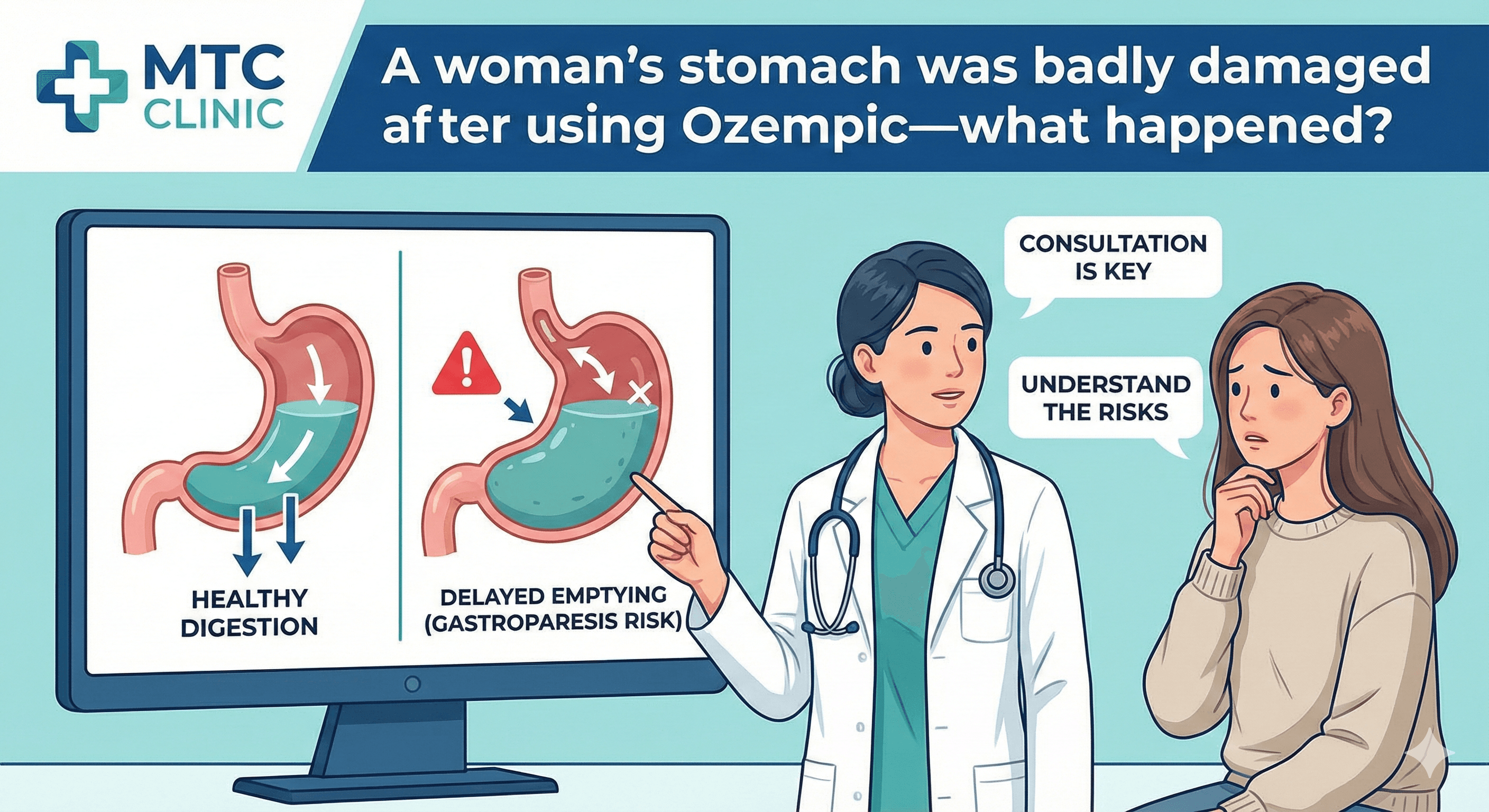
A woman’s stomach was badly damaged after using Ozempic—what happened?

If you just watched a video or heard of someone whose “gut was cooked” after taking a friend’s Ozempic, your brain is doing what it should: scanning for danger. Ozempic side effects can be uncomfortable, and a small number can be serious. The most important takeaway is not panic. It is this: do not use someone else’s prescription, and do not start GLP-1 medications without medical supervision.
Are these stories real?
Some side effects are expected. GLP-1 medications like semaglutide can slow stomach emptying, which is part of how they work, and that can lead to nausea, early fullness, reflux, and constipation. The Ozempic prescribing information states, “OZEMPIC causes a delay of gastric emptying.”
More severe complications are uncommon, but they matter. In clinical trials for Ozempic, severe gastrointestinal reactions were reported more often with Ozempic than placebo. And the label includes warnings about acute pancreatitis and gallbladder disease, among others.
Why this topic is suddenly everywhere
Obesity and diabetes are common, which is why demand for medical weight management has grown. A CDC data brief estimates adult obesity prevalence at 40.3% in the U.S. (Aug 2021 to Aug 2023). At the same time, a KFF poll found about one in eight adults (12%) say they are currently taking a GLP-1 drug for weight loss, diabetes, or another condition.
That scale of use is exactly why clear safety guidance matters.
Why Ozempic can upset your stomach in the first place
GLP-1 receptor agonists mimic a hormone signal that affects appetite and digestion. In many people, that means feeling full sooner and staying full longer. The tradeoff is that digestion can feel slower.
Delayed gastric emptying vs gastroparesis
These terms get mixed up online.
- Delayed gastric emptying means the stomach empties more slowly than usual. This can happen with GLP-1 medications and can contribute to nausea or early fullness.
- Gastroparesis is a condition where stomach motility is significantly impaired and symptoms can be more severe or persistent. (Symptoms can include early satiety, nausea, vomiting, bloating, and abdominal pain.)
The Ozempic label also cautions that it is not recommended in patients with severe gastroparesis.
The real danger in the video Taking a friend’s prescription
The scariest part of the story is not “Ozempic exists.” It is “someone took a friend’s leftover prescription.”
Here is why that is risky, even if the pen is genuine.
No individualized dosing and no monitoring
GLP-1 medications are typically started at a lower dose and increased over time to improve tolerability. When people self-dose without a clinician, they may escalate too quickly, ignore contraindications, or miss early warning signs that should prompt stopping or evaluation.
Missed contraindications and safety screening
The Ozempic label includes important contraindications and warnings, including a boxed warning related to thyroid C-cell tumors observed in rodents and contraindication in people with certain thyroid cancer history (medullary thyroid carcinoma, abbreviated MTC in the label) or MEN 2. Many patients do not know their full family history until asked.
Infection risk from sharing pens
Even if the medication is “real,” sharing injection devices is unsafe. The Ozempic label says not to share your pen with others because of the risk of infection.
Counterfeit or unapproved product risks
Beyond sharing, some people try to buy GLP-1 products online or use unapproved versions. The FDA has specifically raised concerns about unapproved GLP-1 drugs marketed for weight loss and encourages reporting problems and using legitimate sources.
Symptoms that are unpleasant but often manageable
Many people experience some GI symptoms early on or after a dose increase. Your clinician can help you tailor strategies, but these are common, patient-friendly starting points.
Nausea and early fullness
- Eat smaller meals more often.
- Prioritize protein and softer, lower-fat foods when nausea is active.
- Stop eating at “comfortably satisfied,” not stuffed.
- Sip fluids steadily, especially if food intake is down.
Constipation and reflux
- Increase fluids and add fiber gradually.
- Gentle movement after meals can help.
- Avoid lying down right after eating.
If constipation is severe or you have no bowel movements for several days with worsening pain or vomiting, that is not a “push through it” situation. Get medical guidance.
Practical food and hydration tips If nausea is active:
- Choose bland, easy options (toast, oatmeal, yogurt, soup).
- Avoid greasy, heavy meals until symptoms settle.
If vomiting occurs: - Focus on hydration first.
- If you cannot keep fluids down, seek care.
Red flags Do not wait on these symptoms
Possible pancreatitis
The Ozempic label warns about acute pancreatitis and advises discontinuation if pancreatitis is suspected. In Ozempic glycemic control trials, adjudicated acute pancreatitis occurred at 0.3 cases per 100 patient-years vs 0.2 in comparators.
Call urgent care or go to the ER for symptoms consistent with severe pancreatitis. NIDDK says: “Seek care right away” for severe or worsening abdominal pain, nausea and vomiting, fever or chills, fast heartbeat, shortness of breath, or jaundice.
Severe dehydration and kidney stress
Vomiting and very low intake can lead to dehydration. The Ozempic label warns about acute kidney injury due to volume depletion and recommends monitoring renal function when reactions could lead to dehydration.
Go get evaluated if you have persistent vomiting, dizziness, fainting, confusion, or you are barely urinating.
Gallbladder warning signs
GLP-1 therapy can be associated with gallbladder problems. The Ozempic label notes cholelithiasis (gallstones) was reported in 1.5% (0.5 mg) and 0.4% (1 mg) of Ozempic-treated patients in placebo-controlled trials.
Seek care for:
- Right upper abdominal pain (especially after fatty meals)
- Fever
- Yellowing of the skin or eyes
- Persistent nausea and vomiting
When to seek urgent help?
Do not wait it out if you have:
- Severe abdominal pain, especially radiating to the back
- Repeated vomiting or inability to keep fluids down
- Fever, chills, fast heartbeat
- Jaundice
- Signs of dehydration or confusion
If you are taking a GLP-1 medication and feel unwell, ask:
Can I keep fluids down?
- No: urgent evaluation is appropriate.
Do I have severe or worsening abdominal pain?
- Yes: urgent evaluation is appropriate.
Am I vomiting repeatedly, or vomiting plus fever or chills?
- Yes: urgent evaluation is appropriate.
Do I have jaundice or dark urine with pain or nausea?
- Yes: urgent evaluation is appropriate.
Are symptoms mild to moderate nausea, early fullness, constipation, and I can hydrate?
- Often manageable, but tell your clinician, especially after dose changes.
Who should be extra cautious with GLP-1 medicines
Talk with a clinician before starting if you have:
- A history of severe gastroparesis or significant GI motility disorders (Ozempic is not recommended in severe gastroparesis).
- A personal or family history of medullary thyroid carcinoma (label abbreviation is MTC) or MEN 2.
- Prior pancreatitis, gallbladder disease, or significant GI symptoms (your clinician will weigh risks and alternatives).
- Planned surgery or anesthesia: delayed gastric emptying may increase aspiration risk, and the Ozempic label notes reports of pulmonary aspiration during anesthesia or deep sedation.
Questions to ask your provider before starting (take this list to your visit)
1. What is the medical reason I am a good candidate, and what are my alternatives?
2. What side effects are expected at the start, and what symptoms are not normal?
3. What is my dose-escalation plan, and what should I do if nausea or constipation is significant?
4. At what point should I stop the medication and call you?
5. What is my plan to prevent dehydration if my appetite drops or I vomit?
6. How will you monitor for complications (symptoms, labs, follow-ups)?
7. Do any of my current medications increase constipation, nausea, or dehydration risk?
8. If I need a procedure, what should I tell the surgical team about GLP-1 use?
Myths vs facts about Ozempic
Myth: If a video shows a severe case, it will happen to most people.
Fact: Many people have manageable symptoms, but rare serious events can occur, so monitoring and education matter.
Myth: Taking a friend’s Ozempic is basically the same as getting it prescribed.
Fact: Prescribing involves screening, dosing plan, and follow-up. Sharing also carries infection risk and ignores contraindications.
Myth: “Stomach paralysis” is the same as delayed gastric emptying.
Fact: Delayed emptying can be an expected effect; gastroparesis is a more severe motility disorder.
Myth: Compounded or unapproved GLP-1 products are always equivalent to FDA-approved medicines.
Fact: The FDA has raised concerns about unapproved GLP-1 drugs marketed for weight loss.
Myth: If I get nausea, the only solution is to quit immediately.
Fact: Many side effects can be managed with dosing strategy and nutrition support, but red flags require urgent evaluation.
What to do next in Laurel, MD
If you are in or near Laurel, Maryland and considering a GLP-1 medication, the safest next step is a supervised medical evaluation, not a borrowed pen or an online checkout page.
A safer clinic-based program typically includes:
- Screening for contraindications and risk factors
- A dose-escalation and side-effect plan
- Nutrition guidance so you can maintain protein, hydration, and regular bowel habits
- Clear thresholds for when to pause medication and seek urgent care
Maryland Trim Clinic can be a helpful option for medical weight loss support, including GLP-1 counseling, if you want a structured, supervised plan in Laurel, MD. (Ask any clinic the provider questions above so you feel confident in the monitoring plan.)
Frequently Asked Questions
1. What are the most common Ozempic side effects
Commonly reported issues include nausea, vomiting, diarrhea, constipation, reflux, and reduced appetite. Some people notice symptoms most after starting or increasing the dose. Severe symptoms should be discussed with a clinician.
2. Can Ozempic cause gastroparesis
GLP-1 medicines can delay gastric emptying, and the Ozempic label notes it is not recommended in patients with severe gastroparesis. If symptoms are severe or persistent, seek medical evaluation.
3. How do I know if my symptoms are serious
Red flags include severe or worsening abdominal pain, repeated vomiting, fever or chills, fast heartbeat, shortness of breath, or jaundice.
4. Can Ozempic cause pancreatitis
The Ozempic label includes a warning for acute pancreatitis and advises stopping if pancreatitis is suspected.
5. What does pancreatitis pain feel like
Often described as significant upper abdominal pain that may radiate to the back and may come with nausea and vomiting. If pain is severe or worsening, seek care right away.
6. Can Ozempic cause gallstones
The Ozempic label reports cholelithiasis (gallstones) occurred in Ozempic-treated patients in placebo-controlled trials. Right upper abdominal pain, fever, or jaundice should be evaluated.
7. Is it dangerous to take someone else’s Ozempic
Yes. It bypasses screening and monitoring, risks inappropriate dosing, and the label warns against sharing pens due to infection risk.
8. Are compounded or unapproved GLP-1 products safe
The FDA has raised concerns about unapproved GLP-1 drugs marketed for weight loss. If you are considering any non-standard product, ask a clinician and verify legitimacy through reliable sources.
Medical disclaimer
This article is for general education only and is not medical advice. GLP-1 medications affect people differently. If you have symptoms or medical conditions, talk with a qualified clinician. If you think you are having a medical emergency, seek emergency care right away.
Try Consultation Over Self-Medication
Worried after an Ozempic horror story? Learn common side effects, serious red flags, who should avoid it, and safer next steps in Laurel, MD.