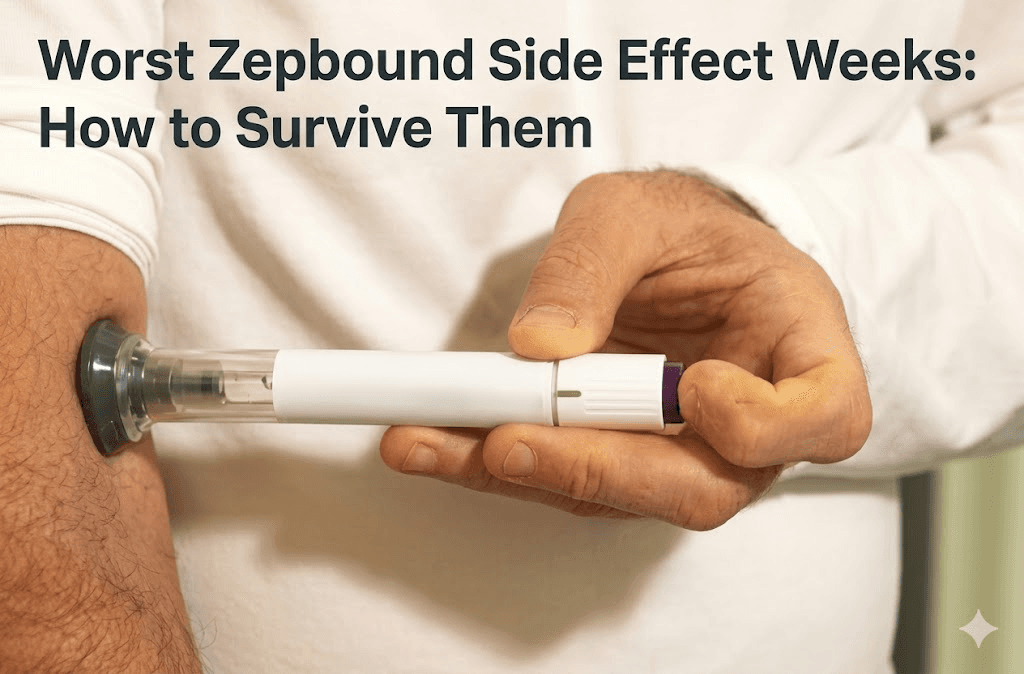
Worst Zepbound Side Effect Weeks: How to Survive Nausea & Fatigue

This week on Zepbound was rough, and nobody warned me it could get worse before it gets better.
If you are reading this mid-wave of nausea, fatigue, or stomach chaos, you are not alone and you are not imagining it. Millions of people are utilizing appetite suppressant medications, and while the results are often life-changing, the journey isn't always smooth.
Some weeks on tirzepatide genuinely hit differently. Understanding exactly why your body is reacting this way can be the difference between pushing through an adjustment period and unnecessarily quitting a medication that was actually working.
Why Some Weeks Feel So Much Worse
Tirzepatide does not work in a straight, predictable line. The National Institute of Diabetes and Digestive and Kidney Diseases (NIDDK) notes that your body requires time to adapt to medications that alter gastric and hormonal systems.
Several factors can stack up to create a genuinely brutal stretch:
- Dose escalation timing: The jump to a new dose is the most common trigger. Your body needs one to three weeks to recalibrate, and the first few days after an increase are typically the worst.
- Food choices: High-fat, greasy, or heavily spiced meals slow gastric emptying even further. On tirzepatide, this amplifies nausea and bloating dramatically.
- Stress and sleep disruption: Cortisol spikes can heighten GI sensitivity. A rough week at work often becomes a rough week on your injection.
- Injection day timing: Some users report that injecting in the evening leads to worse overnight symptoms, while morning injections spread discomfort across waking hours. Neither is universally better—it is highly individual.
- Cumulative buildup: Tirzepatide has a long half-life. If you've had several weeks of minor symptoms, they can compound into one intense period before your body fully adjusts.
Knowing the biological cause does not make the nausea magically disappear, but it does make it feel significantly less alarming.
Normal Discomfort vs. Red Flags
This is the question every struggling user needs answered honestly: When do I just push through, and when do I call for help?
Generally Safe to Push Through
- Mild to moderate nausea, especially in the first 48 hours post-injection.
- Loose stools or constipation as your GI tract adjusts to slower motility.
- Fatigue and exceptionally low appetite.
- Burping (often referred to as "sulfur burps"), bloating, or indigestion.
- Mild headaches around injection day.
Contact Your Doctor Immediately If You Experience:
- Severe, persistent vomiting that prevents you from keeping down clear liquids for more than 24 hours.
- Sharp or radiating abdominal pain, which could be a warning sign of pancreatitis.
- Signs of dehydration, including dizziness, dark urine, or a rapid heart rate.
- Vision changes or exceptionally severe headaches.
- Symptoms of an allergic reaction, such as swelling, hives, or difficulty breathing.
The general rule among experienced clinicians is this: if the discomfort is unpleasant but manageable, it is likely the medication doing its job. If it is disrupting your ability to function or keep fluids down, that requires a medical conversation, not a willpower conversation.
How Real Users Survive the Worst Days
These are field-tested strategies from patients who stuck it out and are glad they did.
1. Eat like you're recovering from surgery. Remove all decision fatigue around eating and stick to plain foods only: crackers, rice, clear broth, toast, and bananas. Go bland until the wave passes.
2. Hydrate aggressively and strategically. Small, frequent sips of water or electrolyte drinks beat large, heavy glasses that can stretch the stomach. Ginger tea and peppermint tea have genuine anecdotal support for providing rapid nausea relief.
3. Ask your doctor about anti-nausea medication. Ondansetron (Zofran) is commonly prescribed alongside GLP-1 medications for rough adjustment periods. Many users say this single addition made the difference between staying on the medication and stopping.
4. Don't force meals. Tirzepatide suppresses appetite sharply on bad days. Forcing heavy meals when you are nauseous can trigger vomiting. Eat small amounts when hunger signals actually appear.
5. Rest without guilt. The fatigue during bad side effect weeks is real and physical. Treating rest as productive recovery—rather than laziness—changes how manageable the week feels. (Note: When your energy returns, engaging in light muscle building and toning is crucial to ensure the weight you are losing is fat, not lean mass).
6. Track your patterns. Note your injection day, what you ate, your stress levels, and your symptom severity. Within a few weeks, most users identify their personal triggers and can actively reduce the intensity of future rough stretches.
Maryland Trim Clinic (MTC) in Laurel, MD
Surviving the toughest weeks of a weight loss journey shouldn't be something you have to do alone or figure out via internet forums. Located in Laurel, MD, the Maryland Trim Clinic (MTC) provides the professional medical oversight necessary to ensure your side effects are minimized and your results are optimized.
When you enroll in a structured medical weight loss program at MTC, our clinical team actively monitors your progress. If you are experiencing brutal side effects on GLP-1 weight loss injections, we can adjust your dose titration schedule or prescribe supportive medications to ease the transition. Furthermore, our dedicated nutritional counseling and coaching ensures you know exactly what to eat—and what to avoid—to prevent severe GI distress while maintaining a healthy metabolic rate.
The Bottom Line
The hardest part of a brutal side effect week is the doubt—wondering if it is always going to feel like this.
According to the Centers for Disease Control and Prevention (CDC), managing chronic weight issues is a long-term commitment. For the vast majority of users, the medication does not always feel this harsh. The body adapts. The worst weeks are usually early weeks or dose-escalation weeks, not a permanent state.
Track your symptoms, hydrate, rest, and communicate with your medical provider. Hang in there.
Medical Disclaimer: The information provided in this article is for educational purposes only and is not intended as a substitute for professional medical advice, diagnosis, or treatment. Always seek the advice of your physician regarding severe side effects or before altering your prescribed medication routine.
Frequently Asked Questions
Q: Is it normal for Zepbound side effects to get worse before they get better? A: Yes, especially around dose escalations. The first one to three weeks after a dose increase are typically the most intense. Symptoms often improve significantly as your body physically adapts to the new hormone levels.
Q: What foods should I avoid during a bad Zepbound side effect week? A: Avoid high-fat, greasy, fried, or heavily spiced foods. These foods slow gastric emptying even further, which significantly worsens nausea and bloating. Stick to bland, easy-to-digest options like crackers, rice, and broth.
Q: When should I call my doctor about Zepbound side effects? A: Contact your doctor if you experience severe vomiting lasting more than 24 hours, sharp abdominal pain, signs of dehydration, vision changes, or any symptoms of an allergic reaction. Manageable discomfort is typically normal; an inability to keep fluids down is a medical issue.
Q: Can I take anything to help with Zepbound nausea? A: Ask your prescribing doctor about anti-nausea medications like ondansetron (Zofran), which is commonly used alongside GLP-1 medications. Small frequent sips of ginger tea and electrolyte drinks are also highly effective for milder nausea.
Q: Does changing my injection day or time help with side effects? A: It can for some users. Evening injections may cause worse overnight symptoms for some people, while morning injections spread the discomfort across waking hours. Experimenting with timing—with your doctor's awareness—is a reasonable strategy if your current schedule consistently produces bad days.
Ready for Medical Support on Your Weight Loss Journey?
Don't suffer through severe side effects alone. Visit the Maryland Trim Clinic homepage today to schedule a comprehensive consultation. Our expert clinical team in Laurel, MD, will help you manage your symptoms, adjust your plan, and achieve your goals comfortably and safely.