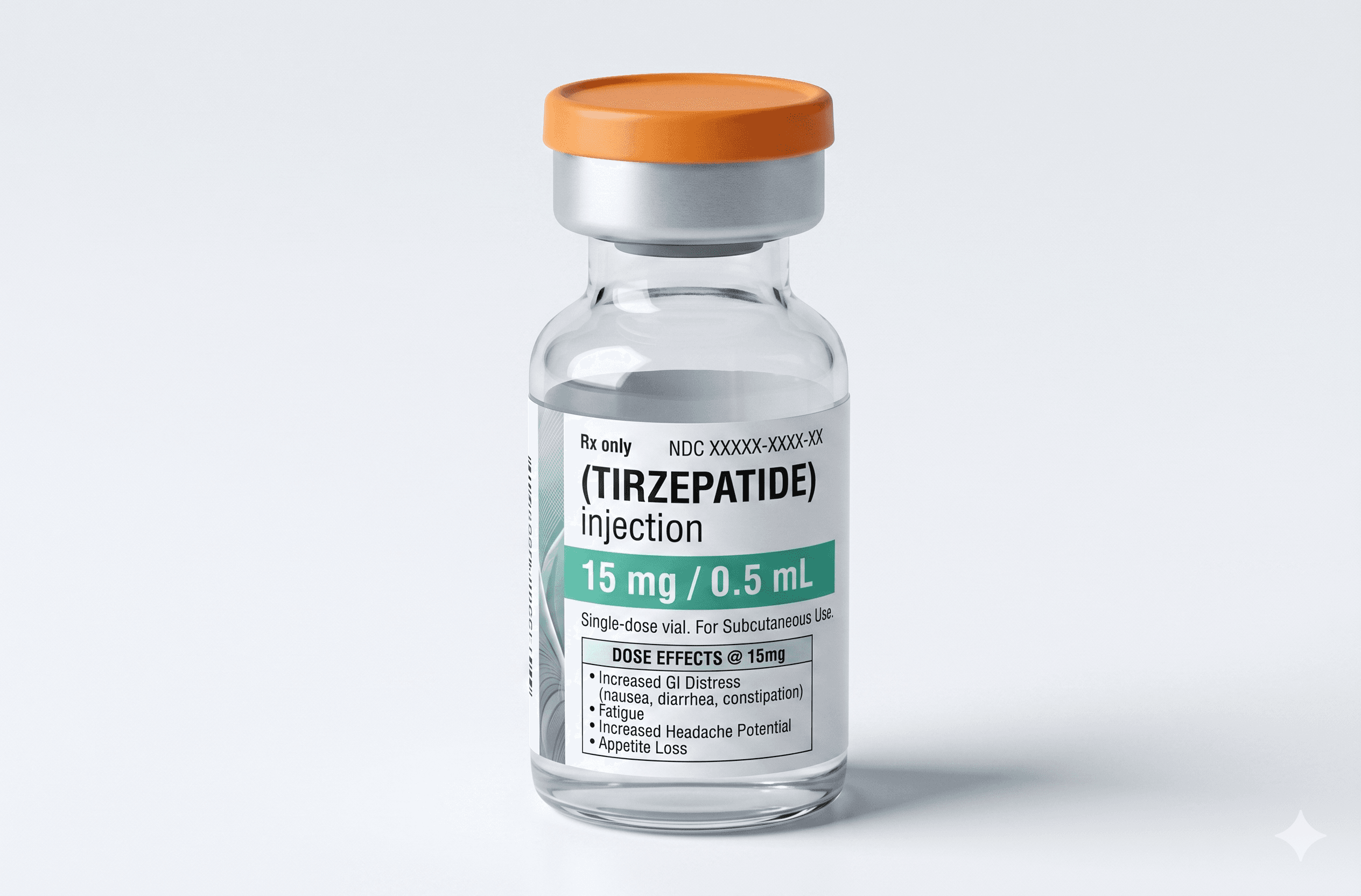
Zepbound 15mg Side Effects: What Happens at the Maximum Dose?

Most videos and blog posts cover starting doses, but what happens to your body when you hit Zepbound's maximum 15mg dose?
If you have been titrating up through 2.5mg, 5mg, 7.5mg, 10mg, and 12.5mg, you already know that each dose escalation brings its own adjustment period. The jump to 15mg is no different, but it carries a unique weight: this is the ceiling. There is nowhere higher to go, which means that if side effects become unmanageable here, you and your prescriber will need a real conversation about the path forward.
Understanding what to expect—and why your body responds the way it does—is the most powerful tool you have.
The 10mg to 15mg Transition — What Actually Changes
The Dose Escalation Reality
Moving from 10mg to 12.5mg and then to 15mg represents the final frontier of tirzepatide dosing. At this stage, most patients have already been on Zepbound for six months or more, and many assume they have "figured out" how their body handles the medication. The 15mg dose has a way of humbling that assumption.
Tirzepatide works as a dual GIP and GLP-1 receptor agonist. At higher concentrations, both hormonal pathways are more fully saturated. Efficacy increases, but so does the physiological demand on your digestive system and your brain's appetite regulation centers.
GI Symptoms: Frequency and Intensity at 15mg
The gastrointestinal side effect profile at 15mg is the most prominent concern. Clinical trial data reviewed by the U.S. Food and Drug Administration (FDA) confirms that nausea, vomiting, diarrhea, and constipation are all reported at higher rates in the 15mg group compared to lower doses.
Here is how this typically plays out:
- Nausea returns with a vengeance during the first two to four weeks. Your gut motility slows significantly at maximum GLP-1 activation, and your brain's nausea centers react strongly to this delayed emptying.
- Vomiting is most frequently triggered by eating too quickly, consuming fatty foods, or eating portions larger than your stomach can currently handle.
- Constipation is the most statistically common complaint at this dose, driven by dramatically slowed gastric motility.
- Sulfurous burping (often called "tirzepatide burps") can intensify. This deeply unpleasant phenomenon is caused by the fermentation of food sitting longer in the digestive tract.
Appetite Suppression: Deeper but Different
At 15mg, appetite suppression often shifts qualitatively. Many patients describe moving from "not feeling very hungry" to "food noise silence"—a near-complete absence of spontaneous food cravings.
While this sounds desirable, it creates clinical risks. Patients on 15mg must often eat by a strict schedule rather than by hunger cues. Inadequate caloric and protein intake becomes a genuine medical concern, risking muscle loss and severe fatigue.
Long-Term 15mg Maintenance — Life at the Ceiling
The Stabilization Window
For the majority of patients who tolerate the initial escalation, a stabilization period typically occurs between weeks four and twelve. Side effects do not disappear, but they reach a manageable "new normal."
Nausea becomes situational, tied primarily to dietary choices rather than the medication's baseline presence. Constipation requires ongoing management. Appetite suppression remains profound but becomes predictable.
The Injection Day Cycle
At 15mg, the weekly injection cycle becomes highly pronounced. Many patients describe a clear rhythm:
- Days 1–2: The strongest side effects (nausea, fatigue, profound appetite suppression).
- Days 3–5: The most functional and balanced days.
- Days 6–7: The "trough" period, bringing a slight return of appetite and increased energy right before the next dose.
Psychological and Behavioral Dimensions
Living long-term at the maximum dose introduces complex psychological layers. There is a particular kind of anxiety that can emerge around eating—a heightened vigilance driven by the knowledge that a dietary misstep at 15mg has sharper physical consequences. Additionally, patients are often deep into their weight loss journey, navigating plateaus and body image recalibration. Side effects are experienced against this emotional backdrop.
Strategies for Managing Persistent Side Effects at 15mg
Dietary Architecture at Maximum Dose
Your eating strategy at 15mg needs to be highly deliberate. The National Institutes of Health (NIH) emphasizes that nutritional adequacy is critical during medical weight management.
Quick Swaps for 15mg Eating:
- If you feel: Overwhelmed by a standard dinner plate.
- Try: Eating 4–6 small "eating occasions" spaced throughout the day.
- Avoid: Forcing yourself to finish a meal; stop eating at 70% fullness to account for delayed emptying.
- Prioritize: Protein (Greek yogurt, eggs, lean meats, or protein shakes) to prevent muscle loss.
Managing Constipation at 15mg
Constipation at 15mg rarely resolves without active intervention. A practical, layered approach includes:
- Hydration: Aim for 64–80 ounces of water daily.
- Fiber supplementation: Daily psyllium husk taken with adequate water.
- Magnesium citrate: A nightly supplement (200–400mg) used for its gentle osmotic laxative effect.
- Prescription options: Discuss motility agents with your prescriber if OTC options fail. At 15mg, this is a legitimate medical conversation.
When to Talk to Your Prescriber About Dose Modification
15mg is the maximum, but it is not a mandatory destination. Consider an honest conversation with your prescriber if:
- You are unable to maintain adequate protein or caloric intake for more than two consecutive weeks.
- Vomiting occurs multiple times per week after the eight-week stabilization window.
- Constipation is severe and unresponsive to multi-modal management.
Some patients find that stepping back to 12.5mg offers a more sustainable long-term maintenance dose. The "highest dose" is not automatically the "best dose"—the best dose is the one you can live well on.
Maryland Trim Clinic (MTC) in Laurel, MD
Navigating the ceiling dose of a powerful GLP-1 medication requires expert, hands-on medical oversight. You do not have to manage severe nausea, fatigue, or nutritional deficits alone. The Maryland Trim Clinic (MTC) located in Laurel, MD, provides a secure, medically supervised environment to ensure your long-term weight management is safe, effective, and comfortable.
At MTC, patients are closely monitored through a comprehensive medical weight loss program. If you are struggling with the intense side effects of maximum-dose GLP-1 weight loss injections, their medical providers can evaluate your symptoms and adjust your dosage safely. To combat the muscle loss and severe fatigue associated with profound appetite suppression, MTC offers nutritional counseling and coaching to help you build a sustainable, protein-forward eating schedule. Furthermore, therapies like vitamin B12 & lipotropic injections or precise metabolic testing and analysis can ensure your body remains properly fueled even when your appetite is silent. By partnering with the Maryland Trim Clinic, you gain the peace of mind that comes from having experts protect your health at every stage of your journey.
The Bottom Line
Reaching 15mg Zepbound is a milestone, but it comes with an honest side effect profile that deserves straight talk. The transition is genuinely challenging, and managing this dose requires an active, deliberate strategy rather than passive endurance.
The good news is that the stabilization window is real, and the tools for management are accessible. Going in with clear expectations is how you get the most out of the ceiling dose while protecting your quality of life.
Disclaimer: The information in this article is for educational purposes only and does not constitute medical advice. Always consult a licensed healthcare provider before starting, stopping, or adjusting any medication. If you experience severe abdominal pain or cannot keep fluids down, seek emergency medical care.
Frequently Asked Questions
Q: Are side effects at 15mg Zepbound always worse than at lower doses? A: Not necessarily for everyone, but statistically, 15mg carries a higher rate of GI side effects. Most patients experience a return of nausea during the escalation phase (the first four to eight weeks). After stabilization, many patients find 15mg manageable.
Q: How long does nausea last when you first start 15mg Zepbound? A: Acute nausea usually lasts between two and six weeks. If it remains severe or occurs multiple times a week beyond the eight-week mark, discuss anti-nausea medication or a dose reduction with your prescriber.
Q: Is constipation at 15mg something that goes away on its own? A: No. Because tirzepatide slows gastric motility significantly at higher doses, most long-term 15mg users need ongoing strategies like high water intake, fiber supplementation, or magnesium citrate.
Q: What causes the sulfurous burping on 15mg Zepbound? A: Sulfurous or "eggy" burping is caused by significantly slowed gastric emptying. Food sits in the stomach longer, leading to fermentation. To reduce it, avoid high-fat and high-sulfur foods (eggs, red meat), eat smaller portions, and stay upright after meals.
Q: Can I go back to 12.5mg from 15mg if the side effects are too much? A: Yes. Dose modification is a legitimate medical decision. If 15mg side effects are impairing your quality of life or preventing adequate nutrition, stepping back to 12.5mg is highly recommended.
Q: Does appetite suppression at 15mg cause health risks from under-eating? A: Yes. Appetite suppression can be profound enough that patients fail to eat adequate protein, risking muscle loss and metabolic complications. Eating by schedule and prioritizing protein are essential safeguards at this dose.
Q: Is there a best time of day to inject Zepbound 15mg to minimize side effects? A: Many 15mg users find that injecting in the evening—particularly on a day when they can rest the following morning—reduces functional disruption from peak side effects.
Need Help Managing Your Medication?
Don't let severe side effects derail your progress. Contact a specialized medical provider today to ensure your dosage, nutrition, and overall health are expertly managed.