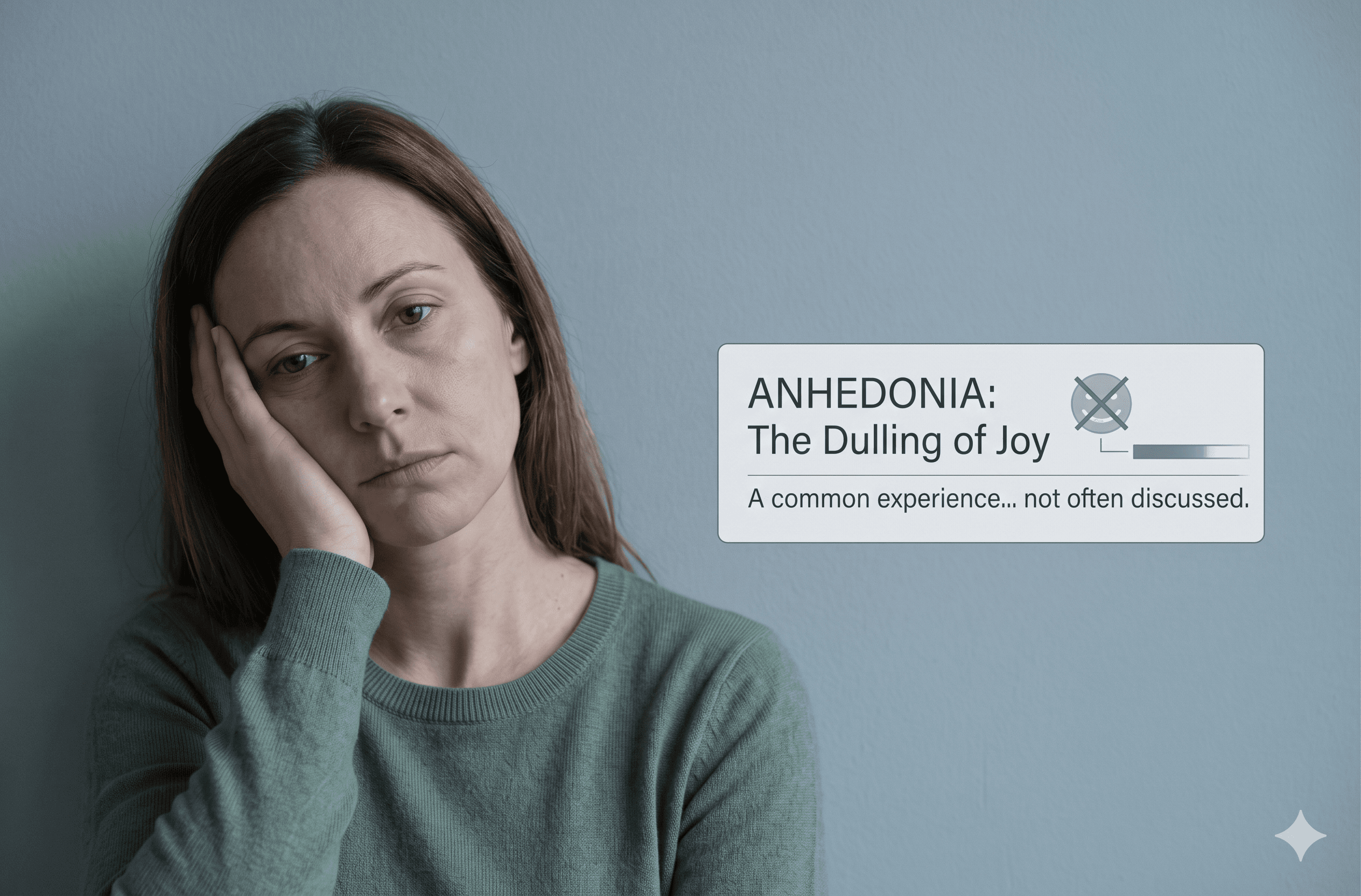
Zepbound & Anhedonia: The Emotional Side Effect You Should Know

Losing interest in food is the goal — but what if Zepbound starts flattening your joy for everything else in life too?
For the millions of people who have started tirzepatide (sold under the brand name Zepbound for weight management), the promise was straightforward: curb the cravings, shrink the appetite, lose the weight. And for most, that is exactly what happened. But buried beneath the before-and-after photos and the clinical trial data showing double-digit weight loss is a conversation that is only beginning to surface—one about mood, motivation, and a creeping emotional numbness that some users say has quietly taken the shine off ordinary life.
They're still losing weight. They just don't seem to care about much else anymore.
What Is Anhedonia, and Why Might Zepbound Cause It?
Anhedonia—from the Greek an (without) and hēdonē (pleasure)—is the reduced ability to feel pleasure or motivation in response to things that once brought enjoyment. While it is most commonly associated with clinical depression, it exists on a spectrum.
In its milder forms, anhedonia can look like a sudden disinterest in hobbies, a flat emotional response to good news, or a strange inability to feel excited about things you used to anticipate eagerly.
For Zepbound users, reports tend to cluster around a specific flavor of this experience. "Food noise"—the near-constant mental chatter about eating, cravings, and meals—goes quiet. That part is expected and celebrated. But some patients report that the silence doesn't stop there. The mental real estate that food once occupied doesn't fill back up with other pleasures. Instead, it just stays flat.
This pattern is consistent enough that it has earned informal names online: "Ozempic personality," "GLP-1 blunting," and "emotional flattening" are among the most common.
The Neuroscience Behind the Flatness
To understand why this happens, you have to look at what GLP-1 receptor agonists do in the brain, because the gut is only part of the story.
According to research supported by the National Institutes of Health (NIH), GLP-1 receptors are distributed throughout the central nervous system, including in regions deeply tied to reward, motivation, and emotional processing (specifically the nucleus accumbens and the ventral tegmental area). These are the same structures that comprise the brain's dopaminergic reward circuitry.
Tirzepatide is a dual agonist—it activates both GLP-1 receptors and GIP receptors. GIP receptors are also expressed in the brain, including in limbic regions associated with mood. This dual mechanism makes tirzepatide incredibly potent for weight loss, but it may also mean a broader footprint of neurological effects.
The leading hypothesis among researchers is this: when these medications dampen the reward signal associated with food, they may be modulating dopamine activity more broadly. Food is one of the most powerful natural activators of the brain's reward circuit. If you turn down the volume on food-related pleasure, you may inadvertently turn down the volume on reward signaling in general.
The 'Ozempic Personality' Through a Clinical Lens
Clinical voices in obesity medicine have begun addressing the "Ozempic personality" phenomenon directly, noting that while reports of emotional blunting are real, the picture is complex.
Obesity itself is often associated with depression, low motivation, and emotional dysregulation. When someone loses weight rapidly, the psychological changes can be profound—and not always in straightforward positive directions. Identity shifts, changes in social dynamics, and the sudden loss of food as a primary coping mechanism can all manifest as emotional flatness or disorientation that looks exactly like anhedonia.
However, dismissing these reports entirely would be a mistake. The distribution of GLP-1 receptors in the brain means these drugs are doing something neurologically; we just lack robust, long-term psychiatric data on what that means for mood in all patients.
Why Is This Conversation So Underdeveloped?
Several factors have kept this side effect under-discussed in mainstream medical settings:
- It isn't on the warning label: Anhedonia does not appear in the formal prescribing information for Zepbound in the same way that nausea or pancreatitis risk does.
- It is hard to quantify: Patients may not recognize it as a medical symptom. They may simply feel that they've "changed" without being able to articulate why.
- Cultural pressure to be happy: There is enormous cultural pressure to frame GLP-1 weight loss as a pure victory. Patients who raise emotional concerns often feel dismissed or are told they should focus on their health wins.
Side Effect or Something More? How to Evaluate Your Own Experience
If you are on Zepbound and resonating with this, the most important first step is resisting the urge to self-diagnose. Here is a practical framework for evaluating emotional blunting.
1. Establish a Baseline and Timeline
When did the emotional flatness begin? Anhedonia that appeared or worsened shortly after a dose escalation is more likely to be drug-related than flatness that developed slowly over the previous year.
2. Distinguish Flatness from Sadness
Anhedonia and depression overlap but are not identical.
- If you feel: Sad, hopeless, worthless, or are having thoughts of self-harm, that is a clinical emergency requiring immediate professional intervention, as noted by U.S. Food and Drug Administration (FDA) safety guidelines.
- If you feel: Neutral—not sad, not happy, just oddly indifferent—that pattern is more consistent with hedonic blunting.
3. Audit Your Coping Mechanisms
For many people, food serves significant emotional regulatory functions: stress relief, comfort, and social connection. If Zepbound has effectively removed food as a coping tool without replacement strategies in place, the emotional flatness you are experiencing may be a coping deficit, not purely a pharmacological effect.
4. Talk to Your Prescriber Specifically
Don't just mention that you've been "feeling off." Come prepared with specifics. Options your physician might consider include a dose reduction, a switch to a different GLP-1 agent, or a referral to a mental health professional.
5. Do Not Stop Zepbound Without Medical Guidance
Abrupt discontinuation has its own risks, including rapid weight regain and metabolic rebound. Any changes to your medication regimen should be made in partnership with your prescribing physician.
Maryland Trim Clinic (MTC) in Laurel, MD
Navigating the complex emotional and physiological changes of GLP-1 therapy shouldn't be done alone. The Maryland Trim Clinic (MTC) located in Laurel, MD, provides a secure, medically supervised environment for patients utilizing modern weight management therapies like Zepbound.
When managing the nuanced effects of dual-agonist medications, having a trusted medical provider ensures your mental and physical health are treated equally. MTC offers a comprehensive medical weight loss program designed to monitor your total wellness, not just your scale weight. If you are struggling with the loss of food as a coping mechanism, their team offers critical supportive therapies like nutritional counseling and coaching to help you build new, healthy lifestyle habits. If emotional flatness is accompanied by physical fatigue, interventions like vitamin B12 & lipotropic injections or targeted metabolic testing and analysis can ensure your body is receiving the fuel it needs. By partnering with the Maryland Trim Clinic, you gain the peace of mind that comes from knowing your entire weight loss journey is being guided by experts dedicated to your holistic well-being.
The Bigger Picture
The conversation around GLP-1 medications and mental health is in its early stages. In the coming years, neuroimaging studies will almost certainly provide a clearer picture of who is most susceptible to hedonic blunting, at what doses, and for how long.
Until then, the most honest thing the medical community can do is acknowledge that the brain is not a side effect-free zone for these medications. Losing the food noise may be worth it for many people. But joy should not be the collateral damage.
Frequently Asked Questions
1. What is anhedonia, and how is it different from regular sadness? Anhedonia is the reduced ability to feel pleasure or motivation. Unlike depression, which typically involves persistent sadness or hopelessness, anhedonia is characterized by emotional neutrality or flatness. Some Zepbound users describe it as a blunting of joy rather than an onset of sadness.
2. Is emotional blunting on Zepbound officially recognized as a side effect? Not currently. Anhedonia and emotional flattening are not listed among the official prescribing side effects of tirzepatide. However, patient reports are widespread enough that clinicians and researchers are actively studying the phenomenon.
3. Why might Zepbound affect mood and motivation, not just appetite? GLP-1 and GIP receptors are present in brain regions involved in reward, motivation, and emotional processing. The leading hypothesis is that by dampening food-related reward signaling, these medications may also reduce the brain's broader responsiveness to pleasurable stimuli.
4. How do I know if my emotional flatness is from Zepbound or an underlying condition? The most useful clues are timing and character. If the flatness began or intensified shortly after starting Zepbound or after a dose increase, a pharmacological connection is plausible. If you are experiencing hopelessness or thoughts of self-harm, seek a mental health evaluation immediately.
5. Should I stop taking Zepbound if I think it's affecting my mood? No. Stopping Zepbound abruptly can lead to rapid weight regain and metabolic changes. Instead, document your symptoms and discuss them with your prescribing physician to explore options like dose reduction or switching medications.
6. Is the 'Ozempic personality' the same thing as anhedonia on Zepbound? The 'Ozempic personality' is an informal umbrella term used online to describe a range of personality and mood changes people notice while on GLP-1 medications. Anhedonia (the blunting of pleasure) is one major component of what gets described under this label.
7. Can therapy help with emotional blunting on Zepbound? Yes. For patients whose emotional flatness is partly driven by the loss of food as a primary coping mechanism, working with a therapist can help develop alternative emotional regulation strategies. Exercise has also shown robust effects on dopaminergic reward circuitry and may help counteract hedonic blunting.
Need Medical Support on Your Weight Loss Journey?
Don't navigate the complex side effects of GLP-1 medications alone. Contact a specialized medical weight loss provider today to ensure your treatment plan supports both your physical goals and your emotional well-being.