Zepbound Side Effects: The Complete Patient Guide & Safety Risks

Before your first Zepbound injection, there are side effects your doctor may not warn you about. Here's what to actually expect.
Starting a new weight-loss medication is a significant decision. Zepbound (tirzepatide) has quickly become one of the most talked-about pharmaceutical options on the market. Approved by the FDA for chronic weight management, it has shown impressive results in clinical trials. However, the conversation around its side effects often gets glossed over in the excitement of rapid weight loss.
Whether your doctor handed you a prescription with only a brief verbal summary or you're still weighing your options, this guide covers everything you need to know before that first injection: the official FDA warnings, the real-world experiences patients aren't always prepared for, and the severe symptoms that demand immediate medical attention.
What the FDA Actually Says About Zepbound Side Effects
Zepbound belongs to a class of medications called GIP/GLP-1 receptor agonists. It works by mimicking two gut hormones—glucose-dependent insulinotropic polypeptide (GIP) and glucagon-like peptide-1 (GLP-1)—that regulate blood sugar, dramatically slow gastric emptying, and reduce appetite. Because it acts on multiple hormonal pathways simultaneously, its side effect profile is broader than older single-agonist medications.
The FDA's official prescribing information for Zepbound includes several categories of clinical warnings that every prospective user must understand.
Boxed Warning: Thyroid C-Cell Tumors
The most serious warning on Zepbound's label is a "black box" warning—the FDA's highest level of caution. In rodent studies, tirzepatide caused thyroid C-cell tumors. While it is not yet confirmed whether this risk translates to humans, the FDA requires that Zepbound not be used by anyone with a personal or family history of medullary thyroid carcinoma (MTC) or Multiple Endocrine Neoplasia syndrome type 2 (MEN 2). This is a hard contraindication, not a soft caution.
Pancreatitis
Acute pancreatitis (inflammation of the pancreas) has been reported in patients using tirzepatide. The FDA label specifically instructs patients to discontinue Zepbound if pancreatitis is confirmed. Symptoms include severe, persistent abdominal pain that may radiate to the back, sometimes accompanied by intense vomiting.
Hypoglycemia
Although Zepbound is not primarily an insulin medication, low blood sugar is a documented risk, particularly in patients who are also taking insulin or sulfonylureas. If you are managing type 2 diabetes alongside weight loss, your prescribing doctor must review and adjust your diabetes medications before you start Zepbound.
Gallbladder Disease
Clinical trials for tirzepatide reported cases of cholelithiasis (gallstones) and cholecystitis (gallbladder inflammation). Rapid weight loss is a known risk factor for gallstone formation, and Zepbound's appetite-suppressing effects can accelerate that process. The National Institute of Diabetes and Digestive and Kidney Diseases (NIDDK) notes that patients losing weight rapidly should receive clinical evaluations if they develop biliary symptoms.
Kidney Injury
Severe gastrointestinal side effects—particularly dehydration caused by vomiting and diarrhea—can impair kidney function. The FDA warns that acute kidney injury has been reported in patients using GLP-1 receptor agonists, typically as a downstream consequence of severe volume depletion.
The First Four Weeks — What Real Patients Actually Experience
Beyond the formal label language, the day-to-day reality of starting Zepbound is something clinical trial summaries do not fully capture. Here is a breakdown of what most patients encounter during the early weeks.
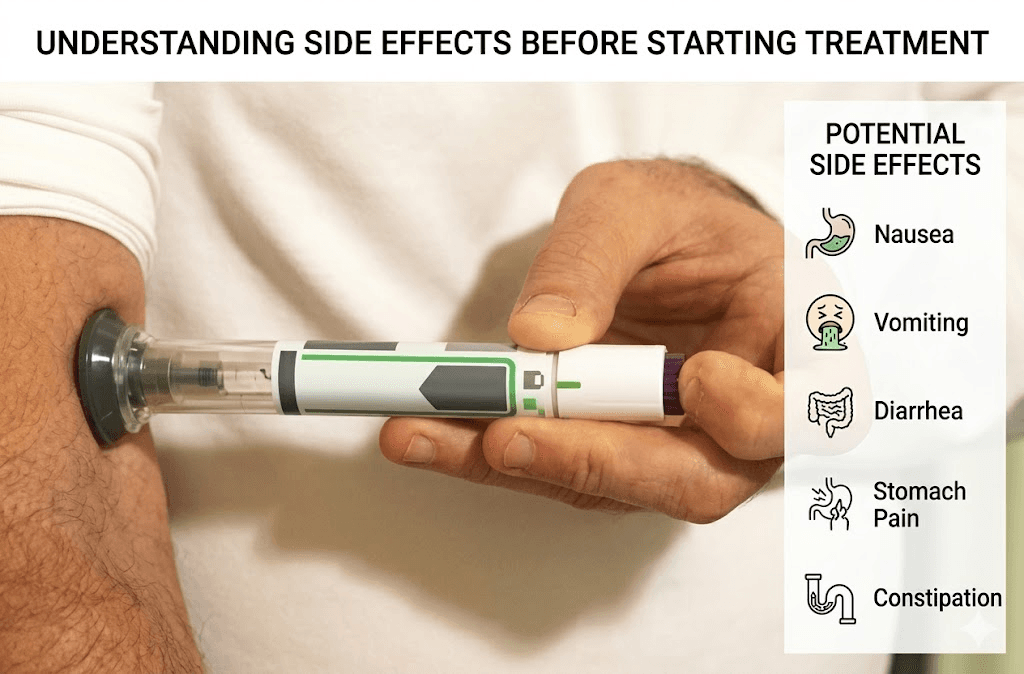
Nausea: The Most Common Complaint
Nausea is the single most frequently reported side effect in Zepbound clinical trials, affecting a significant portion of users—particularly during dose escalation. It occurs because tirzepatide slows gastric emptying, meaning food sits in your stomach longer than usual. The result is a persistent, low-grade queasiness.
Quick Swaps to Manage Nausea:
- If you feel: Overly full or nauseous after eating.
- Try: Eating smaller, blander meals and injecting your dose at night to sleep through the peak symptom window.
- Avoid: High-fat, greasy, or spicy foods, especially within 48 hours of injection day.
Vomiting and Diarrhea
These symptoms are less universal than nausea but affect a meaningful subset of new users. They are most common in the first two weeks at any given dose level. Staying heavily hydrated is critical during this period; these symptoms can compound quickly into dehydration, which risks kidney complications.
Constipation: The Underreported Flip Side
Because the medication dramatically slows gastric emptying, intestinal transit time increases across the board. Patients who do not proactively increase fiber and fluid intake often find themselves dealing with significant constipation within the first month. Increasing water intake to at least 8–10 glasses per day and prioritizing dietary fiber are essential.
Appetite Suppression: Dramatic and Sometimes Disorienting
For many patients, the most striking early experience is the profound, almost alien feeling of simply not being hungry. People who have struggled with "food noise" for decades report that it goes completely quiet.
While this is the intended therapeutic effect, it can become a practical problem. Patients frequently under-eat to the point of severe nutrient deficiency and develop muscle loss because they aren't consuming adequate protein. A registered dietitian can be an invaluable resource during this phase.
Red Flag Symptoms — When to Call Your Doctor Immediately
Not every Zepbound side effect is something you can manage at home with ginger tea. There is a clear category of symptoms that require stopping the medication and contacting your physician or seeking emergency care without delay. According to the U.S. Food and Drug Administration (FDA), serious adverse events must be evaluated immediately.
Severe Abdominal Pain That Doesn't Resolve
Persistent, severe pain in the upper abdomen—especially pain that radiates to the back and is accompanied by vomiting—is the classic presentation of acute pancreatitis. This is a medical emergency. Do not assume it is ordinary GI discomfort. Go to an emergency room.
Signs of Thyroid Problems
Seek medical evaluation if you develop a lump or swelling in your neck, hoarseness that doesn't resolve, difficulty swallowing, or shortness of breath. These can be signs of thyroid abnormalities.
Symptoms of a Serious Allergic Reaction
Swelling of the face, lips, tongue, or throat; difficulty breathing; severe rash or hives; or a rapid drop in blood pressure following an injection are signs of anaphylaxis. Use epinephrine if available and call emergency services immediately.
Symptoms of Gallbladder Disease
If you experience sudden, severe pain in the upper right portion of your abdomen (particularly after eating fatty meals), along with fever or jaundice (yellowing of the skin or eyes), seek medical evaluation promptly.
Signs of Kidney Problems
Decreased urination, swelling in the legs, extreme fatigue, or confusion—particularly following a bout of severe vomiting—can signal acute kidney injury caused by dehydration.
Maryland Trim Clinic (MTC) in Laurel, MD
Navigating the complex, sometimes severe side effects of medications like Zepbound requires expert medical oversight. Managing dosage escalations, monitoring kidney function, and ensuring you are losing fat rather than muscle shouldn't be done alone. The Maryland Trim Clinic (MTC) located in Laurel, MD, provides a secure, medically supervised environment for patients utilizing modern weight management therapies.
At MTC, patients do not just receive a prescription and a handshake; they enter a comprehensive medical weight loss program designed to closely monitor metabolic responses to medications. If you are a clinical candidate, their providers can expertly guide your use of GLP-1 weight loss injections to minimize gastrointestinal distress. Because rapid weight loss can lead to nutrient deficiencies and fatigue, MTC offers critical supportive therapies, including nutritional counseling and coaching to ensure you hit your protein targets, as well as vitamin B12 & lipotropic injections to help stabilize your energy levels. By partnering with the Maryland Trim Clinic, you gain the peace of mind that comes from knowing every side effect is being evaluated by experts dedicated to your safety and long-term health.
The Bottom Line: Go In With Eyes Open
Zepbound's clinical efficacy data is genuinely impressive, and for many people, it will be a life-changing tool. But the path to those results involves real physiological adaptation, real discomfort, and real risks that deserve honest preparation rather than minimization.
The most successful Zepbound users are those who started with clear expectations, had a plan for managing GI symptoms, worked with a medical professional to protect their nutrition, and knew exactly which symptoms warranted an emergency room visit. That preparation doesn't make the side effects disappear, but it makes the difference between abandoning a medication that could genuinely help you and successfully navigating the early weeks to reach a stable dose.
Disclaimer: The information in this article is for educational purposes only and does not constitute medical advice. Always consult a licensed healthcare provider before starting any weight loss program or taking new medications. Do not ignore severe side effects or stop prescribed medications without professional medical guidance.
Frequently Asked Questions
1. What is the most common side effect of Zepbound? Nausea is the most commonly reported side effect. It affects a significant percentage of users, particularly during the first few weeks and during dose escalation. It is caused by the medication slowing gastric emptying.
2. How long do Zepbound side effects last? Most common gastrointestinal side effects (nausea, vomiting, diarrhea) are most intense in the 24–72 hours following each injection. For many patients, these symptoms diminish significantly after 2–4 weeks at a stable dose. However, some effects like constipation may persist.
3. Can Zepbound cause serious side effects? Yes. Zepbound carries an FDA black box warning regarding thyroid C-cell tumors observed in animal studies. Other serious risks include acute pancreatitis, gallbladder disease, acute kidney injury, severe allergic reactions, and significant heart rate increases.
4. Who should not take Zepbound? Zepbound is strictly contraindicated in people with a personal or family history of medullary thyroid carcinoma (MTC) or Multiple Endocrine Neoplasia syndrome type 2 (MEN 2).
5. How can I reduce nausea when starting Zepbound? Eat smaller, more frequent meals; avoid high-fat, greasy, or spicy foods around injection day; stay well-hydrated; and consider injecting at night to sleep through the peak side effect window. If nausea is severe enough to prevent eating or drinking entirely, contact your physician immediately.
6. Does Zepbound cause fatigue? Yes, fatigue is a common early side effect, typically peaking in weeks two through four. It is partly pharmacological and partly a consequence of significantly reduced calorie intake. Prioritizing protein-rich foods and staying hydrated can help.
7. What are the red flag symptoms that require emergency care on Zepbound? Seek emergency care immediately if you experience severe persistent abdominal pain (especially radiating to the back), signs of a serious allergic reaction (throat swelling), symptoms of gallbladder disease (upper right abdominal pain with jaundice), or severely decreased urination.
Start Your Weight Loss Journey Safely
Don't navigate complex weight loss medications on your own. Reach out to a licensed medical provider today to build a personalized, medically supervised care plan that prioritizes your long-term health and safety.