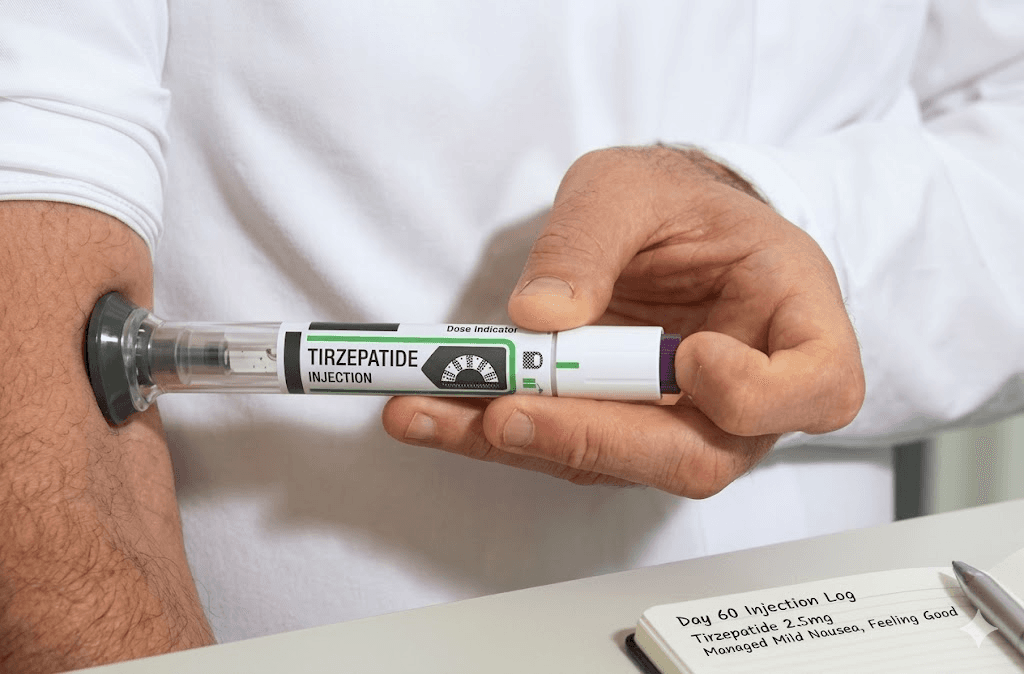
Real Zepbound Side Effects at 2 Months: An Honest Patient Update

Everyone talks about the weight loss — but what about the fatigue, the nausea, and the weeks you genuinely wanted to quit?
If you are in your first one to three months on Zepbound (tirzepatide), you have probably noticed a massive gap in the information available online. Most of what you read is either a glowing before-and-after post on social media or a clinical breakdown of adverse events written in language meant for medical journals. Neither actually tells you what it feels like to sit on your couch at 7 p.m., too tired to make dinner, vaguely nauseated, and wondering whether this medication is worth the physical toll.
This article is the honest account you have been looking for. No sponsorships. No cherry-picking the good weeks. Just a real, week-by-week picture of what the first eight weeks on Zepbound commonly look like—the highs, the harder stretches, and everything in between.
ACT 1: The First Eight Weeks — What's Actually Happening to Your Body
Weeks 1–2: The Honeymoon Period (With a Catch)
For many new Zepbound users, the first week after the initial 2.5 mg injection is surprisingly manageable. Appetite starts to quiet down noticeably. That constant background hum of hunger—"food noise"—softens.
But around days four through seven, the first wave of side effects often arrives. The most commonly reported experiences during this window include:
- Mild to moderate nausea, especially in the hours following a meal.
- Constipation or loose stools, sometimes alternating between the two.
- Injection site redness or mild irritation, which typically resolves quickly.
- A subtle but persistent fatigue that feels like your body is running heavy background processes.
The key thing to understand is that tirzepatide works by activating GIP and GLP-1 receptors throughout your body, including your gut. Your gastrointestinal system is essentially being recalibrated. The nausea isn't necessarily a sign that something is wrong; it is a sign that the medication is doing exactly what it was engineered to do.
Weeks 3–4: The Dose Escalation Test
At the four-week mark, most people move from the 2.5 mg starting dose to 5 mg. This is when many users report that side effects intensify before they improve.
Statistically, weeks three and four are when people are most likely to consider stopping. The nausea can become intrusive—a low-grade queasiness that lingers from morning into afternoon and makes food feel like a chore rather than a comfort.
Fatigue often becomes pronounced here, creating what many describe as the "week three wall." Part of this is physiological: reduced caloric intake means reduced fuel. Part of it is your body adjusting to dramatically altered gastric emptying rates.
Common week 3–4 side effects include:
- Increased nausea after fatty or heavily seasoned foods.
- Burping and acid reflux (feeling "full" even hours after eating).
- Headaches related to reduced fluid intake.
- Mood fluctuations or sleep changes.
Weeks 5–6: The Corner Starts to Turn
For the majority of people who push through the difficult stretch of weeks three and four, something shifts around week five. The nausea doesn't disappear entirely, but it becomes predictable. You start to learn your triggers—eating too fast, eating too close to bedtime, or eating foods that are too rich.
Energy levels often stabilize during this window, particularly if you've made nutritional adjustments. Appetite suppression is typically at its most noticeable here. This is the period where many users first truly believe the medication is working.
Weeks 7–8: Finding Your Baseline
By the end of two months, most users have developed a working understanding of how their body responds to tirzepatide. Side effects don't vanish, but familiarity makes them far easier to manage.
A notable development many people don't expect at this stage is a genuine shift in food preferences. Previously irresistible foods—especially high-fat, high-sugar options—may start to feel unappealing. This isn't willpower; it is a documented effect of tirzepatide on the brain's reward pathways.
ACT 2: Understanding Nausea and Fatigue as Your Body Adjusts
Why the Nausea Happens
Honest information about Zepbound nausea requires understanding one specific mechanism: gastric emptying delay. Tirzepatide slows the rate at which your stomach moves food into your small intestine. This is intentional, but it also means that if you eat a large or rich meal, that food sits in your stomach considerably longer than your body is used to.
The nausea you feel isn't stomach flu nausea. It is more like the discomfort of having eaten too much at Thanksgiving—a heaviness combined with a reluctance to eat anything else.
Why the Fatigue Hits Hard
Fatigue on Zepbound has multiple contributing factors that compound each other:
Caloric deficit: When you eat significantly less, your body has less immediate fuel.
Protein undereating: Insufficient protein accelerates muscle fatigue and general energy depletion.
Dehydration: Reduced appetite often extends to reduced thirst cues. Even mild dehydration causes fatigue and headaches.
Metabolic adjustment: Your body is recalibrating how it processes and stores energy.
When to Take Side Effects More Seriously
While most early side effects are uncomfortable but not dangerous, the U.S. Food and Drug Administration (FDA) advises that certain symptoms warrant immediate medical evaluation:
- Severe abdominal pain, especially radiating to the back (a potential sign of pancreatitis).
- Vomiting that persists for more than 24–48 hours, leading to severe dehydration.
- Yellowing of the skin or eyes (a sign of gallbladder complications, a known risk of rapid weight loss documented by the National Institutes of Health).
ACT 3: Practical Tips for Getting Through the Hard Weeks
Rethink Your Meals Completely
The eating patterns that served you before Zepbound will work against you now.
Quick Swaps for Nausea:
- If you feel: Overly full and queasy after a standard dinner.
- Try: Eating smaller, more frequent meals (like 5 mini-meals a day). Prioritize lean proteins (chicken, Greek yogurt) and easily digestible carbs (rice, toast).
- Avoid: High-fat, greasy, or heavily spiced foods, especially late at night.
Hydration Is Non-Negotiable
Set a reminder to drink water. Many people on Zepbound discover they can go hours without feeling thirsty, only to suddenly feel genuinely unwell. Aim for consistent fluid intake throughout the day. Low-sugar electrolyte drinks can be particularly helpful during high-fatigue stretches.
Time Your Injections Strategically
Many users find that taking their weekly injection on a Friday evening allows the first 24–36 hours of increased side effects to fall over a weekend, when there is less pressure to be functional at work.
Move Your Body — Even When You Don't Want To
This feels counterintuitive during fatigue waves, but light movement (a 20-minute walk or gentle stretching) consistently helps. Movement stimulates digestion, reduces nausea, and triggers endorphin release that offsets fatigue. The goal isn't intense exercise; the goal is to avoid becoming totally sedentary.
Give Yourself the Full Eight Weeks
If you are in week three or four and questioning whether to continue, know that you are statistically at the hardest point of the early experience. Two months is a meaningful amount of time to assess how your body responds to tirzepatide. Before that threshold, you are largely assessing how your body responds to change—which is almost always uncomfortable.
Maryland Trim Clinic (MTC) in Laurel, MD
Navigating the first two months of a powerful medication like Zepbound should never be done in isolation. Managing severe nausea, fatigue, and rapid metabolic shifts requires expert medical oversight. The Maryland Trim Clinic (MTC) located in Laurel, MD, provides a secure, medically supervised environment to ensure your transition into GLP-1 therapy is as safe and comfortable as possible.
At MTC, patients are continuously monitored through a comprehensive medical weight loss program. If you hit the "week three wall" and struggle with severe fatigue, their providers can intervene safely. By utilizing precise metabolic testing and analysis, the clinic can determine exactly how your body is responding to the medication. They offer critical supportive therapies, such as nutritional counseling and coaching to help you adapt your diet to prevent nausea, and vitamin B12 & lipotropic injections to combat the lethargy that often accompanies GLP-1 weight loss injections. By partnering with the Maryland Trim Clinic, you ensure that every side effect is actively managed by experts dedicated to your long-term success.
The Bottom Line
Zepbound is not a frictionless experience, especially in the first two months. The nausea is real. The fatigue is real. The weeks where you seriously contemplate stopping are real.
But so is the adaptation that happens on the other side of those weeks: the quieted appetite, the improved energy, and the gradual shift in how your body relates to food. If you are in the thick of it right now, you are not doing it wrong. You are just in the part that nobody posts about.
Disclaimer: The information in this article is for educational purposes only and does not constitute medical advice. Always consult a licensed healthcare provider before starting any weight loss program or medication. Do not ignore severe pain or persistent vomiting.
Frequently Asked Questions
Q: How long does nausea from Zepbound typically last? A: Nausea is most intense during the first four to six weeks and immediately after each dose escalation. It typically improves significantly by weeks six to eight as the body adapts to slowed gastric emptying.
Q: Is extreme fatigue normal on Zepbound? A: Moderate to significant fatigue is very common around weeks three through five. It is caused by reduced caloric intake, lower protein consumption, mild dehydration, and metabolic adjustment. Prioritizing protein and hydration can help manage it.
Q: What foods should I avoid on Zepbound to reduce side effects? A: High-fat foods, heavily seasoned dishes, spicy foods, and large meals are the most common triggers for nausea and digestive discomfort. Alcohol can also amplify side effects.
Q: When does the appetite suppression effect of Zepbound become most noticeable? A: While noticeable in the first week, it becomes most pronounced between weeks five and eight. This is often when users first feel a genuine shift in cravings, particularly a reduction in the pull toward high-sugar and high-fat foods.
Q: Is it common to want to quit Zepbound in the first two months? A: Yes, very common. Weeks three through five tend to be the most challenging stretch. Many people who initially considered stopping during this window report that symptoms improved substantially by weeks six to eight.
Q: Should I take my Zepbound injection on a specific day of the week? A: There is no medically required day, but taking it on a Friday evening allows the first 24–48 hours of increased side effects to fall over a weekend, reducing the pressure to be functional at work.
Start Your Journey With Expert Support
Don't suffer through the hardest weeks alone. Contact a specialized medical provider today to build a personalized, medically supervised care plan that helps you manage side effects and achieve your goals safely.