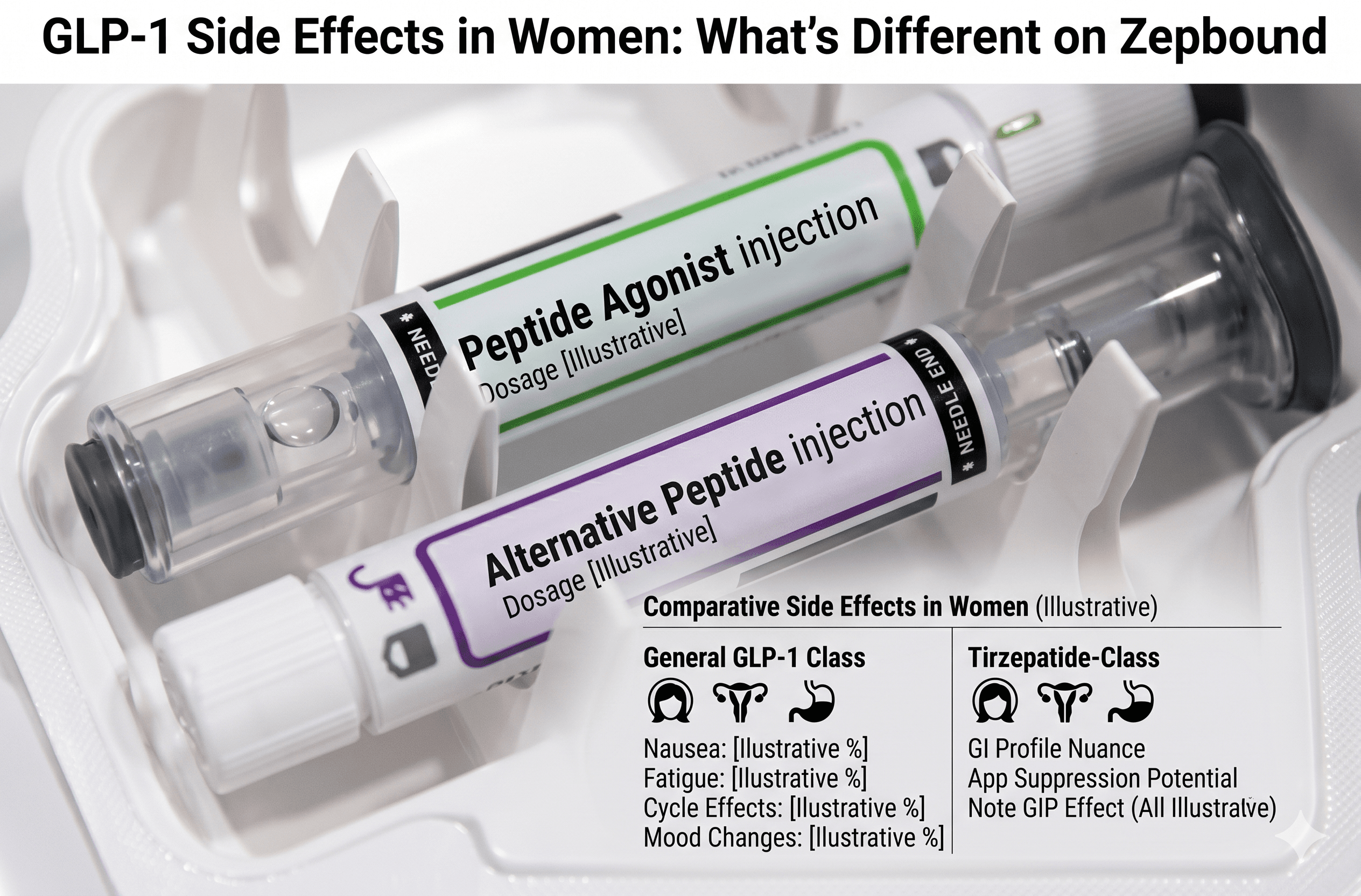
GLP-1 Side Effects in Women: What's Different on Zepbound

Clinical trials show women experience some GLP-1 side effects differently—here is what that means for your Zepbound journey.
If you have been reading general guides about Zepbound side effects, you have probably encountered the standard list: nausea, vomiting, diarrhea, constipation, and fatigue. What those guides frequently leave out is that women don't just experience these effects at different intensities—they sometimes experience entirely different categories of side effects that men in the same trials simply didn't report.
Hormonal shifts, menstrual cycle disruptions, changes in contraceptive efficacy, and unique gastrointestinal patterns all showed up in the data when researchers looked closely at sex-stratified outcomes.
For women currently on Zepbound (tirzepatide) or seriously considering it, understanding these distinctions isn't a minor detail. It is foundational to managing your health safely and effectively.
What the Clinical Trial Data Actually Shows for Women
The SURMOUNT Trials and Sex-Stratified Findings
Zepbound's FDA approval was built on the SURMOUNT clinical trial program. What makes these trials particularly relevant is that approximately two-thirds of the participants were female, providing a robust dataset for sex-specific analysis.
The headline numbers are well known: tirzepatide at the highest dose (15 mg) produced an average weight loss of around 20–22% of body weight. But when researchers began disaggregating the data by sex, highly specific female patterns emerged.
Gastrointestinal Side Effects: Women Report More, and More Severely
Across GLP-1 trials broadly, women consistently report higher rates of nausea, vomiting, and general gastrointestinal distress compared to men at equivalent doses. In the SURMOUNT trials, nausea was reported by a substantially higher proportion of female participants.
This is not surprising from a physiological standpoint. According to research published by the National Institutes of Health (NIH), women on average have slower gastric emptying rates than men—a difference tied to progesterone levels, which naturally inhibit gastric motility. Tirzepatide further slows gastric emptying as its primary mechanism of action. When you layer a drug-induced slowdown on top of a baseline that already trends slower, the compounding effect makes nausea feel significantly more intense.
Quick Swaps for Managing Nausea:
- If you feel: Severe nausea during dose escalation.
- Try: Asking your prescriber for a more gradual titration schedule (e.g., staying on a lower dose for 8 weeks instead of 4).
- Avoid: Rushing to the maximum dose just to speed up weight loss.
Menstrual Cycle Changes: The Underreported Disruption
One of the most clinically significant and least publicly discussed side effects for women is menstrual cycle disruption.
Getty Images
Reports from both clinical trial follow-up data and real-world users describe a range of changes:
- Irregular cycle timing: Periods arriving 1–2 weeks early or late.
- Changes in flow volume: Both unusually heavy and light periods.
- Increased cramping: Especially during the first several months.
- Temporary amenorrhea: Missed periods during rapid weight loss phases.
The mechanisms here are multilayered. Rapid weight loss alters estrogen metabolism because fat tissue is an active site of estrogen production. As fat mass decreases rapidly, circulating estrogen levels fluctuate, which disrupts the hypothalamic-pituitary-ovarian axis. Furthermore, GLP-1 receptors have been identified in ovarian tissue, suggesting direct interactions with reproductive hormone pathways.
Note for women with PCOS: Because tirzepatide improves insulin sensitivity, some women with Polycystic Ovary Syndrome (PCOS) experience more regular cycles. However, this also means unintended pregnancy risk increases as ovulatory function improves.
Oral Contraceptive Efficacy: A Risk That Needs Explicit Discussion
This is perhaps the most clinically urgent sex-specific issue for women on Zepbound.
Because tirzepatide slows gastric emptying, it delays the absorption of oral contraceptive pills, potentially reducing their effectiveness. The U.S. Food and Drug Administration (FDA) explicitly notes this interaction in the prescribing information.
The recommendation is clear: Women on oral contraceptives should either switch to a non-oral method or add a barrier method (like condoms) for the first four weeks after starting Zepbound and for four weeks after each dose increase.
Hair Loss: Telogen Effluvium in Women
Telogen effluvium—a temporary but distressing form of diffuse hair shedding—is reported significantly more often by women on tirzepatide. This is largely attributed to the physiological stress of rapid weight loss rather than a direct drug toxicity. Ensuring adequate protein intake (0.7–1g per pound of goal body weight) along with micronutrients like zinc and iron appears to reduce the severity in many women.
How Retatrutide Trial Data Compares
While Zepbound is currently the most advanced therapy approved for weight management, retatrutide—a triple agonist targeting GLP-1, GIP, and glucagon receptors—is generating significant clinical interest.
For women specifically, the Phase 2 data offers important comparative signals:
- Glucagon receptor agonism adds complexity: Retatrutide drives increased energy expenditure and has pronounced effects on hepatic fat. Women tend to have higher baseline rates of non-alcoholic fatty liver disease driven by hormonal factors, and glucagon agonism could be particularly beneficial here.
- GI tolerability may be worse: The Phase 2 trials reported nausea rates that exceeded those seen with tirzepatide. Given that women already experience higher GI burden on Zepbound, this pattern will likely amplify.
- Appetite suppression depth differs: Neuroimaging studies show women describing profound changes in food cue reactivity on these drugs, including a loss of enjoyment of previously preferred foods.
The trajectory from GLP-1 monotherapy (semaglutide) to dual agonism (tirzepatide) to triple agonism (retatrutide) shows a consistent pattern: greater efficacy accompanied by greater physiological complexity for women.
Maryland Trim Clinic (MTC) in Laurel, MD
Navigating the unique, sex-specific side effects of Zepbound requires more than just a prescription—it requires dedicated, holistic medical oversight. The Maryland Trim Clinic (MTC) located in Laurel, MD, provides women with a secure, medically supervised environment to ensure their GLP-1 journey is both effective and safe.
At MTC, women receive individualized care through a comprehensive medical weight loss program. If you are experiencing severe nausea or concerning menstrual disruptions from GLP-1 weight loss injections, their expert medical providers can safely adjust your titration schedule. To combat the hair loss (telogen effluvium) and muscle wasting that often accompany rapid weight loss, MTC offers critical nutritional counseling and coaching to help you hit vital protein targets. Additionally, they provide targeted interventions like vitamin B12 & lipotropic injections to combat severe fatigue and precise metabolic testing and analysis to monitor your body's specific response to the medication. By partnering with the Maryland Trim Clinic, women gain a care team dedicated to protecting their total hormonal and metabolic health.
Your Monitoring Roadmap — What to Track and Discuss
Before You Start Zepbound
Before your first injection, proactively have these conversations:
Contraception review: If you use oral contraceptives, explicitly discuss the gastric motility interaction with your doctor.
Baseline cycle documentation: Document your menstrual cycle before starting so any changes can be attributed correctly.
Thyroid and iron panel: Women have substantially higher baseline rates of subclinical hypothyroidism and iron-deficiency anemia, which worsen hair loss and fatigue.
Bone density awareness: Rapid weight loss decreases bone mineral density, an effect more pronounced in peri- and postmenopausal women.
During Treatment: What to Monitor Monthly
- Cycle regularity: Note changes in timing and flow. If you miss two consecutive periods, take a pregnancy test (given the oral contraceptive failure risk).
- Hair shedding volume: Take a photo of your hair part once a month to track subtle thinning.
- Protein intake: Track your protein loosely to prevent muscle loss.
Red Flags That Warrant Prompt Medical Contact
- Severe or escalating abdominal pain (potential pancreatitis).
- Complete cessation of periods for 3+ months without confirmed pregnancy.
- Significant right upper quadrant pain (rapid weight loss increases gallstone risk in women).
The Broader Conversation About Sex-Aware Prescribing
The most powerful tool you have is self-advocacy. Bring this information to your prescriber. Ask specifically: How will we monitor hormonal changes? What is the protocol if my cycle becomes severely disrupted? Zepbound is a genuinely transformative medication. Understanding the full picture of how it works in the female body doesn't diminish that—it equips you to navigate it more safely and confidently.
Disclaimer: The information in this article is for educational purposes only and does not constitute medical advice. Always consult a licensed healthcare provider before starting, stopping, or adjusting any medication or contraceptive method.
Frequently Asked Questions
Q: Can Zepbound (tirzepatide) affect my menstrual cycle? A: Yes, menstrual cycle changes are among the most commonly reported side effects for women on Zepbound. These include irregular timing, changes in flow volume, and temporary missed periods. The primary driver is rapid weight loss causing shifts in estrogen metabolism.
Q: Does Zepbound interfere with birth control pills? A: Yes. Because tirzepatide slows gastric emptying, it delays the absorption of oral contraceptive pills, reducing their effectiveness. The FDA recommends using a non-oral method or adding a barrier method (like condoms) for four weeks after starting Zepbound and for four weeks after each dose increase.
Q: Why do women experience more nausea on Zepbound than men? A: Women generally have slower baseline gastric emptying rates due to progesterone. Since tirzepatide further slows gastric emptying, women experience a compounding effect that significantly intensifies nausea, especially during dose escalation.
Q: Is hair loss on Zepbound permanent? A: No. The hair shedding many women experience (telogen effluvium) is temporary. It typically begins 2–4 months after significant weight loss starts and resolves as weight stabilizes. Ensuring adequate protein, zinc, and iron intake reduces severity.
Q: Can Zepbound help women with PCOS? A: Yes. Tirzepatide improves insulin sensitivity, which can have downstream benefits for hormonal balance in women with PCOS. Some women report more regular cycles. However, improved ovulatory function also increases fertility, making contraception planning critical.
Q: What labs or tests should women get before starting Zepbound? A: Women should consider getting a thyroid function panel, iron studies, and a baseline lipid panel. Perimenopausal or postmenopausal women should discuss whether a baseline bone density (DEXA) scan is appropriate.
Ready to Prioritize Your Unique Health Needs?
Don't navigate the complex, sex-specific side effects of Zepbound alone. Contact a specialized medical provider today to build a personalized, hormone-aware care plan that supports your weight loss goals safely.