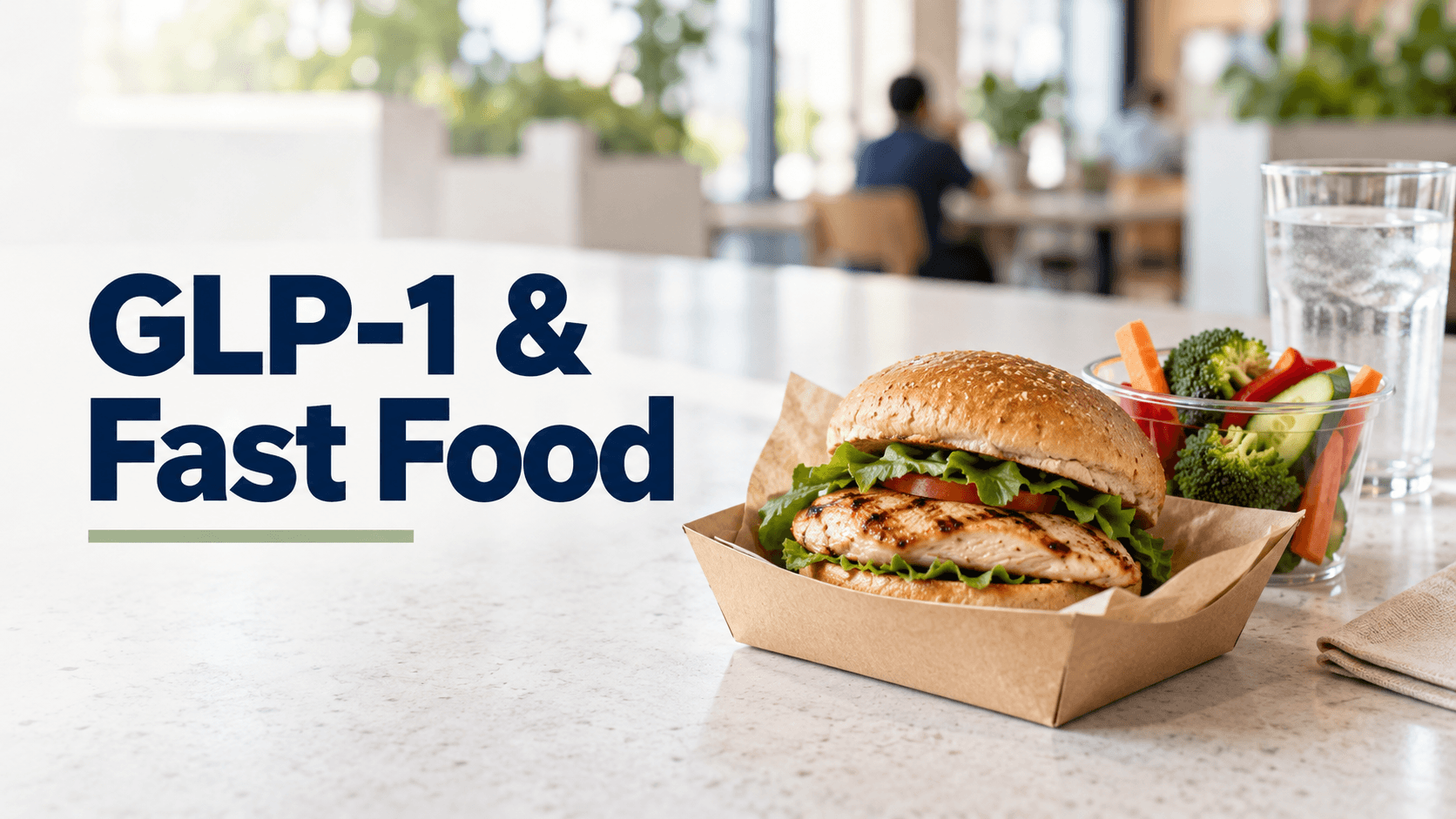
Fast Food Goes GLP-1: Menu Changes for Drug Users


McDonald's is changing their menu because of Ozempic, and the shift says as much about America's eating habits as it does about a drug class that barely existed five years ago. Fast food chains are quietly redesigning menus around a customer base that eats less, wants protein without the bun, and skips the large fries entirely. This is not a niche story. It is a supply chain and product strategy response to a pharmaceutical trend reshaping consumer demand at scale.
Why Grilled Chicken Is Back on the Menu
GLP-1 drugs like Ozempic, Wegovy, and Zepbound suppress appetite by slowing digestion and increasing satiety signals. Users report smaller meals, less interest in fried or heavily processed food, and a preference for protein-forward options they can finish in one sitting.
Maryland Trim Clinic note: At Maryland Trim Clinic in Laurel, MD, the practical question is not simply whether GLP-1 users eat smaller portions. It is whether those smaller meals still support nutrition, muscle, and long-term weight management.
Fast food chains built their menus around volume. Bigger burgers, bundled combos, and value meals designed to maximize calories per dollar. That model works less well when a growing share of customers physically cannot eat that much in one sitting.
The response has been predictable:
- McDonald's has leaned back into grilled chicken options after years of prioritizing crispy, breaded formats.
- Subway has pushed protein bowls and lower-carb builds as alternatives to full sandwiches.
- Jersey Mike's and similar chains have expanded smaller portion sizes and lighter protein options.
This is not charity. Chains track sales data, loyalty app behavior, and regional demand shifts closely. When a meaningful customer segment changes how it eats, menu engineering follows.
Portion Sizes Are Shrinking, and So Are Combos

The deeper story is in portion architecture, not just ingredient swaps.
Several visible patterns have emerged across chains:
- Smaller combo sizes marketed as "value" rather than "diet"
- More a la carte protein options sold without bread, rice, or fries
- Snack-sized menu items positioned as standalone meals
- Slower rollout of new indulgent, oversized items compared to prior years
This matters for anyone studying consumer behavior, whether you work in market research, investment analysis, or competitive intelligence. Menu changes are a leading indicator. Chains do not redesign core offerings on a whim. They respond to point-of-sale data showing what people actually order.
For teams trying to study this trend at scale, the practical challenge is data collection. Menu prices, item availability, and regional rollouts differ by location and by country. A single manual check of a McDonald's app in one city tells you almost nothing about a national or global trend.
This is where public data collection workflows come in. Researchers tracking menu changes across regions typically need to:
- Pull menu and pricing data from multiple locations, which often means requesting pages as if from different geographic areas
- Repeat checks over time to see how offerings shift, which requires stable, repeatable access rather than one-off requests
- Avoid triggering rate limits or blocks when checking many locations in sequence
What This Signals About GLP-1 Adoption
Menu redesigns are a business signal, not a health statistic. But they are a useful signal of how deeply GLP-1 drugs have penetrated the mainstream.
When a company with the scale and testing discipline of McDonald's shifts core menu strategy, it usually means the underlying customer behavior shift is large enough to matter financially, not anecdotal. Chains do not retool national menus for a rounding error in sales.
The honest takeaway for business watchers is this: menu changes are a downstream effect. They confirm that GLP-1 usage has reached a scale that changes unit economics for fast food chains, but they do not tell you the exact percentage of Americans on these drugs. For that, actual usage data and prescription tracking are more reliable sources.
What menu changes do tell you clearly is where the industry expects demand to keep shifting. Watching which items get quietly discontinued, which get promoted, and which portion sizes shrink over the next 12 to 24 months will be a more reliable signal than any single quarterly earnings call.
- Plan smaller meals around protein, fiber, and hydration
- Use restaurant convenience without letting it replace a balanced eating pattern
- Track progress with more than scale weight
- Adjust the plan as medication response and appetite change
The clinic also offers metabolic testing, 3D body scanning, and weight-maintenance support. Those tools can help move the conversation away from simply eating less and toward building an eating pattern that matches the patient's appetite, energy needs, and long-term goals.
For patients using GLP-1 medication, smaller portions are only useful if the smaller meal still supports nutrition, protein intake, and long-term habits. Maryland Trim Clinic in Laurel, MD pairs medical weight-loss care with nutritional counseling so patients can make practical food choices in restaurants, at home, and during busy workdays.
What This Trend Means for Maryland Trim Clinic Patients
Common Mistakes When Tracking Menu and Pricing Trends
Teams researching trends like this often run into avoidable problems:
- Relying on a single location's data and assuming it represents a national pattern
- Ignoring that menu apps often differ from web menus, requiring separate tracking
- Failing to timestamp data, making it hard to prove when a change actually happened
- Not checking robots.txt or terms of service before setting up automated checks
Conclusion
Fast food menus are changing because customer behavior is changing, and GLP-1 drugs are a major driver of that shift. McDonald's, Subway, and Jersey Mike's are not guessing. They are responding to real sales data showing smaller appetites and different protein preferences among a growing customer segment.
FAQ
All answers below relate directly to the trend and how to research it responsibly.
Can Maryland Trim Clinic help me plan meals while using a GLP-1 medication?
Yes. Maryland Trim Clinic offers nutritional counseling alongside its medical weight-loss and GLP-1 services. The goal is to help patients build realistic food choices around reduced appetite, work schedules, restaurant meals, and long-term weight maintenance.
Need help planning meals on GLP-1 treatment?
Maryland Trim Clinic can help you talk through practical food choices, nutrition, and weight-management support alongside GLP-1 care. Schedule a consultation to learn more.