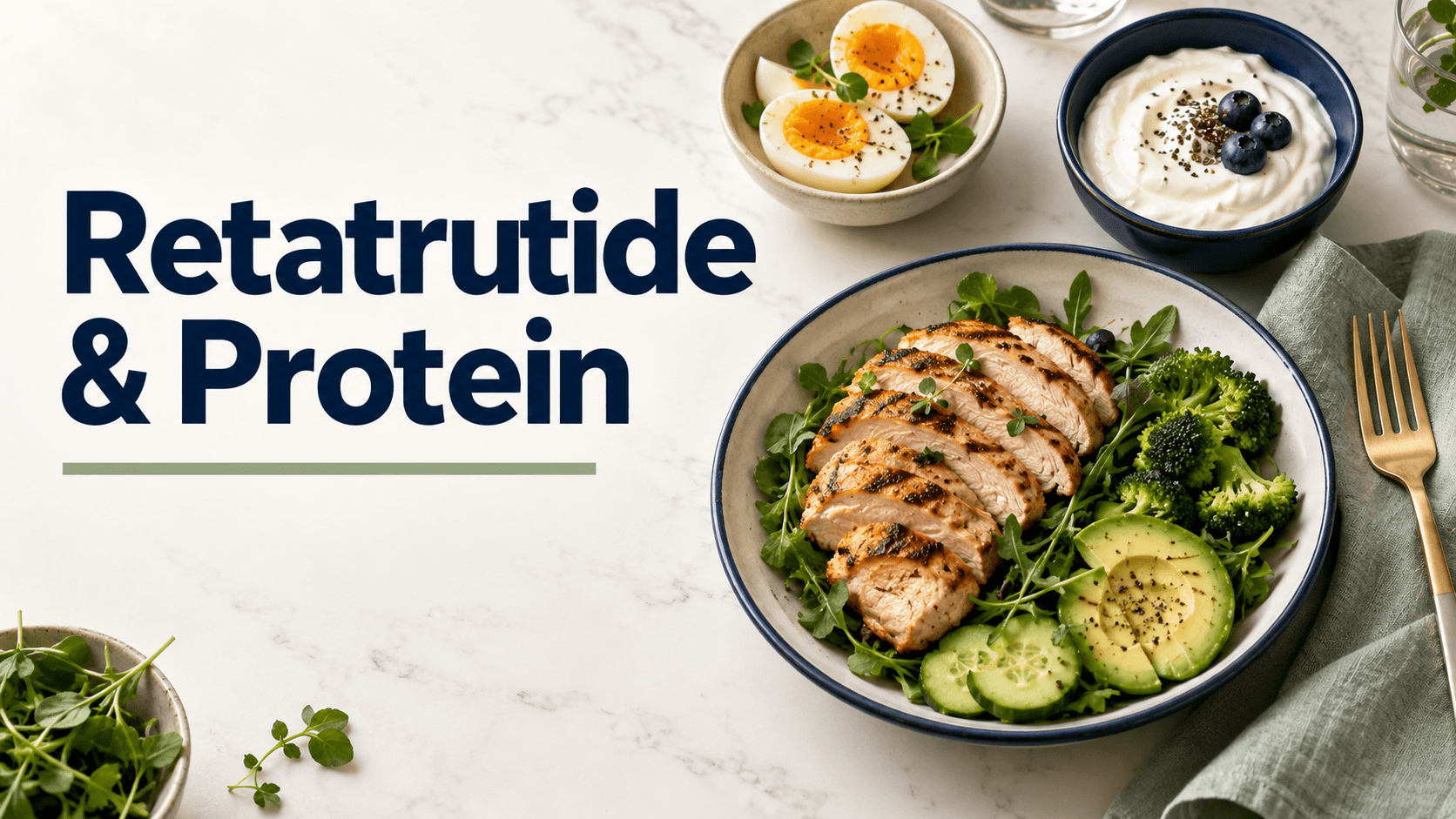
Protein Strategy for Retatrutide Users


Retatrutide doubles your protein needs but halves your appetite—here's the fix. This mismatch is the single biggest complaint from people using retatrutide for weight loss: the body suddenly demands more protein to protect muscle mass during rapid fat loss, while the drug itself makes it hard to eat enough of anything, let alone dense protein sources. This article breaks down why that gap exists and gives concrete tactics for closing it without fighting your appetite all day.
Why Protein Needs Go Up on Retatrutide
Retatrutide is a triple agonist that activates GLP-1, GIP, and glucagon receptors. That combination produces two effects relevant here: strong appetite suppression and fast, significant weight loss.
Maryland Trim Clinic note: Maryland Trim Clinic in Laurel, MD currently lists semaglutide and tirzepatide in its GLP-1 weight-loss services, not retatrutide. The clinic's nutrition, metabolic testing, and progress-monitoring services are still relevant to the muscle-preservation principles discussed here.
Fast weight loss is not automatically fat loss. When the body drops weight quickly, a meaningful portion can come from lean tissue if protein intake is inadequate. Preserving muscle during aggressive weight loss requires higher protein intake than standard maintenance guidelines, often in the range used by people doing structured cuts in fitness contexts, roughly 1.6 to 2.2 grams per kilogram of body weight, sometimes higher depending on starting body composition and rate of loss.
The problem is straightforward: the same mechanism driving weight loss (reduced hunger, slower gastric emptying, early fullness) also makes it physically harder to consume larger volumes of food, including protein-dense meals that used to be easy.
This creates a practical conflict:
- Muscle preservation needs more protein grams per day
- Appetite suppression reduces total food volume tolerated
- Meal timing becomes unpredictable due to nausea or early satiety windows
Understanding this conflict is the first step. The rest of the strategy is about working around reduced capacity, not fighting it.
Timing and Distribution: Making Fewer Bites Count More
Since total daily volume is limited, distribution matters more than it did before starting the medication.
Spread protein across more, smaller meals
Trying to hit 30 to 40 grams of protein in one sitting can trigger discomfort when gastric emptying is already slowed. Splitting daily protein into 4 to 6 smaller occasions, each with 15 to 25 grams, is usually better tolerated than 2 to 3 large meals.
Eat protein first
When appetite drops mid-meal, whatever was eaten first is what actually gets absorbed in meaningful quantity. Structuring meals so protein is consumed before vegetables, starches, or anything else reduces the risk of filling up on lower-priority foods.
Time meals around your injection cycle
Many users notice appetite and nausea follow a pattern tied to injection day and the days immediately after. Front-loading slightly higher protein intake during the window when appetite is relatively better, then relying more heavily on liquid or lower-volume options during the low-appetite window, helps average out intake across the week rather than trying to hit the same target every single day.
Use liquids strategically
Liquid and semi-liquid protein sources are absorbed and tolerated differently than solid food for many people on GLP-1 based medications. Protein shakes, protein-fortified drinks, and thinner options like kefir can supplement intake without adding to the feeling of fullness that solid meals cause.
High-Density Protein Sources That Work With Reduced Appetite

With limited stomach capacity, protein density per bite becomes the deciding factor. Foods that deliver a lot of protein in a small volume outperform technically healthy but low-density options.
High-Density Protein Options
• Whey or casein protein shake: About 25–30g of protein per scoop. It is fast, low-volume, and easy to sip slowly.
• Greek yogurt (plain): About 15–20g of protein per cup. It also provides some volume tolerance.
• Cottage cheese: About 12–14g of protein per half cup. It is very dense with minimal volume.
• Eggs: About 6–7g of protein each. They are easy to prepare in small quantities.
• Lean ground meat or chicken: About 20–25g of protein per 100g. It is best eaten early in a meal.
• Collagen + whey blend: About 15–20g of protein per serving. It can be a useful add-in to other drinks.
• Cheese (in moderation): About 6–7g of protein per ounce. It provides high protein density in a small volume.
A practical decision framework:
- Calculate a daily protein target based on current body weight and goals, ideally with input from a healthcare provider given the elevated needs during rapid weight loss.
- Divide that target across smaller, more frequent intake windows rather than 2-3 large meals.
- Default to the highest protein-per-volume options first, especially on lower-appetite days.
- Use shakes or liquid protein as a backup, not a replacement for whole food when appetite allows solid meals.
- Track intake for at least a few weeks to confirm the target is actually being met, since perceived intake and actual intake often diverge when appetite is suppressed.
- Review medication choice and health history with a clinician
- Set realistic nutrition and protein goals
- Use metabolic and body-composition data to track more than scale weight
- Adjust the plan as appetite, weight, and activity change
At Maryland Trim Clinic in Laurel, MD, patients can pair medical weight-loss care with nutritional counseling, metabolic testing, 3D body scanning, and follow-up monitoring. Those services are especially relevant when appetite is reduced and the goal is to lose fat without allowing nutrition quality, strength, or long-term weight maintenance to become an afterthought.
Retatrutide remains investigational and Maryland Trim Clinic's current GLP-1 service information lists semaglutide and tirzepatide, not retatrutide. That distinction matters when discussing protein needs, muscle preservation, and medication safety: an individualized plan should be built around the treatment a licensed clinician has actually prescribed and is monitoring.
What This Means for Maryland Trim Clinic Patients
Common Mistakes to Avoid
- Estimating protein intake instead of tracking it, which usually overestimates actual consumption
- Front-loading carbohydrates or fats early in a meal, leaving little appetite left for protein
- Skipping meals entirely on low-appetite days instead of switching to smaller, denser options
- Relying only on shakes without checking total daily protein against the calculated target
- Not adjusting the protein target as body weight changes significantly over the treatment period
- Making major dietary changes without checking in with a healthcare provider managing the prescription
Conclusion
The core tension for retatrutide users is simple: the medication increases the biological need for protein while reducing the physical ability to eat large amounts at once. The fix is not eating more overall, it is eating smarter within a smaller window: prioritizing protein first, spreading intake across more frequent smaller meals, leaning on dense and liquid protein sources, and tracking actual numbers instead of estimates. Solving this mismatch is what protects muscle mass during rapid weight loss and makes the results from the medication more sustainable long term.
FAQ
Does Maryland Trim Clinic offer retatrutide?
Maryland Trim Clinic's current website lists semaglutide and tirzepatide for GLP-1 weight-loss therapy; retatrutide is not listed as an offered treatment. If you are considering an investigational product or are already using one, discuss your medication history and safer, medically supervised options with a licensed clinician.
Discuss Your Nutrition Plan
If you’re using a weight-loss medication and finding protein intake hard to maintain, schedule a consultation to review your nutrition goals and care plan with a licensed clinician.