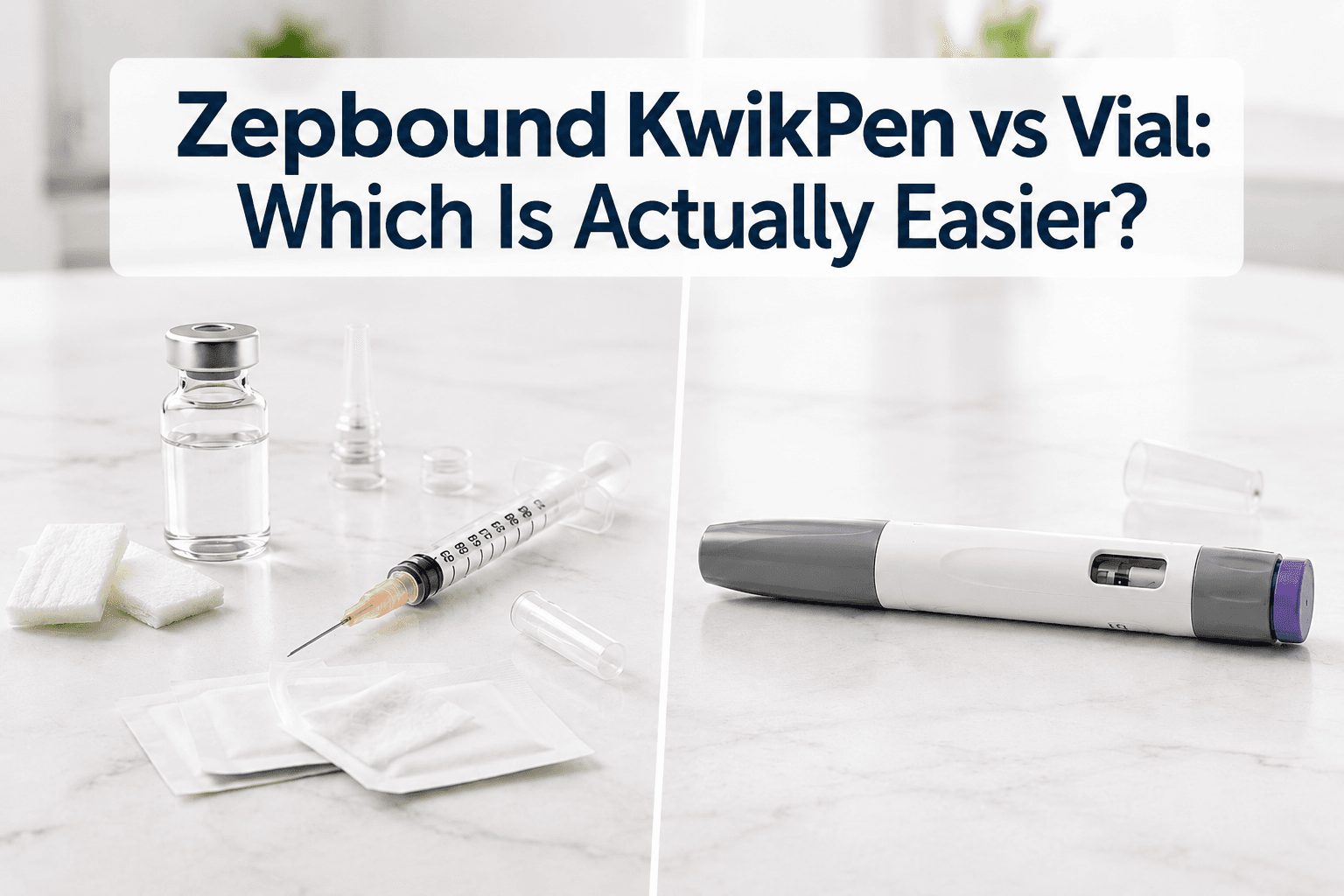
Zepbound KwikPen vs Vial: Which Is Actually Easier?


If you are comparing Zepbound KwikPen vs vial, the real question is not just which one contains tirzepatide. It is which format you can use correctly, consistently, and calmly every week. At Maryland Trim Clinic, we see this as a practical adherence question: the easier routine is often the one a patient can repeat without skipped doses, second-guessing, or unnecessary stress.
Both formats can fit a serious medical weight-loss plan. A patient using GLP-1 weight loss injections may care most about accuracy, while another patient in a broader medical weight loss program may care more about cost, access, and confidence with self-injection. The difference shows up in the steps before the medicine enters the skin.
The Basic Difference Between KwikPen and Vial
The KwikPen is a single-patient-use multi-dose pen. It is still an injection, and it still requires training, a compatible pen needle, site rotation, and safe disposal. But the device guides more of the routine. You inspect the medicine, attach a new needle, prime as directed, dial the dose, inject, confirm completion, and dispose of the used needle safely.
A vial routine asks more from the user. You need the vial, a new syringe and needle, alcohol swabs, a sharps container, and enough comfort to draw the correct volume. The official Zepbound how-to-use instructions describe the available formats and reinforce that patients should receive training for their prescribed presentation.
That does not make the vial a bad option. It means the vial has more user-dependent steps. For someone who is careful, steady-handed, and comfortable with syringes, that may be fine. For someone with injection anxiety, vision challenges, shaky hands, or a hectic morning schedule, the extra steps can matter.
The Step Count Difference
With a vial, the work starts before the injection. You inspect the vial, clean the stopper, draw air into the syringe, inject air into the vial, pull medication into the syringe, remove bubbles, re-check the volume, choose a site, inject, and dispose of the needle and syringe.
With the KwikPen, the biggest difference is that you are not manually drawing the dose from a vial. The device is designed to make the measurement step less dependent on your hands and eyesight. You still need to follow instructions carefully, but there are fewer places for the routine to go sideways.
The practical winner for ease of use is usually the KwikPen. This is especially true if your main worry is making a mistake during preparation. Patients who already read guides like our Zepbound KwikPen injection tutorial are often trying to reduce uncertainty before the first few doses.
Where Mistakes Usually Happen
Vial mistakes tend to happen during preparation: drawing slightly too much or too little, missing an air bubble, touching a sterile part of the needle, or losing medication while trying to push bubbles out. These errors are rarely dramatic, but they can make the weekly routine feel tense.
KwikPen mistakes are usually different. A patient might forget to prime, fail to use a new needle, remove the needle too soon, or feel unsure whether the dose was fully delivered. These are still important, but they are more about following the device sequence than measuring liquid volume.
This is why format choice should be connected to the rest of the plan. Someone who is also managing nausea, appetite changes, or titration questions may benefit from structured support around GLP-1 side effects, who qualifies for GLP-1 treatment, and whether a future oral medication option should be discussed.
Travel and Storage Make the Gap Feel Bigger
Travel is where convenience becomes very real. A vial means managing glass, syringes, needles, alcohol swabs, cold storage, and safe disposal away from home. A KwikPen still needs careful storage and supplies, but it can simplify the packing list because the medication and dosing mechanism travel together.
Unused syringes are allowed by TSA when accompanied by injectable medication, but the TSA says they must be declared for inspection and recommends labeled medication to make the process easier. Their official syringe travel guidance is worth reviewing before any flight.
If you travel often, rotate between homes, or have an unpredictable work schedule, simplicity can become part of adherence. The easier format is the one that helps you stay on schedule without making each dose feel like a full medical setup.
When a Vial Can Still Make Sense
The vial can still be a reasonable choice. Some patients prefer seeing and controlling every step. Others may be routed toward a vial because of cost, access, pharmacy channel, or prescription availability. If you already use syringes for another medication, the vial may not feel intimidating at all.
The key is not to pretend the vial is effortless. It needs the right syringe, careful technique, steady attention, and a willingness to slow down. Patients also need to know when not to improvise. If you are unsure whether a dose was correct, it is safer to contact your care team than to guess or repeat the injection.
How Maryland Trim Clinic Helps Patients Compare Injection Options
At Maryland Trim Clinic, the format conversation is part of a bigger clinical picture. We look at weight history, lifestyle, medication tolerance, body composition goals, and the support a patient needs to stay consistent. That may include metabolic testing and analysis, nutritional counseling and coaching, or reviewing alternatives such as appetite suppressant medications.
For some patients, the KwikPen is easier because it removes the measuring step. For others, the vial is workable because cost or access matters more. Either way, the best decision is not made from an online debate. It is made by matching the format to the person who has to use it every week.
Final Verdict
If the question is pure ease of use, the KwikPen usually wins. It has fewer manual steps, a more guided sequence, and less dependence on drawing medication into a syringe. The vial can still be appropriate, but it asks more of the patient.
For most people choosing between Zepbound KwikPen and vial, the smartest next step is to bring the real details to a clinician: your insurance status, travel habits, comfort with needles, dexterity, storage setup, and prior injection experience. That is how a format choice becomes part of a sustainable treatment plan instead of another weekly stressor.
Frequently Asked Questions
Is Zepbound KwikPen easier than a vial?
For many patients, yes. The KwikPen usually feels easier because it reduces the amount of manual measuring and syringe handling. It still requires training and correct technique, but the routine is more guided.
Does the vial contain the same medicine?
Both formats contain tirzepatide, but the user experience is different. The vial requires drawing the medication with a syringe, while the KwikPen uses a pen mechanism with compatible pen needles.
Which format is better for travel?
The KwikPen is often simpler for travel because there are fewer loose supplies to manage. Vials can travel too, but they require more planning around syringes, storage, and sharps disposal.
Should injection anxiety affect the choice?
Yes. If a patient is anxious about drawing medication or seeing needles, a more guided format may improve confidence. The right choice should support consistency, not just medication access.
Need Help Choosing the Right Injection Format?
Maryland Trim Clinic can help you review your medication routine, injection comfort, travel needs, and weight-loss plan so you can discuss the safest format with your prescriber.