What Happens When You Try to Restart Mounjaro


You lost weight on Mounjaro, stopped, started regaining, and then heard the words nobody wants to hear: you cannot just go back on it.
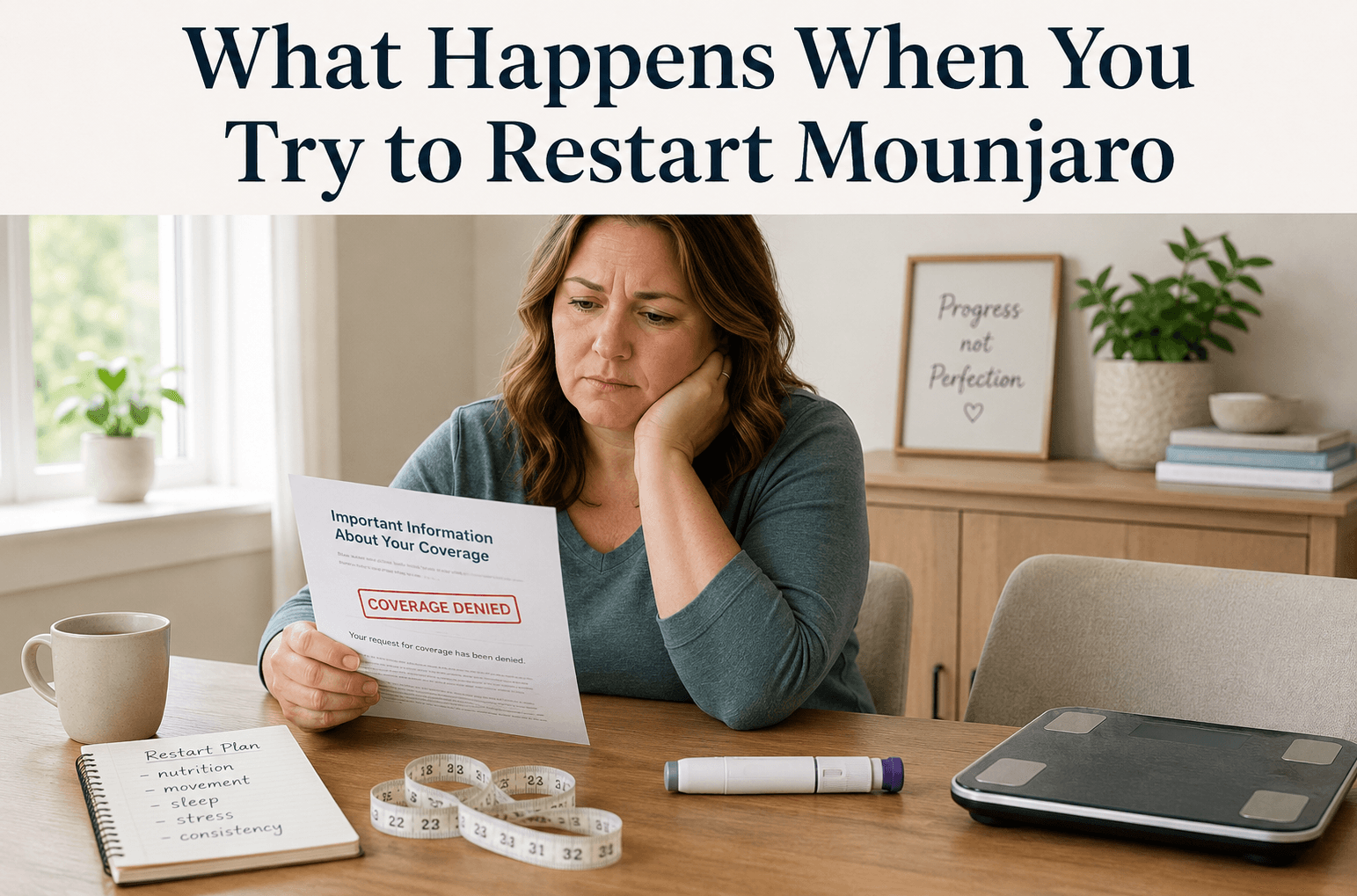
If that describes your last few months, you are not alone. Across weight-loss communities, telehealth threads, and clinic conversations, the same pattern keeps repeating. Someone loses 30, 50, or 80 pounds on tirzepatide. Life interrupts through cost, supply, side effects, insurance, or a prescriber change. The hunger comes back. The weight creeps up. Then the restart request gets denied.
This article explains why that wall exists, what it is made of, and what to do next.
Why Prescribers Deny Mounjaro Restarts

A denied restart is not always a simple medical judgment. Sometimes it is insurance. Sometimes it is administrative. Sometimes it is a new prescriber policy. And sometimes it is a real safety concern that deserves a careful review.
The most common barriers include:
- Insurance reauthorization has tightened.
- Prior authorization expired.
- Current BMI or lab values no longer match the original approval criteria.
- The prescriber changed their GLP-1 protocol.
- The patient stopped because of pancreatitis, gallbladder disease, severe vomiting, gastroparesis symptoms, or another safety issue.
- The insurer wants a new qualifying event before approving the medication again.
That last problem can feel especially unfair. A patient may no longer qualify because they responded well, yet they may not be able to maintain the response without ongoing treatment. That is why restart planning should be documented carefully.
At Maryland Trim Clinic, the first question is not only "Can we restart?" It is also "Why was access interrupted, and what barrier has to be solved?"
What Stopping Mounjaro Does to the Body
Tirzepatide works by activating GIP and GLP-1 pathways. In practical terms, it can reduce appetite signaling, slow gastric emptying, improve insulin-related responses, and make it easier for many people to eat less without constant food noise.
When the medication stops, those effects fade. Appetite can return within days to weeks. Fullness may not last as long. Cravings may feel louder. For some patients, the rebound feels more intense than expected because they have become used to a quieter appetite system.
Weight loss itself also changes the body. A smaller body burns fewer calories at rest. This is normal physiology, not failure. But when a lower metabolic requirement combines with returning appetite, regain can feel fast and discouraging.
The maintenance data are important here. In the SURMOUNT-4 trial, people who continued tirzepatide after initial weight loss maintained and extended results more than those switched to placebo, as reported in JAMA. That does not mean every person must stay on medication forever, but it does mean stopping should be a planned medical decision, not an accidental coverage gap.
Your Real Options When You Cannot Get Back On
The right response depends on the reason for the denial.
Request the reason in writing
If your prescriber denied the restart without a clear explanation, ask them to document the reason. Was it clinical safety? Insurance? BMI criteria? A new office policy? A vague "no" is hard to appeal. A specific reason can be addressed.
Rebuild the medical file
Document your highest weight, lowest weight, current weight, medication response, side effects, lab changes, blood pressure changes, A1C changes, and what happened after stopping. A clinician reviewing a restart needs the full trajectory, not one snapshot.
Consider a second opinion
Obesity medicine clinicians often think about GLP-1 therapy as chronic disease management. That can lead to a more nuanced restart conversation than a rushed telehealth visit or a general "you no longer qualify" response.
Ask about the correct medication pathway
Mounjaro is labeled for type 2 diabetes. Zepbound contains tirzepatide and is labeled for chronic weight management. Coverage rules differ. Your clinician may need to evaluate whether GLP-1 weight loss injections fit your current diagnosis, history, and payer requirements.
Be cautious with compounded products
Compounded GLP-1 products are not the same as FDA-approved brand medications. Some patients explore them during coverage gaps, but the quality and safety questions are real. The FDA has published concerns about unapproved GLP-1 drugs used for weight loss, especially products from unverified sources or without appropriate medical supervision.
Discuss bridge options
If tirzepatide access is temporarily blocked, your clinician may discuss other strategies, such as semaglutide, metformin, bupropion/naltrexone, nutrition support, or a structured exercise plan. None of these are identical to Mounjaro, but partial support can still help slow regain while the access issue is being solved.
How Maryland Trim Clinic Can Help After a Treatment Gap
MTC helps patients turn a confusing medication gap into a structured review. That may include weight history, prior dose, side-effect history, lab review, appetite changes, insurance barriers, and body-composition concerns.
For some patients, the next step is a renewed medical weight loss program. For others, it may include metabolic testing and analysis, nutritional counseling and coaching, or a discussion of appetite suppressant medications when a GLP-1 restart is delayed or inappropriate.
If weight regain has changed your body composition, tools like 3D body scanning can help separate water shifts, fat regain, and muscle loss. That matters because the solution may not be only "restart the same dose." It may be restart safely, rebuild protein intake, preserve muscle, and monitor response.
Patients navigating this situation may also benefit from our articles on stopping Ozempic and GLP-1 medications safely, comparing Wegovy, Ozempic, and Zepbound, and the practical steps in a Zepbound KwikPen injection tutorial.
Restart Dose: Why You Should Not Resume at the Old Dose
Even if you previously tolerated a higher dose, most clinicians restart lower after a meaningful break. Tolerance fades. Jumping back to a previous high dose can increase nausea, vomiting, dehydration, and other GI side effects.
That does not mean you are starting over in a moral sense. It means the body needs a safer reintroduction. The goal is to rebuild tolerance, monitor symptoms, and avoid a restart that becomes so unpleasant you have to stop again.
Bottom Line
Being denied a Mounjaro restart is frustrating, but it is not the end of the road. The most important step is to identify the actual barrier. Is it insurance? Safety? diagnosis coding? prior authorization? prescriber policy? cost? Each barrier has a different response.
You already know the medication worked for your body. Now the task is to build the safest, most realistic path forward with documentation, medical oversight, and a plan that does not rely on panic.
At Maryland Trim Clinic, that conversation can include medication access, restart safety, bridge support, nutrition, and long-term maintenance.
Frequently Asked Questions
Can I restart Mounjaro after stopping for several months?
It may be medically possible, but your access depends on insurance, diagnosis, current health metrics, prior side effects, and your prescriber's judgment.
Why did my hunger come back so strongly?
The appetite-suppressing effects fade after stopping. Hunger, cravings, and food noise can return because the medication is no longer supporting those hormonal pathways.
Will insurance cover Mounjaro again if I lost weight on it?
Not automatically. A successful response can sometimes make current BMI-based criteria harder to meet. Documentation and appeals may be needed.
Is compounded tirzepatide the same as Mounjaro?
No. Compounded products are not FDA-approved brand medications and can carry quality, dosing, and sourcing concerns. Use only with medical supervision if discussed at all.
Should I restart at my previous dose?
Usually no. After a break, clinicians often restart lower to reduce GI side effects and rebuild tolerance safely.
What can I do while waiting for access?
Ask about bridge medications, protein targets, resistance training, nutrition support, and monitoring. None fully replace tirzepatide, but they can reduce the sense of free fall.
Need a Plan After a GLP-1 Treatment Gap?
Maryland Trim Clinic can help you review your weight history, medication response, coverage barriers, restart safety, and realistic bridge options before weight regain turns into guesswork.