Zepbound KwikPen vs Vial: Cost, Access & Availability


Zepbound KwikPen vs vial cost used to feel like a simple question: which one is cheaper? In 2026, that framing is too narrow. The better question is which format you can actually access, afford, refill on time, and use correctly. At Maryland Trim Clinic, we treat cost as part of adherence. A medication that looks affordable on paper is not truly affordable if the refill process breaks down or the format makes weekly dosing harder.
This article updates the earlier vial-versus-pen cost conversation with current LillyDirect information and a more useful decision framework for patients considering GLP-1 weight loss injections, a structured medical weight loss program, or a transition from one Zepbound presentation to another.
Current LillyDirect Pricing Has Changed the Conversation
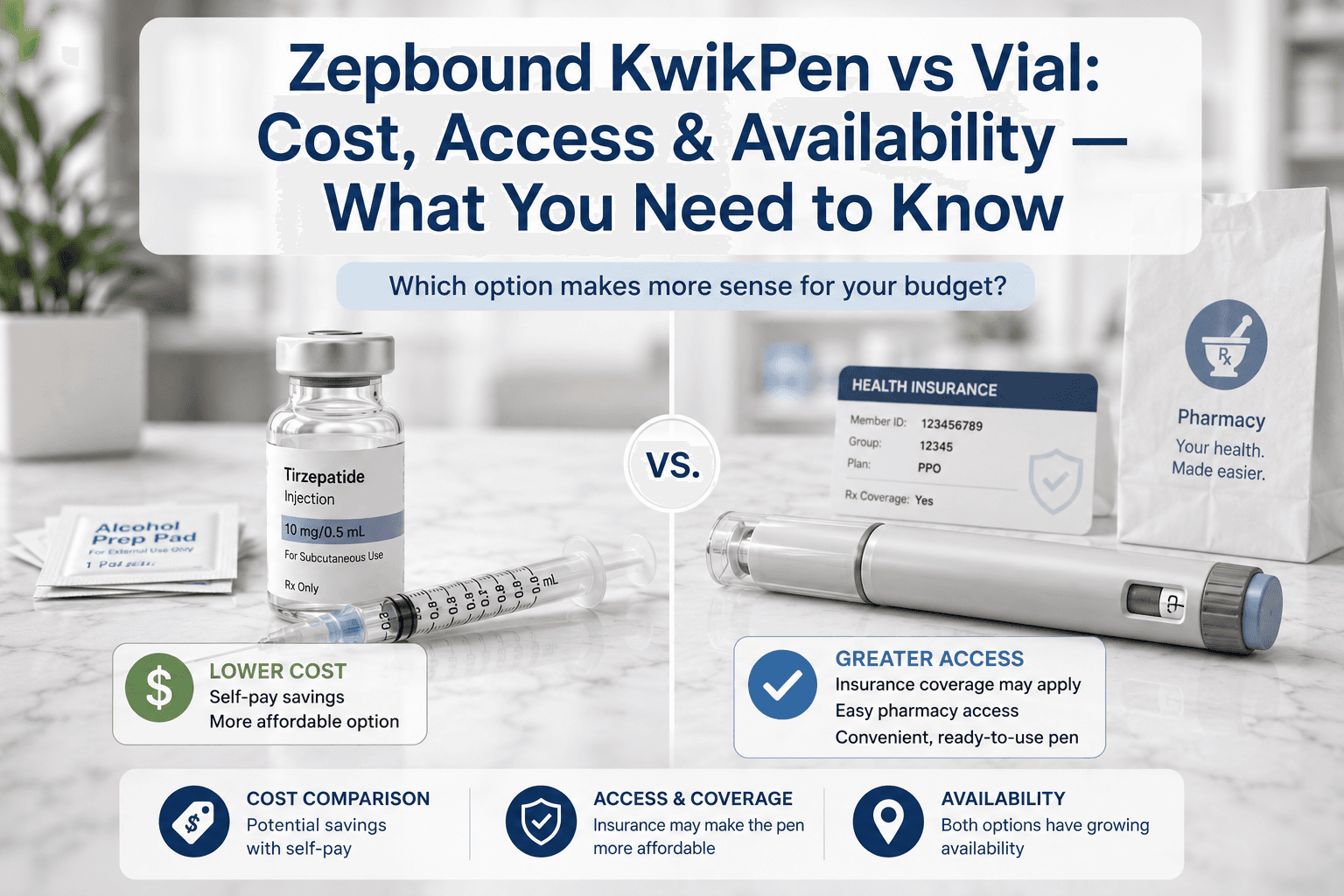
The older assumption was that vials were always meaningfully cheaper than pen formats. That is no longer safe to say without checking the current program terms. LillyDirect's current Zepbound page lists self-pay price ranges for both KwikPen and single-dose vial from $299 to $449 per month, depending on dose and program terms. The page also explains that KwikPen can involve self-pay or insurance pathways, while vial is listed as exclusively available through LillyDirect and self-pay only. See the current LillyDirect Zepbound product page before making a cost decision.
That means the sticker price may be similar, but the access pathway is not identical. The format that saves money for one person may not save money for another.
Why Insurance Status Matters More Than Format
If your insurance covers Zepbound, the covered format may beat self-pay pricing. Some commercially insured patients may qualify for savings that bring out-of-pocket costs down significantly, while others may face exclusions, prior authorization, high deductibles, or no obesity medication benefit at all.
If you are self-paying, the question shifts. You need to compare dose, refill timing, eligibility terms, pharmacy channel, and whether the program price applies to your specific situation. Lilly's savings pages include eligibility rules, dose limits, annual limits, and expiration dates. The Zepbound savings terms and conditions are not light reading, but they matter.
This is where a clinical plan can prevent expensive guessing. If your broader care plan includes metabolic testing and analysis or nutritional counseling and coaching, medication cost should be discussed alongside expected follow-up, side-effect management, and long-term maintenance.
Access and Availability Are Not the Same as Price
Availability is the second half of the cost story. A lower monthly price is not helpful if the prescription is hard to fill, the pharmacy channel is confusing, or shipping timing creates gaps. Zepbound access can involve retail pharmacies, LillyDirect, delivery, pickup, insurance processing, savings programs, or self-pay workflows.
KwikPen may be available through more channels, depending on dose and insurance status. Vial may be more limited in channel but more predictable for certain self-pay patients. The correct answer can change by location, dose, and timing.
Patients comparing Zepbound with other medications often benefit from reading our guide to Wegovy vs Ozempic vs Zepbound. If you are still deciding whether an injection is the right route at all, the GLP-1 pill vs injection comparison can help frame the broader medication landscape.
The Hidden Cost: Weekly Friction
Cost is not only dollars. It is time, stress, missed doses, and the mental load of managing a weekly injection. A vial may require more supplies and more confidence with measuring. A KwikPen may simplify the dose routine but still requires compatible pen needles and correct technique.
For some patients, that convenience is worth paying for. For others, saving money matters more, especially if they are comfortable with syringe technique. The point is not that one format is universally superior. It is that the real cost includes both the purchase pathway and the likelihood that you can stay consistent.
How to Decide Which Option Is More Affordable for You
Start with four questions.
First, does your insurance cover Zepbound for your diagnosis and BMI-related medical history? If yes, your covered pharmacy option may be the best starting point.
Second, if your plan does not cover it, which self-pay program applies to your dose and format? Do not rely on a social media price screenshot. Program terms change.
Third, can you refill on time? Some savings rules and fulfillment windows depend on timely refills, and delays can change the real cost.
Fourth, can you use the format correctly? If a lower-cost route leads to missed doses, wasted medication, or anxiety, it may not be the best value.
This is also the moment to consider related treatment needs. Some patients need medication plus appetite suppressant medications, vitamin B12 or lipotropic injections, or body-composition tracking through 3D body scanning. The medication price is only one piece of the weight-loss plan.
How Maryland Trim Clinic Helps Patients Think Through Cost and Access
At Maryland Trim Clinic, we do not treat Zepbound access as a one-line prescription decision. The format should fit the patient's medical profile, budget, weekly routine, pharmacy pathway, and follow-up plan. MTC can help patients organize the right questions before they speak with a pharmacy, insurer, or prescribing clinician.
This matters because the best medication plan is the one that survives real life. If a patient cannot refill on time, tolerate the dose, afford the next month, or use the device confidently, the plan needs adjustment. Sometimes that means the KwikPen. Sometimes it means the vial. Sometimes it means a different GLP-1 strategy entirely, especially when reviewed alongside our guide on how GLP-1 works.
Bottom Line
Zepbound KwikPen vs vial cost is no longer a simple "vial is cheaper" answer. Current LillyDirect listings show similar self-pay ranges for both formats, but insurance eligibility, savings terms, channel access, dose level, and refill timing can all change the real monthly cost.
If you are paying out of pocket, verify the current self-pay terms. If you have commercial insurance, confirm coverage and savings eligibility. If you are unsure which format fits your routine, bring the full picture to a clinician instead of choosing based only on the lowest number you see online.
Frequently Asked Questions
Is the Zepbound vial always cheaper than the KwikPen?
Not necessarily. Current LillyDirect listings show similar self-pay price ranges for both formats, but program terms, dose, refill timing, and eligibility can change the real cost.
Does insurance cover the Zepbound vial?
The vial pathway is more limited and is described by LillyDirect as self-pay only. Patients with insurance should check which presentation is covered under their plan and whether savings programs apply.
Can a savings card lower the cost?
It may, depending on eligibility, insurance type, format, and dose. Government insurance beneficiaries are generally excluded from many manufacturer savings programs, and terms can change.
Which format is easier to get?
It depends on pharmacy channel, dose, location, and current supply. KwikPen may have more insurance and retail pathways, while vial access may depend more directly on LillyDirect.
Want Help Understanding Your Zepbound Options?
Maryland Trim Clinic can help you compare medication access, expected monthly cost, insurance questions, and clinical fit so your weight-loss plan is practical before you start.