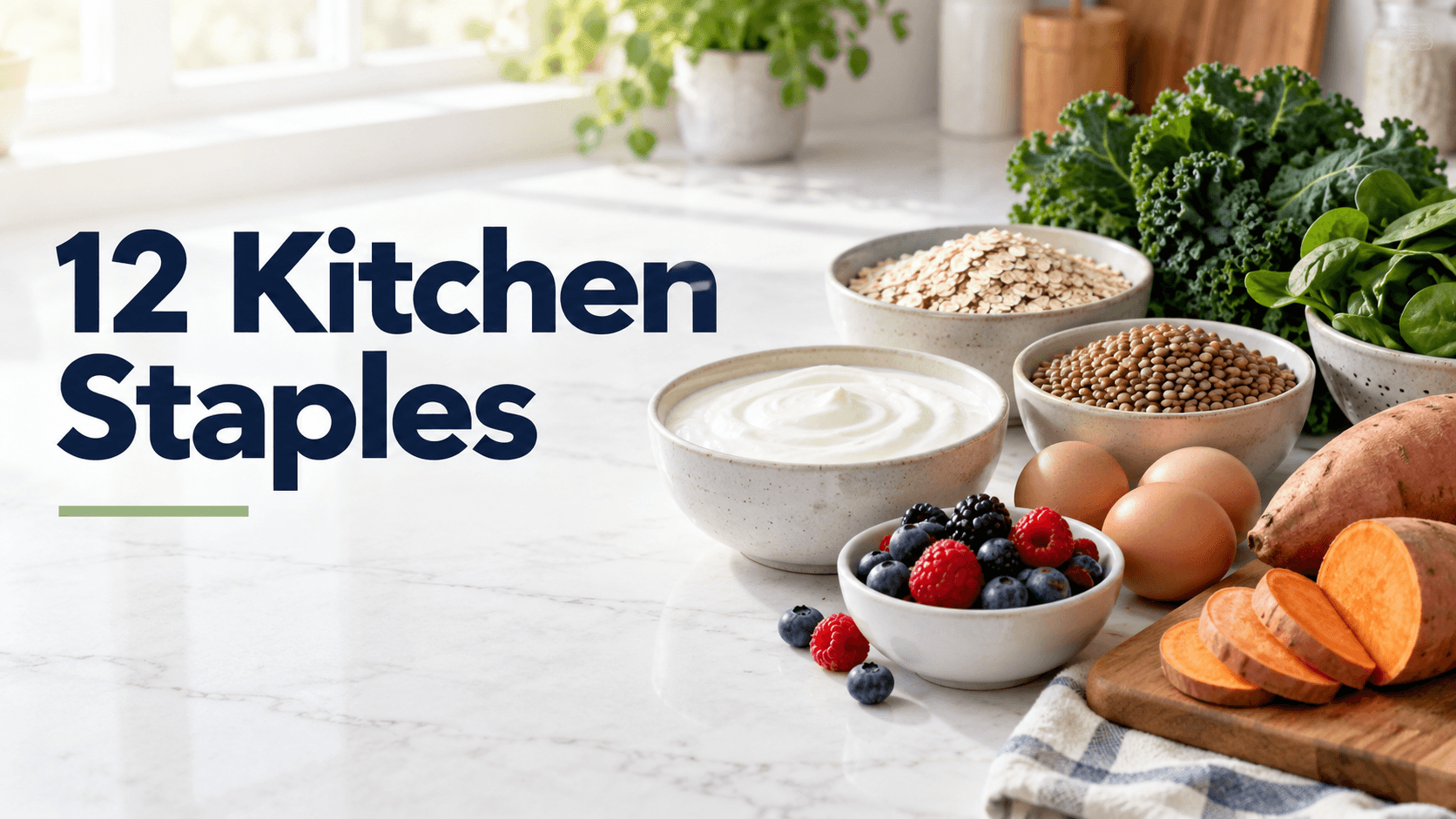
12 Foods Every Ozempic User Needs in Their Kitchen


Your kitchen can make or break your semaglutide routine, not because there is a magic “Ozempic diet,” but because a smaller appetite leaves less room for low-value food. When you are eating less, the food you do eat needs to work harder for you.
Ozempic is a brand of semaglutide approved for type 2 diabetes. Semaglutide is also used in other formulations for chronic weight management. If you are using semaglutide as part of a weight-loss plan, follow the medication, dose, and nutrition guidance given by your own clinician rather than treating every semaglutide product as interchangeable.
Why Food Quality Matters More When Appetite Drops
GLP-1 medications can reduce hunger and make people feel full sooner. That can help with weight management, but it can also make it easier to undereat protein, fiber, vitamins, minerals, and fluids. Large, greasy meals may also feel harder to tolerate for some people, especially during dose escalation.
A practical goal is to build a kitchen around foods that are nutrient-dense, easy to portion, and flexible enough to work on both high-appetite and low-appetite days. Protein and resistance exercise are especially important when the goal is to lose fat while preserving strength and lean mass.
12 Foods Worth Keeping on Hand
1. Greek Yogurt
Plain Greek yogurt gives you protein in a relatively small volume, which can be useful when appetite is limited. Pair it with berries, chia seeds, or a small amount of oats for extra fiber and texture. Choose the fat level that fits your overall plan and tolerance.
2. Eggs
Eggs are compact, versatile, and easy to prepare. They can work at breakfast, in a snack plate, or alongside vegetables. If you struggle to finish large meals, eggs make it easier to build a smaller meal around a meaningful protein source.
3. Cottage Cheese
Cottage cheese is another low-volume protein option. It can be eaten with fruit, tomatoes, cucumbers, or whole-grain crackers. If dairy bothers your stomach, choose lactose-free options or another protein source.
4. Chicken or Turkey
Lean poultry is useful for meal prep because it can be cooked once and added to salads, wraps, soups, grain bowls, or vegetables throughout the week. Keep portions modest if large amounts of meat feel heavy.
5. Fish
Fish provides protein and, depending on the type, useful unsaturated fats. Salmon, tuna, sardines, cod, and tilapia can all fit. If nausea is an issue, a simply seasoned, lower-fat fish may be easier to tolerate than a rich preparation.
6. Beans and Lentils
Beans and lentils combine plant protein with fiber. They are inexpensive, shelf-stable, and easy to add to soups, salads, chili, or rice. Increase fiber gradually if you are already dealing with bloating or constipation.
7. Tofu or Edamame
Soy foods can add variety to a protein-first routine. Tofu works in stir-fries, soups, and bowls, while edamame is an easy snack or side. They are especially useful for people who want more plant-based meals.
8. Oats
Oats provide soluble fiber and are easy to scale up or down depending on appetite. A small bowl can be paired with Greek yogurt, milk, protein powder, berries, or nut butter. Start with a portion you can comfortably tolerate.
9. Berries
Berries provide fiber and micronutrients without requiring a large serving. Fresh or frozen both work. Add them to yogurt, oats, smoothies, or a small snack plate.
10. Cooked Vegetables
Vegetables matter, but raw vegetables are not always the easiest choice when nausea, reflux, or early fullness is strong. Cooked zucchini, carrots, green beans, spinach, squash, or broccoli may be easier to manage while still adding fiber and micronutrients.
11. Nuts, Seeds, and Nut Butter
Nuts, chia seeds, flaxseed, and nut butters add healthy fats and nutrients in small portions. Because they are calorie-dense, measure portions rather than eating directly from the container, especially if fat loss is the goal.
12. Potatoes or Sweet Potatoes
Potatoes and sweet potatoes can provide a simple carbohydrate source that is easy to portion and combine with protein and vegetables. They are often more practical than trying to eliminate carbohydrates completely, especially for people who exercise and need enough energy to train.
A Simple Grocery Formula for GLP-1 Users

• Keep 2 to 3 easy protein options ready at all times.
• Choose 2 fiber-rich carbohydrate staples that you digest well.
• Keep fruit and vegetables available in forms you will actually eat, including frozen and cooked options.
• Use healthy fats in measured portions rather than making high-fat meals the center of the plate.
• Keep fluids accessible and sip regularly, especially if nausea or constipation reduces your usual intake.
How Maryland Trim Clinic Can Help Personalize the Plan
At Maryland Trim Clinic in Laurel, Maryland, nutrition can be integrated with a broader medical weight-loss plan. The clinic offers nutritional counseling, metabolic testing, medical weight-loss evaluation, and GLP-1 support with semaglutide or tirzepatide when clinically appropriate.
That matters because there is no universal protein target, calorie target, or “perfect” GLP-1 meal plan. A person’s health history, body size, activity, kidney function, appetite, gastrointestinal tolerance, and weight-loss pace all affect what an appropriate plan looks like. Metabolic testing and progress tracking can help move the conversation beyond generic calorie calculators.
Common Mistakes to Avoid
• Eating so little that protein and micronutrient intake become inadequate.
• Increasing fiber too quickly when constipation or bloating is already present.
• Relying mostly on shakes and bars when whole foods are tolerated.
• Choosing very large, high-fat meals that worsen nausea or reflux.
• Assuming protein alone protects muscle without resistance or strength training.
Conclusion
The best kitchen for someone using semaglutide is not a shelf full of “diet foods.” It is a kitchen that makes protein, fiber, hydration, and nutrient-dense meals easy to reach. Start with foods you tolerate, keep portions realistic, and adjust as your appetite changes.
If you are using a GLP-1 medication through Maryland Trim Clinic, use your follow-up visits and nutrition support to make the plan fit your body rather than forcing your body to fit a generic online menu.
FAQ
What should I eat first at a meal while taking semaglutide?
When appetite is limited, starting with a protein-rich food can make it easier to meet protein needs before you become too full. Your clinician or dietitian can help set an appropriate target.
Should I avoid carbohydrates on Ozempic?
Not necessarily. High-fiber, minimally processed carbohydrates can fit a balanced plan. The amount should reflect your health needs, activity, blood sugar goals, and total calorie intake.
What foods are easiest to eat when I feel nauseated?
Many people tolerate smaller, lower-fat meals better. Simple foods such as yogurt, eggs, toast, oats, soup, fruit, or lightly seasoned lean protein may be easier than large or greasy meals.
Do I need protein shakes?
No. They can be convenient when appetite is low, but they are not mandatory. Whole-food protein sources can work just as well when you can comfortably eat them.
Can Maryland Trim Clinic help me plan meals around a GLP-1 medication?
Yes. Maryland Trim Clinic offers nutritional counseling as part of its weight-management services, along with metabolic testing and clinician-guided medication support when appropriate.
When should I contact my clinician about eating too little?
Contact your clinician if you are repeatedly unable to eat or drink enough, have persistent vomiting, feel weak or dizzy, or are losing weight at a pace that concerns you.
Medical note: This article is for general education and does not replace individualized medical advice. Medication and nutrition plans should be reviewed with a qualified healthcare professional.
Personalize Your GLP-1 Nutrition Plan
If you’re using semaglutide and want a practical plan that fits your appetite, preferences, and goals, schedule a consultation with Maryland Trim Clinic to discuss nutrition support as part of your weight-management care.